
By the time Javier Botet appears onscreen in Do Not Enter, your body already knows something is wrong. The silhouette bends the wrong way. The movement feels human, but only just. This is the kind of unease Botet has been perfecting for over two decades, and in Marc Klasfeld’s upcoming horror thriller, he once again proves why his presence alone can haunt anyone.
Botet plays the Pale Creature in Do Not Enter, a supernatural entity lurking inside an abandoned hotel that feels just as cursed as the thing stalking its hallways. During our conversation, it was clear that while Botet has embodied countless creatures over his career, he is still actively searching for what makes each new monster worth stepping into.
“After 20 years making monsters, it’s hard to find things that makes something totally different,” Botet admitted. He laughed as he described how rare it is to encounter material that truly excites him, saying that when he does read something special, his reaction is simple. “I say, ‘Oh, God, thank you.’”
That feeling is what ultimately drew him to Do Not Enter. While the film is packed with genre thrills, what mattered most to Botet was the Pale Creature’s humanity. “When the character has a background story, a human background story, that makes the creature more human,” he explained, adding that it gives him something internal to work from rather than relying purely on spectacle. For Botet, monsters without history can be visually striking, but those with pain, motivation, and loss resonate deeper. “When it have a story and something that I can work more inside, that likes me very much.”
In Do Not Enter, that human foundation is impossible to ignore. Early in the film, we glimpse the man the creature once was and the life he lost. Botet emphasized how important that backstory was to shaping the role. “You have a story, a human story, a background about the guy you can see in the beginning,” he said. The film lays out his financial ruin, the loss of his wife, and the decisions that follow. “Now he’s different. He changed, and now he’s making bad things with Devil.”
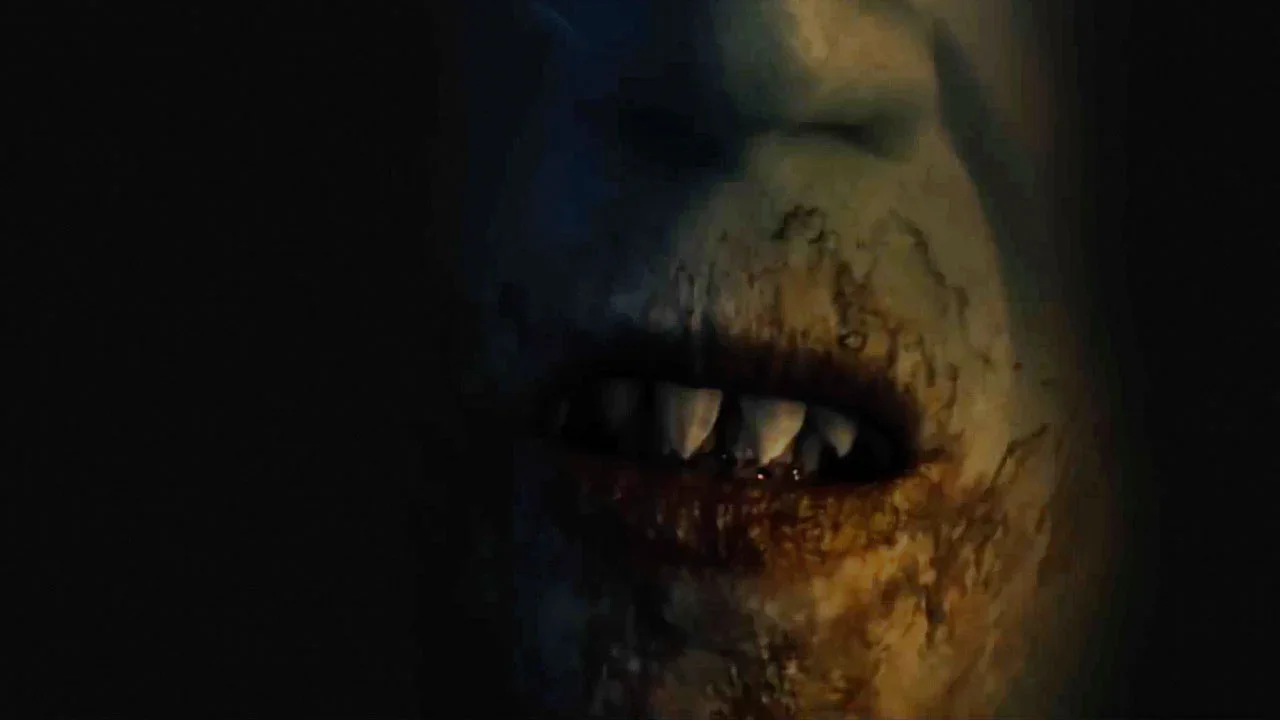
Rather than approaching the Pale Creature as something purely otherworldly, Botet focused on intention. “That helps you to create the intentions, the motivations of the creature,” he explained. From there, the work becomes familiar territory. “You start designing movements and everything, but first you need to clarify the intentions, the pain, what it makes him do what he’s doing.”
Despite being best known for horror, Botet views creature work as an extension of traditional acting. “For me it’s very similar,” he said. “It’s not so different.” The only difference is vocabulary. Monsters do not rely on dialogue. “The words can distract. Only a sight and a movement can describe very good, sometimes better than speaking.”
That philosophy carries directly into the Pale Creature’s design. Rather than burying Botet under layers of prosthetics, the team leaned into restraint. “We try to find something different but soft, not very complicated,” he said. The goal was to preserve the sense of a man still visible beneath the corruption. “You need to still see a human here.”
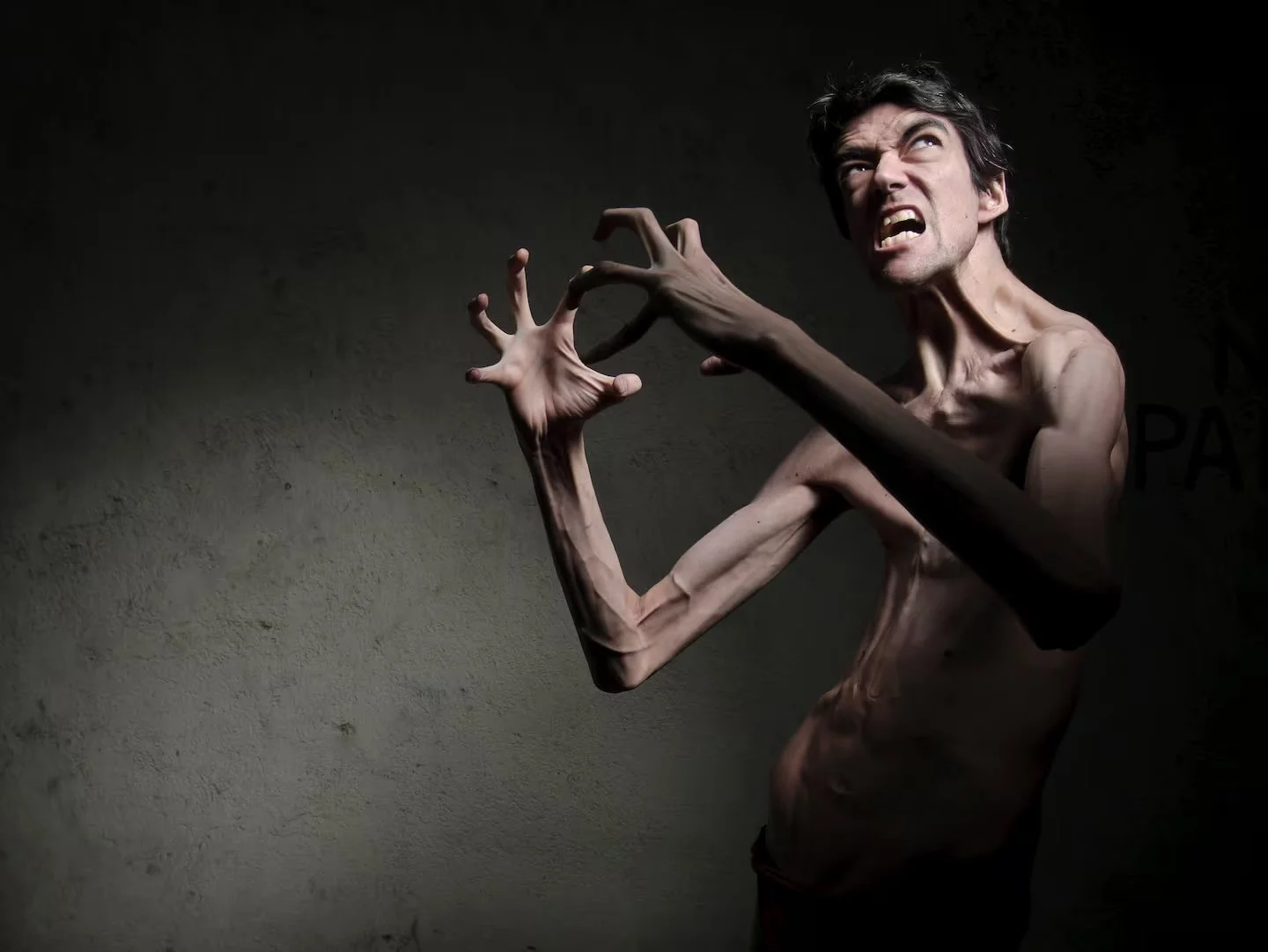
The makeup process reflected that balance. Aside from long nails and subtle prosthetic pieces, the transformation relied heavily on color. Even then, the process was no joke. “It was like four hours or five hours every day,” Botet said. Still, compared to past roles, it was freeing. “Sometimes I make movies that I have to wear a makeup of five kilograms,” he explained, noting how limiting that can be. This time, the lighter design allowed him to move more comfortably and expressively.
Fittingly, the first time Botet saw the finished look was also his first day on set inside the film’s central location. “The first time that I had the makeup was the first day of shooting,” he recalled. That shoot took place in a real abandoned hotel in Bulgaria, and Botet was visibly enthusiastic when describing it. “Amazing place,” he said simply.
That atmosphere bled into every aspect of production. “When you’re shooting in this place, you cannot see the edge of the set,” Botet explained. “It helps so much to get in the mood.” During breaks, cast and crew explored the building, wandering through corridors that were unsettling even without cameras rolling. “It’s so scary,” he added with a smile. For Botet, the building became one of the most memorable locations of his career. “It was one of the most beautiful places I shooted.”
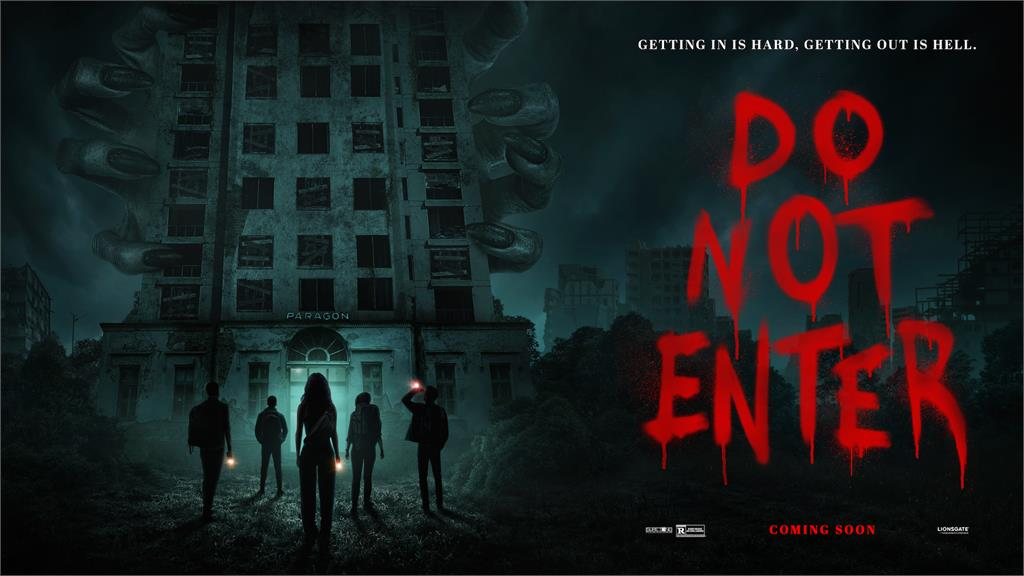
Working with director Marc Klasfeld, who makes his feature debut with Do Not Enter, was another highlight. Botet found the collaboration effortless. “Very gentle, very easy to work with,” he said, noting that Klasfeld gave everyone room to create. “He gives a lot of space for everybody, and it was a very nice experience.”
Botet also made it clear that his passion for the craft has not dimmed with time. He spoke openly about his desire to keep working, to keep building a long career fueled by love for cinema. “I love to work. I love movies. I love to do cinema,” he said. Even when projects vary in quality, his approach remains consistent. “I’m trying to make the best career. I need to make a long career and nonstop working because I love being in every party.”
That passion is palpable, both onscreen and off. Talking with someone who has shaped modern horror in such an indelible way was genuinely surreal. Javier Botet has haunted our screens for years, and with Do Not Enter, it looks like he is not done haunting us anytime soon.
Jessie Hobson