
Casper Kelly is not normal. Buddy is proof of that.
If you are already infected with the Too Many Cooks brain rot, you know exactly what wavelength this thing is operating on. Buddy is a full-length escalation of that same impulse, the idea that familiarity is the scariest thing in the room and that children’s television is essentially a hostage situation waiting to happen. This is Barney filtered through Adult Swim nihilism, filtered again through blood, puppets, and a screaming existential crisis.
Buddy opens inside an episode of It’s Buddy!, a cheery kids show that feels like Pee-wee’s Playhouse collided with Barney and came out worse for everyone involved. There are dumb songs about the ABCs, about being brave, about smiling through the pain. There is a talking backpack named Strappy, voiced by Patton Oswalt, and a mailbox with eyes. The show is framed in 4:3, a perfect aesthetic choice that immediately traps you inside this fake analog nightmare. Everything is bright, friendly, and wrong.
MINOR SPOILERS AHEAD
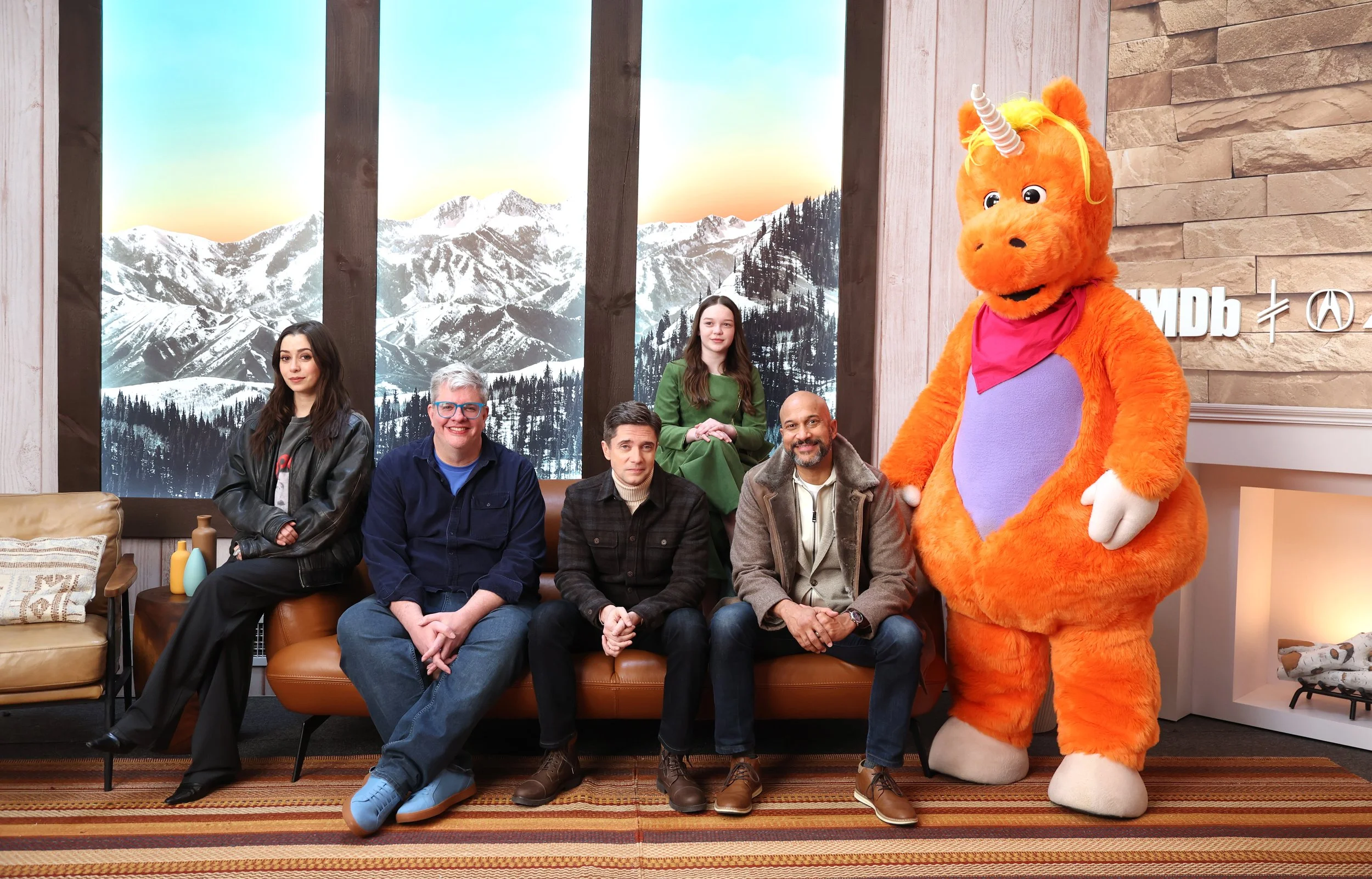
Then a kid named Josh does not want to dance.
Buddy does not take this well.
Josh is killed off-camera, and another kid later notices Josh’s book in the trash, soaked in blood, right as the episode ends and the credits roll. Episode two opens with Josh’s replacement, like nothing happened. Buddy gaslights the kids, insisting the blood is just paint, while the children slowly realize they are not safe and that Buddy is lying straight to their faces. They witness Buddy murder the nurse while the other kids and the bunny companion are stuck mid-dance number, still smiling, still performing. The episode closes on a child staring directly into the camera, and it is chilling.
From there, the series structure becomes weaponized. Episode three introduces a train and a set of rules the kids understand but refuse to say out loud. They know Buddy is bad. They will not say his name, because saying his name summons him. A stuffed animal version stalks them until one kid breaks, says it anyway, and Buddy transforms into his larger self. This time, he’s significantly more unhinged, very much echoing how Barney escalates when challenged.
From this point on, Buddy becomes pure chaos. He destroys the train. He screams about being hurt any time someone tries to leave or reach his constrained world. The sound design amplifies the tonal dissonance, with crushed cassette audio and happy music slamming against violence and screaming. Buddy is set on fire at one point, and it is legitimately hilarious. He melts. He kills a guy mid-performance. The kids hide while he tries to force the episode to end because the show cannot progress without its children.

No kid is safe. The movie commits to that.
Eventually the episode glitches, reality collapses, and the screen snaps into widescreen. We enter the real world.
Cristin Milioti plays Grace, a suburban mother of two boys, married to Topher Grace, living in a beige nightmare of normalcy that could not be further removed from Buddy’s world. Grace starts having visions tied to the show. She is convinced she has a third child, but cannot explain where they went or why no one else remembers them. There is an incredible sequence where Buddy pulls her halfway into the television, her body splitting between realities, as the real world glitches her out of existence. She is dragged inside the show and reappears as Nurse Grace, finally explaining where Buddy’s new characters come from.
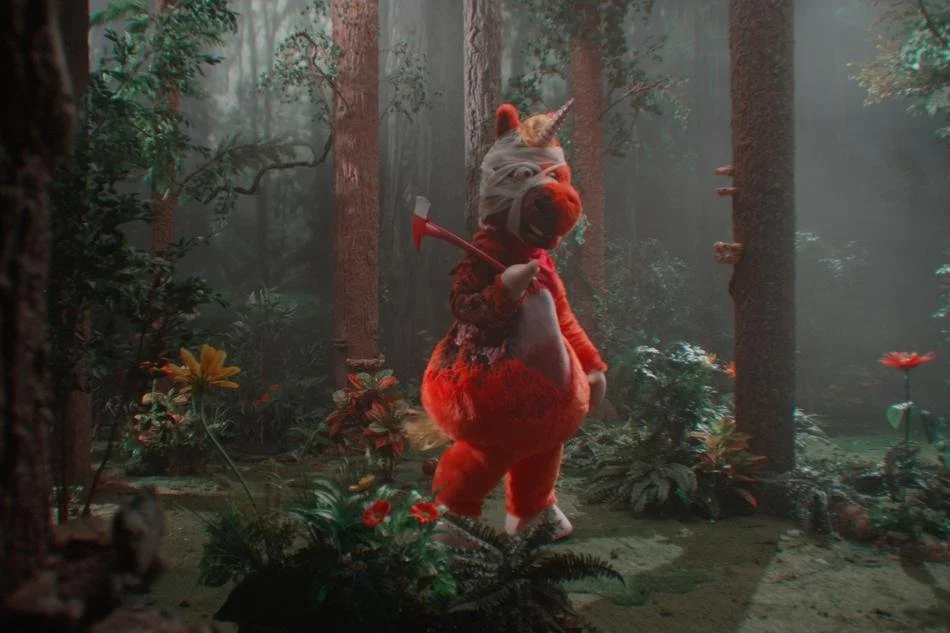
This is when things get even weirder. Buddy gropes Nurse Grace, which is deeply uncomfortable and absolutely intentional. He needs her help because he cannot end an episode without the kids, who are now developing agency and memory. They start experiencing things they have never done before, like peeing or remembering who they used to be. There is a cameo from Clint Howard as a deranged old cowboy who explains that he used to be on a show too, complete with a Howdy Doody-style dummy and some deeply unsettling implications.
The kills are fun, occasionally gnarly, and especially funny when Buddy destroys inanimate objects with the same rage he uses on people. There is one jump scare that landed so hard it nearly reset my soul. As with any Casper Kelly project, the density of background jokes and visual insanity demands repeat viewings. Every corner of the frame is doing something.
Eventually, Buddy manages to end an episode, resets everything, and introduces a new kid who is fully brainwashed. The original kids are left broken, crying, and terrified while the show continues without them. It is bleak and hysterical at the same time. The subtle changes in Buddy’s behavior when he is angry are some of the funniest moments in the film.

When the kids sing a mean song about him, Buddy mutates into a massive nightmare creature that looks like a black Godzilla goat and starts wrecking the set. Freddy, played incredibly by Delaney Quinn, becomes the emotional heart of the film. Nurse Grace saves her in a moment that is both absurd and oddly moving.
The finale goes completely off the rails in the best way. The practical effects are outstanding, and Dark Buddy looks absolutely unhinged. The puppetry rules. Keegan-Michael Key delivers a legitimately terrifying vocal performance, and Johnathon Yurco somehow takes it even further. There are a few nightmare-fueled nods to Freddy Krueger that I’ll leave unspoiled.
Buddy is terrifying. It is hilarious. The writing does not miss. Every joke lands. Every scare lands. The editing, sound design, and production design are doing constant heavy lifting. This is not mainstream-friendly, and thank god for that. See this with a rowdy audience if you can. It hits harder when people are screaming and laughing at the same time.

Nobody is doing what Casper Kelly is doing. Buddy feels like the arrival of a new horror icon, one built from felt, rage, and broken television logic. Blood, guts, and Barney. I cannot wait to watch it again.
Jessie Hobson