
There is something deeply satisfying about watching an actor take a hard left turn. Not a polite pivot, not a gentle expansion, but a full commitment to something sharper, messier, and far less concerned with likability. That is exactly what Polly Maberly does in Odyssey, a film that wastes no time throwing her character Natasha Flynn into moral freefall and refusing to offer an easy way out.
When Maberly first read the script, excitement was immediate. She described being “incredibly excited about the prospect of playing such a nasty really outwardly nasty individual,” calling it “a gift to be able to play a part which I hadn’t done before on film from beginning to end.” That enthusiasm makes sense. Odyssey never takes its foot off the gas, and neither does she.
Maberly’s connection to the material runs deeper than performance alone. Long before stepping into Natasha’s heels, she had worked as a lettings agent herself, grounding the film’s cutthroat real estate world in lived experience. She explained that the role was “very loosely inspired from this place where I worked,” a familiarity that helped anchor the chaos as the film barrels forward in what she describes as almost gorilla‑style filmmaking, constantly moving, following her permanently, never allowing Natasha or the audience to slow down.
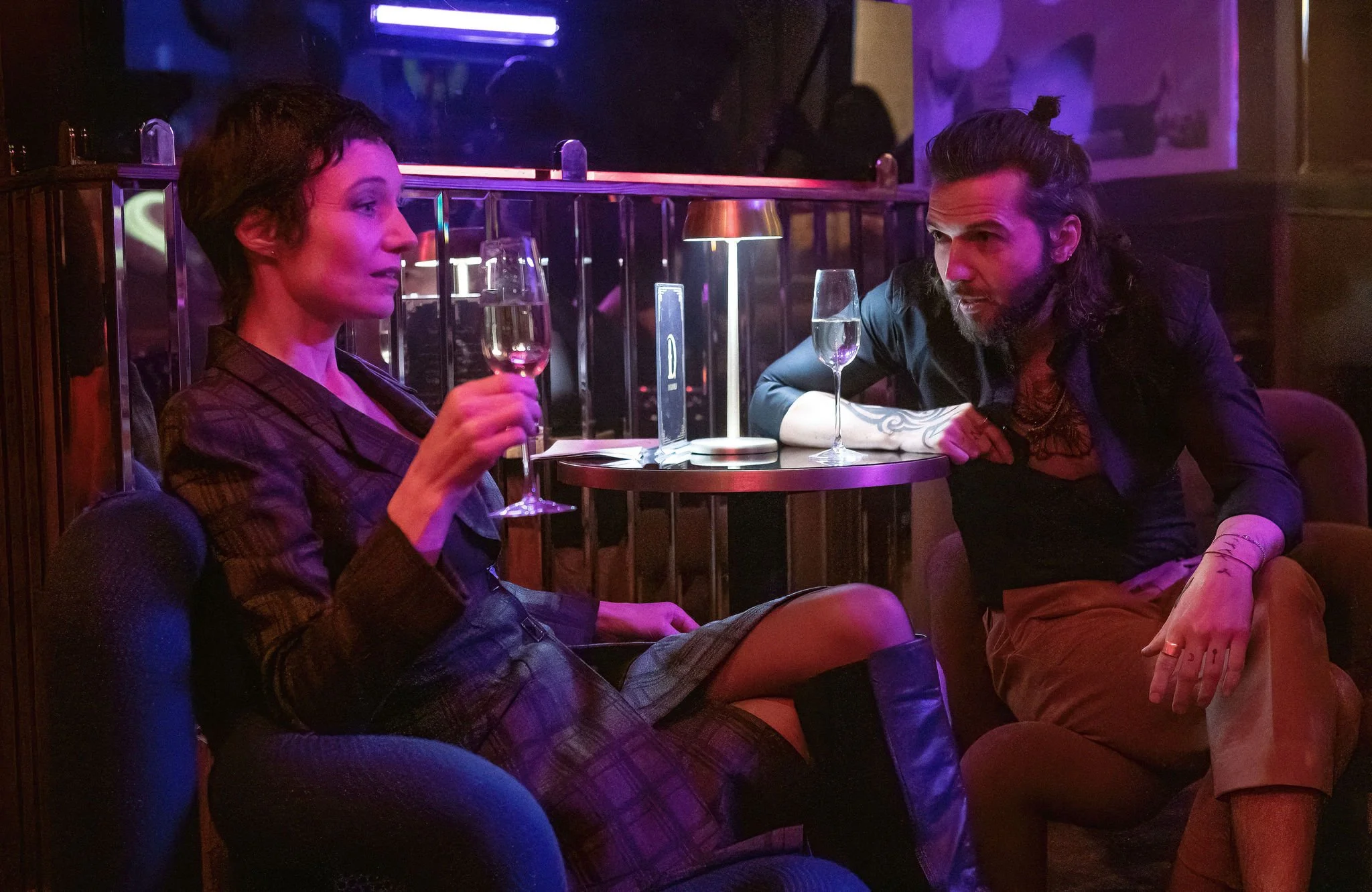
That relentless momentum mirrors Natasha’s psychology. On the surface, she is confident, ruthless, and deeply transactional. Underneath, she is unraveling. Maberly credits the film’s rehearsal process for allowing her to find that balance, noting that once she understood “who everyone was to Natasha,” everything else clicked. Knowing when her character needed someone and when she could dismiss them became “very freeing,” especially as Natasha’s worldview narrowed into devotion or disposal.
“She’s a vulnerable soul,” Maberly said, describing Natasha as someone with a massive blame complex who cannot understand why people are not there purely to serve her. That vulnerability curdles into narcissism, protection, and isolation, all operating at once. Natasha is not outwardly redeemable, and Maberly does not pretend otherwise. She even joked that the character does not have many redeeming qualities, but that is exactly what makes her compelling.
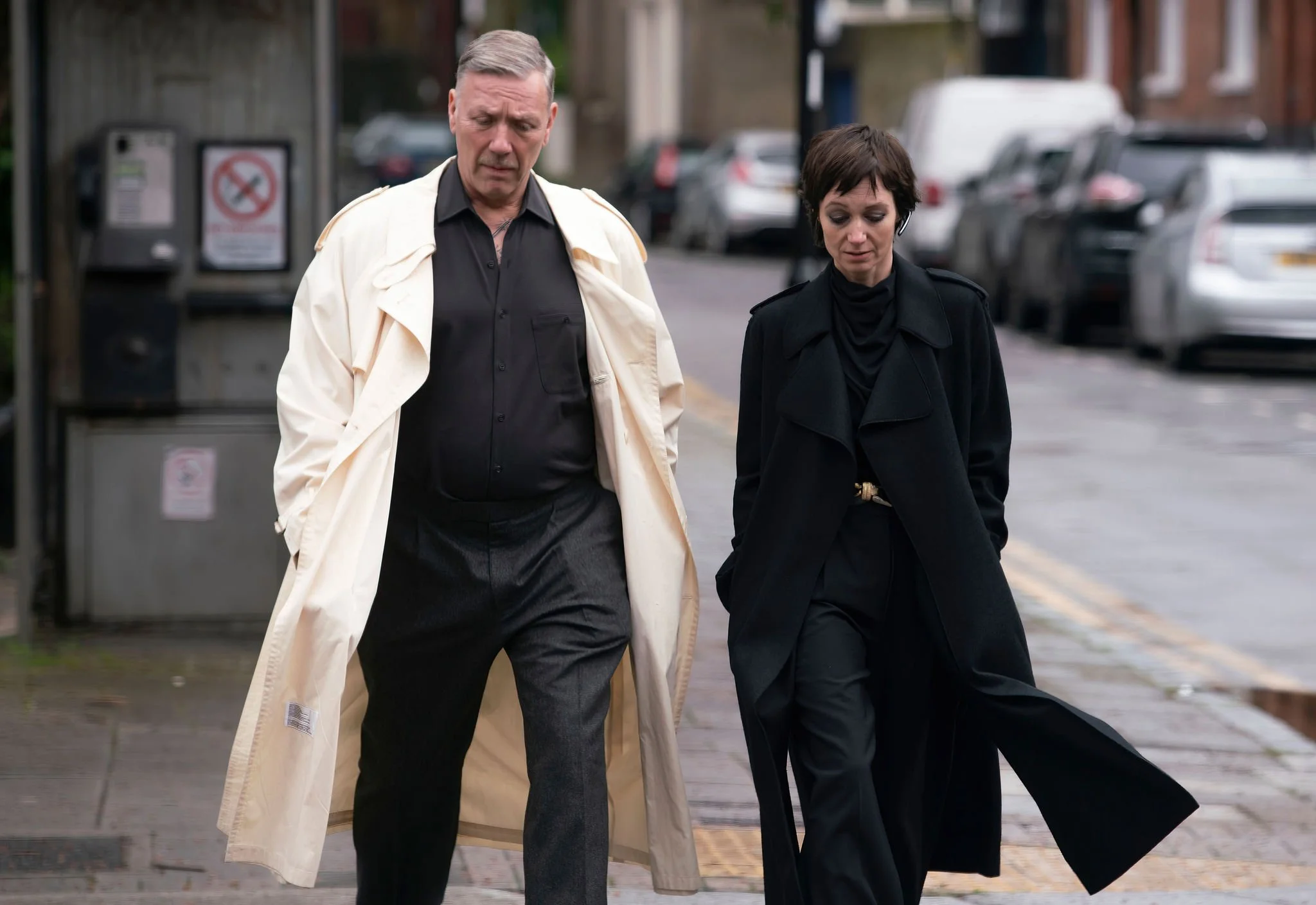
One of the most striking creative choices Maberly made came in the simplest form of instruction. Written in bold on the front of her script were the words “no smiling, no apologizing.” For an actor who openly describes herself as quite apologetic and eager to be liked, the instruction became liberating. Natasha does not explain herself. She lets silences linger. She does not soften edges for anyone else’s comfort, and playing that kind of brutality was, in Maberly’s words, “very freeing.”
Those choices place Odyssey firmly in a tradition of British storytelling obsessed with class, power, and ambition, even if the setting is modern and the tactics are ruthless. Maberly did not approach Natasha as an outlier, but as a woman playing by the same rules men have always played by. If money and ambition are the driving forces, she saw no reason the character should behave differently simply because she is a woman. There is also a quiet defensiveness baked into Natasha, tied to fear of judgment and age, that fuels her determination rather than softens it.
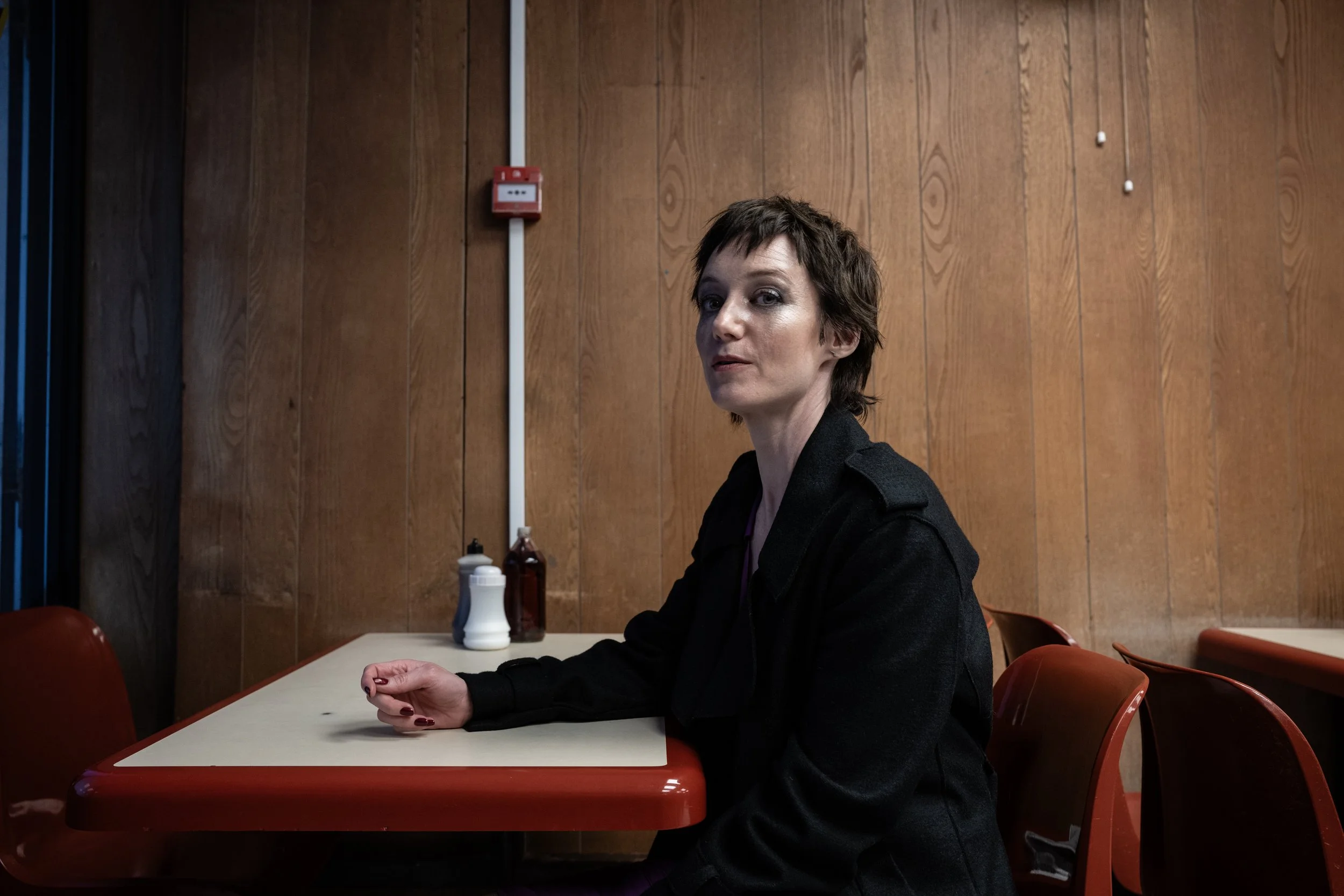
What makes the performance land is not whether Natasha is right or wrong, but how impossible she is to look away from. Maberly hopes viewers surprise themselves by backing her anyway. She believes audiences will want to scream at Natasha and root for her at the same time, wanting her to win even while questioning why they feel that pull. Ideally, she wants viewers to love hating her, and maybe more importantly, she wants casting directors to notice.
“A period drama is all well and good,” she said, “but this was interesting.”
That sentiment lingers after the conversation ends. Maberly clearly relished the freedom to play a woman who is not designed to be palatable, someone allowed to show strength, weakness, masculinity, and collapse without apology. She spoke passionately about watching performances like Cate Blanchett in Tar or Laura Calamy’s recent work, roles that allow women to dominate a narrative from start to finish. That kind of opportunity, she said, is a gift.
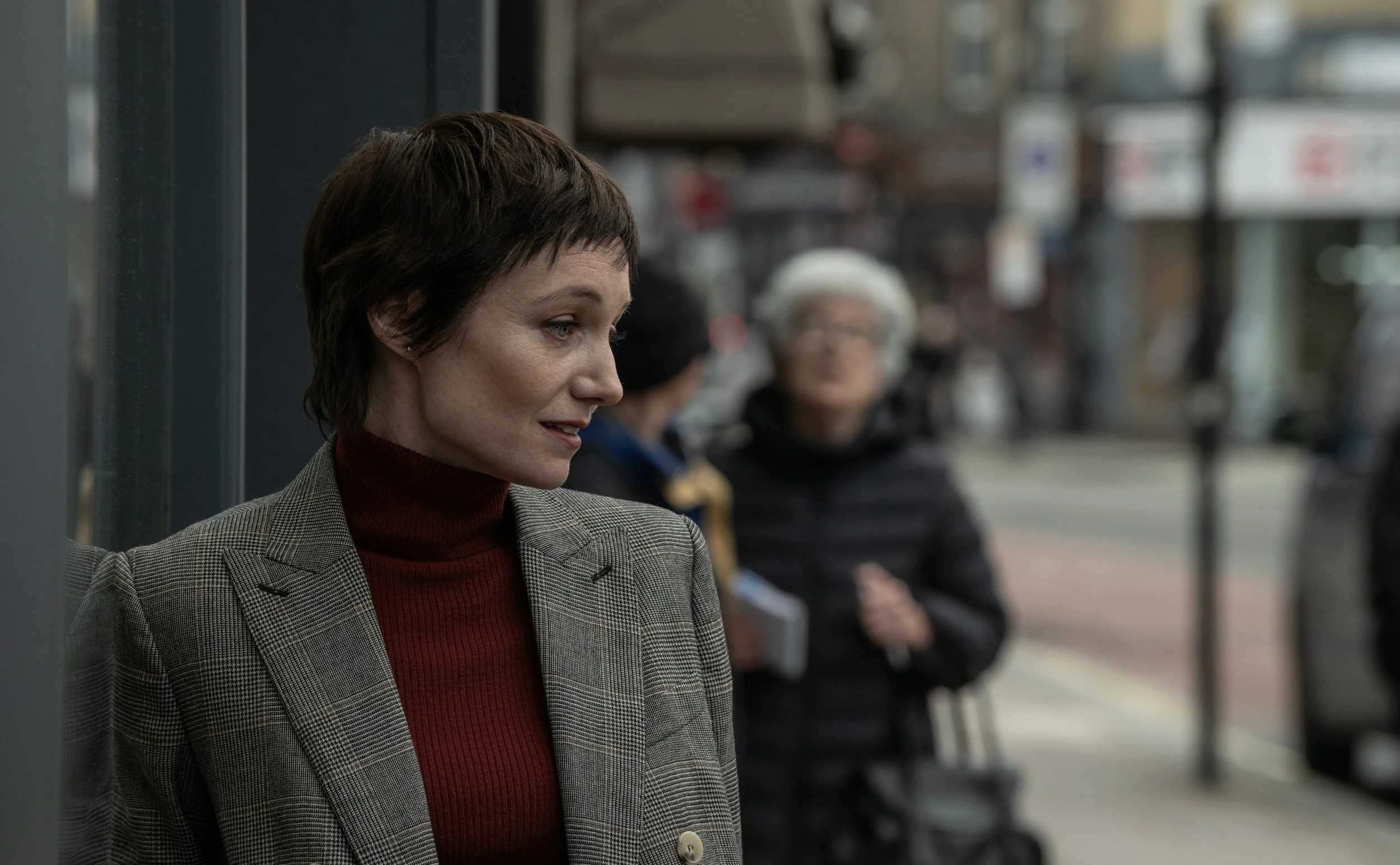
After spending time with Maberly, it is hard not to agree. The conversation was loose, thoughtful, and fun, but also full of intention. She knows exactly what she unlocked with Odyssey, and she does not want to give it back. Frankly, neither do we.
If this is the chapter where Polly Maberly trades drawing rooms for dark corners, here’s hoping she stays there a while. We will gladly keep watching.
Jessie Hobson