
There is something unmistakably genuine about Hacked: A Double Entendre of Rage Fueled Karma. Beneath the chaos, absurdity, and unfiltered rage is a film built on history, trust, and relationships that long predate the cameras ever rolling. That much became clear during CineDump’s recent conversation with director and actor Shane Brady alongside stars Owen Atlas and Collin Thompson, a discussion that felt less like a press obligation and more like three people reminiscing about something they survived together.
For Brady, Hacked began the way very few films do, with lived trauma that felt almost too surreal to process. After he and his wife Emily were victims of a real cybercrime, the experience spiraled beyond financial loss and into emotional freefall. Brady recalled that at one point, Emily was on hold with the FBI, deeply distressed and talking about tracking the hacker down herself. Later, during a therapy session, the suggestion that finally unlocked something was shockingly simple. As Brady put it, the therapist told them that since they were filmmakers, “it seems like that’s a very normal reaction to it,” adding that making a movie could actually be “a healthy coping mechanism.”
That comment flipped a switch. “We should just make a whole movie about it,” Brady remembered thinking, and suddenly the chaos had somewhere to go. What followed was not just a dramatization of what happened, but a full‑scale revenge fantasy built around emotional truth, absurd escalation, and catharsis.
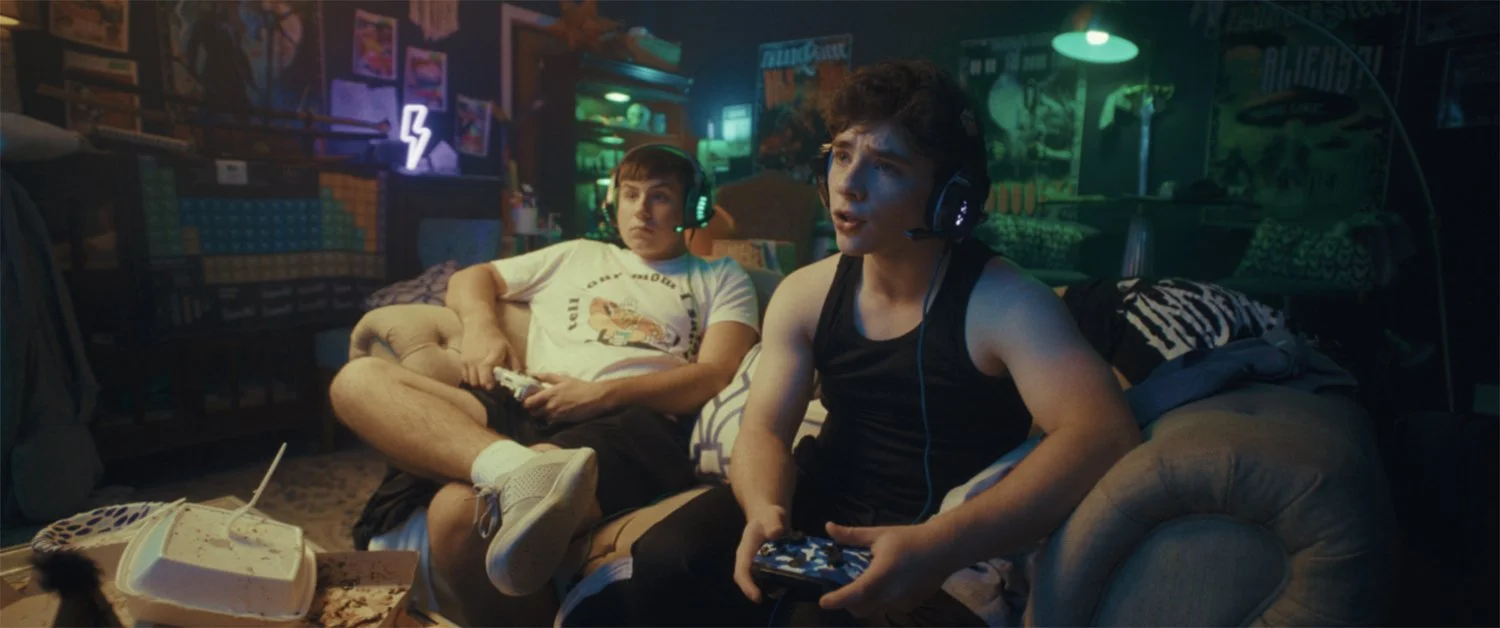
One of Brady’s greatest advantages was not just his personal connection to the story, but his long history with Atlas and Thompson. He had known both actors for nearly a decade, first meeting them through Camp Hollywood, a summer intensive where Brady worked closely with young performers. Over the years, he had already been writing in their voices and watching them grow. When the idea for Hacked took shape, casting them as brothers felt less like a decision and more like instinct.
“They’ve just actually been friends forever,” Brady said, pointing out that many viewers assume Atlas and Thompson are real siblings because of how natural their bond feels on screen. That familiarity became what Brady jokingly called a cheat code. By the time production started, he was not just directing them but collaborating with two people who had already helped shape the characters from early development onward. “Everything was geared specifically towards what they already were wildly effective as,” he explained.
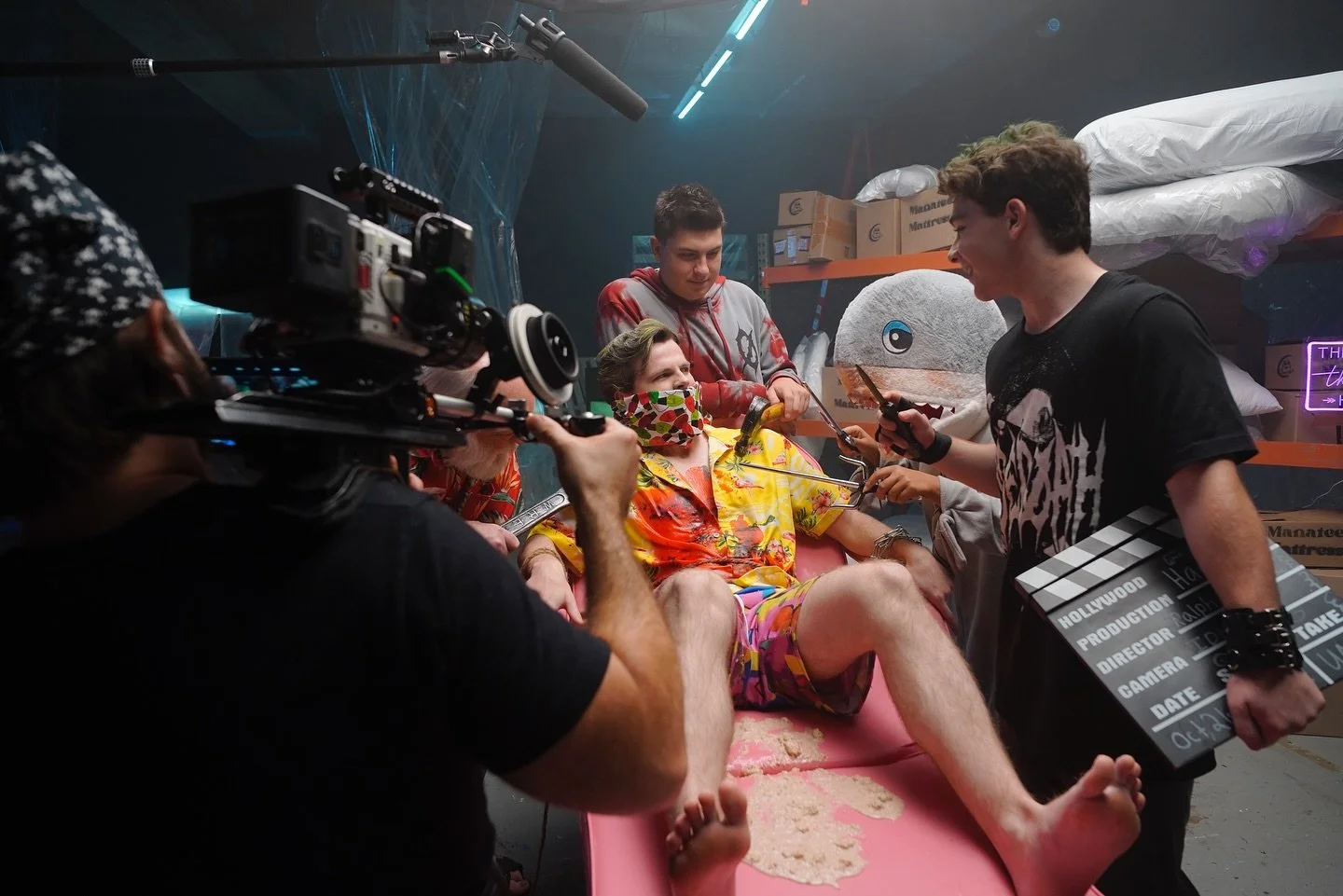
That ease translated directly to the set. For Thompson, the experience never felt like work in the traditional sense. “It never really felt like work,” he said. “It always felt like I’m just having fun with people I know.” Atlas echoed that sentiment, noting that the years of shared history made performing feel effortless. Their real friendship gave the film something that cannot be faked. As Atlas put it, watching the finished movie back, “it’s more of a real brother connection.”
Atlas’s character Ralph also allowed him to fold pieces of his real life directly into the performance. An MMA enthusiast who has trained and competed, Atlas leaned into the physicality the role demanded. “The character was also really like me,” he said, explaining that using weapons and engaging in fight choreography felt like second nature. Rather than building a persona from scratch, he and Thompson were able to showcase their actual chemistry and shared rhythm. “It was literally just us showcasing our relationship on screen,” Atlas said.
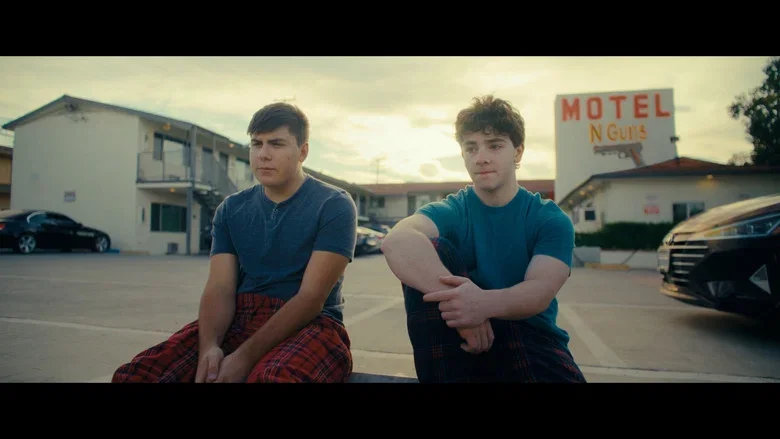
For Thompson, who plays Freddy, the emotional anchor of the film, grounding the heightened reality of Hacked required a surprisingly simple approach. “I looked at it like, this is now reality,” he said. Instead of treating the situation as exaggerated, he committed fully to how those emotions would feel if they were real. That commitment paid off most powerfully in the film’s most devastating scene, one that even caught Atlas off guard during filming. Atlas admitted the tears he shed were not planned. “Those were real tears,” he said, explaining that imagining the situation as something truly happening to him unlocked something raw and unexpected.
Brady was well aware of how pivotal that moment was, and he was fiercely protective of it. He recalled clearing the set of distractions and making sure the focus stayed entirely on Atlas and Thompson. “If the audience does not believe that these brothers are real, then we do not have a movie,” he said. For Brady, emotional authenticity was the steel frame holding together all the film’s insanity.
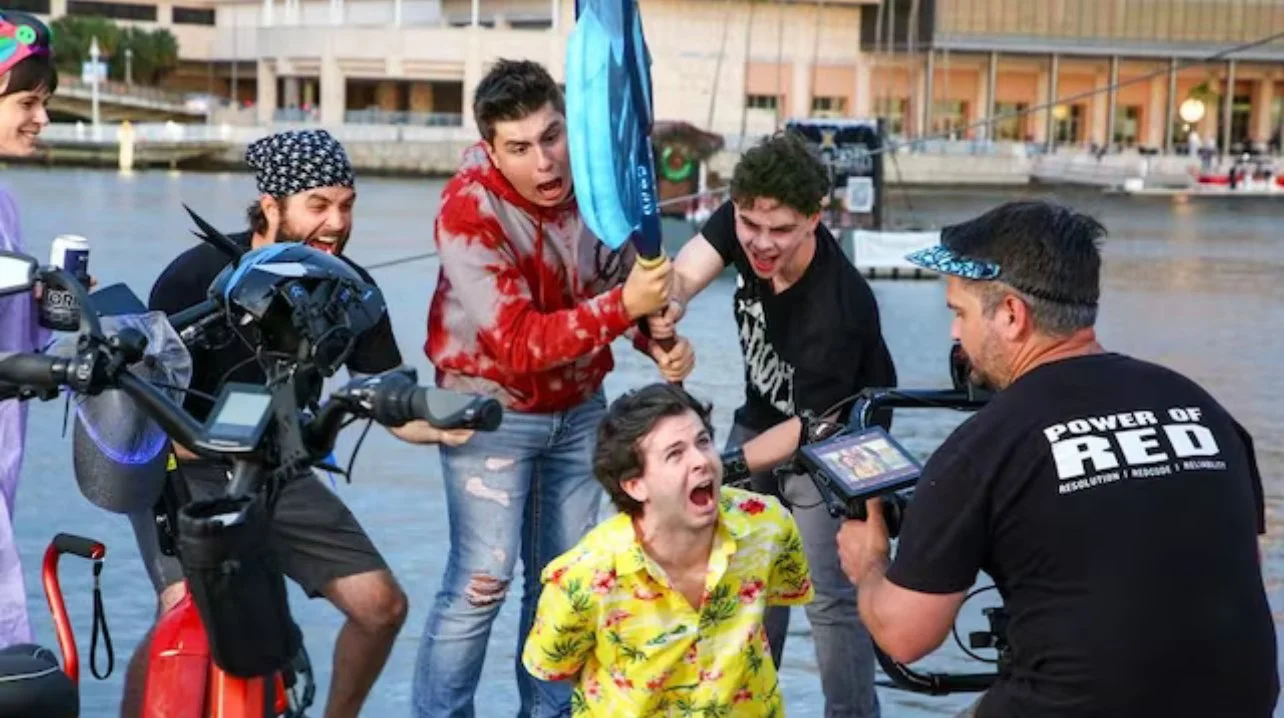
That philosophy extended to his directing style. Rather than asserting authority, Brady intentionally met Atlas and Thompson at their level. He described choosing to talk to them “like I’m 16 years old,” keeping the energy playful and loose so technical pressure would not crush the youthful bond he wanted on screen. Mistakes became jokes, takes became play, and the environment stayed alive. The result is a movie that never feels stiff, even when it swings wildly between comedy and grief.
The sense of family went beyond the three of them. Thompson described the set as “one big family,” a feeling reinforced by actors like Augie Duke, who played the mother of the family. Atlas called her “the sweetest person on set,” while Thompson described her presence as deeply maternal and grounding. Brady added that she delivered powerhouse performances even while severely sleep‑deprived, reinforcing the respect and admiration that permeated the production.
Ultimately, Hacked aims to be more than just a revenge story. Brady hopes it functions as a release valve for audiences who are exhausted, angry, and overwhelmed by the modern world. He talked about wanting to make a movie people could return to again and again, something that lets you laugh through frustration without living in negativity. Given how common cybercrime has become, he believes the timing could not be better for a film like this to connect.
For Thompson, the hope is simpler. He wants audiences to enjoy the ride. “I hope they enjoy my performance and get a laugh out of it,” he said. Atlas added that at its core, the movie is about family sticking together and overcoming chaos as a unit, something that resonates far beyond the screen.
After spending time with Brady, Atlas, and Thompson, it is hard not to feel that Hacked is a reflection of the people who made it. Loud, messy, honest, and full of heart. The film may be about being hacked, but its strength comes from something unbreakable. A group of people who trusted each other enough to turn real pain into something cathartic and, against all odds, a whole lot of fun.
Jessie Hobson