
There is a certain kind of filmmaker who makes work that feels less like content and more like communion. Movies that reach through the screen, grab you by the collar, and say, "Hey, you are not alone in this.” After spending time talking with Addison Heimann about Touch Me, it becomes clear that this is not just a byproduct of his filmmaking. It is the point.
Touch Me, which premiered at Sundance and marks Heimann’s follow-up to Hypochondriac, is a psychosexual horror comedy about co-dependent friendships, mental illness, and the dangerous allure of feeling better right now. On paper, it sounds unhinged. In practice, it is deeply personal, frequently hilarious, and surprisingly tender. That is because Heimann is not writing from a place of distance. He is writing from inside the experience.
When asked how writing Touch Me functioned emotionally, Heimann explained that it began as an attempt to look at his own pain from another angle. He said he wrote the film while grappling with a devastating friendship breakup, noting that those can often feel even more painful than romantic ones because of their longevity and emotional weight. Rather than approaching the story through the lens of diagnosis, he came at it sideways. “I didn’t set out to be like I’m going to write a movie about OCD,” he said. “I was writing a movie about a friendship breakup. That was my way in.”
That honesty runs through every frame of the movie. Touch Me follows Joey and Craig, two emotionally entangled friends who wind up at the compound of Joey’s ex Brian, an alien whose touch removes anxiety and depression. What begins as healing quickly curdles into something far darker. For Heimann, Brian was never just a sci-fi gimmick. He was the embodiment of the quick fix we all secretly want.
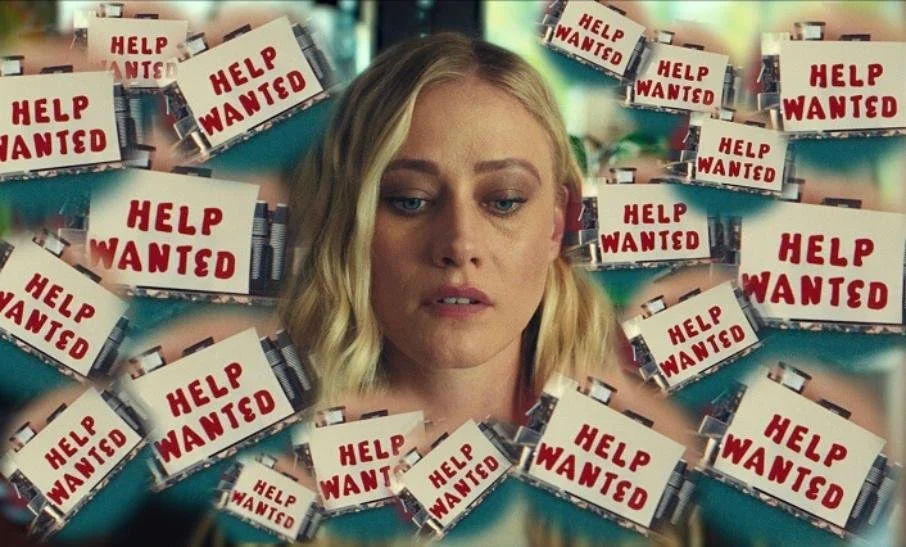
“Brian is the quick fix,” Heimann said. “Brian is the dragon that you’re chasing in order not to feel the things that you once needed to feel.” As he explained it, Brian can stand in for addiction, substances, abusive relationships, or any coping mechanism that promises instant relief without accountability. The entire film is built around the slow, painful realization that those shortcuts do not exist.
That theme mirrors Heimann’s own experience with exposure and response prevention therapy, a process that involves recontextualizing traumatic thoughts through imagination. It also explains the film’s wild tonal shifts. Touch Me moves effortlessly from comedy to horror to sincerity, sometimes within the same scene. This is not whiplash for the sake of provocation. It is a formal reflection of living with intrusive thoughts.

“That is just what it’s like to live with OCD,” Heimann said. “You’ll have the most traumatic thought in your brain and then immediately imagine something absurd. You make yourself laugh to deaden the nerve.” Rather than smoothing those contrasts out, Heimann leaned into them. He trusted the audience to follow him.
He also trusted his collaborators. One of the most meaningful creative partnerships behind Touch Me was with Justin Benson and Aaron Moorhead, who came on board as executive producers, with Moorhead also contributing VFX. Heimann met them while touring Hypochondriac and quickly formed a bond that went beyond industry networking.

“They really are people who put their money where their mouth is,” he said. “They’re the type of people who put the ladder back down when others have pulled it back up.” Benson and Moorhead offered practical story notes early in the writing process, particularly around horror tropes and when to subvert them, but their greatest contribution may have been the sense of solidarity they brought with them.
Their involvement also helped expand the film’s creative ecosystem. Through their Rustic Films network, additional crew members and artists joined the project, blending Heimann’s existing collaborators with a broader filmmaking family. “Together we collectively made a film by all of us,” he said. It is impossible to watch Touch Me and not feel that sense of collective authorship pulsing beneath the surface.

That communal spirit extends to how Heimann thinks about audiences. He is not chasing universal appeal. He is chasing connection. He openly acknowledged that some people hate the film, and he is more than fine with that. “I’d rather be loud and wrong,” he said, than safe and forgettable. What matters to him is reaching the people who feel seen by the chaos.
“I want to be somebody’s movie where they go, I feel seen for the first time,” he said, referencing cult touchstones that helped him feel less alone growing up. That impulse is deeply tied to his identity as a queer filmmaker telling stories about mental health through genre. Horror, for Heimann, is not an escape from reality. It is a way of heightening it until the truth becomes unavoidable.
As the conversation went on, what stood out most was not just Heimann’s insight, but his openness. He talks about therapy, medication, shame, executive dysfunction, and the daily difficulty of existing in a brain that does not always cooperate. He does it without irony or distance. Not as confession, but as invitation.

“It’s okay to struggle,” he said. “But we don’t need to suffer in silence.” That sentiment lingers long after the interview ends. Touch Me may be filled with alien seduction, blood, and absurd humor, but its message is brutally simple. There is no shortcut. There is no sexy alien. There is only the work. And the people willing to do it alongside you.
Spending time with Addison Heimann makes one thing clear. He is not just making movies about community. He is actively building one. And for anyone who has ever felt weird, broken, or alone, that might be the most radical thing of all.
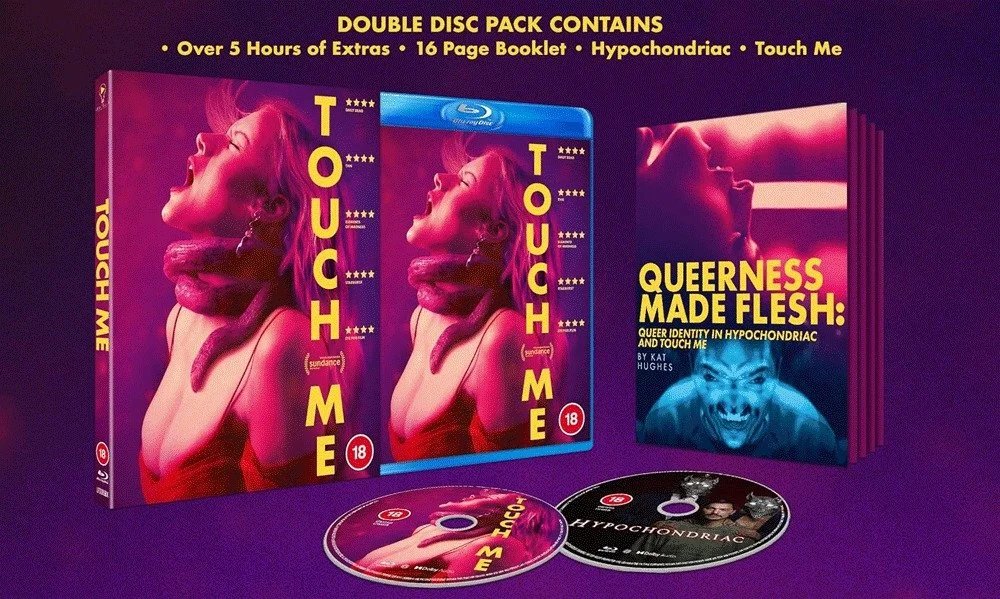
Set for release on Blu-ray and digital on 4th May, the limited edition Blu-ray includes Heimann’s debut feature Hypochondriac (2022) and an exclusive 16-page booklet “Queerness Made Flesh” written by horror critic and enthusiast Kat Hughes.
Jessie Hobson