
There is something immediately unnerving about Atropia, and not just because it takes place inside a fabricated country designed to help soldiers rehearse for war. Directed by Hailey Gates, the film understands that the strangest part of these simulations is not the fake buildings or staged violence, but the emotional labor required to keep the illusion alive. From that discomfort, Atropia builds a dry, frequently funny satire that slowly reveals a softer and more complicated center.

The premise is sharp. A fake nation constructed by the U.S. military becomes the setting for a love story between an aspiring actress, played by Alia Shawkat, and a soldier portrayed by Callum Turner, cast as an insurgent within the exercise. The line between performance and reality starts to blur, not in explosive ways, but in smaller, more unsettling ones. When real feelings creep in, the simulation does not collapse. It simply absorbs them.

Shawkat anchors the film with a performance that is both deeply funny and quietly unsettling. She shows off her range here, effortlessly shifting between smart-ass humor and moments where her face does most of the emotional work. Her character is not chasing fame so much as validation, and Atropia treats that desire as neither pathetic nor noble. It is simply another resource being exploited by a system that thrives on performance. Shawkat leans into awkwardness without begging for laughs and allows genuine tenderness to surface without undercutting the satire. The result is a performance built on timing, restraint, and an understanding that comedy and discomfort often sit side by side.

Callum Turner brings a low-key sincerity that works well opposite Shawkat, even if the romance itself feels underdeveloped. The film often pulls back on its humor to focus on their connection, but it rarely digs deep enough to justify that shift. What does this relationship actually give her? Why does she choose to exist inside this simulation at all? The movie has plenty of opportunities to explore her motivations and largely skips them, which can make her choices feel confusing. It almost plays as if pieces of her story were trimmed for time. Still, even with those gaps, Shawkat’s performance keeps the emotional thread intact.

The supporting cast adds texture and occasional bursts of chaos. Channing Tatum, reuniting with Shawkat after Blink Twice, is a genuine highlight. He has limited screen time but makes the most of it, delivering laugh-out-loud moments with surprisingly sharp comedic timing. Jane Levy, Tim Heidecker, Lola Kirke, Tony Shawkat, Zahra Alzubaidi, Chloë Sevigny, and others populate the fake nation with just enough personality to make the environment feel lived in, even as it remains fundamentally hollow.
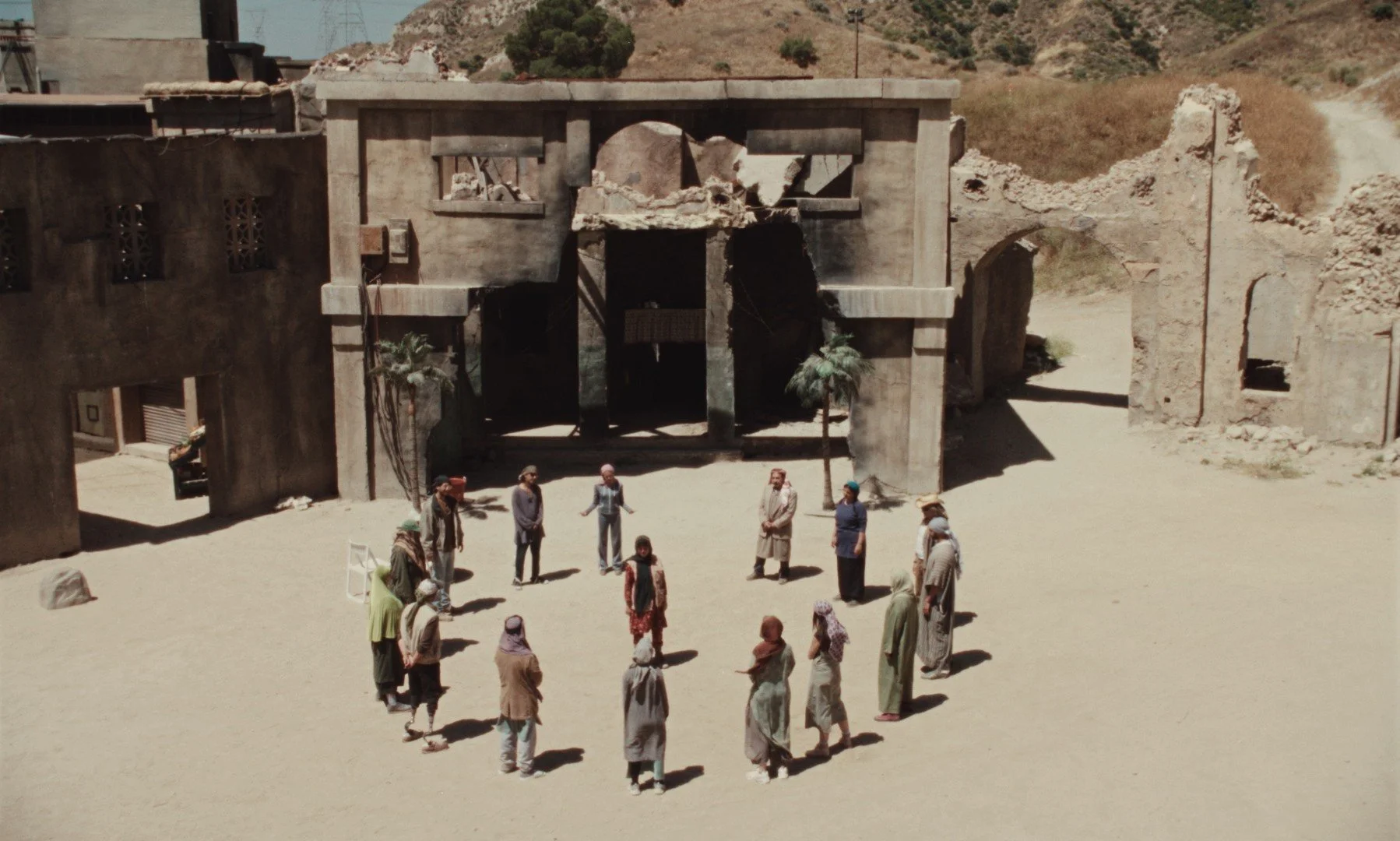
Visually and tonally, Gates shows impressive control for a feature debut. The film trusts the audience to catch the absurdity without underlining it. Scenes are allowed to breathe, conversations trail into uncomfortable silences, and jokes are sometimes left hanging rather than punctuated. That restraint is refreshing, especially for a satire dealing with militarism, performance, and exploitation. It never feels smug or overly moralistic, even when its critique is clear.

That confidence does occasionally work against the film’s momentum. There are stretches where the story hesitates to escalate, not because the scenes are dull, but because the narrative seems unsure how far to push its ideas. The trailer does not really do the film justice, as Atropia is more entertaining and emotionally affecting than it suggests, but it also promises a sharper narrative drive than the film ultimately delivers.
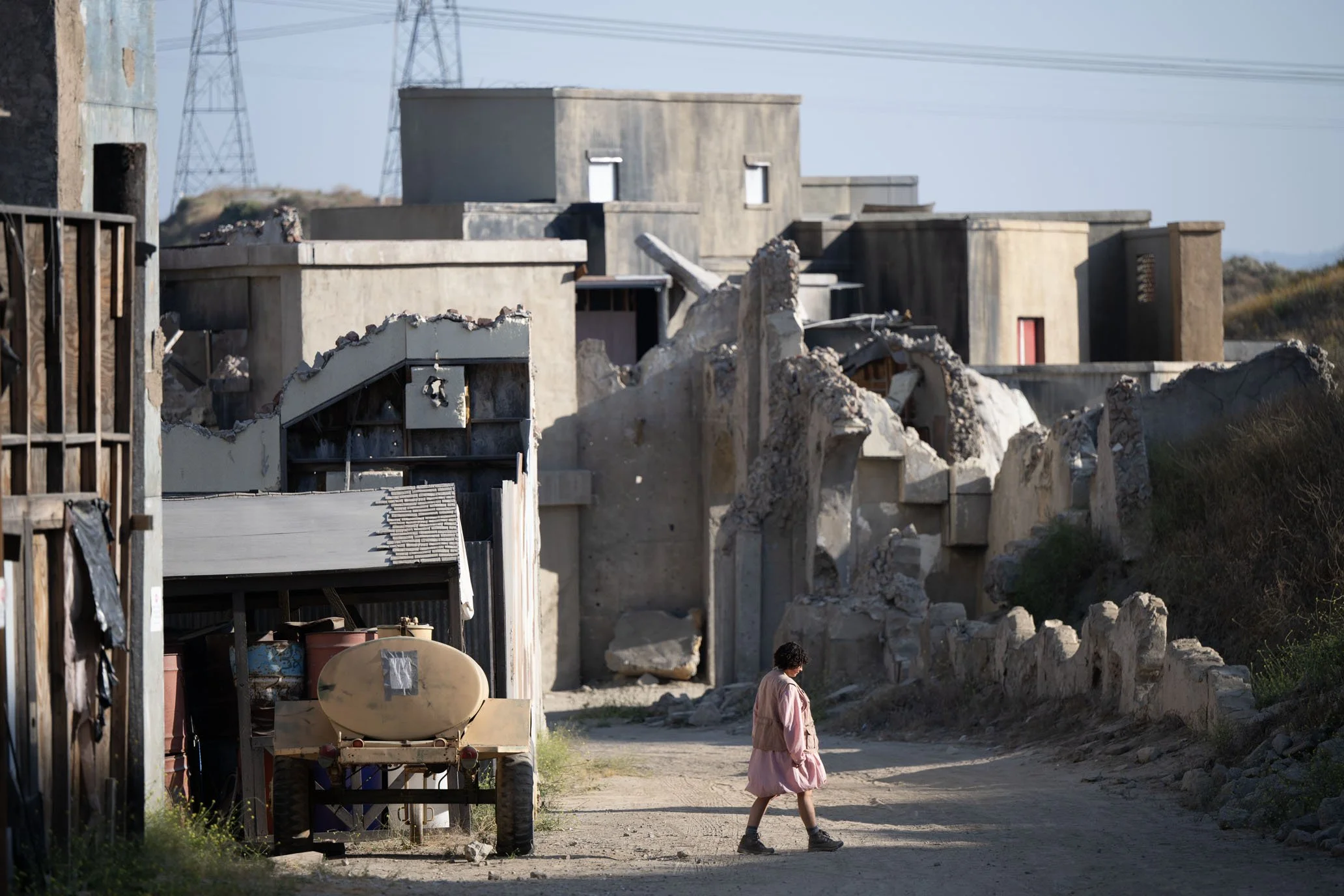
Still, when taken as a slice of life rather than a tightly wound satire, Atropia works. It packs an emotional punch, even if some of its edges feel sanded down. Gates has a clear voice, a strong visual sense, and a willingness to let discomfort do the heavy lifting. For a debut feature, that confidence goes a long way.
Atropia does not always explain itself, and it does not always need to. Its flaws are real, especially in how it handles character motivation and pacing, but its strengths linger longer. It is funny in unexpected ways, quietly unsettling, and anchored by a performance from Alia Shawkat that makes the film worth stepping into, even when the illusion starts to crack.
Jessie Hobson