
Canadian, Sniper is the kind of film that asks for patience and, for those willing to give it, quietly rewards that investment with something haunting and unexpectedly intimate. Flying largely under the radar upon its release, it deserves a second look as a deeply felt character study about PTSD, masculinity, and the uneasy silence that follows war.
Rather than functioning as a conventional thriller or war film, the movie is almost entirely inward-facing. It follows a decorated Canadian army sniper returning home after multiple tours overseas, attempting to reintegrate into civilian life while remaining psychologically trapped in combat mode. The film’s slow burn mirrors its protagonist’s condition, hyper-vigilant, emotionally withdrawn, and unable to re-enter a world that now feels alienating.
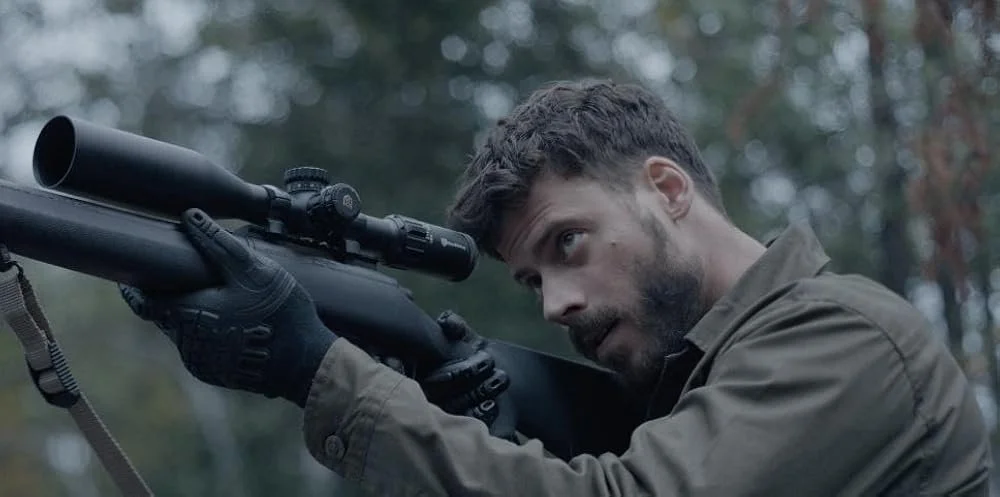
François Arnaud carries the film almost single-handedly, appearing in nearly every frame, and his performance is remarkable for its restraint. He internalizes his character’s anguish beneath a rigid mask of masculinity, conveying trauma through posture, routine, and silence rather than overt breakdowns. Seen now, the performance feels like a clear precursor to the work that would later make him a breakout star. It is subtle, disciplined, and quietly devastating. Watching him navigate everyday tasks, making coffee, hunting, wandering through familiar landscapes that no longer offer comfort, becomes increasingly tense as you realize how deeply his instincts remain wired for violence.
Director Michel Kandinsky’s approach is similarly restrained. His direction is assured without being flashy, favoring smart framing, deliberate editing, and a subjective sense of space that pulls us into the sniper’s fractured mental state. The film frequently places us inside moments where it is unclear what is real and what is imagined, reinforcing how conditioned the character is to expect danger even when none exists. There are genuinely striking cinematic images here, particularly in the Canadian wilderness, where beauty and threat seem to coexist in the character’s mind.
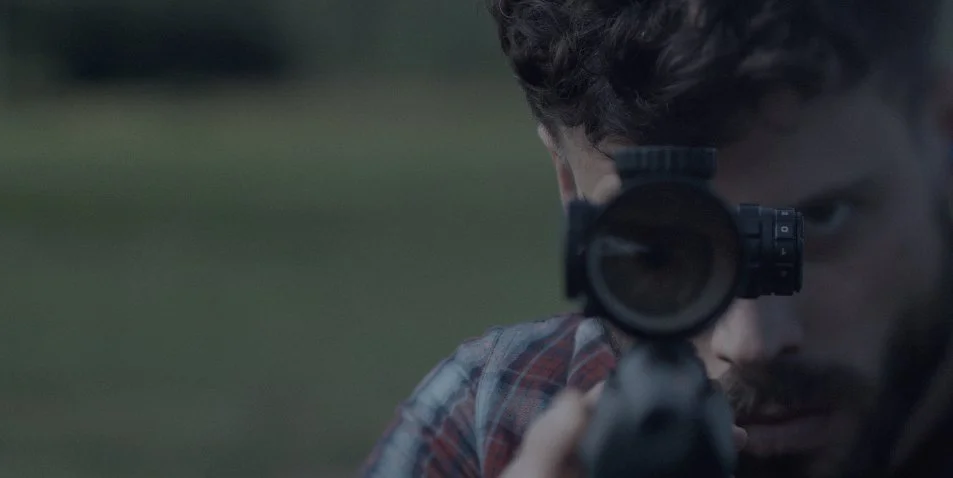
That said, Canadian, Sniper is not without its frustrations. The pacing is extremely deliberate, and at times the long, silent stretches risk testing even sympathetic viewers. Some scenes feel as though they linger beyond their emotional payoff, and narrative threads such as fleeting encounters with townspeople arrive and disappear without much development. The film’s minimalist approach, while thematically appropriate, can occasionally feel more withholding than illuminating.
Yet those very qualities will resonate strongly with viewers attuned to introspective, character-driven cinema. The absence of traditional urgency or catharsis feels intentional, reflecting the reality that trauma does not resolve itself neatly or dramatically. The film’s refusal to hit obvious notes ultimately reinforces its authenticity, as healing here is incomplete, uncertain, and deeply internal.
When Canadian, Sniper works, it works beautifully. Its quiet moments of observation, its refusal to sensationalize PTSD, and its unwavering commitment to interiority give it a haunting power. This is not a film that announces itself loudly, but for patient viewers, it offers a moving and unsettling portrait of a man who cannot stop fighting a war that no longer exists.
It may not be for everyone, but it absolutely deserves to be seen by a wider audience than it initially found.
Jessie Hobson