
No-See-Ums takes its time getting where it’s going, sometimes too much time, but when it finally decides to bite, it lands a surprisingly satisfying sting.
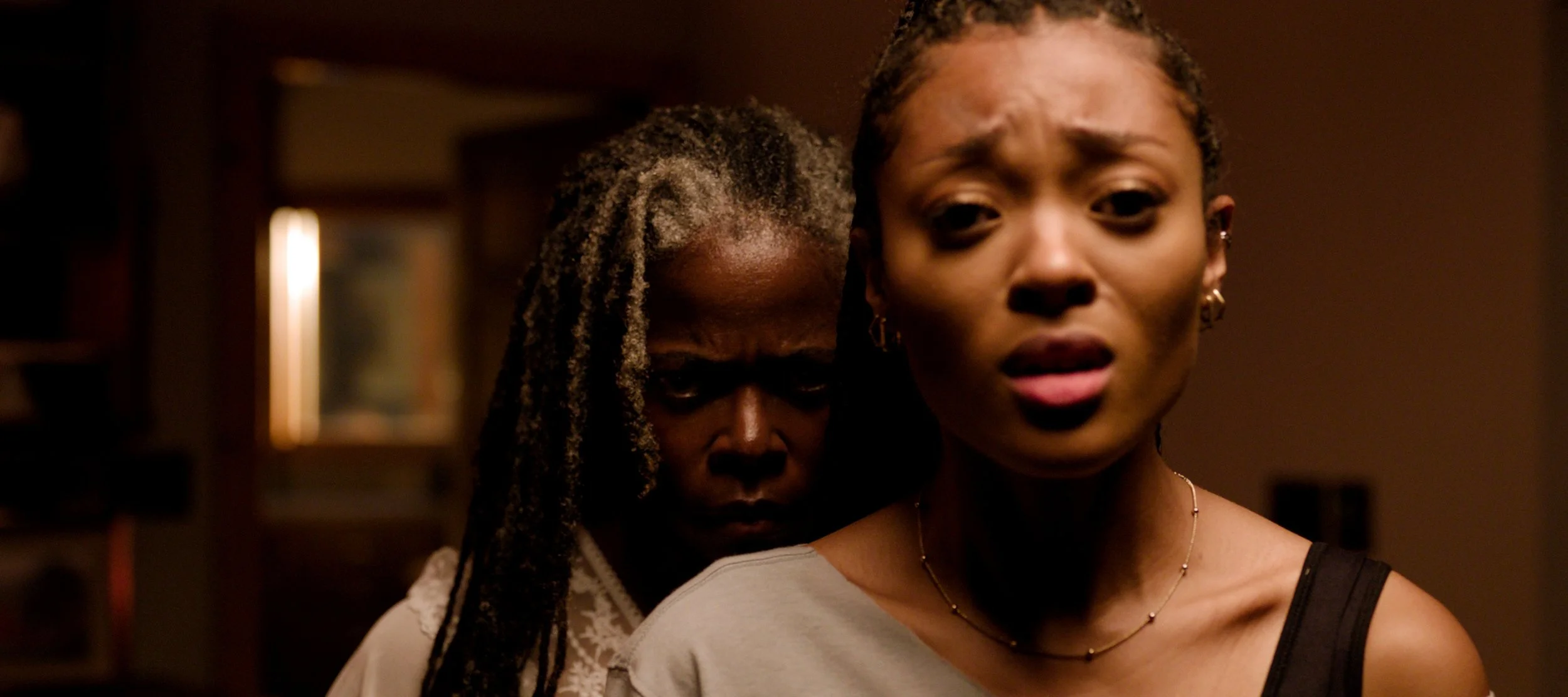
At first, this feels like familiar horror territory. College kids, spring break, a remote location, and the slow realization that something is very wrong. The setup is basic and padded with a fair amount of filler, but what helps sell it is the setting. If you’ve spent any time in Florida or driven through parts of Georgia, the landscape here feels uncomfortably familiar. Swamps, brush, humid stillness. It looks like somewhere you could accidentally end up just by missing a turn. That grounded realism makes the threat feel closer to home.
Then there are the no-see-ums themselves. Anyone who’s dealt with these tiny, relentless bugs knows how irritating they are, and the film smartly weaponizes that annoyance. A few flies are nothing. A lot of them is nightmare fuel. The movie sprinkles in creepy moments throughout the slow burn, and while the build takes patience, the unease is consistent.
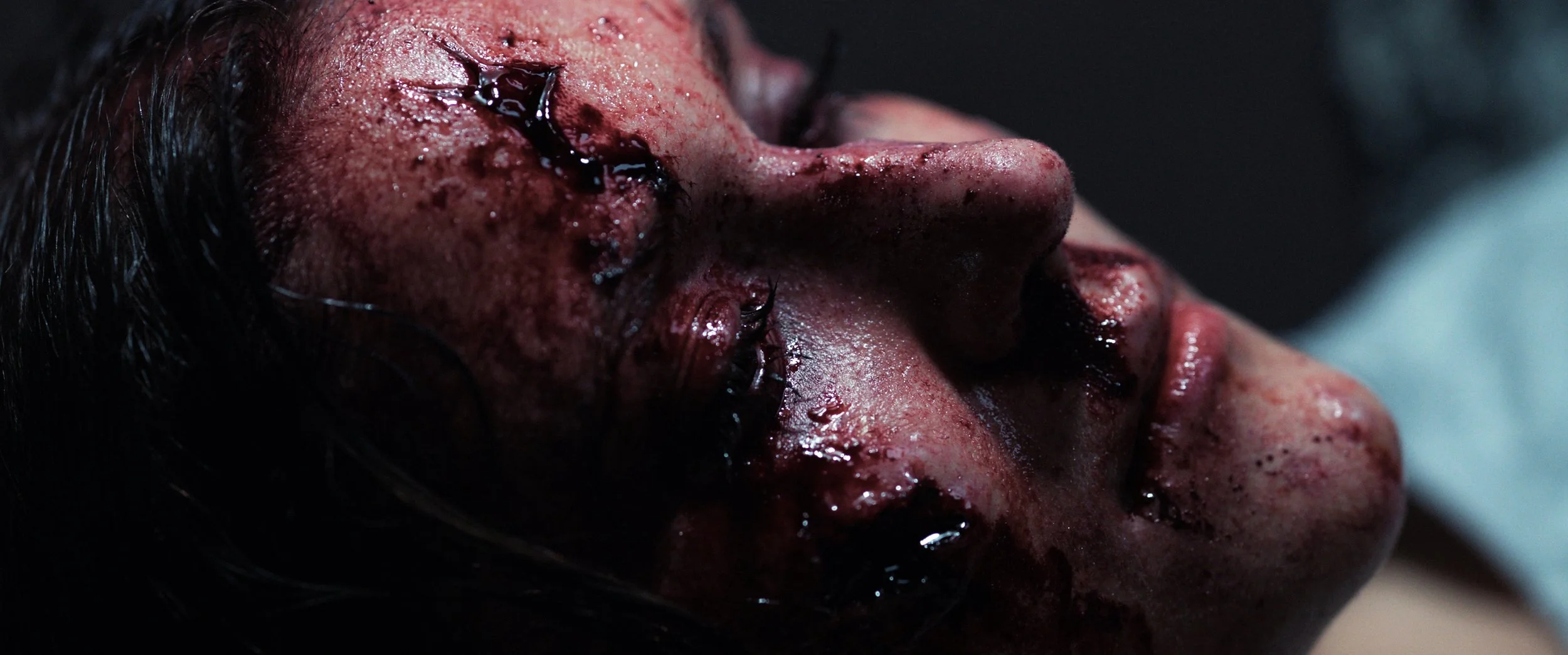
Ember’s friends are, frankly, annoying, but that works in the film’s favor. Horror thrives on friction, and the group dynamic feels authentic in a way that recalls genre staples where students casually debate ideas in class that end up playing out violently in real life. The characters may be grating, but they feel real, even if some are written as broad strokes rather than fully shaded people.
Performance-wise, the cast ranges from good to great. No one completely derails the film, and while there isn’t a breakout performance, the ensemble holds together well enough to keep the tension intact. The kills, when they come, are effective and clearly made with budget awareness. This is a movie that understands its limitations and works within them.
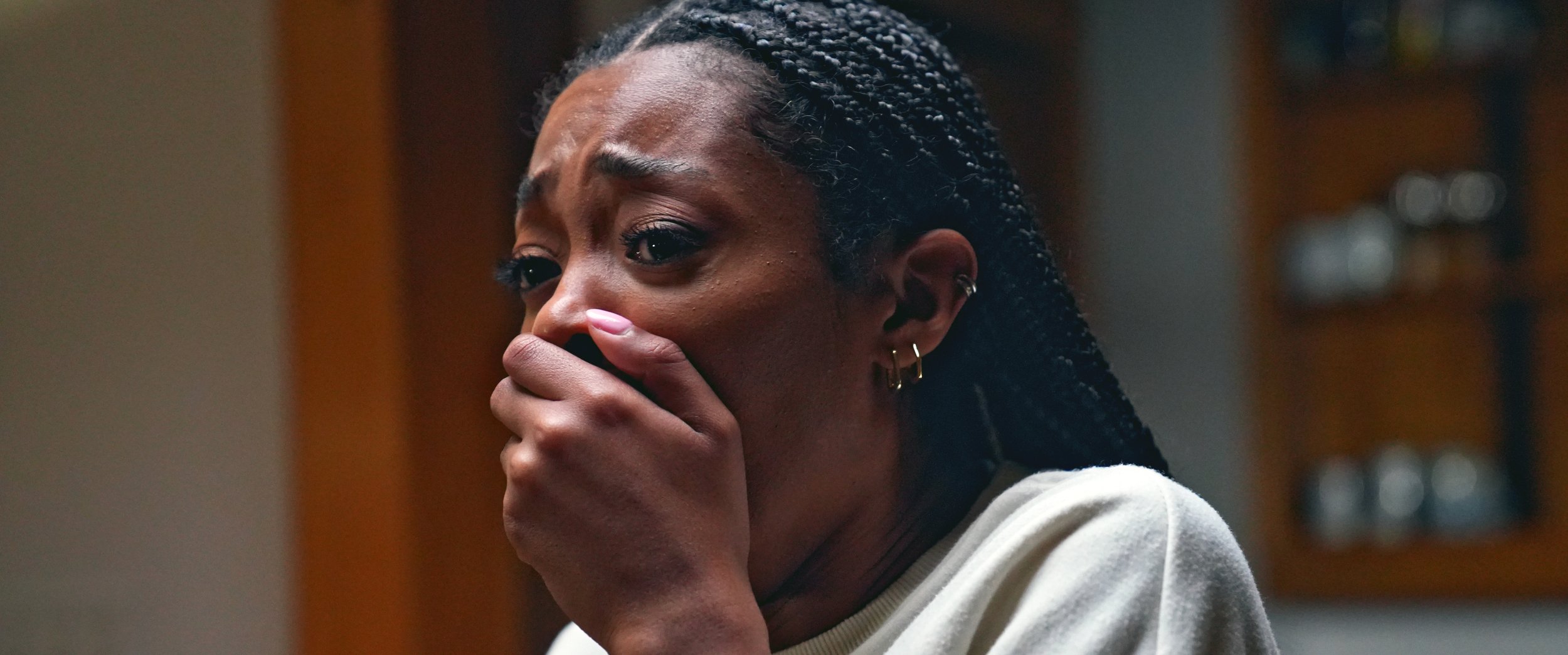
Visually, director and co-writer Raven DeShay Carter makes strong use of the environment. There are genuinely pretty scenic shots that contrast nicely with the growing sense of dread. Nature is both beautiful and hostile here, which fits the story’s themes even when the execution stumbles.
Where No-See-Ums becomes more divisive is in its messaging. The film gestures toward themes of race, land ownership, and privilege, but the commentary often feels less like subtext and more like a sermon. Ember’s powers, which echo Candyman-style mythology, are tied to ancestral land and historical wrongs, but the narrative leans into blunt symbolism instead of nuance. Characters outside Ember’s perspective are frequently reduced to one-dimensional stereotypes, making the moral framework feel oversimplified.
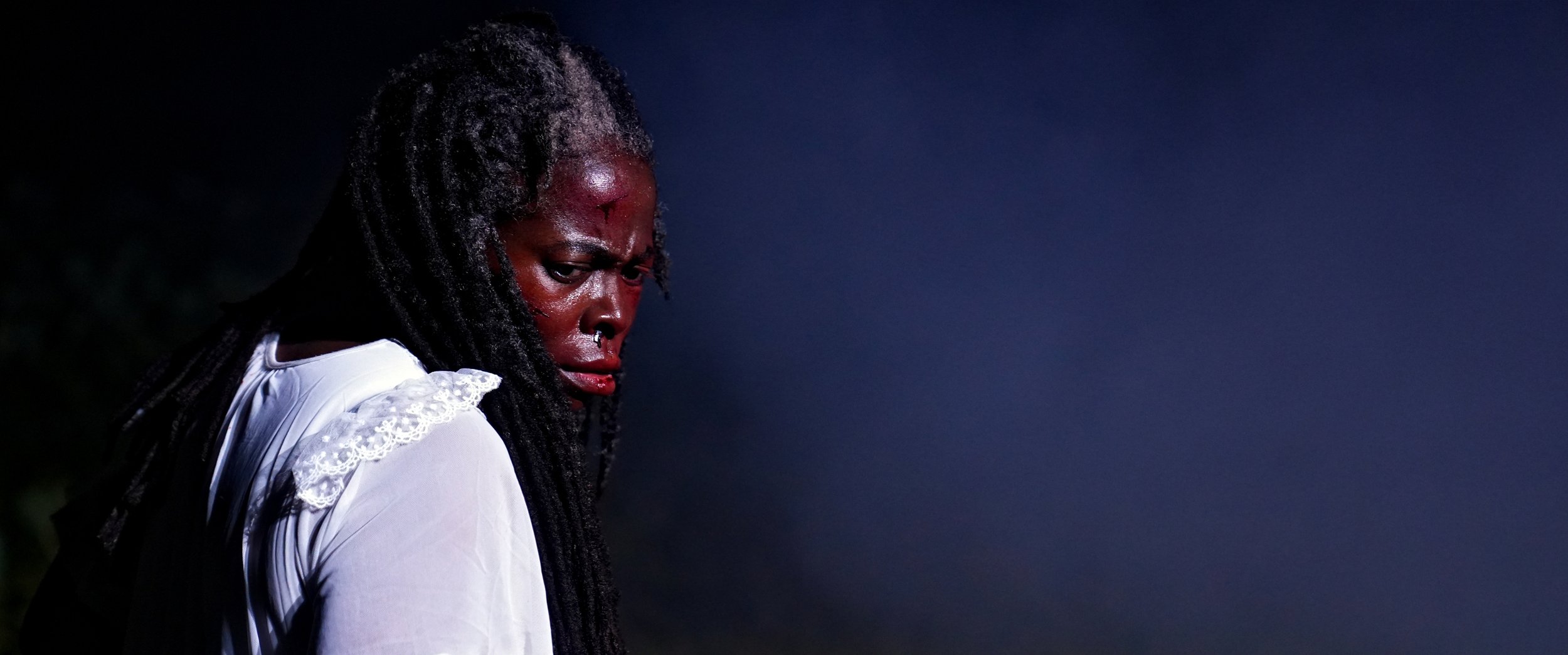
That said, the movie stands on its own. Despite surface comparisons to Candyman or Get Out, it is not trying to imitate either directly, and that independence works in its favor. You can see where the story is heading long before it arrives, but the journey is still engaging enough to justify the runtime.
And then there’s the finale. This is where No-See-Ums truly earns its keep. The slow burn pays off with a crowd-pleasing escalation that finally lets the title creatures fully take over. The payoff is big, messy, and oddly fun. It’s hard not to cheer as the film embraces its concept without hesitation.
In the end, No-See-Ums is not groundbreaking, and it doesn’t always say what it thinks it’s saying with much imagination. But it’s also not your typical young-people-partying-in-the-woods horror throwaway. It’s a flawed but entertaining indie horror film that knows exactly what it has and squeezes every drop out of it.
Jessie Hobson