
There is a quiet confidence that Barbara Crampton brings to Teacher’s Pet, one that comes not from dominance or spectacle, but from lived experience. In Noam Kroll’s restrained psychological thriller, Crampton plays Sylvia, a foster mother orbiting the film’s central conflict, reacting rather than driving, listening rather than confronting. It is a performance built on subtlety, and one that reflects exactly where Crampton is in her career right now.
“I had never been in a serial killer movie,” Crampton admits, noting that the genre genuinely unsettles her because of how close it sits to reality. “Some of the stuff you can kind of laugh about because it seems so fantastical, but these movies really scare me because I think that it really happens in real life.” That realism is what ultimately drew her to Teacher’s Pet, along with her longtime friendship with actor Luke Barnett and her admiration for writer-director Noam Kroll. “It was a serial killer movie that I didn’t have to get killed in, and I wasn’t the killer,” she says with a laugh, before adding that the role offered something she welcomed. “It was more naturalistic, more of a psychological thriller.”
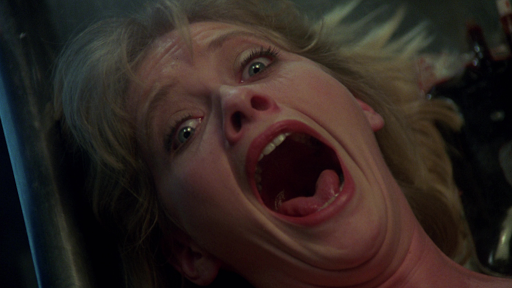
Crampton is best known for larger-than-life genre performances, from Re-Animator and From Beyond to later cult favorites like You’re Next. But Teacher’s Pet deliberately pulls in the opposite direction. Sylvia is not an action taker. She is reactive, cautious, and often overwhelmed by the emotional dynamics of the household she is trying to hold together. “I think my character was more of a reactionary character than anybody that was taking action,” Crampton explains. “So I really practiced my listening skills, just hearing them and reacting off everyone else.”
That choice is central to why Sylvia feels so real. She is not positioned as a moral compass or a genre archetype, but as a woman navigating competing responsibilities. She loves her foster children, struggles with a difficult husband, and fails to fully grasp the danger forming around her. Crampton was intentional about that limitation. “I purposely made her not that evolved as a person,” she says. “Not that she wasn’t smart, but she just wasn’t self-actualized. She loved those girls, and for what it’s worth, loved her husband, but she just didn’t really understand the world or the ways of the world.”
It is a quietly devastating choice, and one that aligns with the film’s broader themes about institutions and adults failing the young people in their care. Teacher’s Pet frames mentorship as something that can easily curdle into control, and Crampton acknowledges how personal that idea can be. “We all have stories like that,” she says. “If you think back to your childhood, I’ve had incidents where I felt like some adults were trying to take advantage of me. That’s why parents have to be vigilant and really tune in to their children.”
What makes Crampton’s current run of work so compelling is how carefully chosen it is. In recent years, she has delivered standout performances in films like Suitable Flesh and The Last Stop in Yuma County, both of which feel sharply tuned to her strengths while still pushing into new territory. She is keenly aware of the trust her name carries with genre audiences. “I’m really careful about what I say yes to, especially at this point in my career, because I don’t need to work anymore,” she says. “I care about my legacy. I turn down more stuff than I say yes to.”
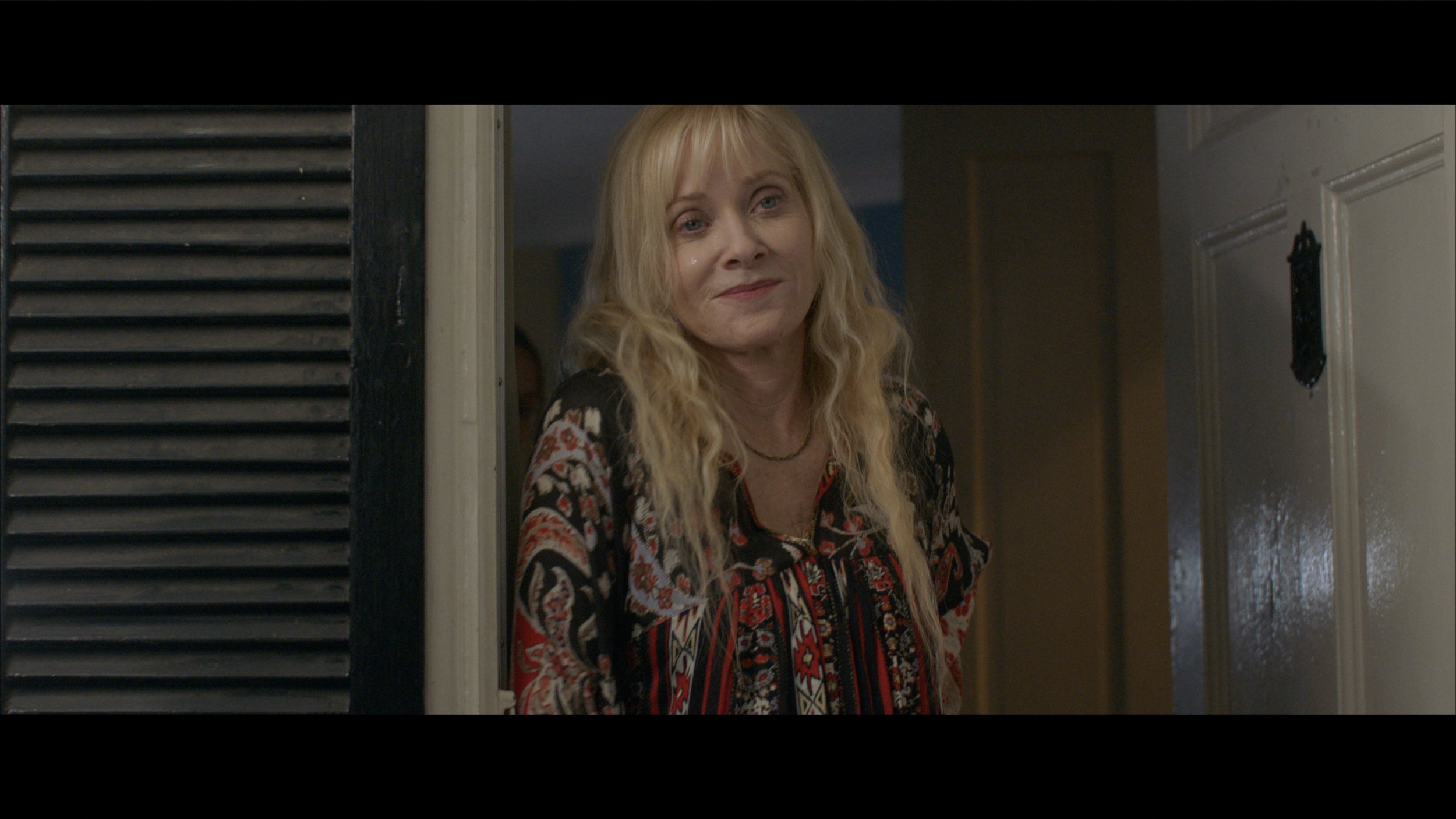
That selectiveness is paying off. Watching Teacher’s Pet, it is clear that Crampton’s presence signals not just quality, but intention. She recognizes that herself, even if she downplays it. “I felt really good about doing Teacher’s Pet,” she says. “When I watched the movie, I just thought all the performances were so great. Michelle was so real and natural and believable. I was really proud.”
There is also a sense of joy in how Crampton talks about this phase of her career. “I really like the second half of my career very much,” she says. “I’m able to really enjoy it now in a way that maybe I wasn’t when I was a struggling actor. I enjoy working with creative people. I enjoy working with young people. I’m still having a good time.”
That enjoyment does not mean playing it safe. If anything, Teacher’s Pet is unsettling by design, and Crampton embraces that. “Films evoke different emotions in different people,” she explains. “This psychological thriller is emotionally disturbing and very affecting. Horror has all flavors. It can scare you, it can make you think, it can rattle you. That’s probably why we love it, because it helps us feel emotions that we’re too afraid to share in real life.”
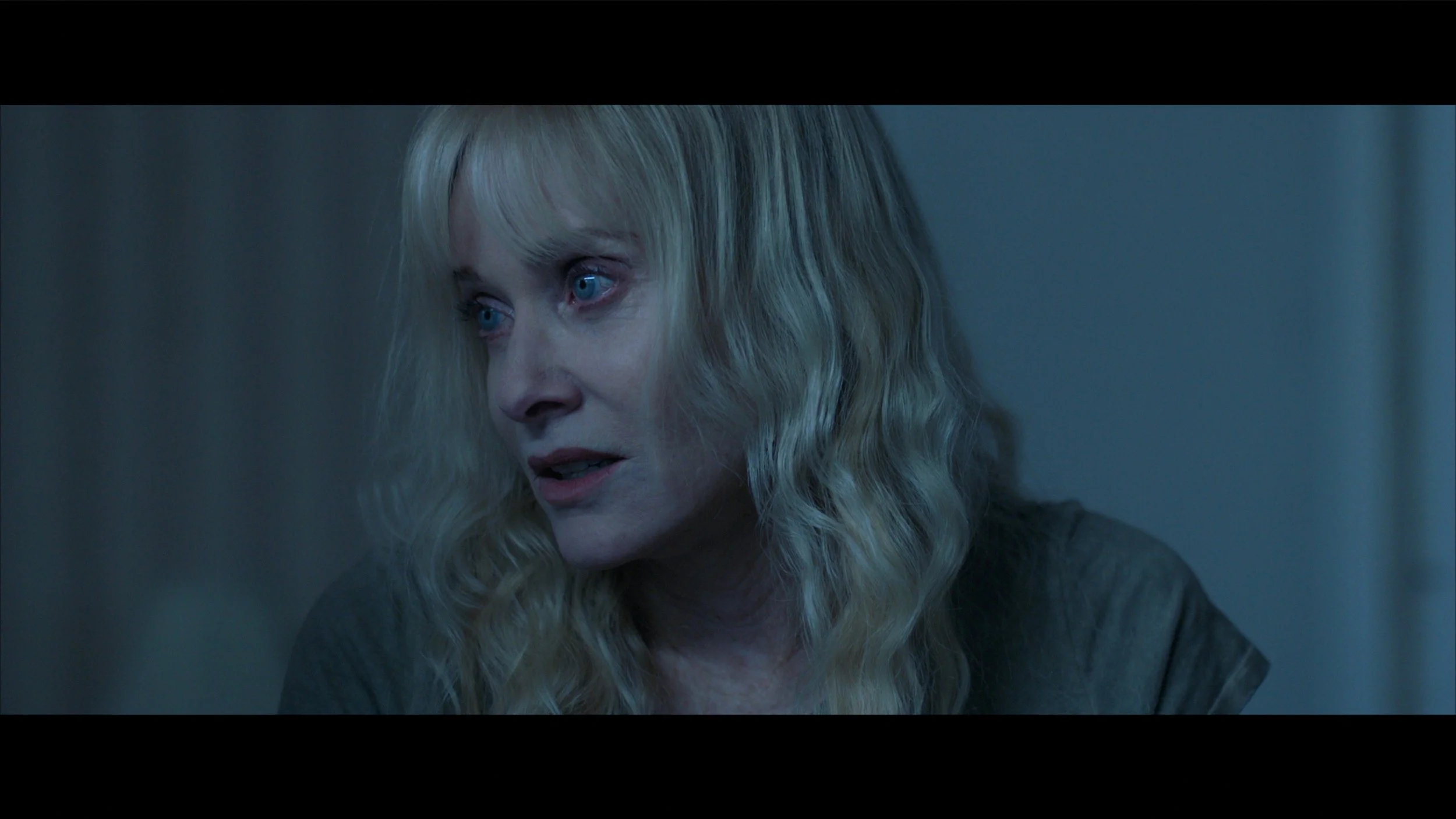
Sylvia may live on the edges of Teacher’s Pet, but Barbara Crampton remains very much at the center of modern genre filmmaking. Still evolving, still challenging herself, and still choosing projects that matter, she proves once again that legends do not coast. They adapt.
Jessie Hobson