
There is something deeply comforting about a back-to-basics slasher. No elevated grief metaphors. No three-hour arthouse detours. Just a bad decision, a creepy house, and a rising body count.
It is horror stripped down to its skeleton. You know the rules. Someone ignores the warning. Someone takes the money. Someone says, “It will be fine.” And it absolutely will not be fine. There is a rhythm to it that feels almost nostalgic. Setup. Tension. First kill. Regroup. Bigger mistake. Blood everywhere.
In an era where horror often feels obligated to unpack generational trauma and existential dread all at once, there is a certain honesty in a film that just wants to trap a handful of people in a bad place and see who makes it out. Slashers are blue-collar horror. They punch in, do the job, and punch out. They are about consequences, curiosity turning into catastrophe, and the simple terror of being in the wrong place at the worst possible time.
A back-to-basics slasher does not pretend to be smarter than you. It does not need a monologue explaining what the monster represents. The monster represents death. The house represents danger. The bad decision represents the moment everything tips. And when it works, it taps into something primal. A creaking staircase. A hallway that feels longer than it should. Footsteps that are not yours.
That is exactly the lane What Lives Here is driving in.
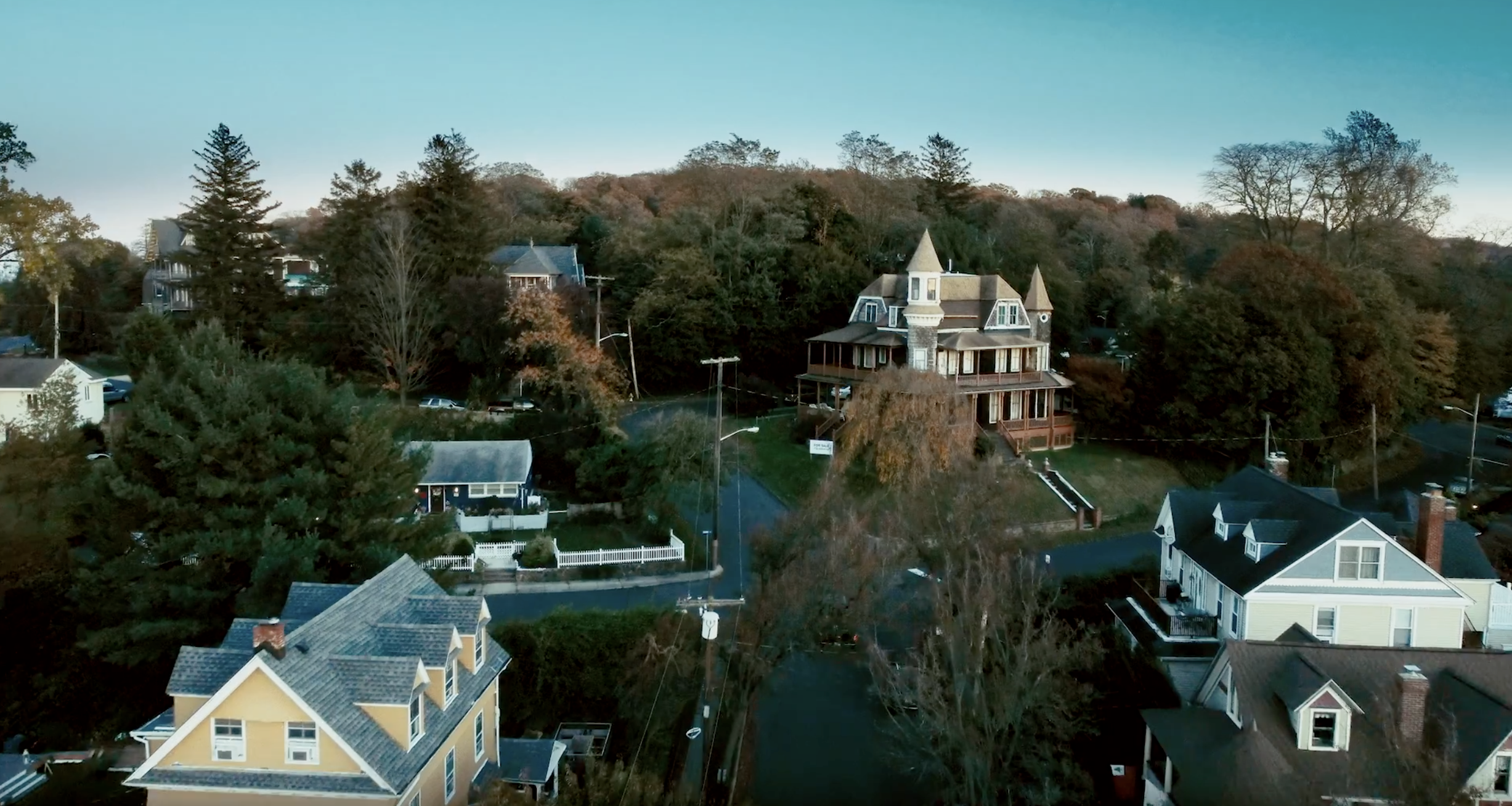
Directed by Troy Burbank, the film opens with a brutally effective cold open. An elderly woman in the looming Edwards Mansion in Atlantic Highlands, New Jersey, is murdered in her sleep in a way that is vicious enough to grab your attention immediately. It is mean, messy, and confident. You are either in, or you are not.
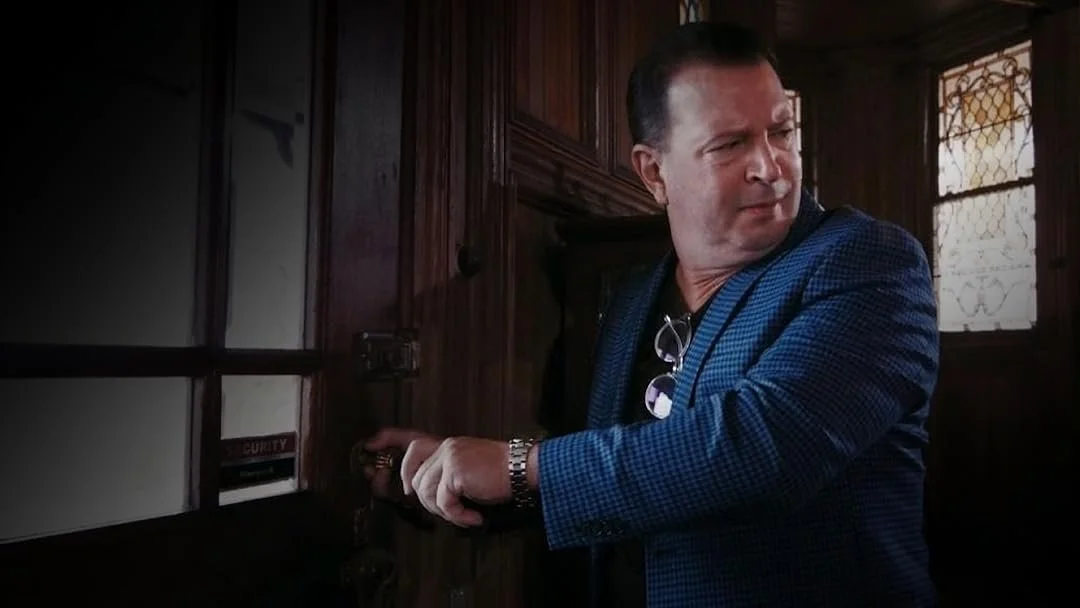
From there, we shift into blue-collar territory. Realtor James Collins, played with just the right amount of smug power trip energy by Christian Keiber, hires an out-of-state junk removal crew to clear the mansion so he can flip it fast. He avoids the locals because of the house’s reputation and instead brings in Lee Duncan, played by Jeff Swanton, who horror fans may recognize from 100 Acres of Hell.
Lee and his six-man crew are promised double pay, food, and accommodations. Naturally, everything goes sideways before they even get started. Motel reservations are botched. Weekends are sacrificed. The crew is grumpy. And before long, they are bunking inside the very mansion they are supposed to empty.
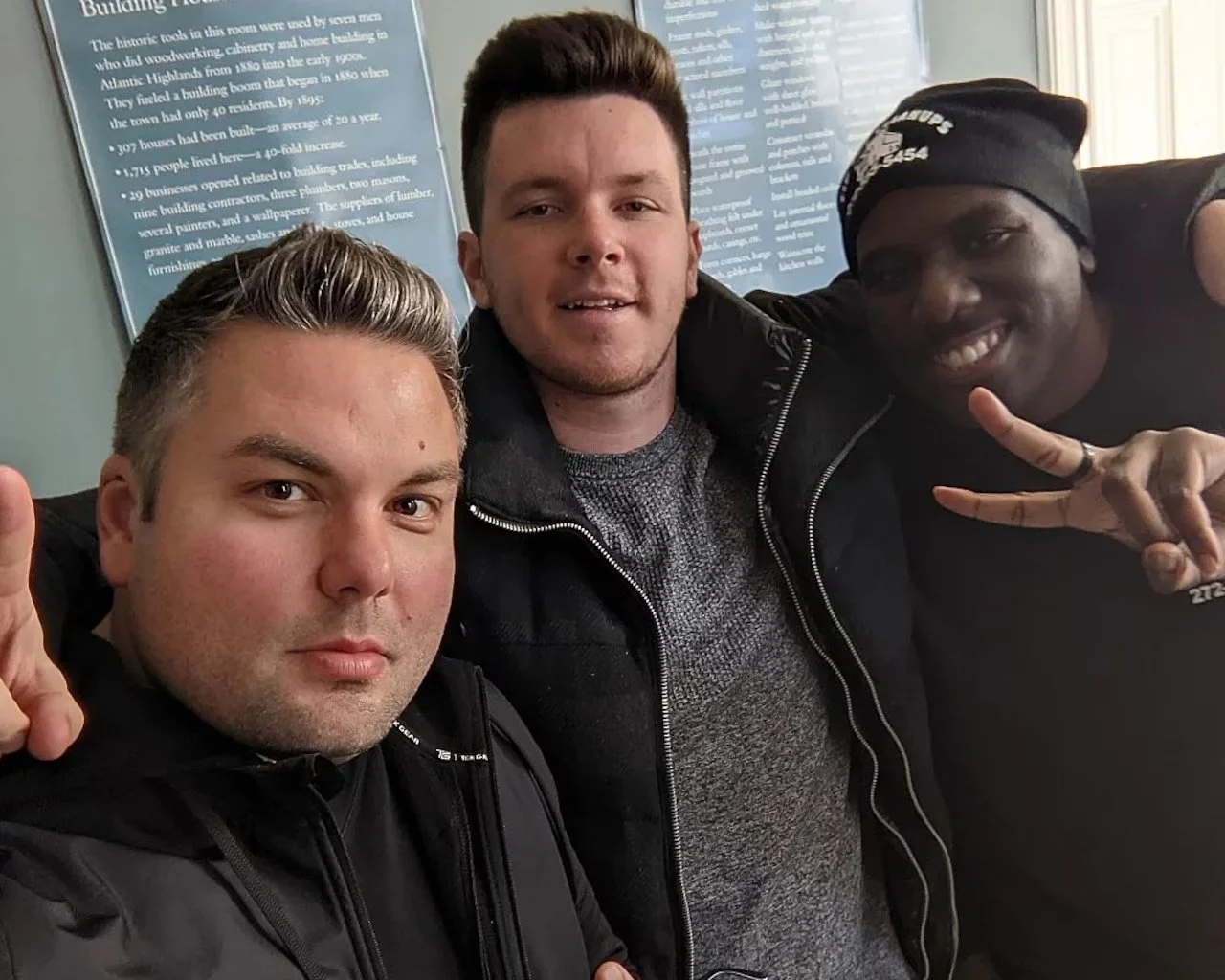
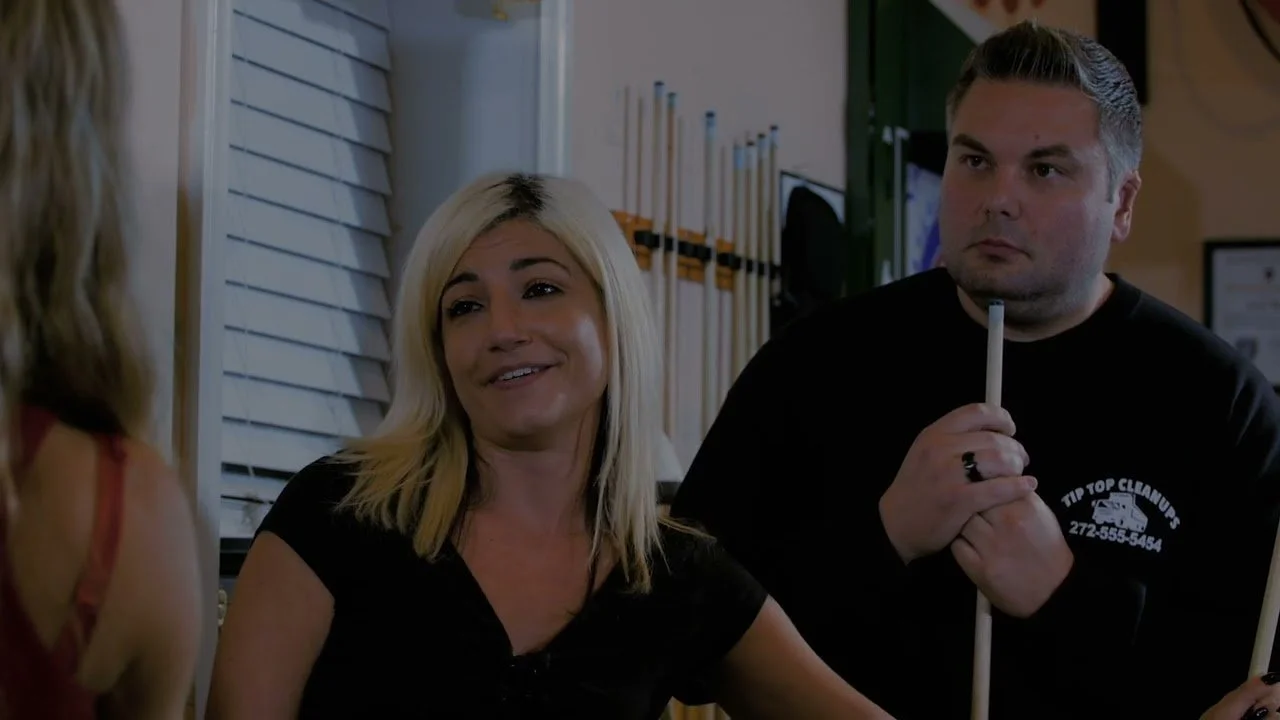
The setup takes its time. Almost too much time. There is a stretch where the movie is clearly finding its footing, leaning heavily into banter, bar scenes, and lore drops about deformed daughters and past atrocities. Not all of the dialogue sparkles. Some of it feels exactly like guys at work talking like guys at work. But strangely, that grounded, sometimes messy energy works in the film’s favor. The actors often feel less like polished performers and more like actual tradesmen who got roped into a horror movie by a friend. It adds texture.
And then, right around the midpoint, the killing kicks back in.
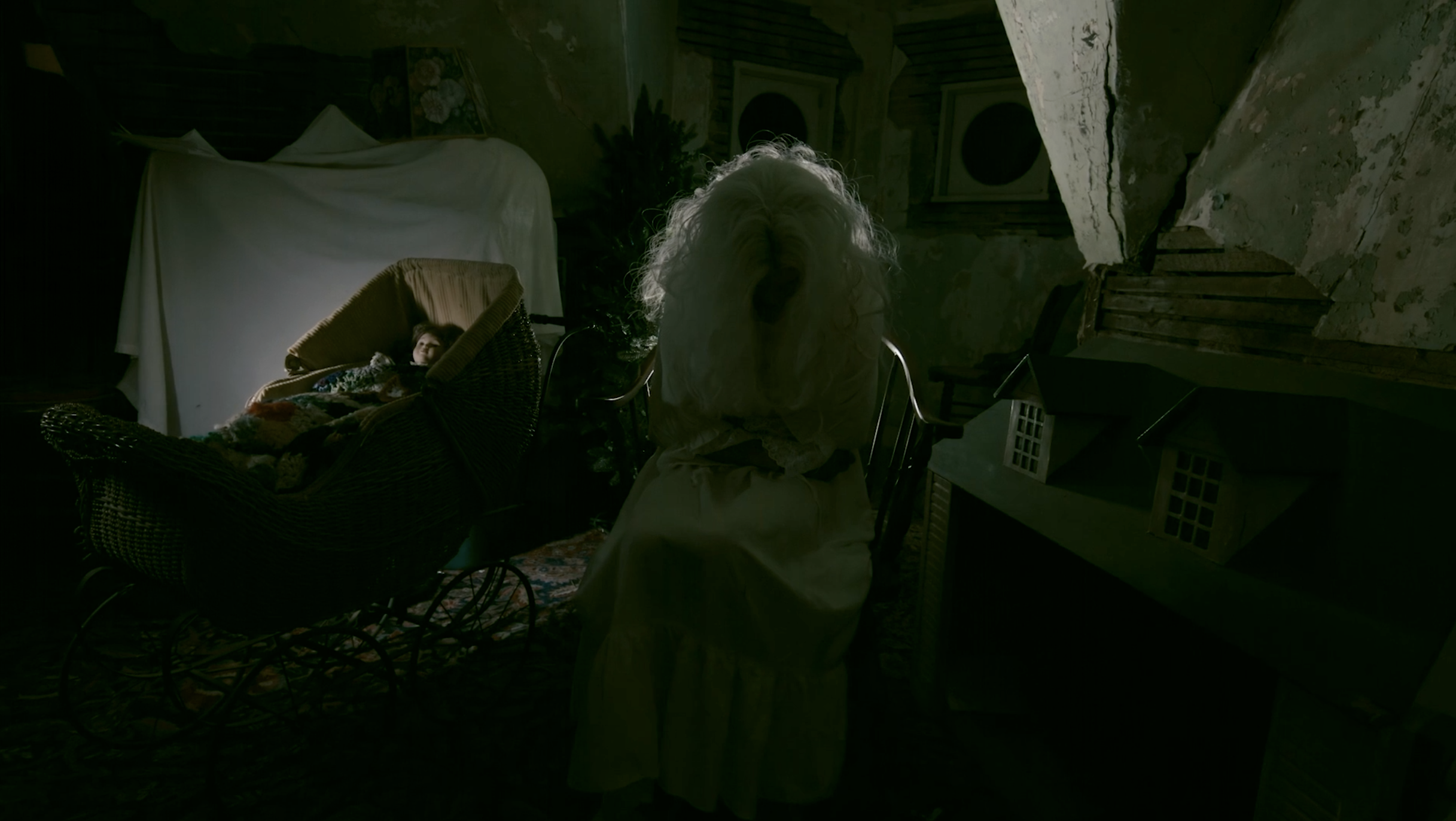
The house itself is a huge asset. Filmed at the real Strauss Mansion Museum, it brings a level of production value you do not usually see in a microbudget slasher. The antiques, the long hallways, and the looming staircases all give the film scale. You can see where some of the drone shots try a little too hard to emphasize that scale in the opening credits, but once the action settles inside, the location does the heavy lifting.
The cast is stacked with familiar faces for genre fans. Ernest O'Donnell shows up and is instantly recognizable if you grew up on Clerks or Chasing Amy. Ming Chen pops in for a brief but memorable appearance. There is even a fun cameo from Ron Millkie, known to horror diehards from Friday the 13th.
The body count is high, and the kills are gleefully over the top. The violence is senseless, messy, and occasionally so exaggerated it loops back around to being funny. A few chase scenes border on absurd in the best possible way. One particular sequence involving a heavier set character running from the killer manages to be both tense and unintentionally hilarious. The practical effects are solid, especially considering the reported microbudget. They lean into that tasteless, low-brow 80s slasher vibe and own it.
Is it perfect? Not even close.
There are a lot of characters, maybe too many, and it can be tough to keep track of who is who. Some logic gaps will make you shake your head. A few character decisions are so questionable that they feel like they were written purely to push someone toward their doom. And yes, the film lacks deeper substance. It is not trying to reinvent horror.
But here is the thing. Even when you catch yourself rolling your eyes, you are still watching. That says something.
There is charm here. Real charm. The pacing improves once the blood starts flowing, and the score adds a surprisingly cinematic layer. SModcast Productions’ involvement gives it a little indie credibility boost, but this is very much a grassroots horror effort. You can see the budget on screen, yet that scrappiness becomes part of the appeal.
Jeff Swanton anchors the film well. He brings a grounded presence that keeps things from completely flying off the rails. The film sprinkles just enough breadcrumbs about the mansion’s twisted past to keep the mystery alive, and there is a decent little twist that adds an extra punch.
At 86 minutes, What Lives Here never overstays its welcome. It feels like one of those forgotten 80s slashers you would have stumbled across on VHS at a rental store and ended up weirdly loving despite its flaws.
It is currently streaming on Tubi, and honestly, it is better than a lot of what you randomly click on there.
Not the cleanest execution. Not the smartest characters. But good pacing, fun kills, a great location, and enough camp to make it memorable.
If you are in the mood for an offbeat, microbudget slasher with blue-collar energy and a mean streak, What Lives Here is absolutely worth clocking in for.
Jessie Hobson