
The Mortuary Assistant arrives with a lot of weight behind it. Based on the cult-favorite horror video game and backed by Epic Pictures and Dread, the Shudder-bound adaptation positions itself as an “authentic” translation of one of gaming’s most unnerving experiences. Directed by Jeremiah Kipp (Slapface), the film is undeniably crafted with care, atmosphere, and a clear respect for its source material—even if it doesn’t always justify its own existence outside of that shadow.
The setup is simple and effective. Rebecca Owens (Willa Holland), a newly certified mortician, takes a night shift embalming bodies alone at River Fields Mortuary. As the hours stretch on, disturbing events escalate, demonic rituals come into focus, and Rebecca’s own buried trauma begins to surface. It’s a familiar framework, but one that benefits from its contained setting and commitment to sustained unease.
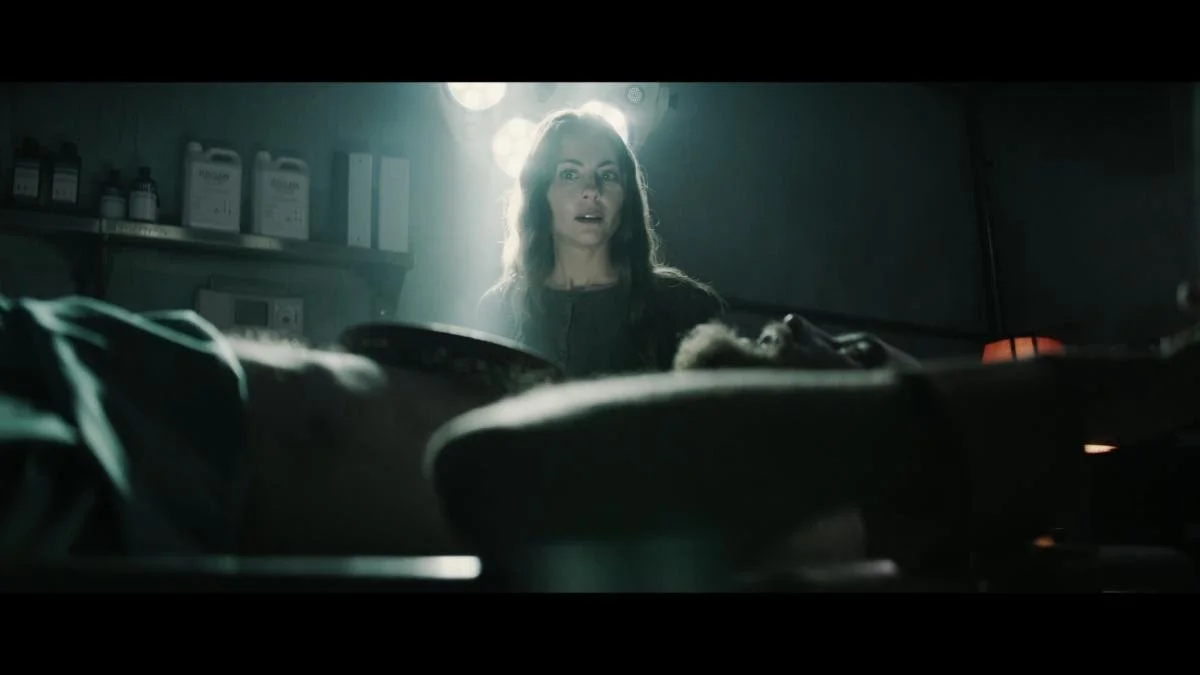
Visually, the film is doing real work. The mortuary environments feel lived-in and tactile, likely because so much of it is practical. The set dressing, lighting, and overall production design ground the film in a reality that makes the supernatural intrusion feel invasive rather than theatrical. There’s a persistent gray and blue color palette that drains warmth from the frame, giving the film a somber, almost funereal tone. Everything feels heavy, muted, and weighed down by grief, which works in the film’s favor when it’s leaning into atmosphere.
Kipp’s framing choices often nod toward survival horror without turning the movie into a gimmick. Several shots are framed from low angles or tight perspectives, subtly echoing video game language and reinforcing Rebecca’s vulnerability. It’s an effective way of reminding the audience where this story comes from while still functioning cinematically.
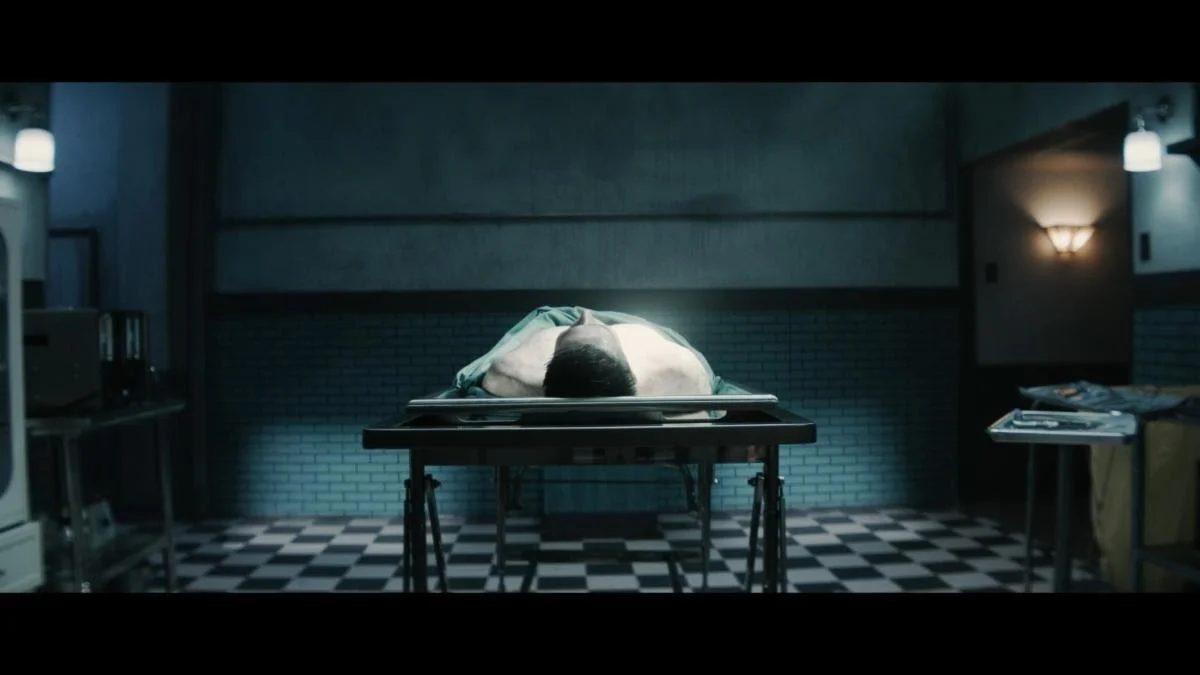
The embalming scenes are where The Mortuary Assistant makes its boldest statement. These moments lean hard into practical effects, and they’re as impressive as they are disgusting. Staples, exposed organs, and invasive procedures are presented without flinching. It’s uncomfortable, tactile, and immediately establishes that the film means business. For some viewers, this will be a highlight. For others, it may be a test of endurance.
Sound design and score play an interesting role in shaping the film’s mood. Rebecca often prepares bodies to melancholy lo-fi music, a choice that humanizes the routine and adds an unexpected emotional texture. Elsewhere, the film relies heavily on tones, ambient noise, and thunder to maintain tension. It works more often than not, though the constant sense that something is about to happen can eventually blur together.
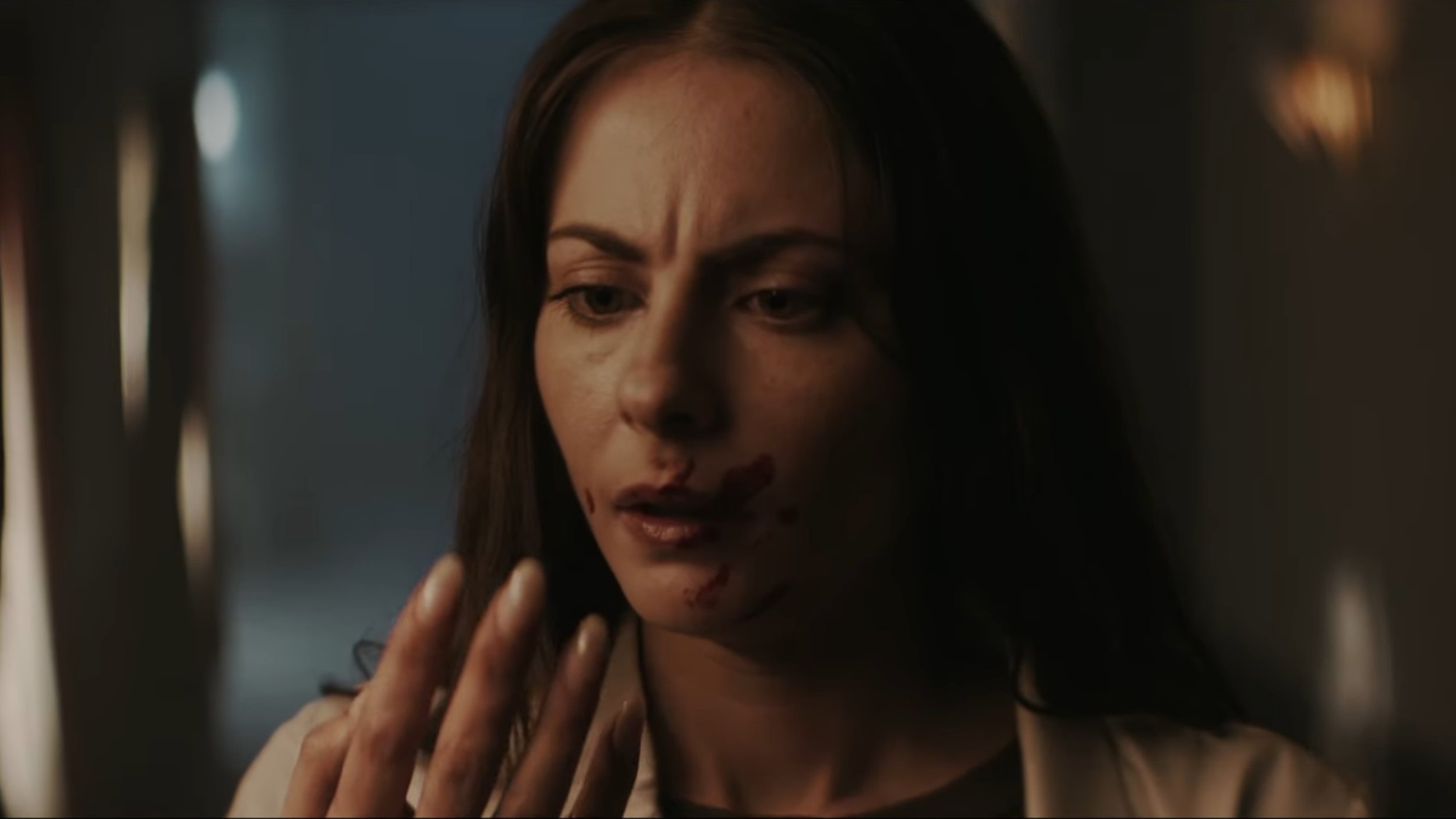
Willa Holland delivers a strong, restrained performance, particularly in how she plays Rebecca as both grounded and unraveling. She’s convincing as someone trying to maintain control while slowly losing it. The shift into possession is handled with subtlety rather than excess, which helps the film avoid cartoonish horror. Paul Sparks, as Rebecca’s enigmatic mentor Raymond, brings an intentionally uncomfortable presence. His delivery is stiff and unsettling, not bad, but designed to keep the audience off-balance.
Where The Mortuary Assistant begins to falter is in its narrative momentum. Despite the fact that there’s almost always something happening onscreen, the film can feel oddly boring at times. It’s not a lack of activity—it’s a lack of escalation. The slow burn is deliberate, but it doesn’t always feel rewarding. The film circles its themes of trauma, depression, and possession without pushing them into truly new or surprising territory.
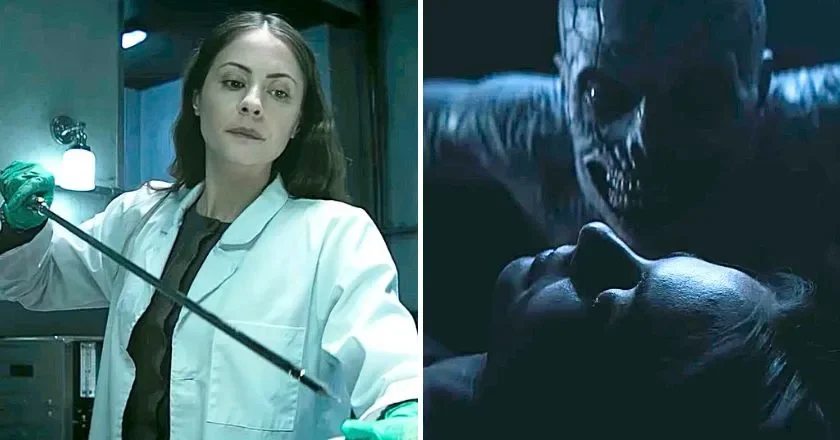
The monster reveal is one of the film’s most effective moments, genuinely frightening and well-executed. Unfortunately, the ending that follows feels anticlimactic. After so much buildup, the resolution doesn’t land with the emotional or thematic impact it seems to be reaching for. It’s not a disaster, but it’s underwhelming, especially given how carefully the film constructs its world.
Comparisons to The Autopsy of Jane Doe are inevitable, and The Mortuary Assistant often feels like a scrappier, less focused cousin. That’s not entirely a knock—there’s ambition here—but it does highlight how familiar the territory is. The film rarely breaks new ground, even when it’s clearly trying to dig deeper into its characters’ inner lives.
Still, it’s impossible to deny the sincerity behind the project. Kipp’s passion for filmmaking and respect for the genre come through in nearly every frame. This isn’t a cynical cash-in on a popular game. It’s a thoughtful, carefully constructed adaptation that prioritizes mood and character over cheap shocks.
For fans of the game, The Mortuary Assistant will likely feel like a faithful expansion of a world they already love. For non-gamers, it’s a solid, if uneven, chamber piece that understands how to build dread, even when it struggles to sustain it. It may not redefine horror cinema, but it earns its place on the slab.
Jessie Hobson