
The Python Hunt drops you straight into the Everglades and never really lets you leave. From the jump, Todd Rundgren’s “Tiny Demons” hums over the opening credits and sets the tone for something that feels less like a traditional nature doc and more like a swamp-born fever dream. Think Tiger King filtered through bug spray and headlamps.
The premise is simple enough. Every year, Florida hosts a ten-night competition to remove invasive pythons from the Everglades. It’s pitched as environmental cleanup, but director Xander Robin quickly reveals something messier. What starts as conservation turns into obsession, spectacle, and for some, something uncomfortably close to bloodsport.
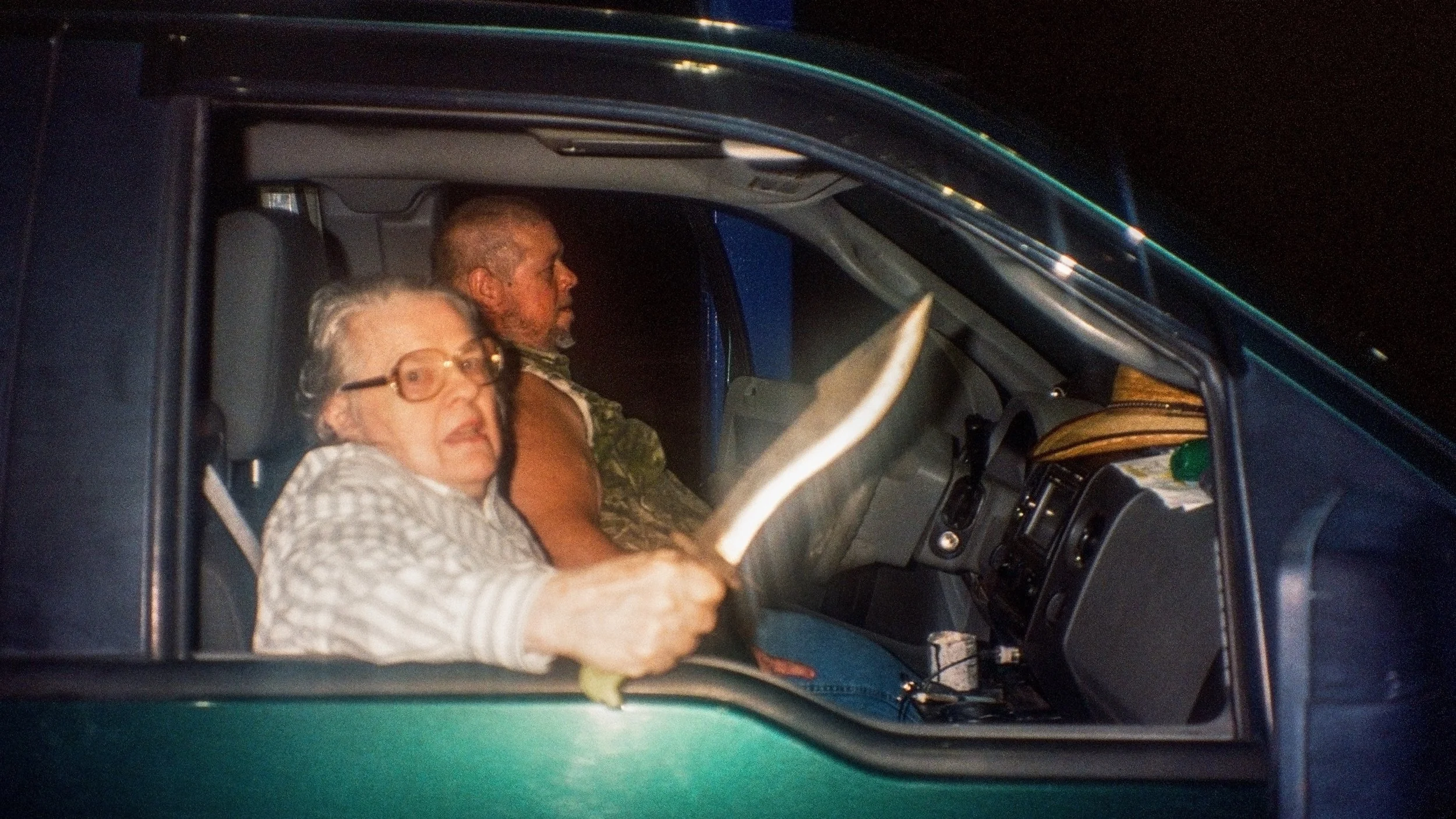
The film thrives on its characters, a rotating cast of hunters, guides, weirdos, and lifers who all think they understand the swamp better than anyone else. There’s Anne Stratton, a rum-loving retiree who claims she’s doing this for nature but very clearly just wants to kill a snake. Watching her spiral from boredom to full-on celebrating icepick brutality is the documentary’s most fascinating and disturbing arcs.
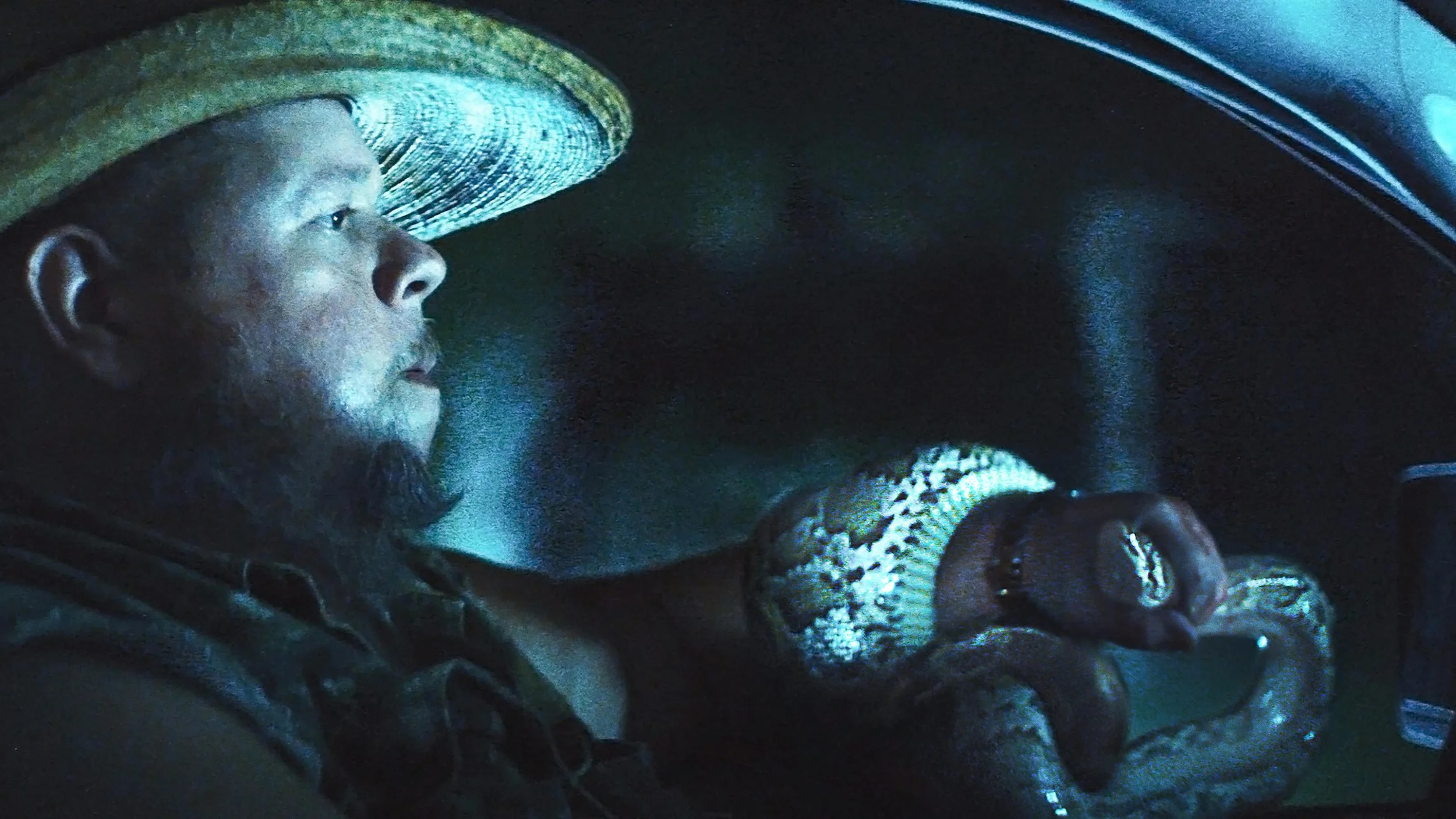
Then there’s Toby Benoit, her guide, an actual professional who carries himself like he has something to prove. Over the course of the hunt, he becomes this quiet anchor in the chaos, especially when the pressure mounts and he hasn’t caught anything. When he finally wrangles a python, taking hits and nearly losing feeling in his arm while driving back with it wrapped around him, it’s one of the few moments that feels genuinely earned instead of performative.
The film keeps bouncing between personalities like this. Jimbo McCartney is the bitter local legend who claims he’d win if he could compete, but instead spends his time trolling hunters with fake snakes and complaining at bars. Richard Perenyi is the out-of-towner chasing some weird mix of community and adrenaline, throwing hotel parties and slowly unraveling as the hunt yields nothing. Madison Oliveira, an ex-Marine trapper, cuts through the noise with competence and a blunt assessment of everyone around her.
What ties them all together is obsession. The film even calls it out directly with the idea of “snake eyes,” that moment when someone stops thinking and just locks in. You see it happen over and over again.

Visually, The Python Hunt rules. The color grading makes everything pop: neon greens, swamp water blacks, reflective safety vests glowing in the dark. The Everglades feel alive and hostile. The cinematography leans hard on texture, mixing GoPro footage, slick night driving shots, archival reels, and even bits of media detritus like podcast clips to create this collage of swamp culture. It’s immersive to the point where you start feeling the humidity.
The b-roll alone could carry the movie. There’s footage of pythons consuming deer, foxes, even crocodiles, mixed in with news clips and old archival video, constantly reminding you that this isn’t just some weird hobby. The ecological threat is real, even if the solutions feel chaotic at best.
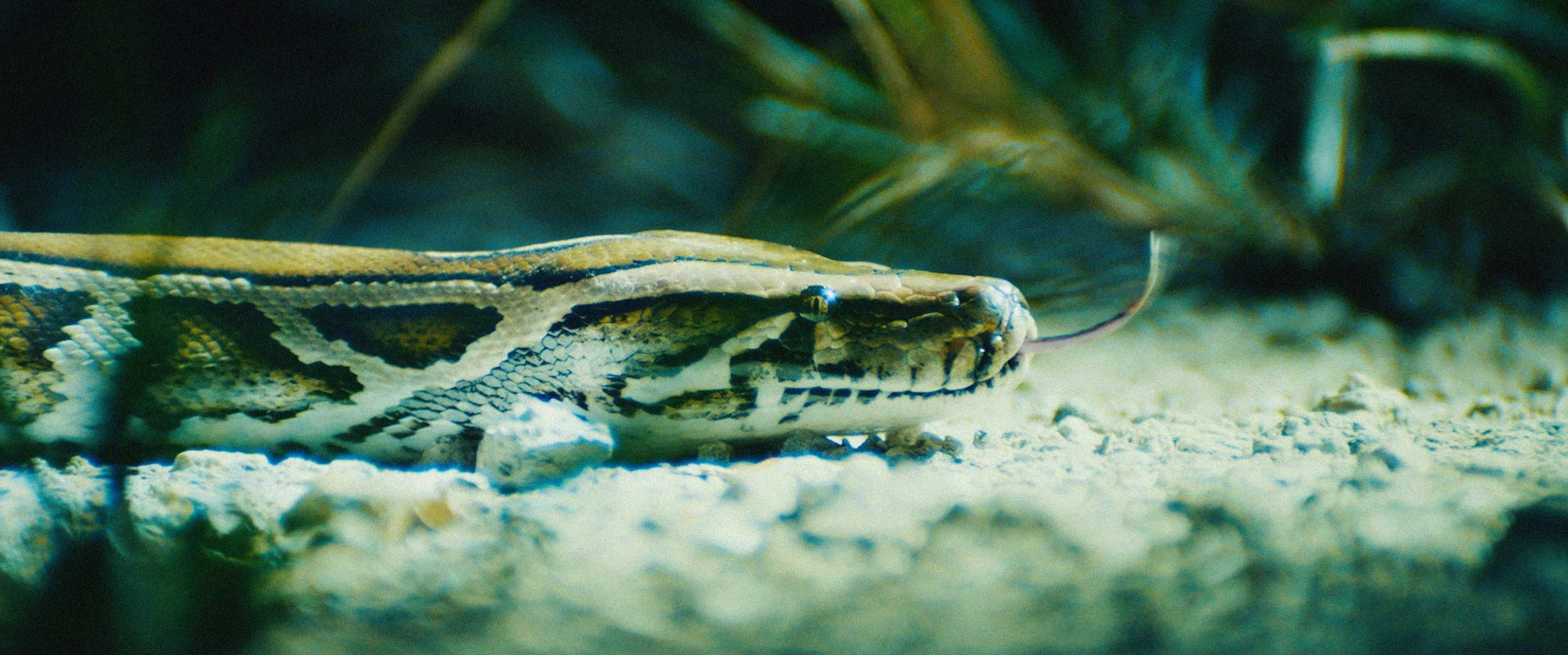
That tension is where the film really digs in. On one side, experts frame the python as the villain wrecking the ecosystem. On the other, locals and critics insist humans did the real damage first, and the snakes just ended up as the easiest scapegoat. The film never picks a definitive side, which makes everything feel more complicated and, honestly, more honest. As Robin puts it, everyone out there has a theory, and they’re all convincing in their own way.
But the longer the hunt goes on, the less it feels like it’s about saving anything. By the final stretch, it’s pure spectacle. People are partying, getting high, cooking snake meat, and chasing payouts. Over 1,000 competitors enter, but only a couple hundred snakes are actually turned in. The math doesn’t exactly scream success.

And then there are moments that are just… gross. A late scene in a bar where people rip apart a python and crush its eggs plays like something out of a horror movie. The film doesn’t sensationalize it, which somehow makes it worse. It just sits there and lets you watch.
That’s kind of the whole deal with The Python Hunt. It refuses to tell you how to feel. It shows you the absurdity, the passion, the ego, and the occasional genuine care for the ecosystem, all tangled up together. Sometimes it’s funny, like watching grown adults treat this like Pokémon GO. Other times it flips, and the discomfort just sticks to you.
By the end, when “Tiny Demons” comes back and the credits roll with updates on the hunt’s results, it feels less like a conclusion and more like a shrug. The snakes are still out there. The people are still out there. Nothing’s really been solved. But that’s the point.
The Python Hunt isn’t really about catching snakes. It’s about the kind of people who believe they can fix something wild, something massive, something already broken, and what that belief turns into. Sometimes it looks like a game. Sometimes it looks like obsession. And sometimes they stare a little too long.
Jessie Hobson