
Tuner opens with jazzy swagger, Herbie Hancock drifting through the background as quirky conversations overlap against sweeping New York Cityscapes. It feels alive right out of the gate, like the film is tuning itself in real time and daring you to keep up.
What follows is technically a heist story, but it never feels boxed in by the genre. There’s crime, there’s tension, there’s the fun of watching safes get cracked piece by piece through extreme close-ups that make the mechanics tactile and oddly hypnotic. But underneath all that is something quieter and more interesting, a story about identity, creativity, and what happens when the very thing that defines you starts to slip away.

Leo Woodall anchors everything with a performance that sneaks up on you. He carries himself with a quiet confidence that’s difficult to ignore, never forcing the moment, never trying to oversell. Whether he’s reciting musical notes, explaining tuning techniques, or casually rattling off details that would trip up a lesser performance, it all comes out effortlessly. It’s the kind of turn that feels natural until you stop and realize how much it’s actually doing.
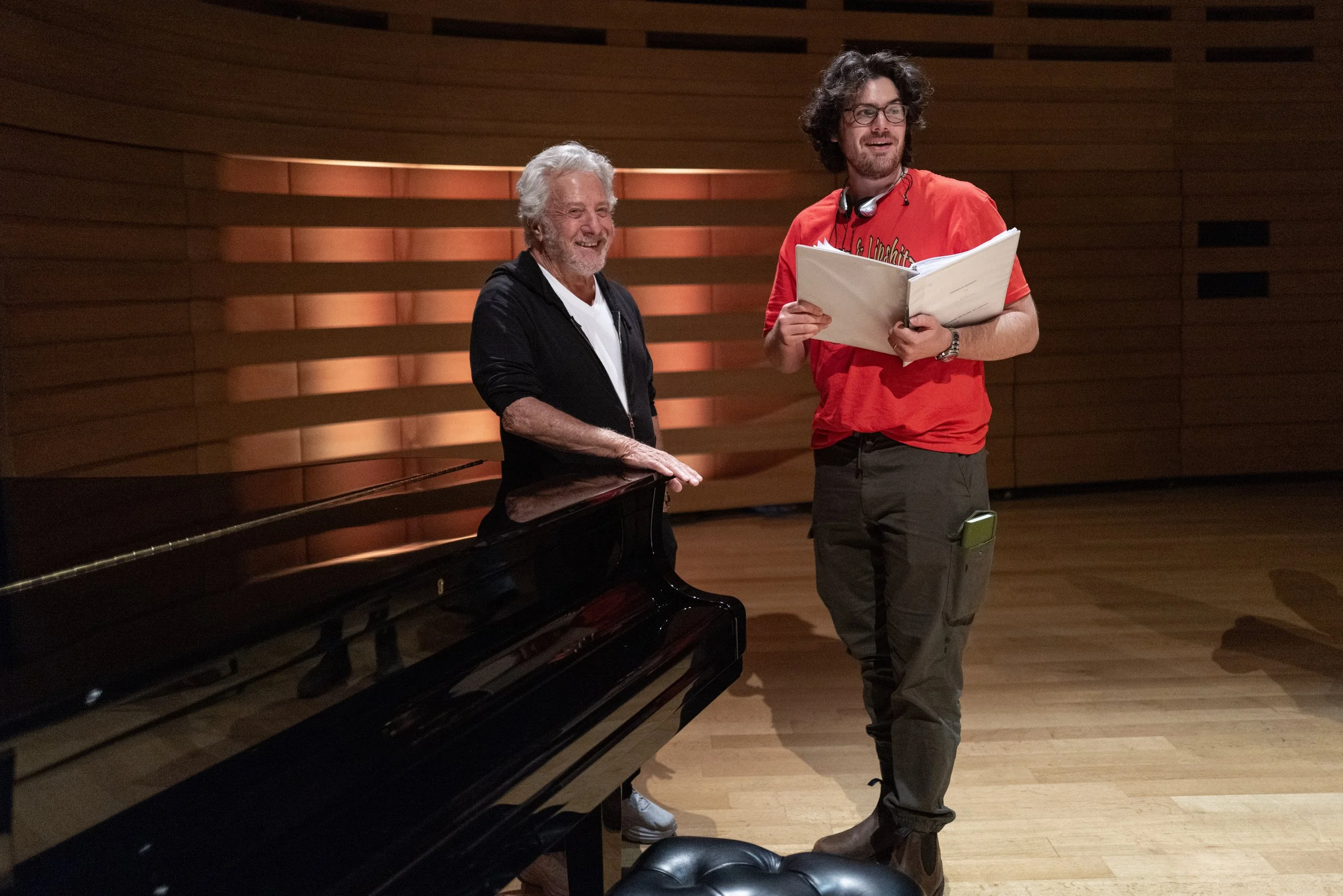
Dustin Hoffman, on the other hand, reminds you exactly why he’s still a legend. His performance feels loose, almost offhand, but every line lands in a way that’s both entertaining and precise. There’s a warmth and unpredictability to him that lifts every scene he’s in. The only real downside is that you begin to feel his absence as the film moves into its later stretch. By the third act, you miss him.

Havana Rose Liu’s Ruthie adds another layer that keeps the film grounded. She feels less like a written character and more like someone pulled from a real life, someone with history behind her. Her dynamic with Woodall gives the story an emotional unpredictability that keeps things engaging even when the plot leans into familiar territory. Their scenes feel lived in, like you’re watching actual conversations instead of scripted exchanges.
That sense of realism extends across the entire ensemble. Even the villains manage to be oddly likable for a while, presented almost like caricatures before the film slowly peels that back. It’s a smart balance that keeps things entertaining without losing the stakes. And when actors like Jean Reno show up, they bring an added weight that the film uses well without overplaying.

What really sets Tuner apart, though, is how it handles sound. The film constantly shifts audio perspective in ways that pull you directly into Niki’s head. When his hearing falters, the world becomes warped, distant, almost submerged. The editing here is sharp and intentional, creating moments that feel genuinely disorienting without tipping into gimmick. At times it feels like you’re underwater, everything muffled and just out of reach, and that sensation sticks.
The use of music is just as precise. Nina Simone’s Sinnerman hits at exactly the right moment, amplifying tension instead of just accompanying it. The Dean Martin montage, built around Almost Like Being in Love, is executed with a kind of effortless charm that makes it one of the film’s standout sequences. Even the quieter piano scenes are given the space they need, allowed to play out without interruption. Those moments let the film breathe, adding emotional authenticity that grounds everything else.
New York itself becomes an extension of that rhythm. The city isn’t just a backdrop; it’s part of the film’s language. It moves the story along, connects scenes, and gives transitions a sense of flow that keeps everything cohesive. You feel like you’re traveling through it with the characters rather than just observing from a distance.
The pacing is confident and fluid, carrying you through the story without friction. It’s engaging enough that the runtime slips by almost unnoticed, always moving forward without ever feeling hurried. The film finds a strong rhythm, letting its quieter character beats breathe while punctuating them with sharp bursts of tension, often elevated by the score.
If there’s a flaw, it’s that the film occasionally leaves you wanting more of certain elements, particularly Hoffman’s presence. But even then, it’s hard to call it a major misstep. The foundation is strong enough that those gaps don’t derail the experience.
By the time it reaches its ending, the film lands on something that feels clever without trying too hard to be. It’s thoughtful, controlled, and in line with everything that came before it.
Tuner isn’t flawless, but it carries a confidence that matters. It understands rhythm, both musically and narratively, knowing when to push forward and when to pull back. More importantly, it makes you feel its world as much as it shows it. It hits its notes more often than not, and even when it misses, it remains compelling enough to keep you listening.
Jessie Hobson