
One of the first things I told Britt Bankhead and Grace Patterson when we sat down to talk about The Town That Takes was that I was impressed. I've watched enough indie horror over the years to know where budgets usually start showing themselves. Sometimes it's the effects. Sometimes it's the locations. Sometimes it's the action. Somehow, The Town That Takes avoids most of those pitfalls. Inspired by the enduring mystery of Roanoke and the infamous word Croatoan, the film delivers a surprisingly polished supernatural thriller that looks much bigger than its budget would suggest.
When I brought that up, both Patterson and Bankhead were quick to credit cinematographer John Blaze and the planning that went into every shot. Bankhead explained that the production made some calculated decisions about where to spend its money, including investing in high-end lenses to elevate the film's look. In fact, he revealed that some of the lenses they used were worth more than $100,000. Before anyone got the wrong idea, Patterson jumped in with a laugh to remind me they were definitely rentals. It's the kind of choice that pays off on screen. The film has a cinematic quality that's often missing from projects operating at this level.
That commitment carries over into the action sequences as well. The fight choreography feels genuine, the car stunts are ambitious, and nothing feels half-hearted. Patterson talked about bringing in a stunt team from California and how much fun it was watching them build those sequences piece by piece. Bankhead also spoke about working with legendary stunt driver Sammy Maloof, whose work includes the Fast & Furious franchise. Those details matter because they help explain why the movie consistently feels larger than life while still remaining grounded. Of course, good production value only gets you so far. What really drew me into The Town That Takes was the mythology behind it.
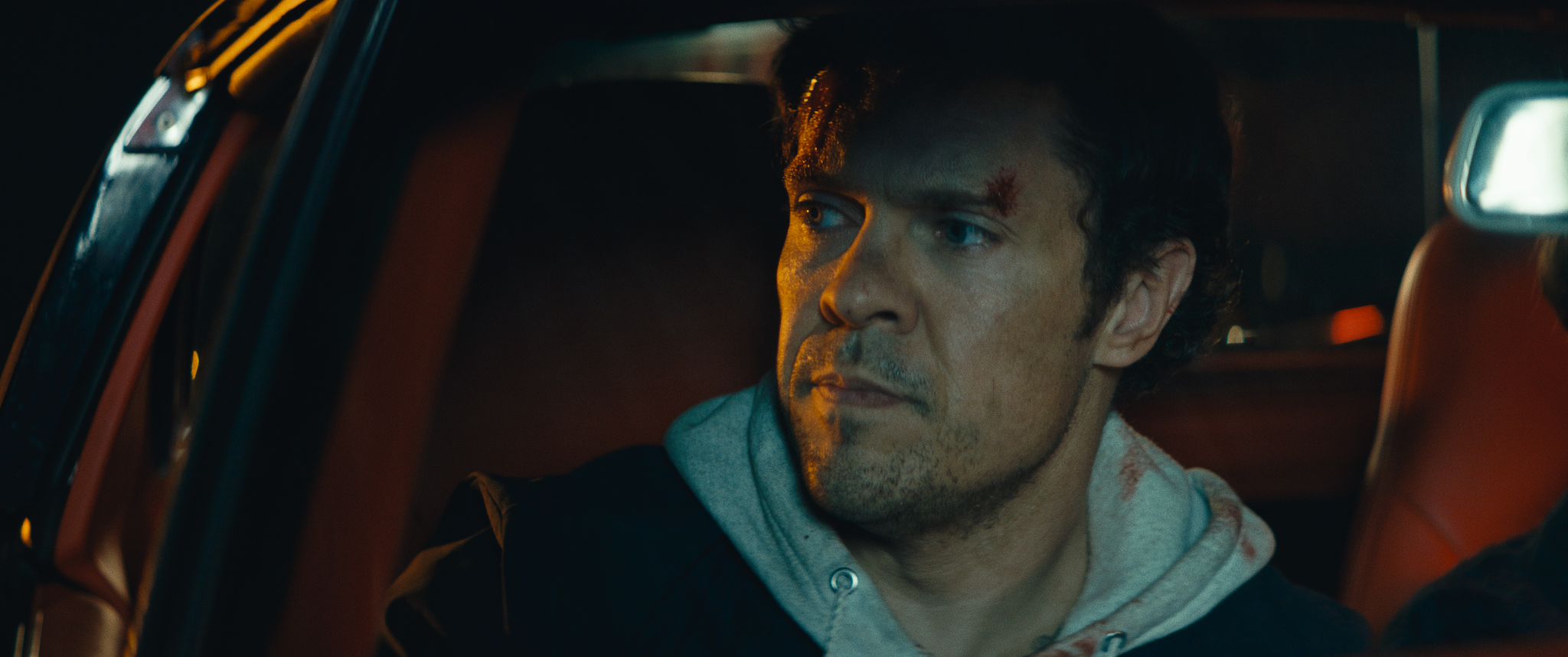
I've always found the mystery of Roanoke fascinating. It's one of those stories you hear growing up and never completely forget. An entire colony disappears, one cryptic word is left behind, and centuries later people are still trying to figure out what happened. That mystery has fueled books, television shows, movies, and countless theories over the years. It's the perfect foundation for horror. For Bankhead, the fascination started early.
He told me he first learned about the story in fourth or fifth grade and never stopped thinking about it. What stuck with him wasn't the mystery itself but the complete lack of answers. As he explained, because nobody knows exactly what happened, it leaves filmmakers with a unique opportunity to create their own interpretation. Instead of being restricted by history, they can use it as a launching point for something original.
Interestingly, The Town That Takes wasn't always The Town That Takes. Bankhead revealed that the project actually evolved from a completely different screenplay. Working alongside co-writer John Blaze, he adapted the original story into something centered around the legend of Croatoan. Horror and mystery were always the goal, but once they began digging deeper into the mythology, the project found its identity.
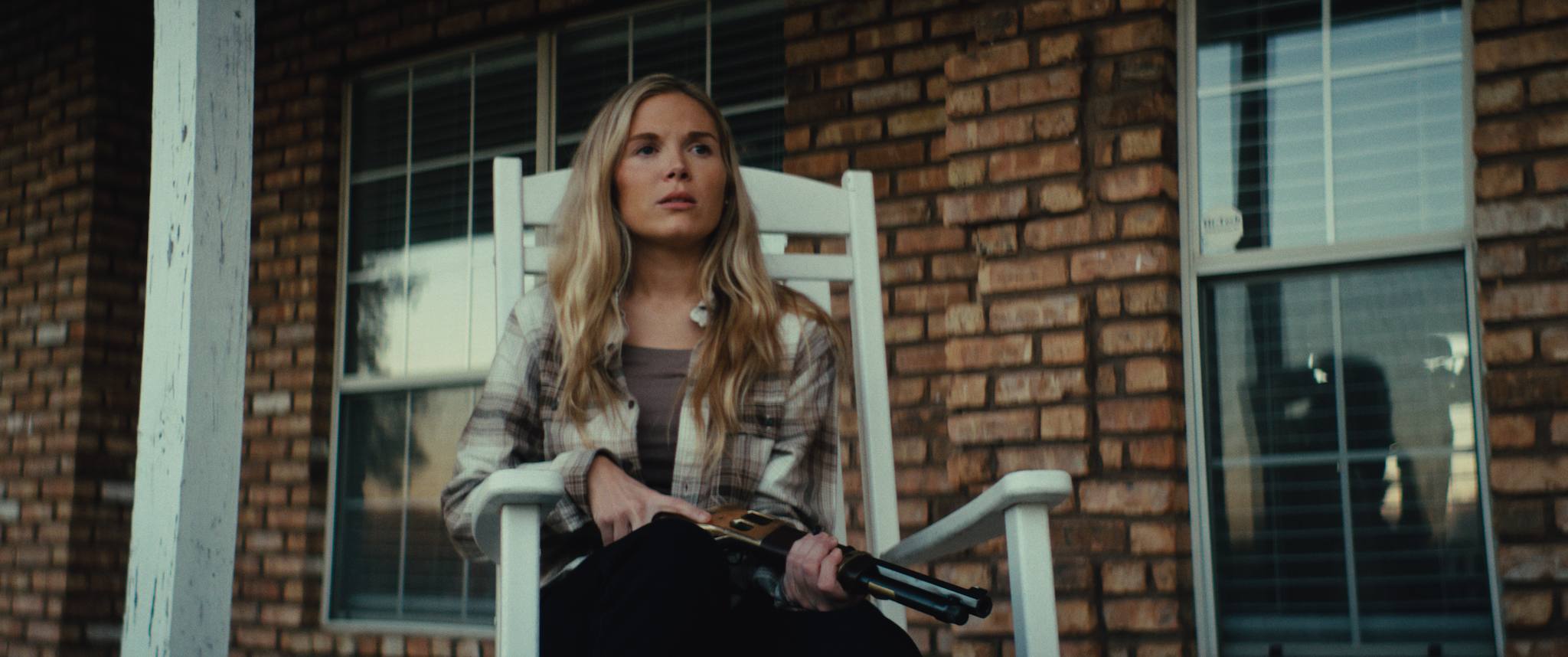
That identity is strengthened by the film's atmosphere. There's a Southern Gothic quality running through the movie that makes every stretch of road and every patch of woods feel unsettling. According to Patterson, a lot of that came naturally because many of the locations were shot on her family's property in Texas. The woods surrounding the location helped establish the mood from the moment cameras started rolling. Texas helped in other ways too.
Both Patterson and Bankhead grew up there, which meant they already had relationships throughout the communities where they filmed. Patterson laughed while explaining that it was often as simple as calling local businesses and asking for permission to use their property. Need to cover a gas station in fake blood? Apparently, that's not a difficult sell in Texas. Those local connections gave the production access and flexibility that would have been much harder to find elsewhere.
One of the highlights of our conversation came when we started talking about Slotherhouse. I'll be upfront about it. I loved Slotherhouse. It's absurd, ridiculous, and completely self-aware, which is exactly why it works. I watched it with my son, and we had a blast. It's a movie that understands its assignment and commits to it wholeheartedly.
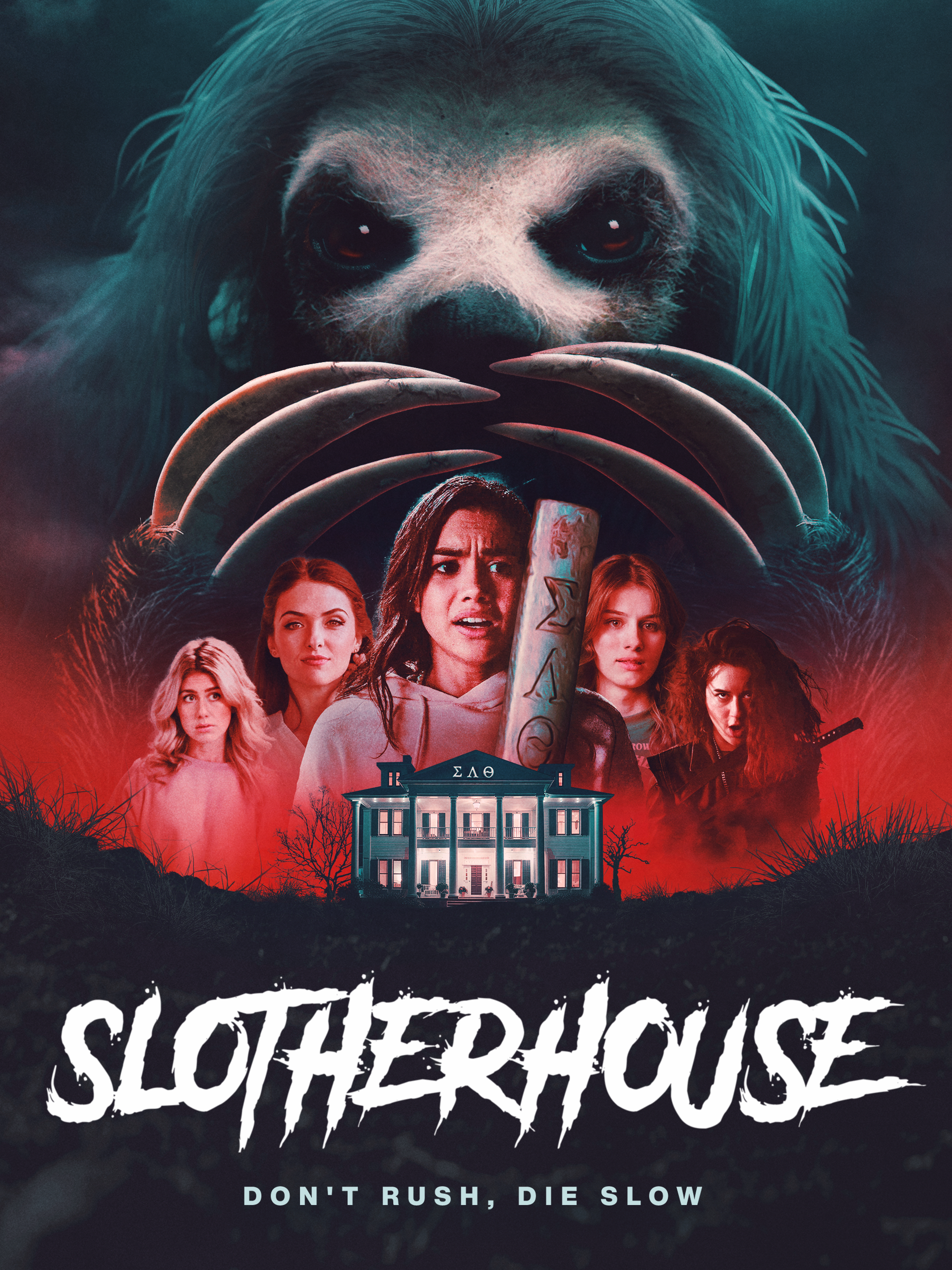
Patterson smiled when the subject came up, describing the experience as "so much fun to make." At the same time, she pointed out that every horror film teaches you something new as an actor. Sometimes it's learning how to access fear more naturally. Sometimes it's discovering emotional beats you didn't realize you could hit. Sometimes it's simply becoming more comfortable living in heightened situations. While her character in Slotherhouse couldn't be more different from the young cop she plays in The Town That Takes, she believes every horror project builds skills that carry into the next one.
Bankhead was equally complimentary of Patterson's abilities. While discussing her growth as an actress, he pointed to another project where she played a mechanic despite having no real-world experience in that environment. What impressed him wasn't just the performance itself but her ability to disappear into roles that don't naturally fit who she is. By the time he finished talking about her work, he summed it up simply: she's "such a great actor" and "so versatile."
When I asked how they kept performances grounded as the story ventured further into supernatural territory, Bankhead immediately credited the cast. He spent a significant amount of time reviewing auditions and assembling actors who understood the tone of the movie. Once everyone arrived on set, there was a shared understanding of what they were trying to accomplish. The result is a horror film where even the most unbelievable moments feel believable because the characters react to them like real people.
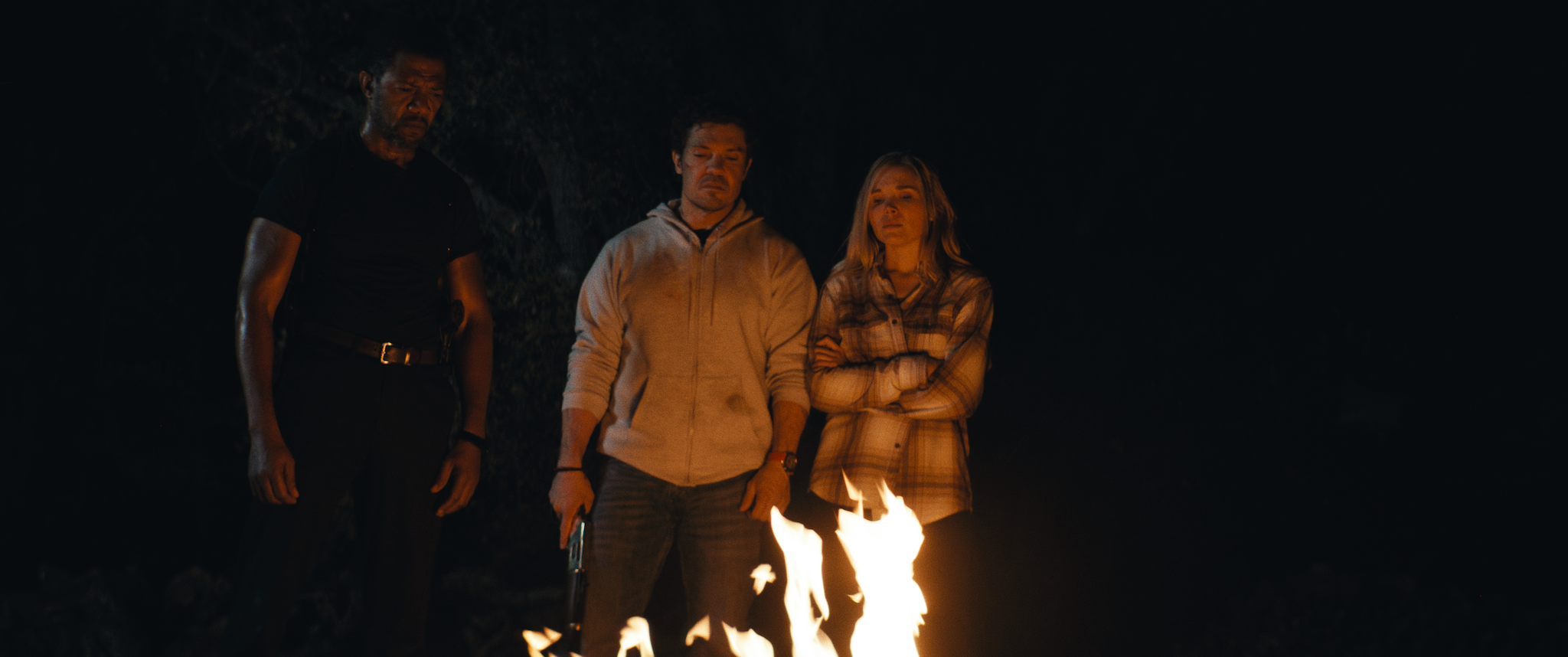
For Bankhead, the film also represented a major personal milestone. The Town That Takes marks his feature directorial debut, and he openly admitted that balancing directing, producing, writing, and starring in the film was far more difficult than it sounds. He joked that taking on all those responsibilities seems easy when someone like Sylvester Stallone does it, but the reality is being pulled in every direction imaginable. Looking back, he described it as an incredible learning experience, even if it's not something he's eager to repeat in quite the same way.
Patterson, however, never had any doubts. She told me she'd already seen Bankhead's directing abilities firsthand because he regularly helps her prepare for auditions. In her experience, whenever he directs her through a scene, the results tend to be positive. Watching him guide an entire feature film felt less like a surprise and more like the natural next step.
As our conversation wrapped up, both filmmakers kept their hopes for the audience refreshingly simple. Patterson wants people to have fun, enjoy the scares, appreciate the action, and stay on the edge of their seats. Bankhead echoed that sentiment, explaining that he simply wanted to create something entertaining, a movie people could lose themselves in for an hour and a half.
For my money, they pulled it off. The Town That Takes takes one of America's most intriguing mysteries and transforms it into an entertaining supernatural thriller packed with atmosphere, ambition, and genuine heart. It's also another reminder that some of the most exciting horror films are still coming from independent filmmakers willing to bet on a good story and a strong vision.
And after talking with both of them, one thing became very clear: Britt Bankhead knows what he's doing. More importantly, he knows how to stretch a dollar. Pair that with Grace Patterson's continued growth as one of indie horror's most enjoyable performers, and you've got a film that's well worth checking out when it hits theaters.
Jessie Hobson