
Ricky Gervais has spent decades building comedy out of uncomfortable truths, awkward conversations, and characters who say exactly the wrong thing at exactly the right time. Alley Cats takes that formula and filters it through a gang of feral cats roaming the streets, resulting in a strange, frequently hilarious adult animated sitcom that feels like stand-up comedy disguised as a cartoon.

At first glance, the premise almost seems too gimmicky. A group of alley cats spends their days wandering the neighborhood, searching for food, avoiding danger, and discussing everything from evolution and religion to dating, death, and the afterlife. The conversations bounce between profound and ridiculous without warning. One minute they're debating humanity's biggest questions, the next they're arguing about bodily functions or fantasizing about completely absurd scenarios.
The show's greatest strength is its writing. Gervais and company understand that the funniest moments often come from treating ridiculous ideas with complete sincerity. These cats speak like a collection of comics sharing stories after last call, constantly riffing on whatever subject lands in front of them. The dialogue feels loose and natural, which makes sense considering Gervais assembled a cast of longtime collaborators and recorded much of the material in ensemble sessions rather than isolated voice booths.
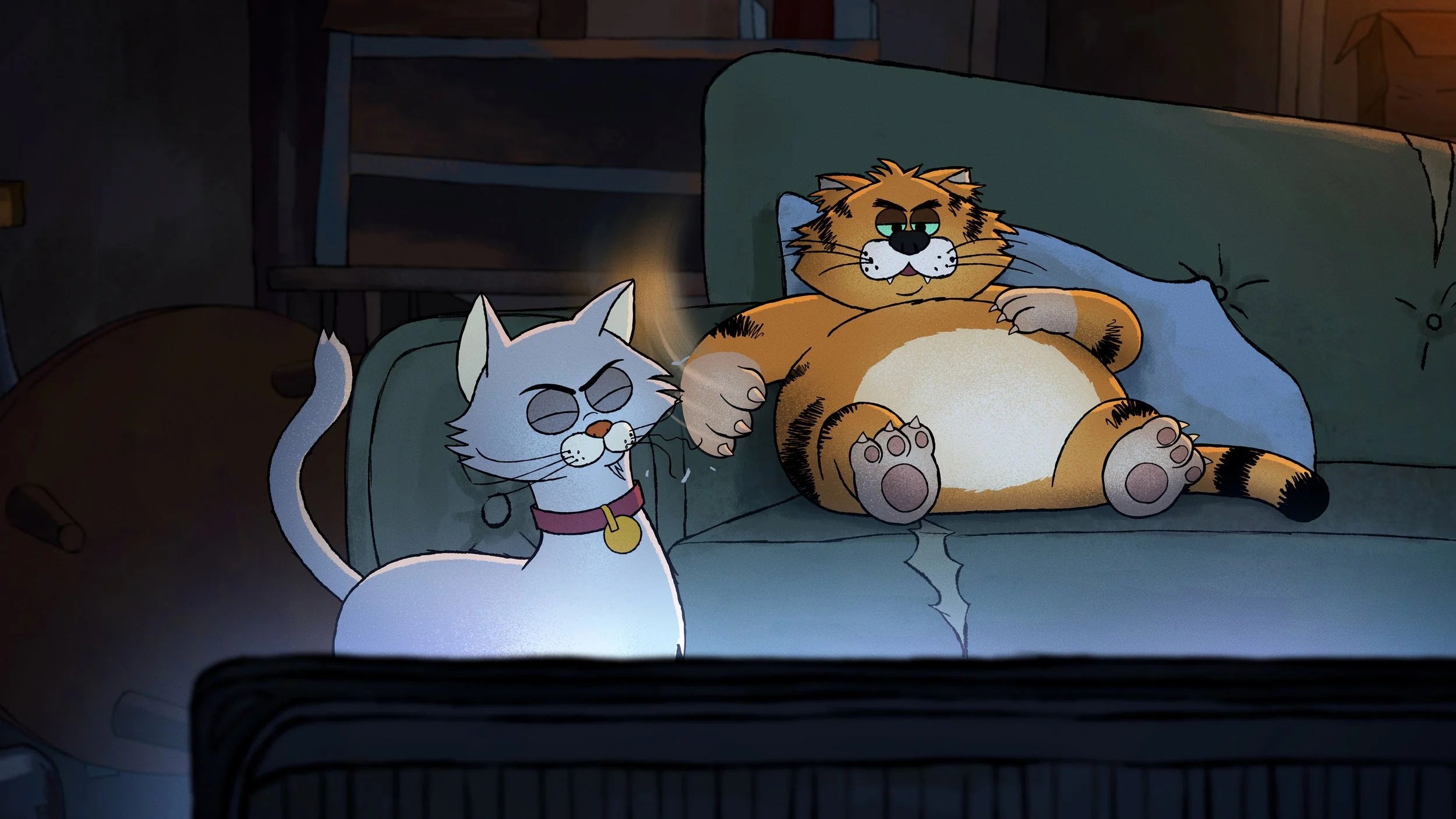
Visually, Alley Cats lands somewhere between classic Disney animation and the cruder edge of modern adult cartoons. The character designs are approachable and expressive while still leaving room for the show's darker, more cynical humor. It is an interesting contrast. The animation often looks family-friendly, yet the conversations range from suicide and mortality to sex, drugs, and every inappropriate subject imaginable.
Not every joke lands. Some material feels oddly dated, and a handful of gags lean so heavily into shock value that they become more crude than funny. There are moments where the series mistakes outrageousness for wit. Even so, the hit rate remains impressively high across its six brisk episodes. The short runtime works in the show's favor, keeping the conversations moving before any particular bit overstays its welcome.
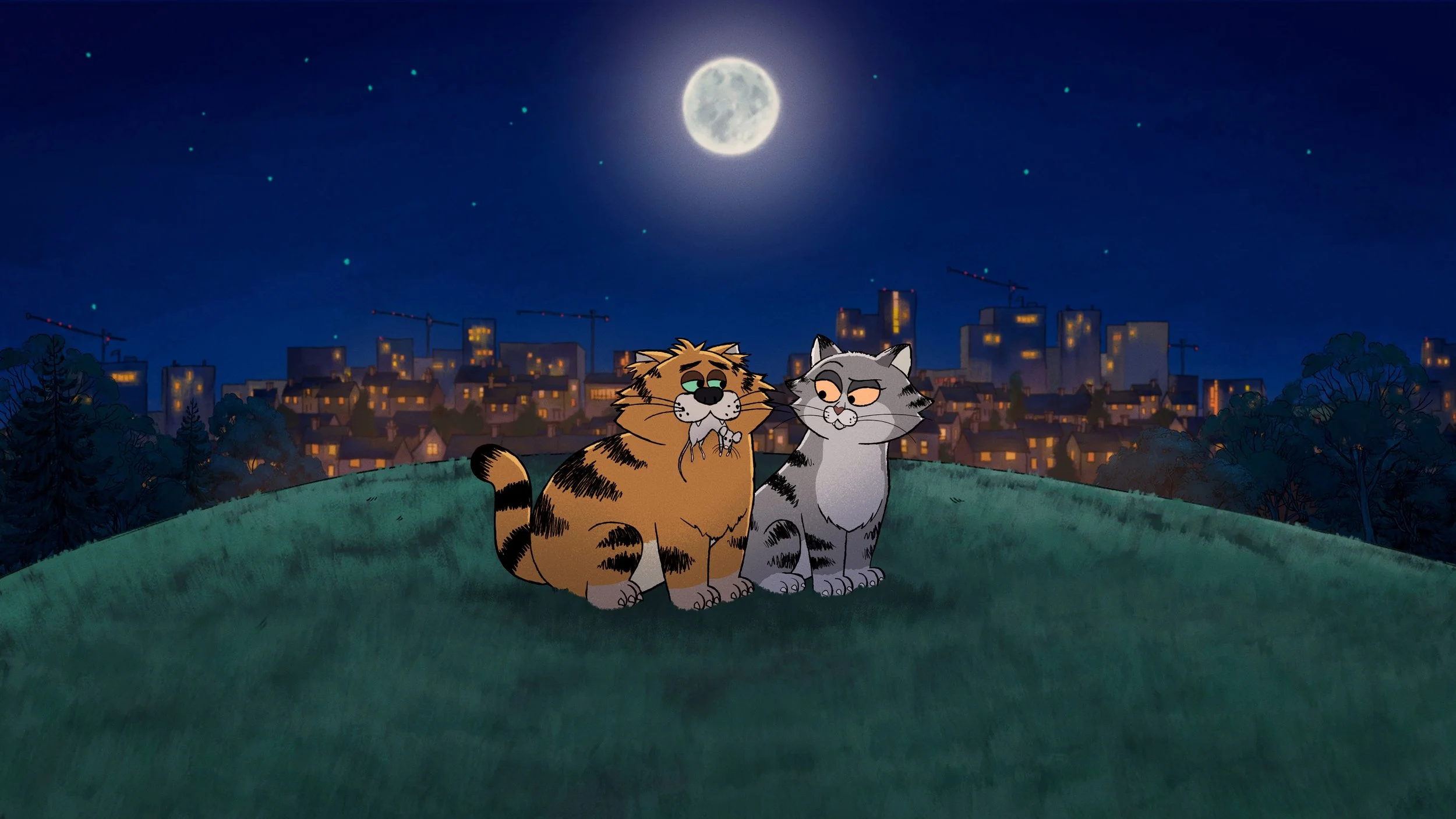
What ultimately separates Alley Cats from countless adult animated comedies is the amount of heart buried beneath the profanity. Beneath all the vulgar discussions and absurd observations sits a surprisingly sincere story about companionship, loneliness, family, and belonging. Several episodes reveal emotional depth that catches you off guard, particularly as the cats navigate relationships, commitment, loss, and their responsibility toward one another.
Gus emerges as the show's emotional anchor. While he often presents himself as another sarcastic member of the gang, the series gradually reveals a character with far more empathy than he would ever admit out loud. The growing bond within the group gives the series a warmth that balances its cynicism, allowing even its darkest conversations to feel oddly comforting.

Music is also used effectively throughout the season. Tracks from James Taylor, Cat Stevens, The Smiths, Coldplay, and others help give certain moments a surprisingly emotional weight without feeling manipulative. The soundtrack choices often reinforce the show's strange balancing act between comedy and melancholy.
Perhaps the biggest criticism is that the cat angle occasionally feels unnecessary. The writing is strong enough that you sometimes wonder whether the material would be even funnier without the anthropomorphic filter. There are stretches where the characters essentially function as stand-up comics or exaggerated humans who happen to have whiskers. Yet that same device allows the show to explore difficult subjects from a safe distance, making conversations about mortality, society, and personal failure easier to laugh at.
In the end, Alley Cats occupies a unique space. It's somewhere between The Aristocats and Fritz the Cat, blending gutter humor, existential musings, and genuine emotion into a surprisingly charming package. It may not be the sharpest or funniest adult animated series of recent years, but it's consistently entertaining, occasionally touching, and easy to devour in a single sitting.
Jessie Hobson