As a kid, I was fascinated by impossible crossovers. Seeing characters from completely different worlds share the screen felt magical. For many of us, the gold standard remains Who Framed Roger Rabbit, where Mickey Mouse and Bugs Bunny somehow existed in the same universe. Later, specials like Cartoon All-Stars to the Rescue packed together icons from rival studios and networks into a single event.
While Shrek was not technically a crossover in the traditional sense, it captured that same feeling for me. Suddenly, fairy tale characters from every corner of popular culture were colliding in one irreverent, chaotic world. Pinocchio, the Three Little Pigs, the Big Bad Wolf, the Gingerbread Man, and countless others all occupied the same story. To a kid who loved seeing different worlds collide, it felt like exactly the kind of movie I had always imagined.
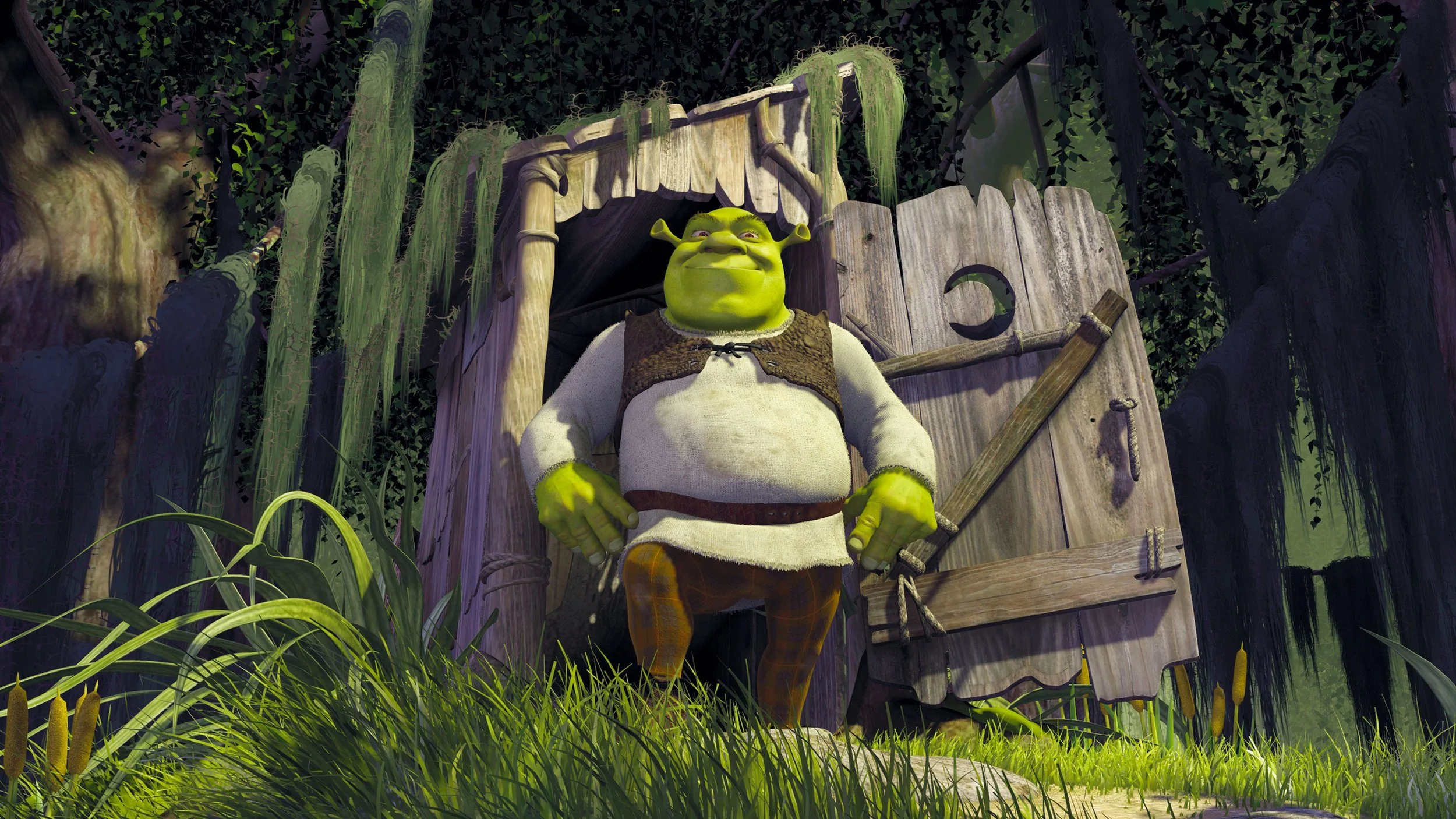
Then the door to the outhouse swings open.
Smash Mouth blasts through the speakers.
An ogre steps into the spotlight.
And animation changed forever.
Twenty-five years later, Shrek remains as sharp, funny, and surprisingly heartfelt as it was in 2001. DreamWorks took direct aim at the conventions Disney had spent decades establishing and somehow delivered a film that worked both as a satire and as a genuinely great fairy tale. The jokes were edgier than anything many of us had seen in mainstream animation at the time, but beneath the sarcasm and pop culture references was a story about friendship, acceptance, and learning to see beyond appearances.
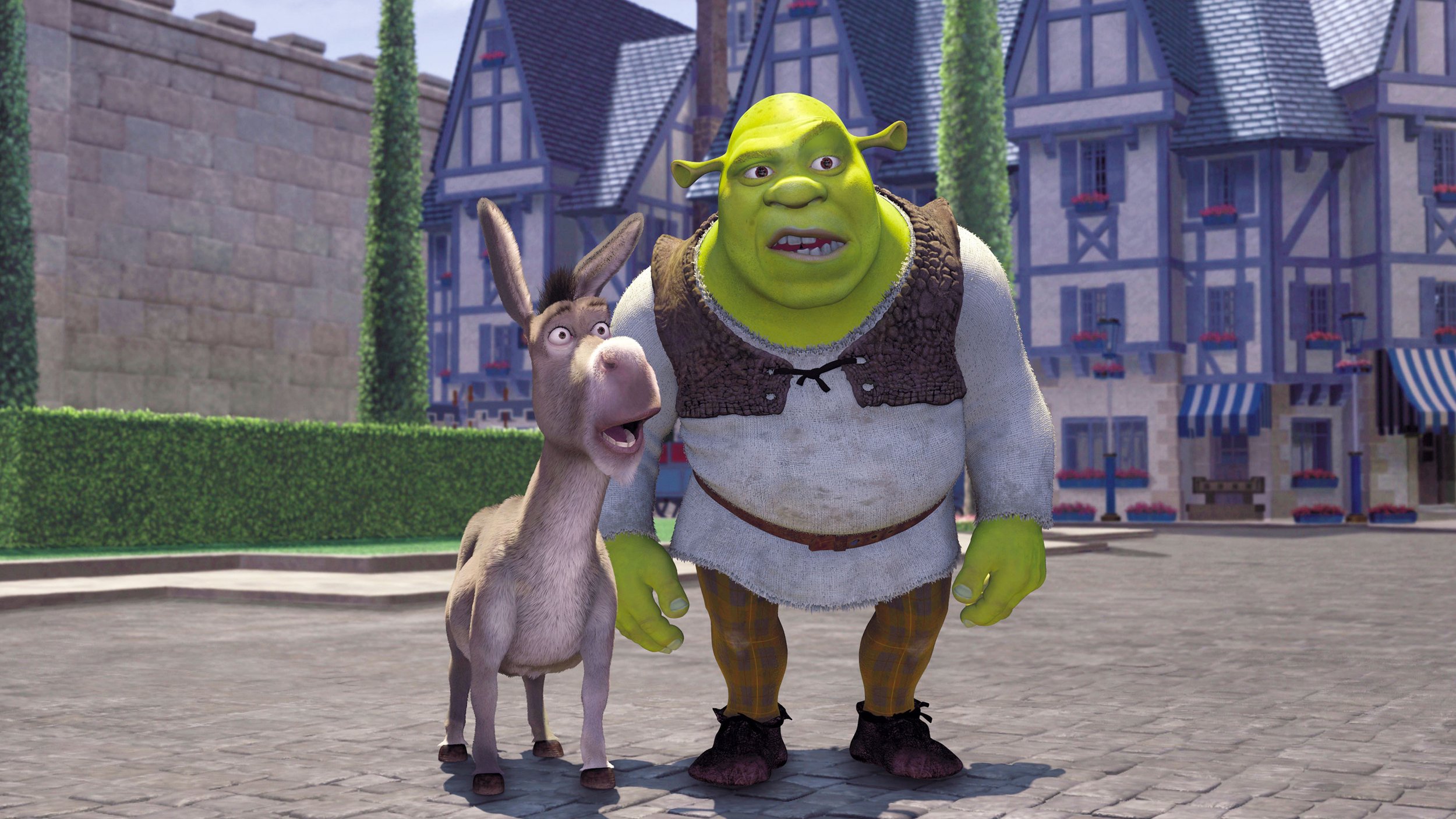
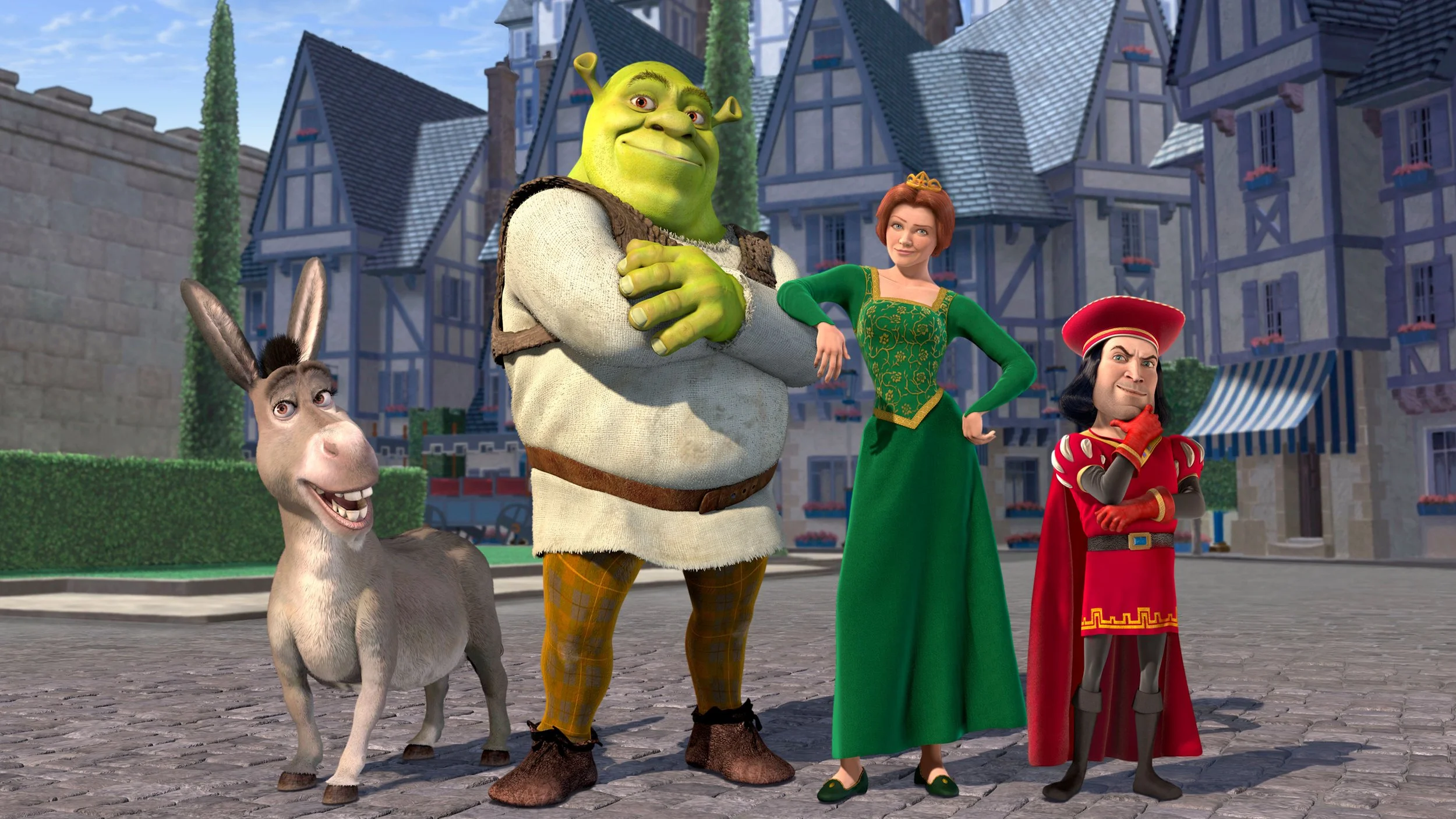
Of course, nostalgia does a lot of the heavy lifting when revisiting Shrek. Yet what surprised me most during this rewatch was how well the film still plays. Eddie Murphy's Donkey remains an absolute scene-stealer; Mike Myers created one of animation's most recognizable characters, and the chemistry between Shrek and Fiona still carries emotional weight. More importantly, the film's pacing and humor continue to connect with audiences in a way many animated films from the era struggle to achieve.
The franchise would go on to produce sequels, spin-offs, television specials, and enough merchandise to fill Far Far Away. Some of those follow-ups were enjoyable, while others never quite captured the lightning in a bottle that made the original special. Even the better sequels cannot replicate the feeling of seeing Shrek for the first time, when the movie gleefully kicked down the door and announced that fairy tales did not have to follow the rules anymore.
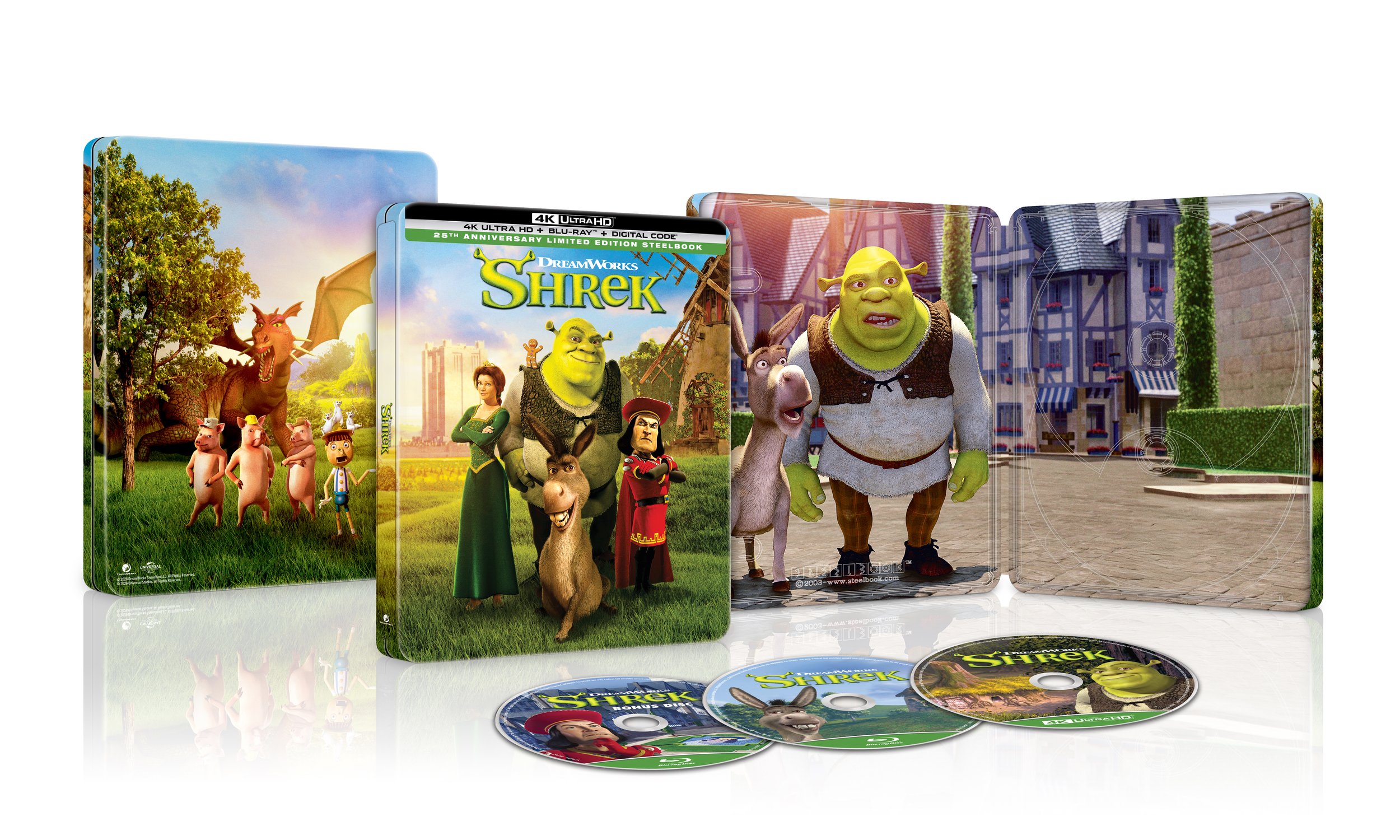
As for the physical release itself, Universal's 25th Anniversary Edition gives fans a worthy excuse to return to the swamp. The new 4K remaster features Dolby Vision and Dolby Atmos audio, providing the best home presentation the film has received to date. Colors are richer, environmental details are more noticeable, and the soundtrack has additional depth without sacrificing the familiar charm of the original presentation. The release also includes a new 30-minute retrospective, "Origin of an Ogre," which looks back at the creation of the film and its lasting impact on animation.
Collectors will likely gravitate toward the limited-edition SteelBook, while longtime fans will appreciate the extensive package of legacy bonus features. The set includes feature commentary, deleted scenes, classic shorts, holiday specials, music videos, and several episodes of The Adventures of Puss in Boots, making it one of the most comprehensive Shrek releases available.
Perhaps the most significant endorsement I can give this release comes from my living room. Watching Shrek again with my almost three-year-old reminded me why the film has endured for a quarter century. The jokes hit differently now, the themes resonate more deeply, and seeing a new generation laugh at the same green ogre I grew up with is a special experience all its own.
Twenty-five years later, Shrek still has layers.
Jessie Hobson