
There’s something almost admirable about how Chum announces exactly what you’re in for from the moment it begins. The opening credits crawl along under a flat, uninterested voiceover that sounds like it would rather be anywhere else. It sets the tone for a shark movie that never finds urgency, never builds tension, and rarely feels like it wants to exist beyond fulfilling its premise.
A destination wedding off the coast of Malta spirals into chaos when a shark starts picking off guests, while a mysterious fisherman with his own agenda complicates things further. It’s a setup that should be a layup for fun, trashy thrills. Sun, water, selfish people, and a hungry predator is a formula that has worked plenty of times before. But Chum feels like it’s been assembled from the spare parts of better shark movies, without understanding why those parts worked in the first place.
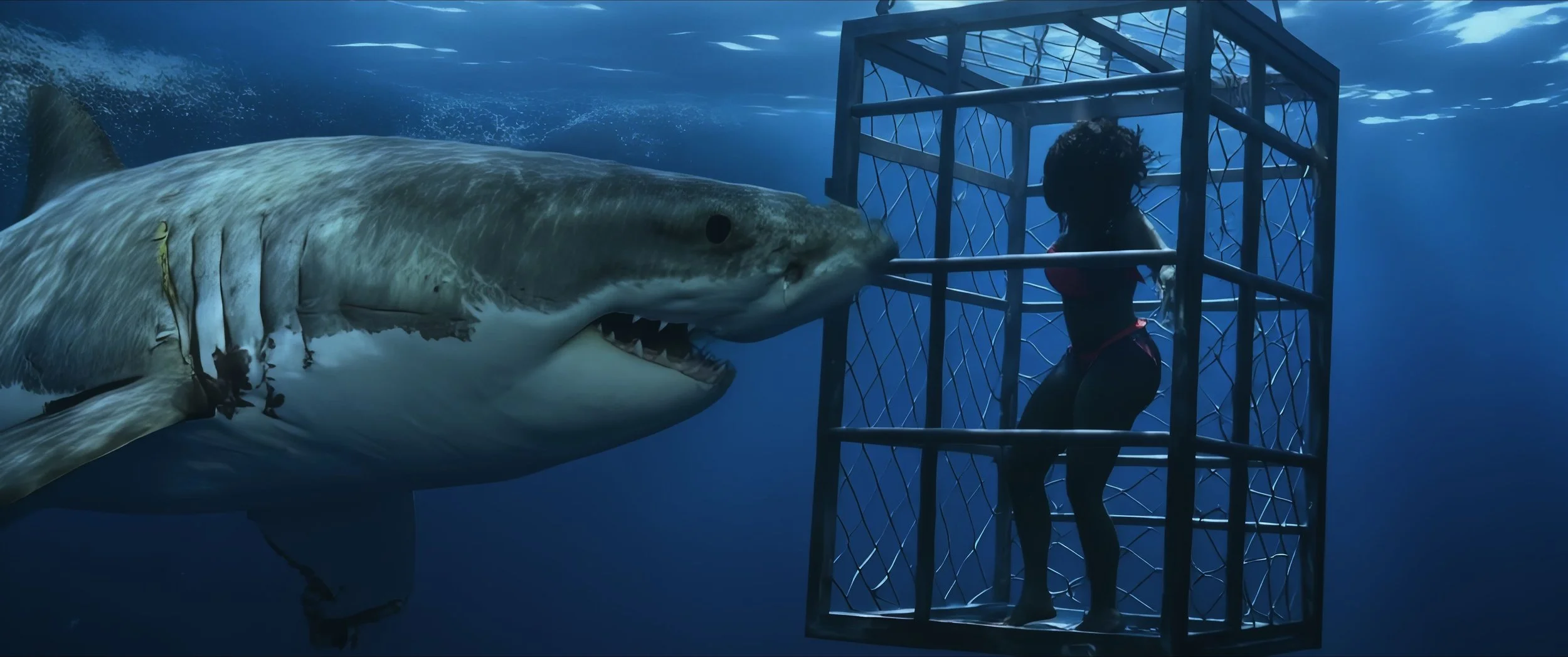
Visually, the film leans heavily on basic b-roll ocean footage, the kind of filler that screams low budget without ever disguising it. The editing doesn’t help. There are strange, layered cuts that feel more like mistakes than stylistic choices, and the film frequently reuses shots in ways that become distracting. Slow motion appears at odd, unnecessary moments, as if the movie is trying to convince you something is dramatic when it hasn’t earned that feeling.
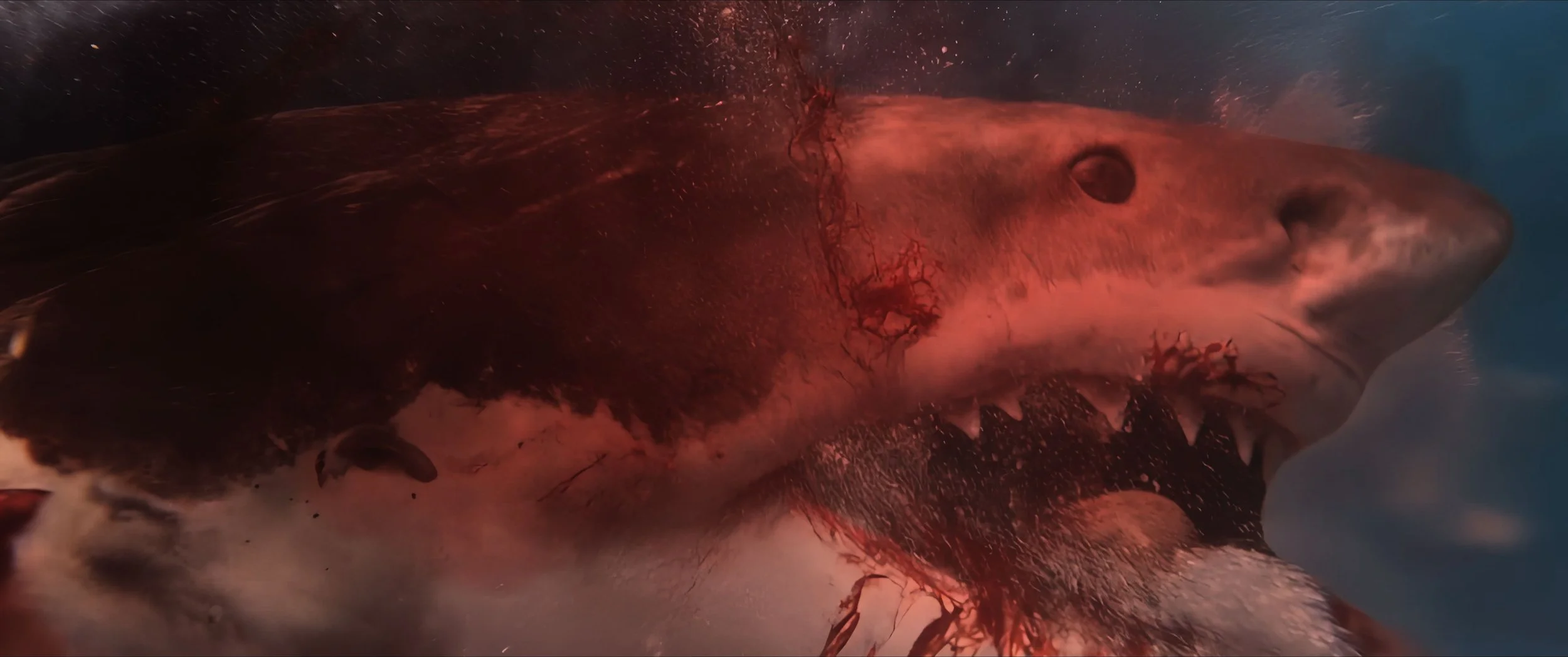
The shark attacks, which should be the core appeal, are wildly inconsistent. Early on, there’s a kill that comes and goes so quickly it barely registers. A bite, a cut, done. No suspense, no buildup, no payoff. Later attacks lean more heavily on CGI, and while they technically improve as the movie goes on, they never rise above early 2000s cable TV quality. The kind of effects you expect to laugh with. Here, you’re mostly just stuck cringing at them.
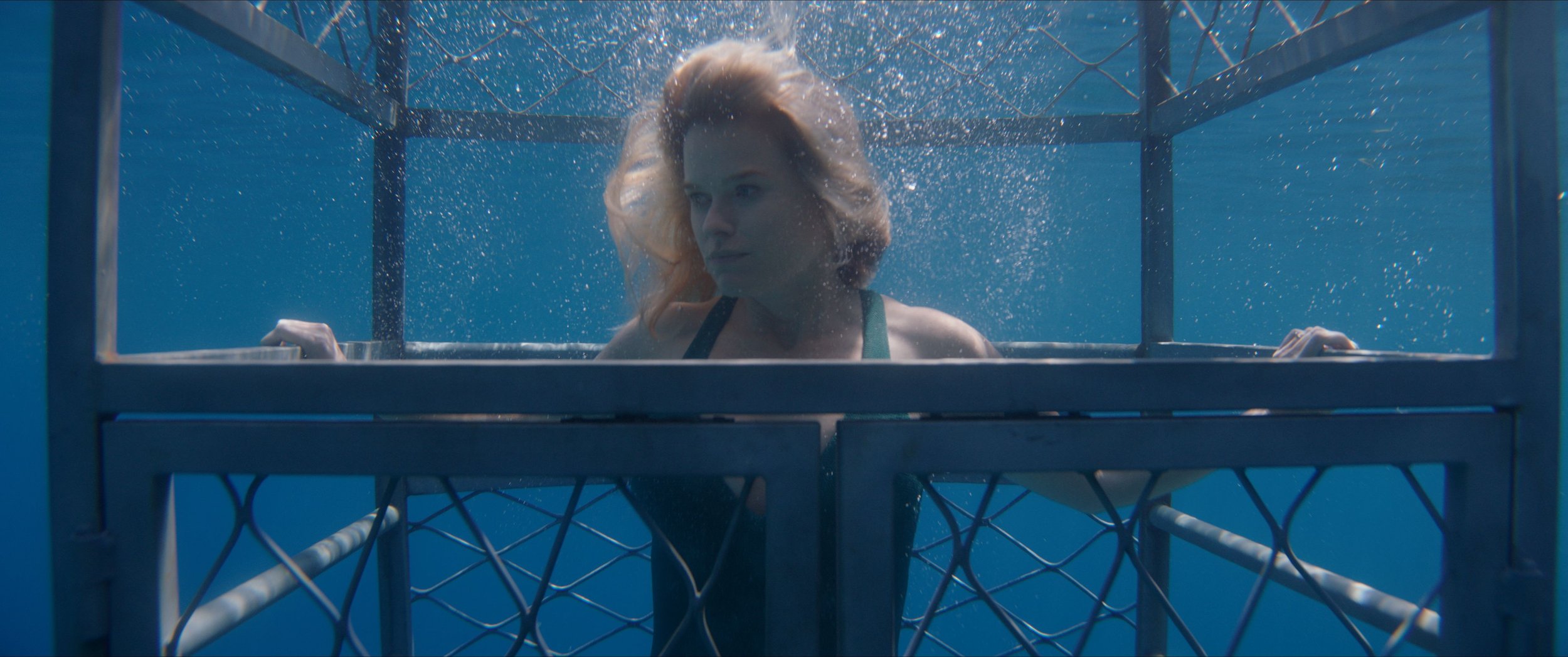
Oddly enough, the practical effects are where Chum shows brief signs of life. The aftermath of attacks features some surprisingly gnarly details. Blood-soaked limbs, half-eaten bodies, an arrow lodged in a chest. These moments land harder than the actual attacks themselves, which says everything about how backwards the film’s priorities feel.
The characters don’t help. A group of wedding guests should give you a mix of personalities to enjoy or at least root against in a fun way. Instead, Chum delivers a collection of deeply unlikable people who range from irritating to unbearable. They seem convinced of their own charm, which only makes their constant bad decisions harder to tolerate. And there are a lot of bad decisions. The plot moves forward almost entirely on coincidence and stupidity, with characters repeatedly making choices no real person would make just to keep the movie going.
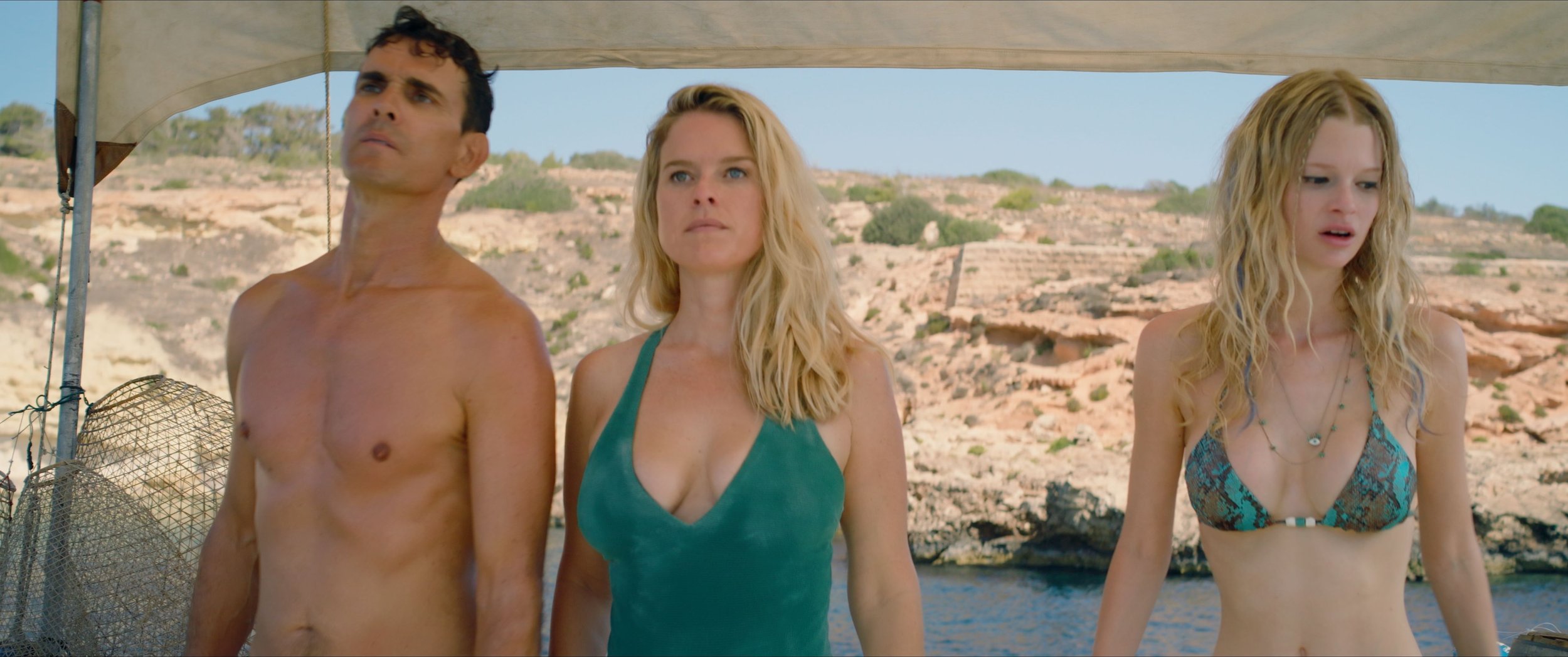
The dialogue is somehow worse. It’s stiff, unnatural, and often feels like it was written in a single rough draft and never revisited. There’s a noticeable amount of ADR throughout, with lines that don’t quite match the actors’ performances or the environment around them. At times, it genuinely sounds like entire conversations were patched together later, giving scenes an artificial, disconnected rhythm.
Even the score feels out of sync with what’s happening. There are moments where unexpected musical choices, like twangy guitar and odd string arrangements, kick in without adding mood or tension. Instead, they highlight how unsure the movie is about its own tone.
That lack of tonal control extends to the story’s central “twist.” The fisherman who initially appears to help the stranded wedding party is revealed to have a vendetta against the shark that killed his wife. His grand plan involves using the survivors as bait to lure the creature back. It’s the closest thing the movie has to an interesting idea, but it’s handled so bluntly that it never evolves beyond a basic genre trope.
To its credit, Chum occasionally stumbles into something resembling self-awareness. There’s a moment where a character asks, “What about the captain?” and the film immediately cuts to the shark eating him. It’s abrupt, cute, and weirdly effective. For a second, you glimpse the version of this movie that could have leaned into its own absurdity.
But those moments are rare.
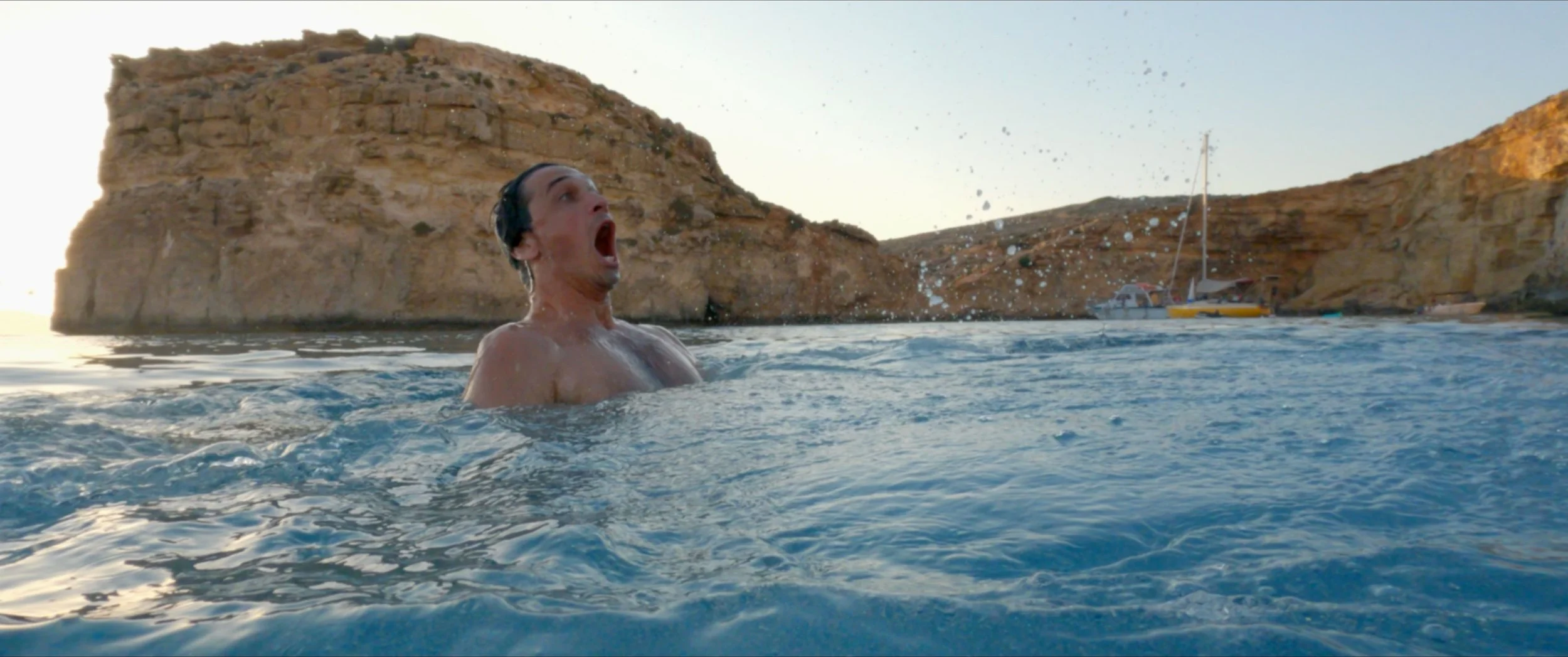
Instead, the film builds toward a late sequence so bizarre and tonally out of place that it feels like it wandered in from an entirely different movie. It’s the kind of scene that might work in something like Sharknado, where ridiculousness is the point. Here, it just leaves you confused about what the filmmakers were even aiming for.
There is, however, one unintentionally hilarious moment. At one point, the shark lets out what can only be described as a roar. Not a splash, not a thrash, but a full-blown animalistic bellow. While the filmmakers may have intended it as a nod to Jaws, the moment lands with all the subtlety of a Saturday morning cartoon. Rather than making the creature more intimidating, it highlights a fundamental misunderstanding of what makes sharks frightening in the first place. Sharks are terrifying because of their silence, their unpredictability, and their cold, instinctive nature. Giving one a roar only strips away that menace and turns it into something far less threatening.
By the time the film limps back to its closing voiceover, echoing the same lifeless delivery from the beginning, Chum has firmly established itself as just another forgettable entry in an overcrowded subgenre. There’s no depth, no real tension, and no sense of fun to offset its flaws. It’s a stripped-down, less clever, less entertaining version of better shark survival stories.
The frustrating part is that you can see glimpses of effort behind the scenes. The production clearly faced the challenges of shooting on open water and working within a limited budget. But effort alone doesn’t translate into entertainment, and Chum never figures out how to turn its limitations into strengths.
The poster might promise something slick and dangerous, but the movie itself is all slack lines and dull hooks. In the end, Chum isn’t scary, it isn’t thrilling, and it isn’t even fun-bad enough to recommend widely. It just kind of exists, floating aimlessly until it runs out of time.
Jessie Hobson