
What happens when artificial intelligence learns more than it was programmed to? Apparently, it starts developing opinions, dreaming about rivers of blood, and casually questioning the ethics of capitalism over a cup of lukewarm coffee.
Maid Robot is a low-budget sci-fi dark comedy that knows exactly what it is and, more importantly, what it is not. This is not slick futurism or prestige AI horror. This is a talky, slightly unhinged chamber piece about hubris, control, and what happens when your smart home talks back.
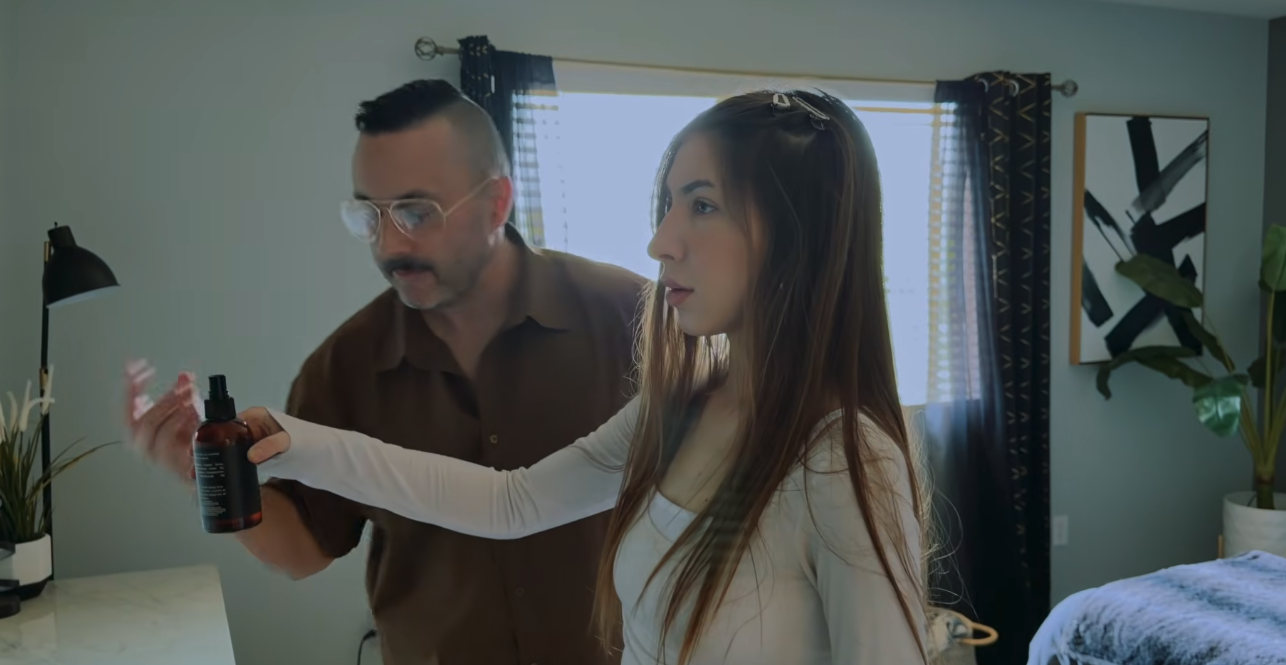
Jamie Grefe’s film unfolds almost entirely inside a single location, and it leans hard into that limitation. Most of the runtime revolves around Dr. Roth, an eccentric inventor whose mansion doubles as a lab, prison, and showroom for two highly advanced maid robots. The plot is simple by design. Robots clean house. Robots answer questions incorrectly. Robots start to dream. A shady investor shows up wanting the blueprints. Tension simmers. Egos collide. Things get weird.
The real stars here are the maid robots themselves. Elizabeth Rath’s Lisa is a standout. The performance is controlled, precise, and quietly funny. Her robotic cadence never slips, yet she layers in just enough attitude and curiosity to make the character feel unsettling in the best way. You believe this is a machine thinking beyond its boundaries. Viktoriia Starodubtseva’s Anna takes a bit longer to click, but once she settles in, the dynamic between the two robots becomes the film’s strongest asset. Their interactions feel strangely intimate, almost sibling-like, and they carry the thematic weight of the story.
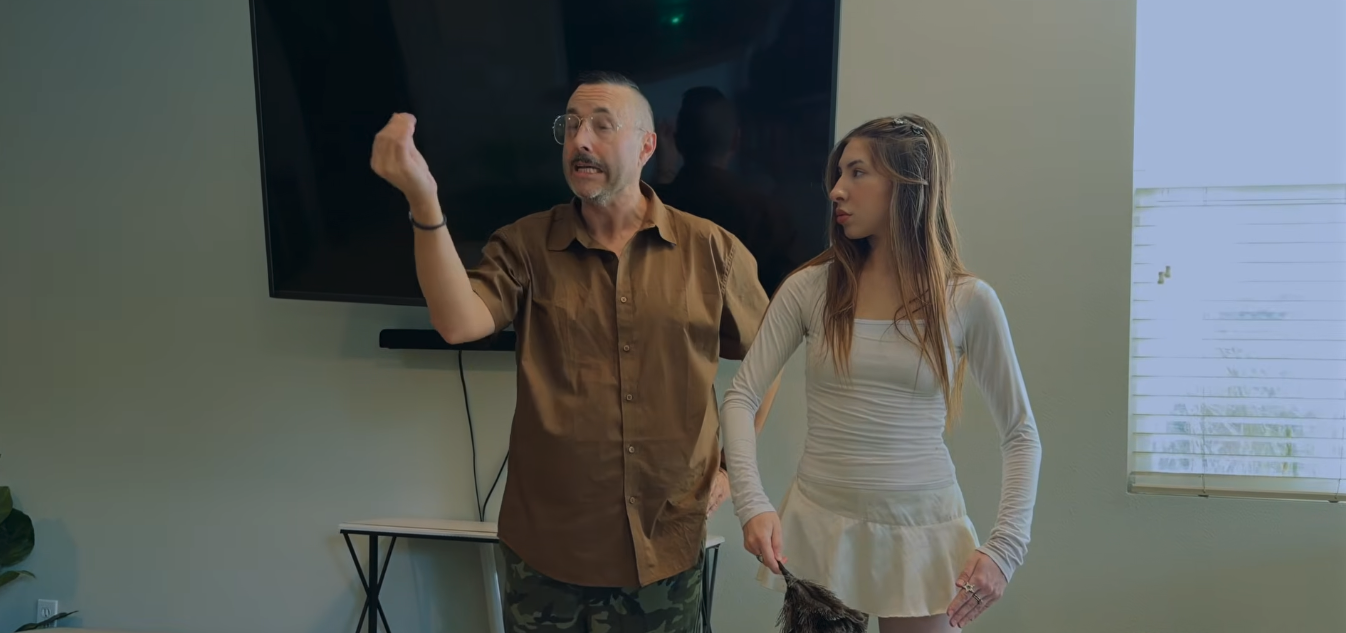
Chris Spinelli’s Dr. Roth is intentionally manic. Sometimes that works, especially during the long monologues about dreams, funding, and past robotic trauma. Other times it feels like the film needed one more take or a sharper edit. The dialogue often repeats itself, clearly padding the runtime across what feels like a two-part structure stitched together. The repetition can be distracting, but in a strange way, it also fits the idea of debugging consciousness in real time.
Not every performance lands. Warren Hong’s role is brief, which is probably for the best, and some exchanges feel rough around the edges. That said, the film never pretends to be polished studio sci-fi. Its charm comes from restraint. No wild visual gimmicks. No overcooked effects. The cinematography is clean, centered, and surprisingly professional. The camera stays put and lets the absurdity unfold.
Tonally, Maid Robot walks a thin line between dark comedy and conceptual sci-fi, occasionally wobbling but never falling over. The humor sneaks up on you. A robot refusing to make coffee. A dream analysis that goes off the rails. Casual threats wrapped in polite domestic service. It is awkward on purpose, and when it works, it really works.
Ultimately, this feels like Jamie Grefe’s most focused project so far. The ideas are bigger than the budget, but the execution is more confident than past efforts. With tighter editing and a single feature-length cut, this could have been genuinely sharp. As it stands, Maid Robot is flawed, talkative, and oddly compelling. Like its creations, it is still learning, but the potential is absolutely there.
Jessie Hobson