
There are certain films that burrow under your skin, not because of how loud they are, but because of how recognizable the dread feels. American Dollhouse, the latest from director John Valley, is one of those movies. Premiering in the Midnighters section at SXSW, the film turns familiar holiday warmth into something isolating, exhausting, and deeply unnerving, a shift that feels deliberate in the best way possible.
I was lucky enough to sit down with Valley and cast members Richard C. Jones, Hailley Lauren, Danielle Evon Ploeger, Kelsey Pribilski, and Tinus Seaux at SXSW, and the conversation made it clear just how intentional this film is beneath the blood and broken ornaments. I was already a fan of Valley’s debut and knew Richard C. Jones from other work, so getting to see this group together, both on screen and in person, was a genuine highlight. Every performance hit hard, and the chemistry was impossible to miss.
Valley explained that while the film’s Christmas setting feels clever in hindsight, it wasn’t conceived as a novelty hook. Christmas, for him, has always carried weight. Growing up as the youngest of five in a large family, he described the season as something stressful and emotionally loaded, watching parents strain themselves to create something magical while quietly burning out. That fatigue stuck with him. It made the holiday a natural backdrop for a story about pressure, denial, and emotional collapse, not something cozy, but something looming.
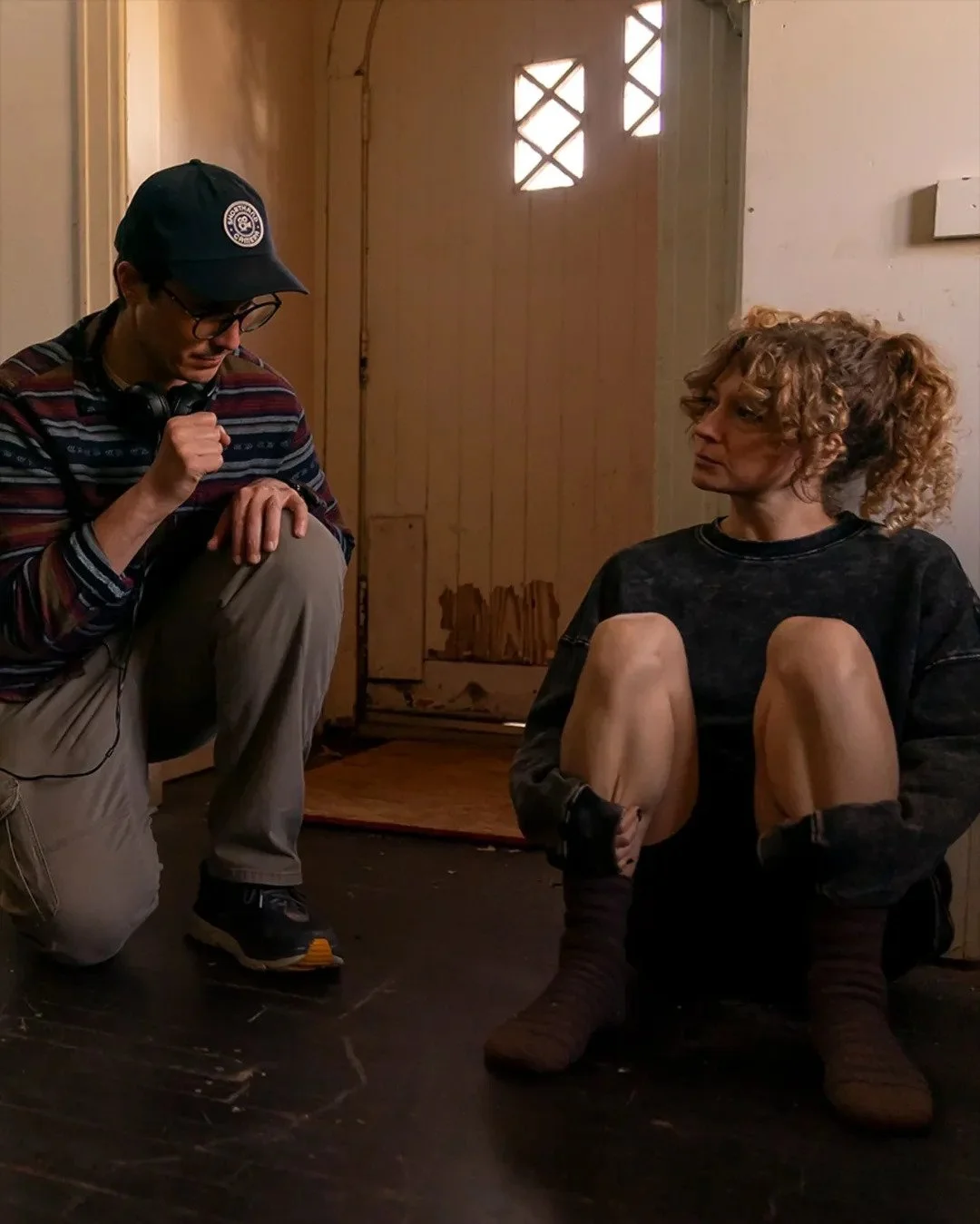
That tonal shift is exactly what caught the cast off guard when they first read the script. What initially felt like a grounded drama suddenly veers into outright horror once the layers start peeling back. A few actors recalled how the script reads almost deceptively normal at first, until it crosses a line and becomes something much darker. What made that turn work, they emphasized, was how fully Hailley Lauren internalized the emotional stakes of the story. The horror did not overwhelm the story; it revealed it.
That sense of realism was something Danielle Evon Ploeger immediately connected to. What unsettled her most was not just the violence, but how casually the world around the characters accepts it. The idea that an entire town could turn a blind eye, that disaster can happen, and people simply shrug it off as not their problem, felt painfully familiar. That normalization of neglect made the story feel less like heightened genre and more like an uncomfortable reflection of everyday life.
For Hailley Lauren, the emotional core of American Dollhouse lives in the shared trauma between her character and Kelsey Pribilski’s, two women shaped differently by similar childhood wounds. She talked about how heartbreaking it was to read a script centered on forgotten kids who grow up still yearning to hear that they are loved, a need that never really disappears. What makes it even more unsettling, she noted, is how that unhealed pain mutates through Kelsey’s character’s childlike perspective, turning moments of violence into something instinctual rather than calculated. The result is a collision of sadness and brutality that is deeply jarring and disturbingly effective.

One of the most striking moments in the conversation came when Kelsey Pribilski talked about what truly unsettled her, and it had nothing to do with jump scares. What haunted her was the constant dismissal her character endures, the way everyone around her insists that nothing is wrong, that what she is experiencing is not real, that she is simply overreacting. Pribilski explained that being disbelieved, especially as a woman, is the kind of fear that can drive you insane. Everyday life already carries an undercurrent of threat, and seeing that reality reflected so honestly within a horror film was both rare and deeply validating.
That honesty hit harder knowing the script was written by a man, a question that Kelsey admitted might have given her pause if she had not known Valley personally. She emphasized that his writing never feels like it caters to a gender, but instead treats characters as people first. Valley later reflected on this, acknowledging that while he would never claim to understand the lived experience of women, he is acutely aware of the inherent lies baked into patriarchy. For him, remaining honest about that imbalance was essential to not betraying the material.
Richard C. Jones was drawn to the film for similar reasons, particularly its understanding of small-town dynamics. He spoke about the brother-sister relationship and the way Valley captures the quiet, grinding tension of rural life. It reminded him of where he grew up, and he likened the film’s emotional undercurrent to something like The Grapes of Wrath reimagined as a horror story. As an actor, that specificity on the page made him want in.
Part of what elevates American Dollhouse is how lived-in the relationships feel, and that did not happen by accident. The cast talked about rehearsals as a rare gift, a chance to find chemistry before stepping on set. Having that space allowed performances to loosen up, to feel reactive instead of rigid. By the time cameras rolled, the cast was not playing connection; it was already there.

Valley noted that while he did not overload his actors with homework, there were clear genre touchstones guiding the process. Films like Psycho, Peeping Tom, Black Christmas, and even Blue Velvet hovered in the background, less as direct references and more as structural DNA. He described those stories as sharing a kind of machinery, similar frameworks that feel radically different depending on the people inhabiting them and the era in which they are made. For him, the goal was not to reinvent the form, but to let these specific voices and performances make it feel new.
Knowing the film would premiere for a horror-forward audience at SXSW only strengthened that commitment. Valley spoke passionately about horror fans as some of the last true movie lovers, audiences willing to engage with a film on its own terms rather than what it is trying to signal. He wanted the movie to speak for itself, to trust viewers to sit with the discomfort, and preferably to experience it together.
That communal aspect came up again when discussing how the film plays in a theater. Valley described the shared reactions as a way of grounding yourself, of realizing you are not alone in feeling unsettled or disturbed. When a room full of strangers screams, laughs, or sits in stunned silence together, it becomes a kind of emotional checkpoint. There is catharsis in that, especially in a movie that centers so much on primal expression and bottled up rage.

As the conversation wrapped up, one thing became increasingly clear. American Dollhouse may use a familiar structure, but there is nothing generic about the people inside it. Valley put it simply. We have seen movies like this before, but we have never seen these actors, these voices, in this space. That is where the originality lives.
After seeing the film and speaking with everyone involved, it is hard to disagree. American Dollhouse is not just a Christmas horror movie. It is a deeply human one, and the film doesn’t stop at the credits.
Jessie Hobson