
Disolution is the kind of film that creeps up on you, sinks its teeth in early, and refuses to let go. What starts as a dark romance quickly mutates into something far more vicious and morally tangled. At its core, this is a revenge story fueled by love, desperation, and the terrifying idea that fate can be tampered with if you are willing to pay the price.
The premise is instantly gripping. A woman trapped in an abusive marriage turns to a forbidden ritual to save her dying lover by transferring his terminal illness to her husband. It is a clean hook, but the film is smart enough not to play it loud. Instead, it lets the tension simmer, keeping the audience locked in a constant state of doubt. Who deserves sympathy, who is exploiting whom, and how far is too far when love is already dying?
Director Kevin Van Stevenson shows serious control of tone. Disolution never rushes its moments. It allows scenes to linger, letting silence, glances, and body language do as much work as dialogue. There is an inescapable sense of doom hovering over the entire film, the feeling that every decision is carving something irreversible into stone. The narrative drops unexpected turns without breaking its internal logic, rewarding viewers who stay alert instead of spoon-feeding answers.
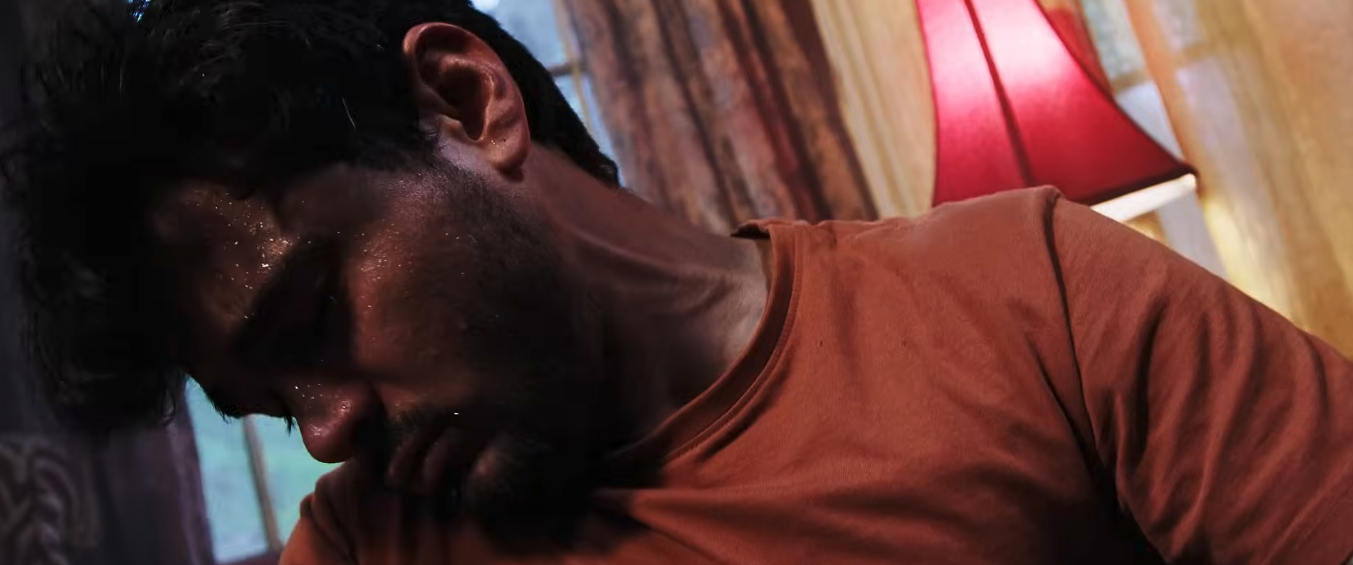
Visually, the film is strong and deliberate. Cinematography leans heavily into mood with shadow forward lighting, careful framing, and a color palette that mirrors emotional rot beneath polished surfaces. Every frame feels intentional without calling attention to itself. The film looks confident, coherent, and emotionally tuned to the story it is telling, which elevates the experience well above standard indie thriller territory.

The performances help glue everything together. Marie Tiberi carries the film with a layered performance that walks the dangerous line between vulnerability and manipulation. Her character is relatable enough to pull you in, but complicated enough to make you uneasy as the story progresses. Dip Patel brings grounded emotional weight that balances the supernatural edge of the narrative, while the supporting cast delivers believable chemistry and tension across the board.
There are clear genre echoes here. Fans of slow-burn folk horror and femme fatale stories will feel right at home. There are shades of The Wicker Man in the ritualistic undertones and moral unease, but Disolution never feels like a copy. Instead, it blends noir romance and occult thriller into something quietly mean and thoughtful, where love is not salvation but a catalyst for destruction.
The film does demand patience. Viewers looking for clear answers early may feel unsettled by how long the film withholds its full truth. That restraint, however, becomes one of its biggest strengths. By the time the final act arrives, the audience understands exactly what kind of world they have been drawn into, and the consequences hit harder because of it.
Disolution is a confident, visually controlled dark romance thriller that stays with you after it ends. It pulls you into a convincing perspective, then dares you to sit with the moral aftermath. By the closing moments, you may find yourself questioning not just the characters, but your own comfort with revenge disguised as love. If this story continues, there is no shortage of darkness left to explore.
Jessie Hobson