
There’s a version of Wetiko that exists purely as a plot synopsis: a young Maya man takes a quick job delivering hallucinogenic toads into the jungle and finds himself trapped in a spiraling ritual run by outsiders playing shaman. But that version barely scratches the surface of what Kerry Mondragon is doing here. This is less a story you follow and more a space you enter, one that slowly shifts under your feet until you’re no longer sure what’s real, what’s performance, and what’s rotting underneath it all.
The film opens in a way that immediately signals you’re in for something different. The colors are almost overwhelming. Bold yellows, deep reds, burning oranges, everything feels alive, heightened, like it’s been pushed just a little too far into something dreamlike. Even the title text hums with a glow. There’s a strange confidence in that opening stretch, especially paired with The Tremeloes’ “Silence is Golden,” a needle drop that feels completely out of place on paper but locks in perfectly with the tone. It feels nostalgic and uncanny at the same time.
Then the film begins to decay.

As Aapo moves deeper into the jungle, the visual language shifts. That brightness fades into something rougher, more worn. The 16mm texture becomes more apparent, scratches, grain, imperfections creeping into the frame. It starts to look like a damaged artifact, like something that shouldn’t exist in clean form anymore. It’s a subtle but effective move that mirrors Aapo’s own slipping sense of control. He starts the film grounded, even if he doesn’t fully understand what he’s stepping into, and by the midpoint he’s operating on pure instinct, locked into a kind of tunnel vision that the film captures beautifully.
That immersion is one of Wetiko’s biggest strengths. The jungle doesn’t feel like a backdrop; it feels like a force. Sunlight cuts through dense trees, rain rolls in suddenly, mountains open and close around the characters. There’s a constant sense that nature is both beautiful and indifferent to everything happening inside it. Even moments where the narrative slows down still hold attention because visually, there’s always something alive on screen.
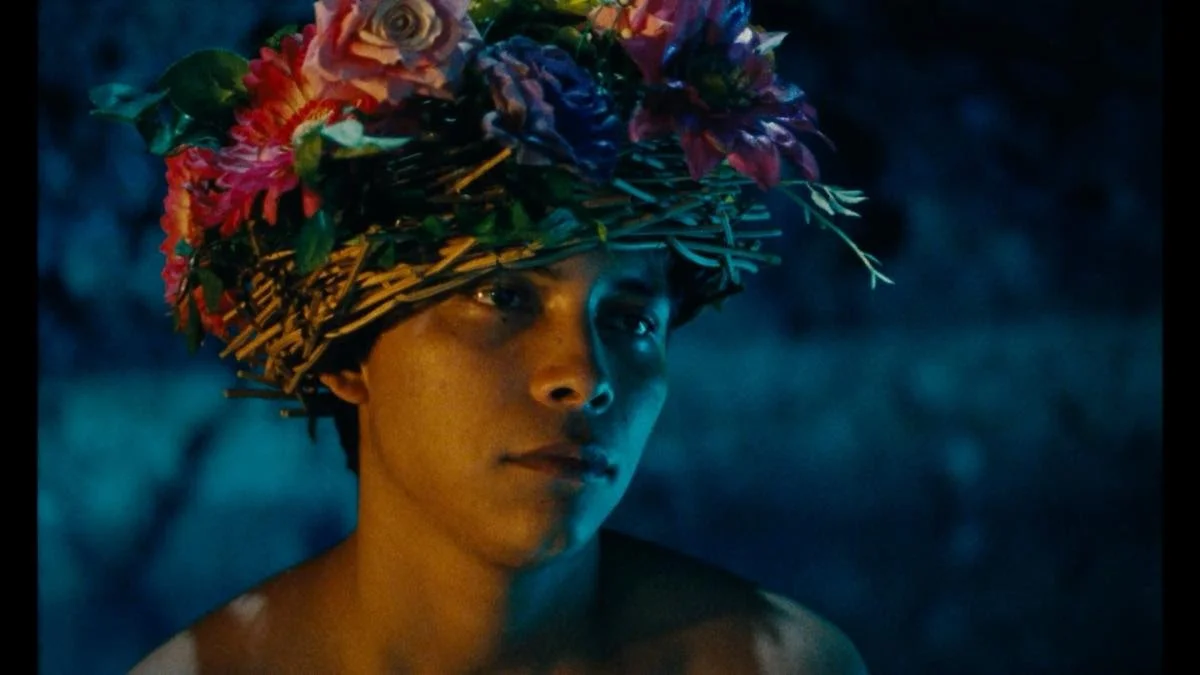
Mondragon leans hard into a retro influence that gives the film a unique identity. There are bold zooms that feel ripped straight from ’70s exploitation cinema, abrupt edits that disorient more than explain, and moments that feel intentionally kitschy without fully tipping into parody. At times, it feels like a lost Italian jungle horror film, the kind where atmosphere matters more than logic and the vibe is everything.
That energy carries over into the characters. Neil Sandilands’ Zaké operates as the film’s central force of manipulation, a smooth-talking figure who exists somewhere between guru and predator. The community surrounding him only adds to the unease. Women dressed in matching imagery, many of them sharing the name Maria, and rituals that feel rehearsed yet strangely convincing. There’s a deliberate artificiality to it all that reinforces the film’s larger themes about spiritual commodification and cultural consumption.
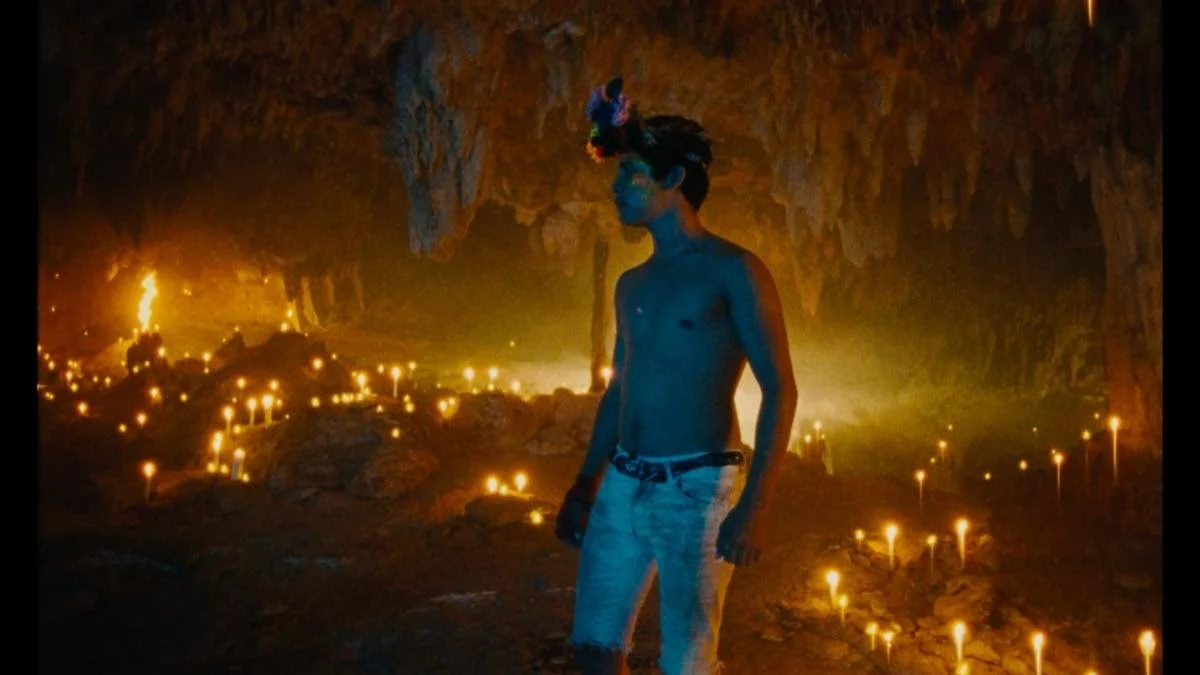
Even the music follows this push and pull between authenticity and disruption. The score itself is minimal, built on slow piano notes and creeping tension, but the film isn’t afraid to throw curveballs. A Gucci Mane track shows up and somehow clicks, not on paper, but because the film has rewired your expectations. By that point, the mismatch feels intentional, adding to the haze rather than snapping you out of it.
That said, Wetiko won’t work for everyone. It sustains a steady sense of dread, like something is always on the verge of breaking, but it rarely delivers that release in a conventional way. There are flashes of chaos, especially within Aapo’s hallucinations, yet it stops short of becoming the full-blown spiral some viewers might be waiting for. It definitely gets wild at times, but there’s a lingering sense that it could have pushed even further.
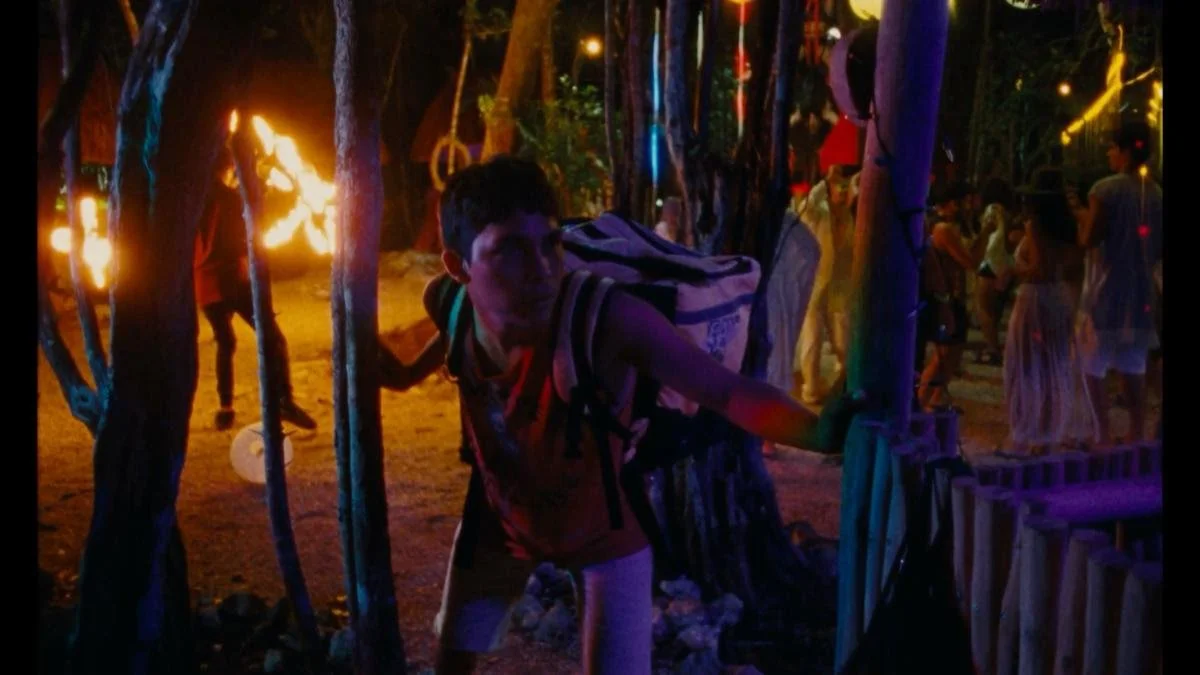
There’s also an argument to be made that certain elements clash with the grounded realism the film otherwise achieves. Some performances and casting choices, while interesting, occasionally feel at odds with the more naturalistic tone. At times, the stylization risks pulling focus away from the emotional core, especially when the film leans heavily into its more self-aware moments.
But when it works, it really works.
What Wetiko excels at is mood. There’s a creeping unease that never fully dissipates, a sense that everything on screen is slightly off. Underneath that is a deeper exploration of duality. Culture and exploitation. Spiritual connection and performance. Tradition and commodification. Mondragon isn’t subtle about these ideas, but he doesn’t need to be. They’re embedded into every frame, every interaction.
And then there’s the ending. After spending so much time in this uneasy, drifting space, the film finally lands with something that feels decisive. It doesn’t undo the ambiguity that comes before it, but it gives the journey a sense of purpose that clicks into place in a satisfying way.
Wetiko is not a passive viewing experience. It demands patience, openness, and a willingness to sit in something that doesn’t always resolve cleanly. For some, that’s going to translate as slow or even frustrating. For others, it’s going to feel like a rare kind of cinematic trip, one that prioritizes sensation and atmosphere over structure.
Either way, it’s hard to shake. And it’s even harder not to recommend.
Jessie Hobson