
Brandon Christensen has steadily carved out a space as one of the most dependable voices in modern genre filmmaking. From supernatural horror to slashers to experimental format pieces, his films consistently show a director who understands the language of genre and knows when to push against it. Bodycam feels like the natural next step in that evolution, a film that weaponizes realism, perspective, and restraint to deliver sustained, nerve-shredding tension.
At its core, Bodycam takes inspiration from something Christensen already found unsettling long before cameras ever rolled. He admitted that bodycam footage has long fascinated him, noting, “I watch body cam videos on YouTube constantly… there’s just always every time you’re walking up for a traffic stop, it’s always tense because you don’t know what you’re going to see.” That uncertainty became the backbone of the film’s design, where fear comes not from spectacle but from limitation. As Christensen put it, “You’re limited by what you’re going to see. You don’t know if you’re even going to see the person at all because the camera’s not going to pick it up.”
That philosophy carries through every creative decision in the film. Bodycam rejects many traditional cinematic tools, including music. Christensen explained that the absence of a score was intentional, saying, “There’s no score in this movie… if it’s not in the scene we can’t hear it.” Without musical cues to guide emotion, tension has to exist naturally within the frame, built through darkness, space, and movement. Even something as simple as entering a room becomes unsettling when, as Christensen described, “you’re just walking through the room, it’s dark, your viewpoint is limited. It just creates a natural tension anyways.”
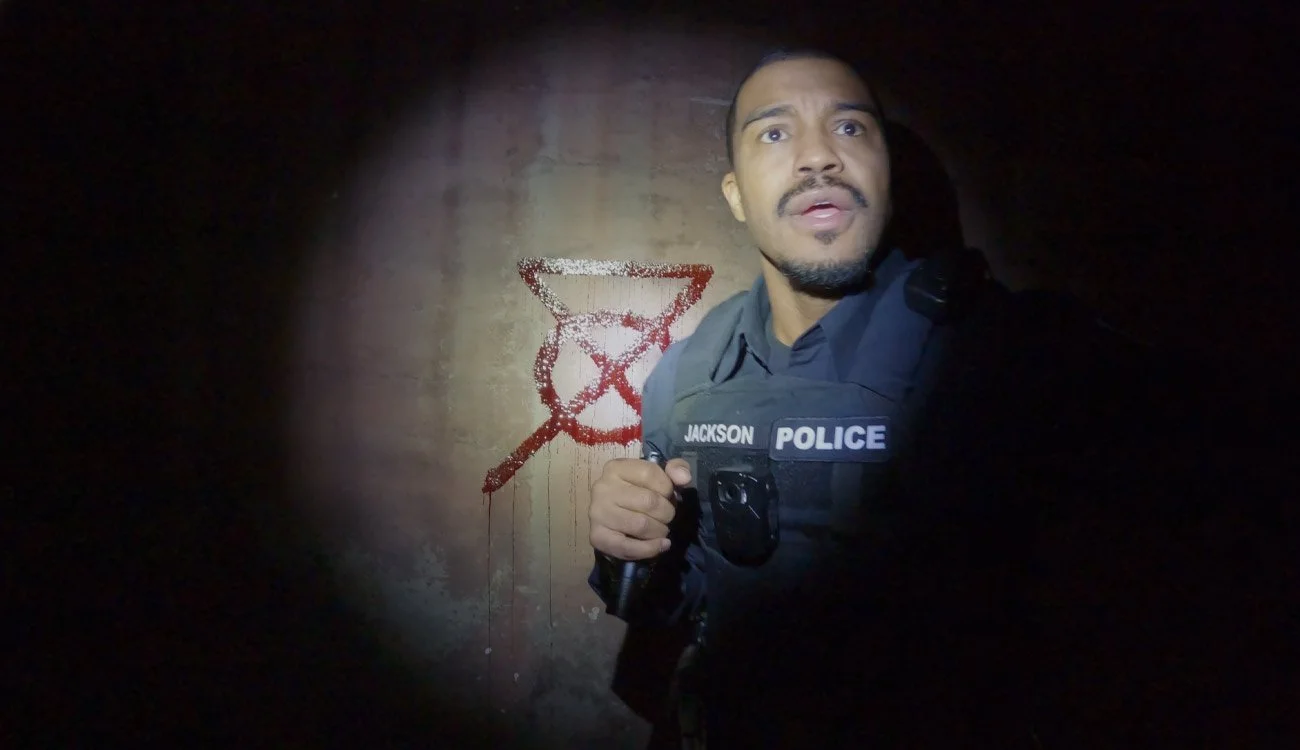
One of the film’s boldest choices was placing the camera and lighting almost entirely in the hands of the actors themselves. This stripped away the traditional separation between performer and production and allowed scenes to unfold with an uncomfortable immediacy. Christensen noted that, unlike a standard shoot where “there’s going to be crew people in every side room,” the actors were “just in the space… the world was open to them.” For him, that openness created moments that feel uniquely immersive, especially in scenes that unfold in a single continuous take.
“There’s a scene early on when Jackson runs from upstairs all the way downstairs in one continuous take,” Christensen said. “You can’t do that in a normal film… you’re with him, you’re on his chest, he’s breathing.” That closeness puts the audience directly inside the panic of the moment, blurring the line between viewer and participant.
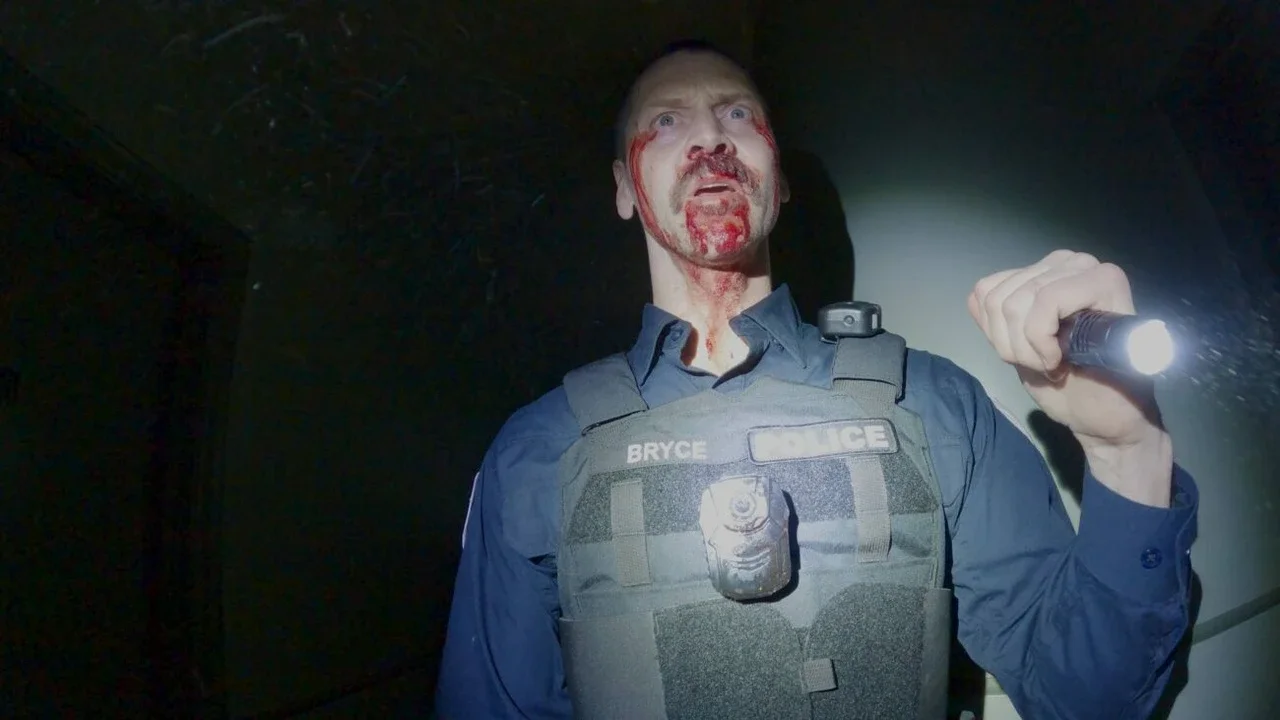
Of course, that freedom came at a cost. The constantly shifting perspective turned post-production into a massive technical challenge. Christensen admitted that “the hardest part honestly was just visual effects,” explaining that every movement changed how the footage had to be tracked and treated. Many of those effects are deliberately invisible, designed to blend seamlessly into the realism of the footage. “So much of the effects in this movie are invisible by design,” he said, revealing that the film required “probably 250 shots” of visual effects work.
Despite the film’s small budget, Bodycam takes several ambitious swings, none bigger than a surreal sequence that sends Officer Jackson alone through a city that feels slightly off, like reality itself is unraveling. Christensen described the process as building an entire environment from scratch, saying, “We had to design a city in Unreal Engine… create a path for it… and then we got to go back and shoot it in a volume.” The sequence nearly didn’t make the final cut. “There was a time deep in post-production where I was like we might have to cut this whole scene,” he admitted, adding that “the fact that it works at all is a miracle to me.”
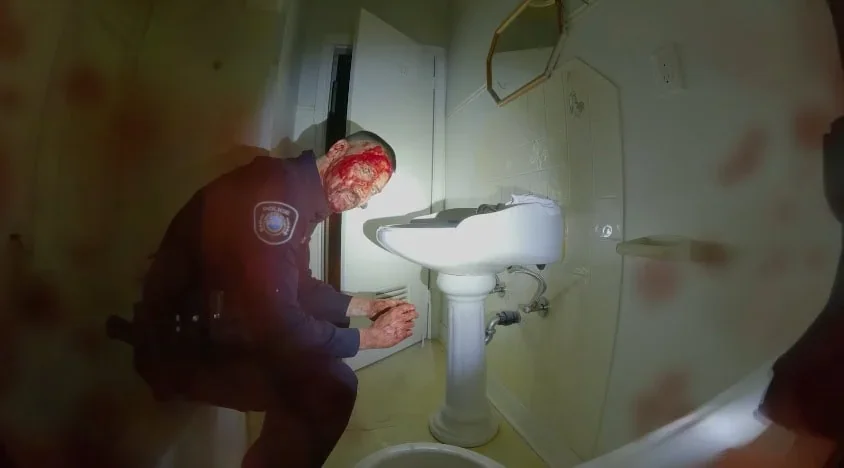
What grounds all of this experimentation is Christensen’s commitment to realism, especially in the film’s opening act. He emphasized how important it was for the early moments to feel authentic, explaining that “the first like 15 minutes of the movie… had to feel by the book and real so that when things spiral out of control… the audience is along for the ride.” A police technical advisor helped ensure that procedures were accurate, creating a strong foundation before the film descends into chaos.
That balance between realism and genre thrills is what makes Bodycam so effective. Christensen understands that fear does not always come from what is shown, but from what is withheld. “You really learn that showing and not telling is important for something like this,” he said, noting that the format often forced characters to physically move closer to danger just so the audience could see what mattered.
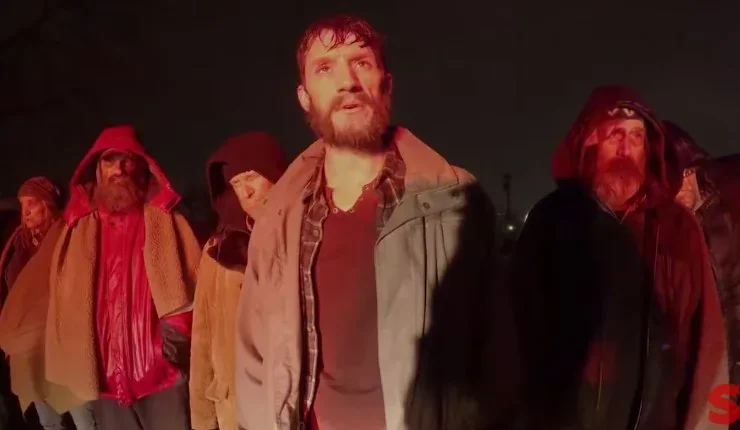
Looking ahead, Christensen seems content continuing to explore different corners of the genre without locking himself into a single identity. He acknowledged that he enjoys “playing in all these different subgenres and trying to do my own thing in them,” while also recognizing the freedom that comes from working at smaller budgets. “I’m just like, this would be cool, and I think this would be really fun to make. Let’s try it,” he said.
Still, for fans hoping for a return to earlier territory, there is reason to be optimistic. Christensen made it clear that revisiting past worlds is not off the table, stating, “I would definitely return to Reaper again or Bodycam again if the situation came up for sure.”
Selfishly, I hope he does. Night of the Reaper was a breath of fresh air for the slasher genre, and Bodycam proves Christensen is just as skilled at crafting dread through realism and constraint. He continues to churn out genre films that understand their lane while still pushing against it, and with each project, his confidence behind the camera only grows.
Brandon Christensen is absolutely a director to watch, and Bodycam is further proof that his best work may still be ahead of him.
Jessie Hobson