
There are films that live and die by spectacle, and then there are films that live and die by the people at their center. Our Hero, Balthazar firmly belongs in the latter category. Director Oscar Boyson has openly said that the movie rises or falls on the tension between its two leads, and after speaking with Jaeden Martell and Asa Butterfield, it is clear that tension was not manufactured. It was earned.
The film places Martell’s Balthazar Malone and Butterfield’s Solomon Jackson into a pressure cooker of loneliness, performance, and misdirected connection. What makes it work is not just the writing or the direction, but the trust built between two actors who understood exactly what was being asked of them.
“We kind of hit it off pretty quick,” Butterfield explained when discussing their off-camera dynamic. “We really admire each other’s work and knew how, especially in a movie like this, where the subject matter is so sensitive, and the characters are so specific, and you haven’t got a huge budget to spend weeks figuring it out, you kind of got to come and be ready to roll.”
That sense of readiness is all over the film. The long takes, the sustained emotional pressure, and the feeling that scenes could tip in any direction only work if both performers are locked in. Butterfield pointed to the importance of collective effort, saying, “When you make a movie like this, you really all have to band together. Not just the actors, but the whole team and the crew were incredibly hardworking.”

Martell echoed that sentiment, but also highlighted something more personal. “That starts from the top, starts with Oscar, and then it starts with a guy like Asa who sets the tone really early,” he said. “I remember having a moment pretty early on, right before we started filming, where I looked into his eyes, and I was like, I can’t mess this up. I got to work really hard because I know he’s thinking about the movie right now, and that’s a great feeling.”
That level of mutual respect shows up in the way their characters circle each other. Balthazar watches. Solomon reacts. The dynamic is unsettling because it feels lived in rather than staged. Martell described the experience of acting opposite Butterfield as a privilege, noting, “I’m watching such a great actor who’s transforming completely. That makes my job easier when those things line up like that.”

Both actors emphasized how essential trust was when pushing scenes to their emotional limits. “You can only do that if you have faith that the other guy can meet you there,” Butterfield said. “I think we found that pretty early on, where we knew that was going to be required of us in this movie.”
One of the most striking sequences in the film, the bus stop scene, became an early blueprint for that collaboration. Martell broke it down in practical terms, explaining how clearly defined character functions helped them stay grounded. “I’m doing this sort of performative thing. He’s getting really freaked out, and I’m reacting to him the whole time,” he said. “Once the boundaries are set like that, it makes your job a whole lot easier.”

Off set, that intensity was balanced by genuine camaraderie. The two talked about exploring Texas together, bonding over downtime, and finding ways to decompress after demanding days. That balance matters, especially in a film that never lets its audience fully relax.
From my own perspective, this was my second time interviewing Jaeden Martell, and he continues to impress. He is thoughtful, focused, and extremely professional for his age, with a clear understanding of how collaboration fuels performance. Asa Butterfield was equally impressive. I have been a fan since Hugo and Ender’s Game, and seeing him lean into something darker and more volatile here feels like a natural evolution. I still wish we could have seen more from the Ender’s Game franchise, because that first film was a blast, but Our Hero, Balthazar shows just how far Butterfield has come.
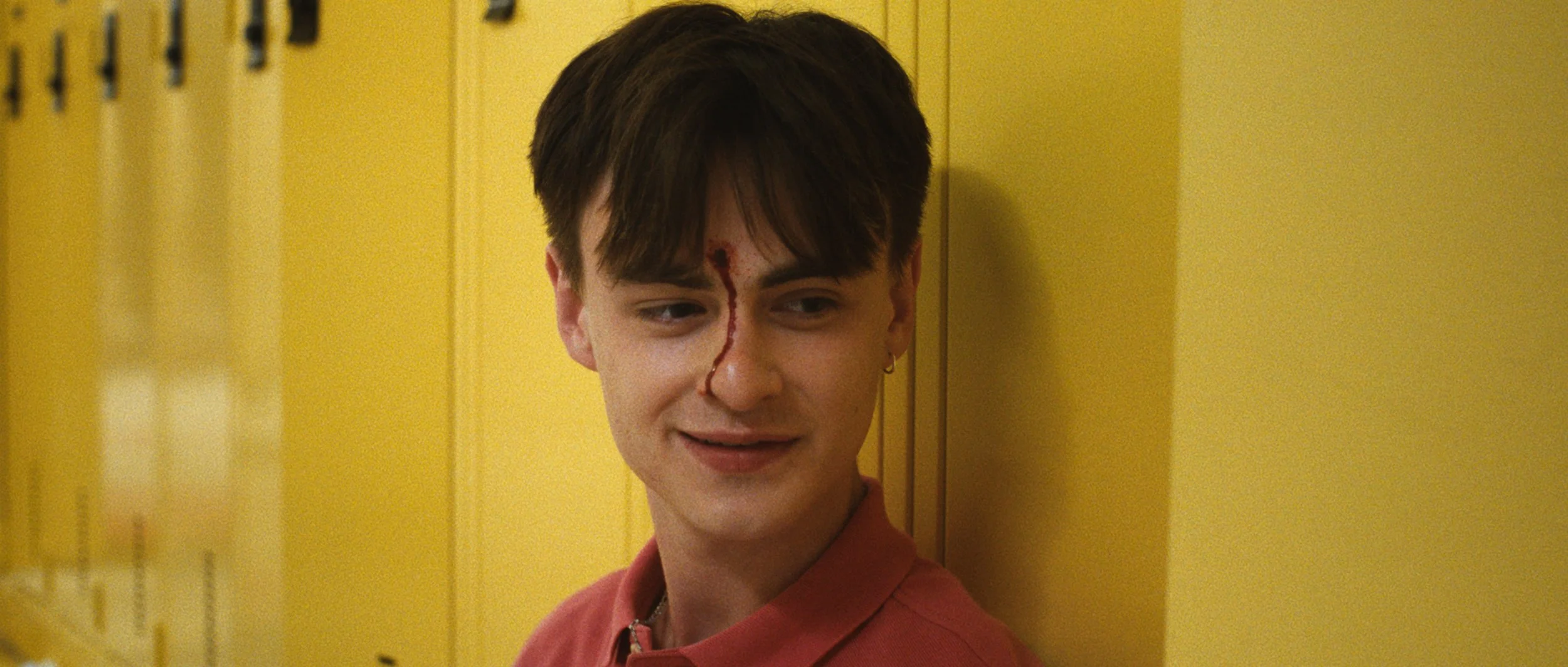
At the end of the conversation, it was clear that neither actor viewed the film as something they carried alone. “We all made really great friends and had a great time making this movie,” Butterfield said, and that sense of shared effort lingers.
Our Hero, Balthazar is not an easy watch, but it is a compelling one, anchored by two performances that never flinch. Martell and Butterfield do not just play tension. They build it, sustain it, and trust each other enough to let it breathe. That trust is the film’s real engine, and it is why the movie works as powerfully as it does.
Jessie Hobson