
From the jump, the conversation with Gene Simmons and Renny Harlin felt different. It started with laughter, which immediately set the tone. This was not a stiff press stop but a loose, genuinely fun conversation with two creative lifers who still believe movies should be loud, dangerous, and experienced the right way. As someone who has followed Harlin’s career for decades and has now spoken with him twice, and as someone who has seen Gene Simmons light up the Houston Rodeo with Kiss, getting the two of them together to talk disaster cinema felt like a wild collision of worlds that somehow made perfect sense.
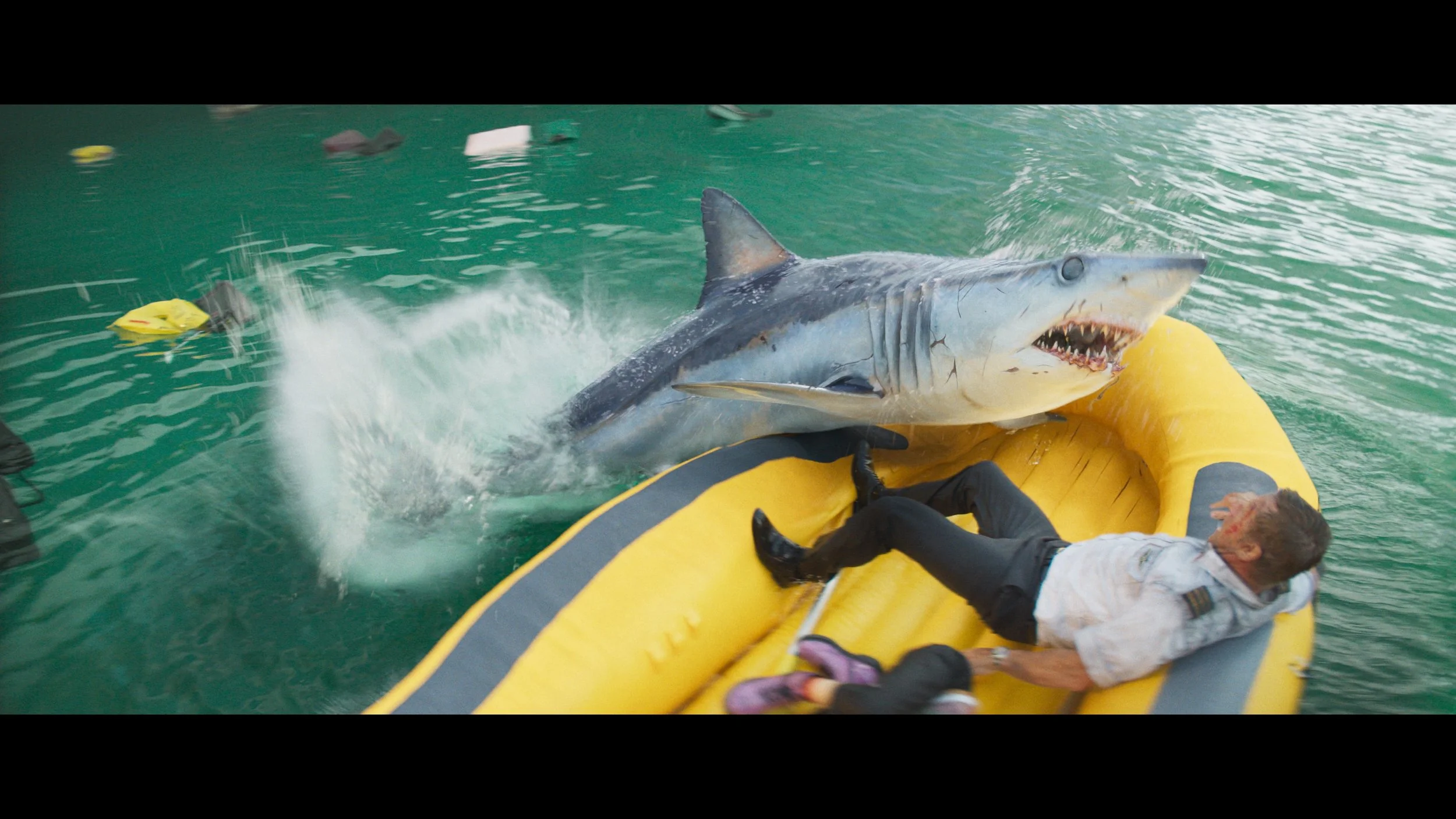
For Harlin, Deep Water was never meant to slip quietly onto a streaming platform. He was adamant that this was “a movie that was made for the big screen,” pointing to the sheer scale of the spectacle, from the plane crash to the chaos of being stranded in open water with sharks circling. He stressed how much work and time went into the movie, explaining that “this took three years to make this movie,” with sound, music, and detail carefully crafted to fully surround the audience.
The intention was immersion above all else. As Harlin put it, “our goal was always to put the audience inside the movie. Not just watch it, but be in the movie, experience it emotionally.” He talked about the joy of the shared theatrical experience, describing the rhythm of screaming, laughing out of embarrassment for screaming, then screaming all over again. For him, those reactions are the payoff, emotions felt from the safety of a theater seat. Movies like Deep Water are designed to be lived through together, not casually absorbed at home.
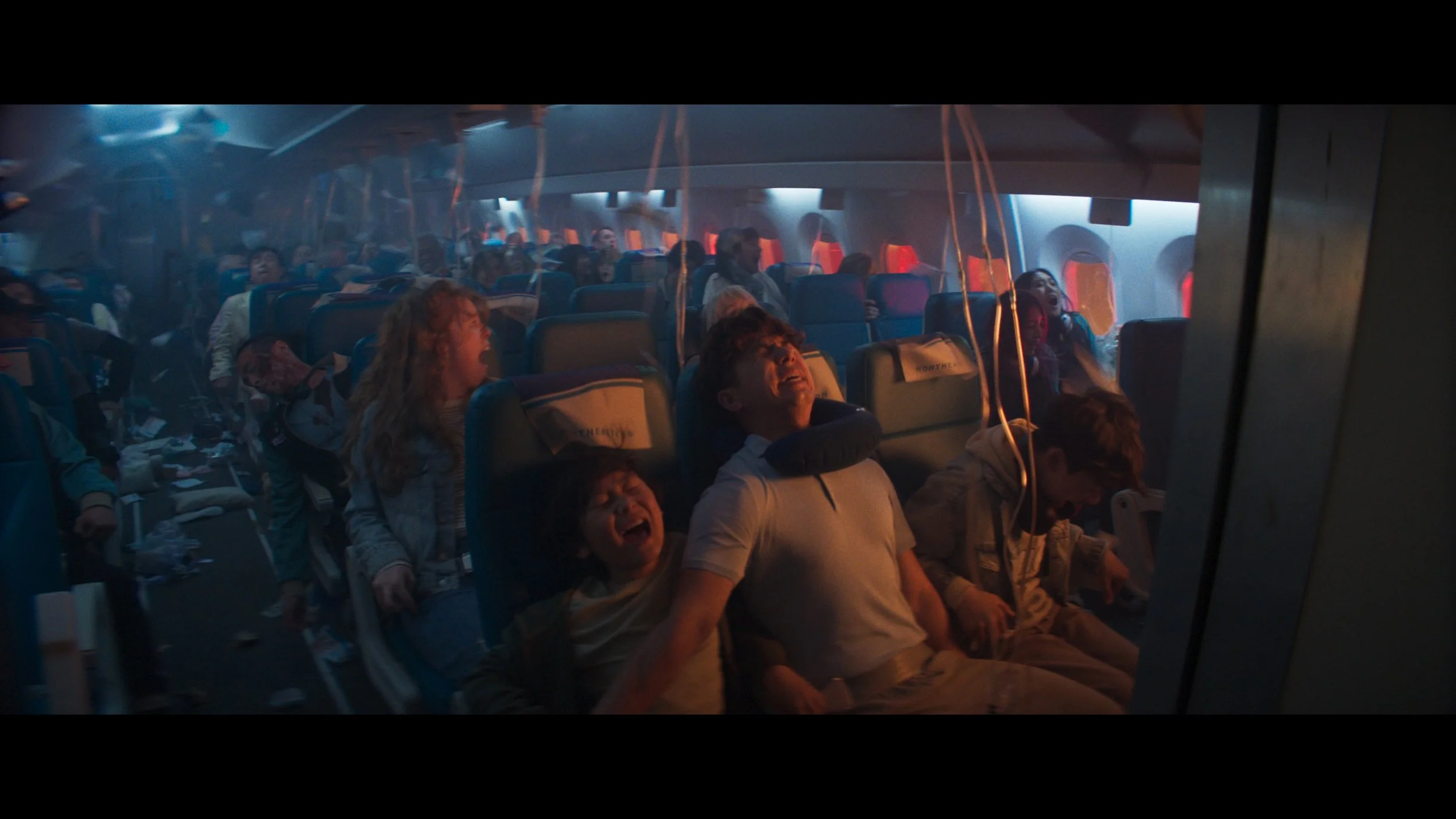
Simmons echoed that mindset immediately, framing the film as less of a passive watch and more of an endurance ride. He warned that “it’s important to go with somebody else because you’re going to need some support,” before describing the experience as something far beyond the ordinary. In his words, “this is not an ordinary film. This is an extraordinary film.” Once the ride begins, he said, “You’re going to buckle in,” and it is going to take you somewhere uncomfortable.
He was quick to point the spotlight at Harlin, praising what he called “the astonishing direction of Renny Harlin.” Even with a sharp script and a cast led by Ben Kingsley and Aaron Eckhart, Simmons was blunt about what truly matters. “With the right script and the right actors, without the right director, you have mush.” It is classic Gene Simmons honesty, but it captures exactly why Deep Water works as well as it does.
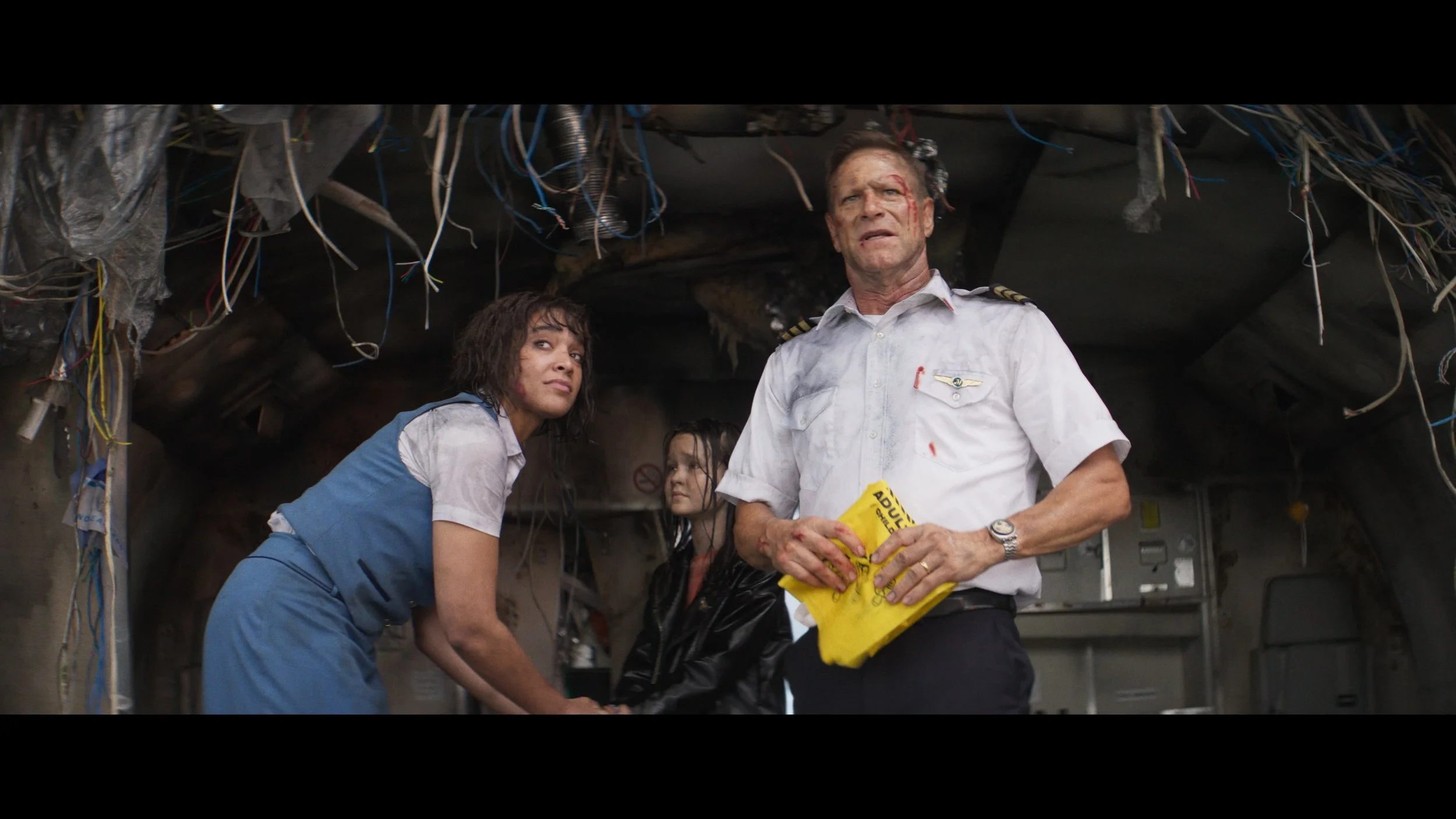
What stood out most was Simmons’ focus on the humanity beneath the chaos. He explained that Kingsley wanted to be part of the project because the story had weight beyond spectacle. “It ain’t just about the thrills and the chills,” he said. “It’s about the human condition, the instinct for survival.” He pointed out how the film explores both good and bad people under pressure, while singling out Eckhart for delivering a performance that grounds the madness, saying he “knocks it out of the park.”
Their partnership does not feel manufactured. Neither Simmons nor Harlin could remember exactly who reached out first, only that they already knew each other and had discussed working together before Deep Water finally came together. Harlin laughed as he admitted that while collaboration had been on his mind, he was “too embarrassed to call you every week” asking if something might line up. Simmons emphasized that those moments only turn into movies when passion takes hold, explaining that when an idea really connects, “you just can’t stop because you love it.”
That passion runs deep for Harlin and stretches all the way back to childhood. Growing up outside the United States, he experienced America first through movies. He spoke about being his mother’s date at the theater and watching horror films and thrillers far too young, including Rosemary’s Baby at six years old, something he joked left him “traumatized for life.” Without money or equipment, he turned to audio storytelling, creating scary radio-style plays with a tape recorder and charging neighborhood kids a few cents to sit on the lawn and listen.
When Harlin finally came to Los Angeles in his early twenties, the experience was surreal. Walking down the street, he realized everything matched the movies that shaped him. “The license plates, the street signs, the waiter in the diner,” all looked exactly like what he had seen on screen. Even the background noise shocked him. Hearing crickets at night, he admitted, blew his mind because he honestly thought that sound only existed in movies. For Harlin, getting to live in that world and make films within it is still, decades later, “a dream come true.”
When the conversation turned toward legacy, Simmons leaned into reflection. He spoke about how fleeting time really is and about the danger of waiting around instead of acting. “Life is short. Life is precious,” he said, urging people to get up every day and try to do something extraordinary instead of settling. He talked about reaching for something bigger than yourself, even if you never quite get there, and reminded everyone that the road is always bumpy. “It took three years for this movie to get up off the ground,” he said, stressing that nothing worthwhile comes easy and that if it did, everyone would be doing it.
Simmons also summed up the creative mindset in one blunt truth, noting that for artists and entertainers, “the day you lose it, it’s over.” Passion has to stay alive, or the work stops meaning anything.
Harlin responded with obvious admiration, calling Simmons an idol and praising his relentless energy and drive. Being asked about his own legacy still feels strange to him, especially remembering how he was nearly rejected from film school for being too young and inexperienced. Sitting here now, talking about a long career filled with both highs and lows, still feels unreal.

When Harlin spoke about where Deep Water fits into his filmography, he focused squarely on the audience. For him, scale only matters if it connects emotionally. “I think the audience is thankful when the movie ends if they felt something,” he said. That feeling, whether fear, relief, or exhilaration, is what makes leaving the house and buying a ticket worth it. He believes Deep Water brings together everything he has learned about spectacle, character, and emotion, combining them into an experience designed to be felt, not just watched.
Listening to Gene Simmons and Renny Harlin talk about Deep Water, it becomes clear that this film is more than a shark-infested disaster movie. It is a statement. A belief in theatrical chaos, shared fear, and the idea that movies should sometimes overwhelm you. After spending time with them, it is hard not to believe in that idea too.
Jessie Hobson