
Renny Harlin is back, and not quietly.
Deep Water feels like the kind of movie Hollywood stopped making somewhere between post 9/11 seriousness and the rise of sanitized CG spectacle. It is big, pulpy, unapologetically intense, and more vicious than it has any right to be. This is not prestige cinema. This is a director who understands momentum, scale, and how to wring maximum terror out of a nightmare scenario without pretending it is anything else.

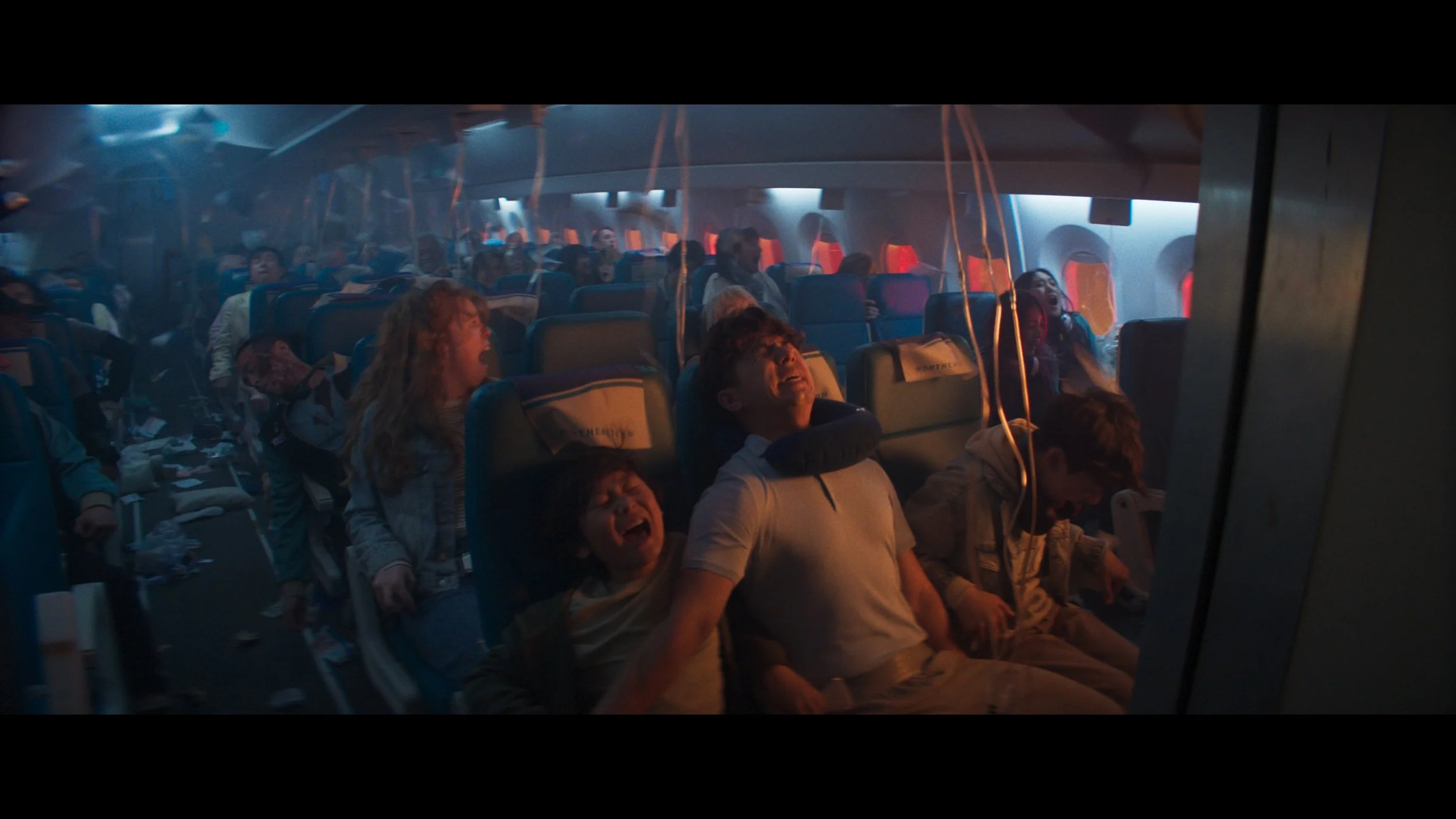
The setup is straightforward. A commercial flight from Los Angeles to Shanghai runs into catastrophic trouble over the Pacific, leading to a midair disaster that makes its intentions very clear early on. The buildup to the crash feels like a throwback to Final Destination with that creeping sense of inevitability hanging over every cockpit warning and uneasy glance. Once things go wrong, Harlin does not hesitate. The crash sequence is spectacular, brutal, and shockingly physical. Bodies slam against ceilings, people are violently ejected, the aircraft flips and tears itself apart in ways that feel disturbingly plausible. It is one of the most visceral plane crash sequences in recent memory, and easily worth the price of admission on its own.
What makes the chaos work is that the film takes just enough time beforehand to make us care. The ensemble cast is large, but surprisingly well-balanced. Each character gets a moment that establishes who they are without grinding the story to a halt. They feel human, not just shark bait with names. There is an odd choice in the age dynamic between the children, where siblings appear nearly the same age when the script clearly wants a younger sibling dynamic, but it is a minor hiccup rather than a deal breaker.
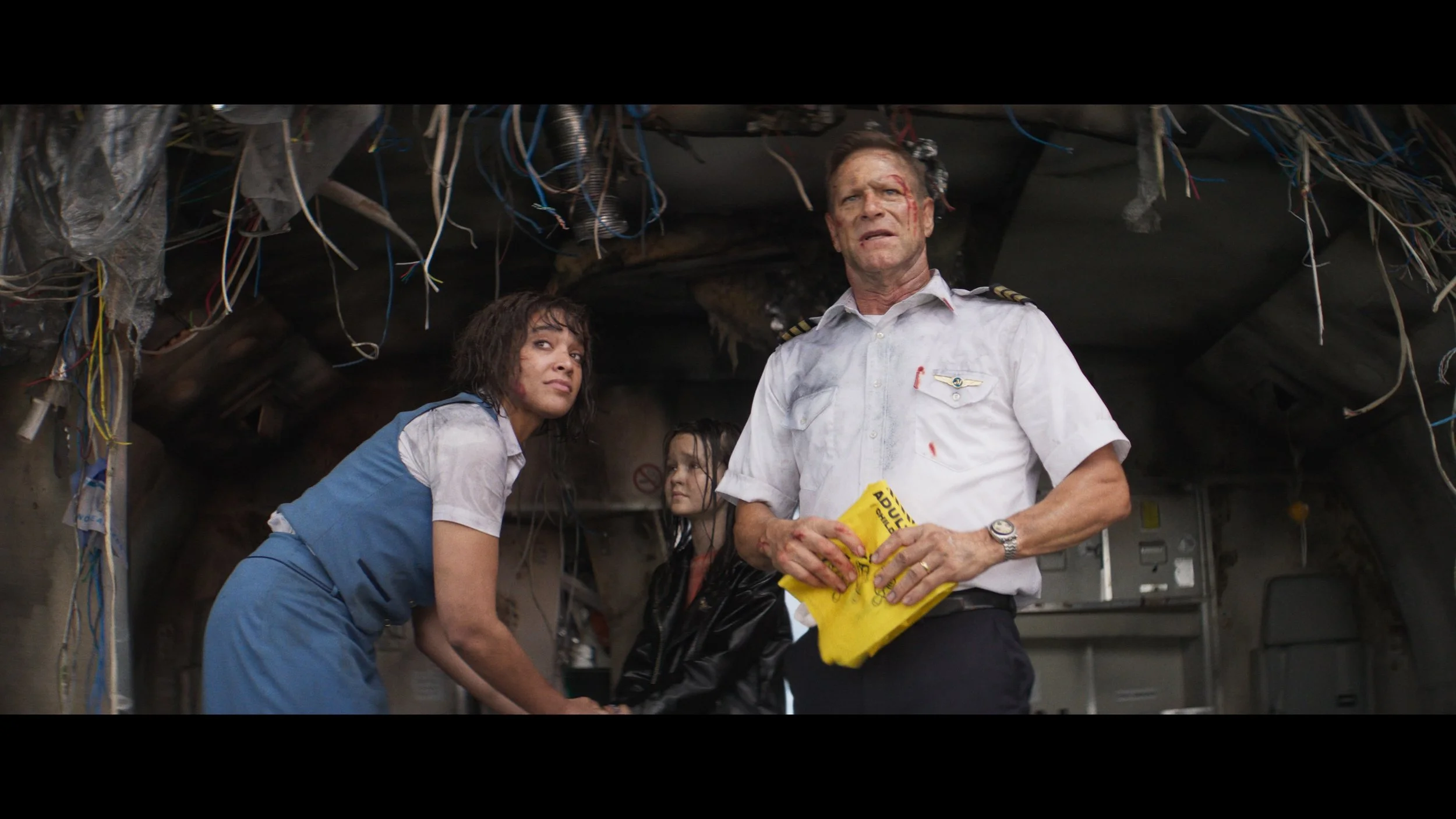
The film is anchored by Aaron Eckhart and Ben Kingsley, who bring a grounded presence that keeps the movie from drifting into pure schlock. Eckhart plays exactly the kind of capable, weary figure you want at the center of a survival film, while Kingsley brings gravitas without ever feeling above the material. They believe in this movie, and that belief matters.
Visually, Deep Water looks expensive. Not just in budget, but in ambition. The scale is massive, and Harlin uses some genuinely interesting camera angles to sell how the plane is compromised piece by piece. There is a real sense of geography to the destruction, which makes the action readable even when everything is going to hell.
About forty minutes in, the movie shifts gears and reminds you what kind of film this really is. The sharks arrive, and things go completely off the rails in the best way possible. If you know Renny Harlin, you know he knows how to make a shark movie. This feels like a director revisiting familiar territory with decades of experience behind him instead of trying to reinvent the wheel.
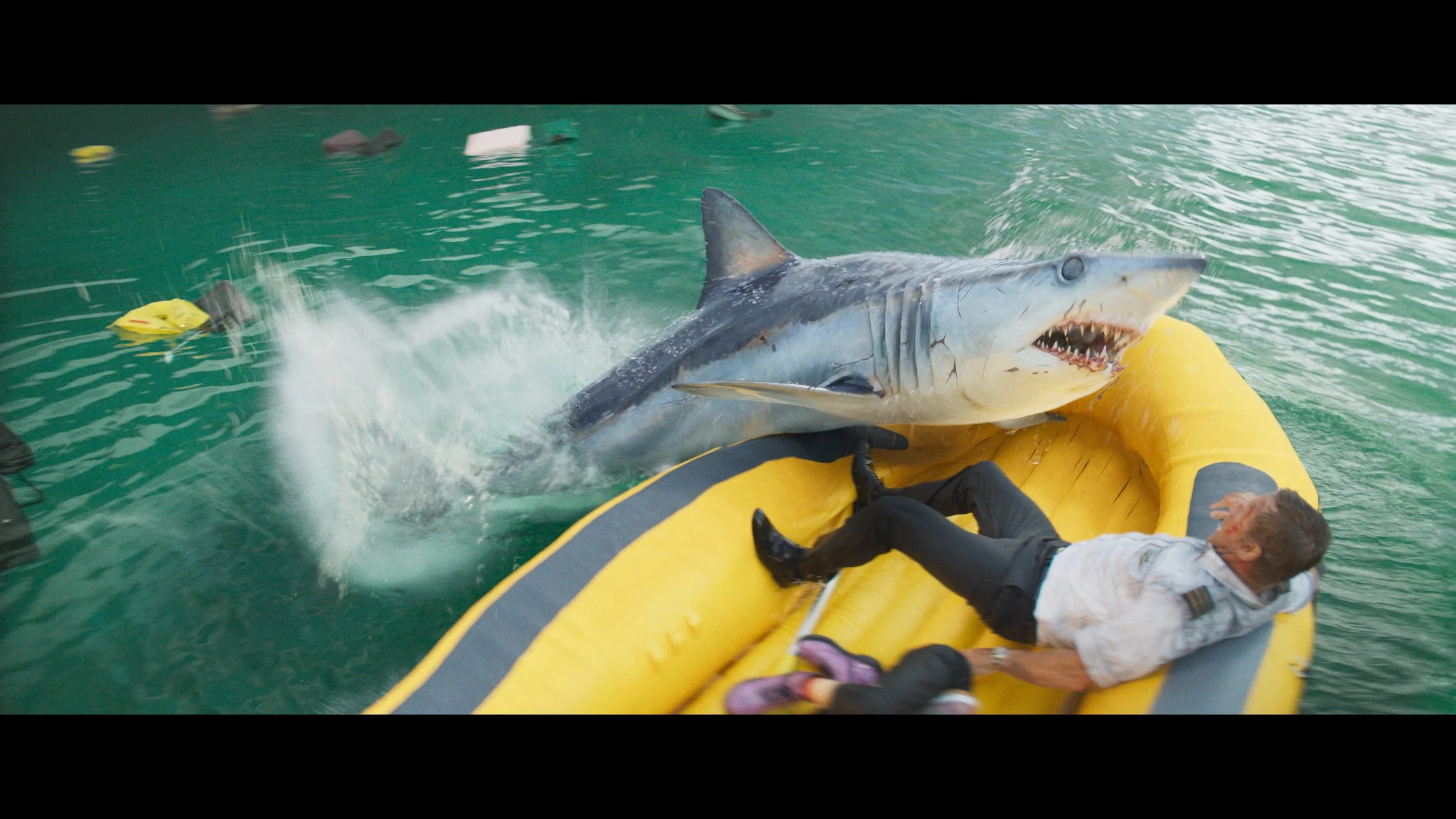
The shark effects are a mixed bag, but largely a win. Some of the CGI is undeniably digital, but for every questionable shot, there are several moments where the sharks look solid, heavy, and convincingly dangerous. The good outweighs the bad by a wide margin, and the film is smart enough to keep things moving so you do not dwell too long on imperfections.
There are also a few moments that will make Deep Blue Sea fans grin. If you know, you know. And just when the movie lets you think certain characters might be safe, it yanks that comfort away without warning. Harlin understands timing, and he understands cruelty.
The biggest misstep is the score. In several of the most intense sequences, the film opts for light, almost hopeful classical music with gentle strings. The contrast is clearly intentional, pushing the idea of resilience and survival, but it often feels heavy-handed and emotionally discordant with the sheer horror on screen. It does not ruin the film, but it does pull you out of the moment more than once.
Despite these flaws, Deep Water is better than it has any right to be. It does not break new ground, and it is not pretending to. What it does instead is deliver expertly staged disaster filmmaking with a level of brutality that modern studio films often shy away from. Harlin proves that he still knows how to orchestrate insanely intricate action sequences and keep an audience locked in.
If you are afraid of flying, avoid this at all costs. If you love throwback disaster movies, shark chaos, and practical-feeling carnage on a massive scale, this is essential viewing. Even without seeing it in a theater, it is clear that Deep Water is built for the big screen. Loud, relentless, and cruel in all the right ways, it is a reminder that sometimes the old masters still have teeth.
Jessie Hobson