
There is a particular kind of thrill that comes from watching an actor you have followed for years finally step into a project that feels completely inevitable. For David Dastmalchian, Dust Bunny feels like that moment. It is the convergence of his emotional precision, his deep love of genre storytelling, and a filmmaker unafraid to turn a fairy tale into something unsettling and profound.
Written and directed by Bryan Fuller, Dust Bunny follows ten-year-old Aurora, a foster child who believes the monster under her bed has eaten her family. Desperate for help, she recruits her mysterious neighbor, a hitman, to destroy it. What unfolds is a dark, surreal story rooted in childhood fear, imagination, and emotional truth.
Dastmalchian plays the “conspicuously inconspicuous man,” a hired assassin brought in to eliminate Mads Mikkelsen’s Intriguing Neighbor. He is the kind of figure designed to blend into the background, someone you would never notice until it is too late. On screen, however, Dastmalchian transforms him into a creature of quiet complexity.
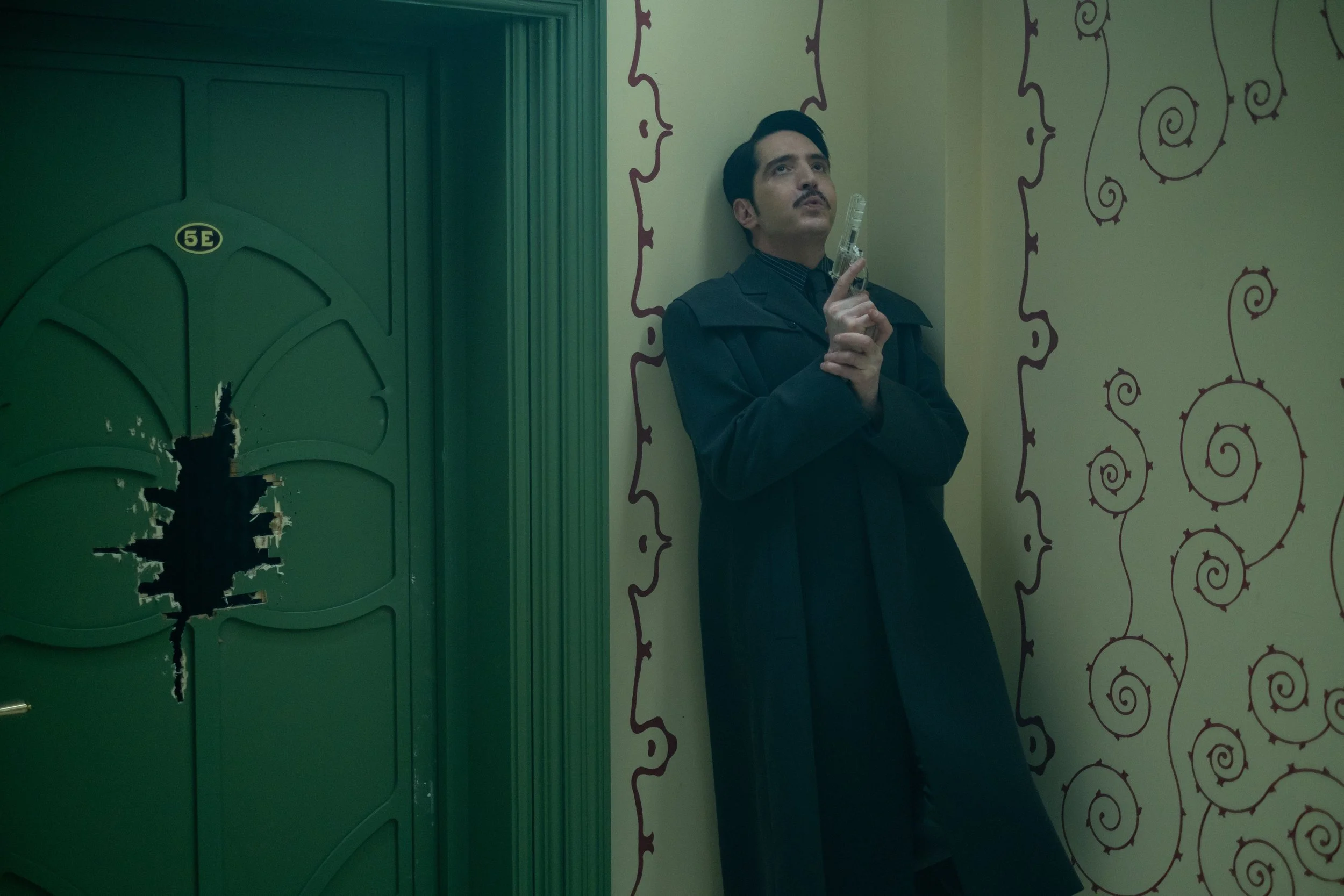
“Just the name alone magnetized me,” Dastmalchian says. “He’s someone who can slide through the world on the subway, in an office building, behind you at Starbucks, and you’ll never see it coming.”
What pulled him toward the role was not just the character’s lethal efficiency, but the unexpected emotional fracture beneath the surface. Although his mission is simple, kill the target, the presence of Aurora disrupts something internal.
“How often do you get to play a very dangerous hitman who also genuinely cares about the well-being of a small child?” he asks. “That’s the beauty of a Bryan Fuller story.”
That contradiction sits at the heart of Dust Bunny. Fuller creates heightened worlds filled with bold visuals and storybook logic, but the emotions driving them are deeply human. For Dastmalchian, finding that balance comes down to clarity of intention.
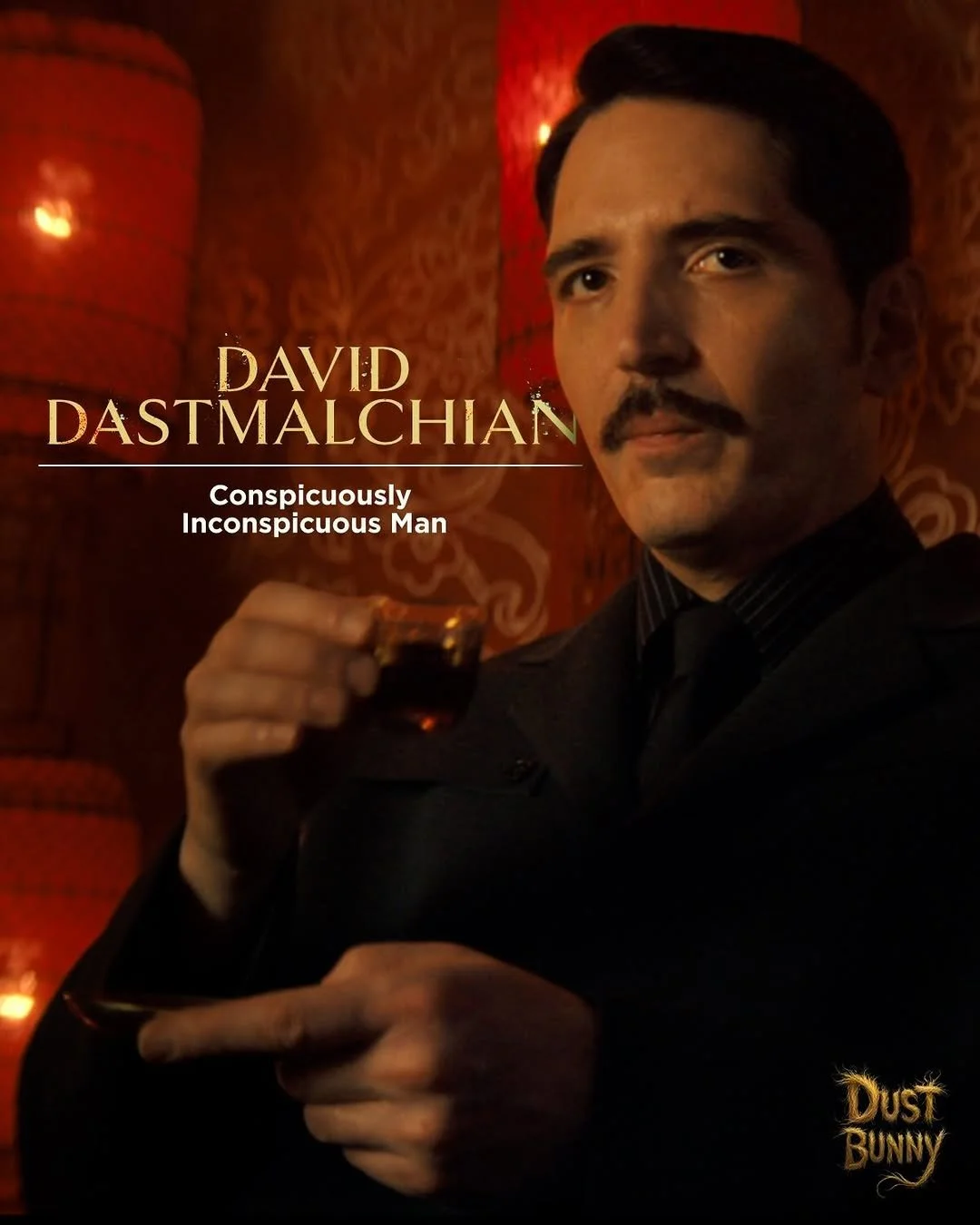
“You play the intention,” he explains. “Every scene has an end goal. I’ve been hired to do a job. But then something trips up my moral compass, and suddenly it is not just about eliminating a target anymore.”
Unlike many modern horror films, Dust Bunny avoids swallowing itself in shadows. Instead, it leans into bright colors and stylized environments, creating a visual language that feels playful on the surface while remaining emotionally haunting underneath. Dastmalchian credits his background in theater for helping him navigate that space.
“When you come from the stage, you are constantly living in pure imagination,” he says. “Things do not have to be realistic, but they have to be emotionally truthful.”
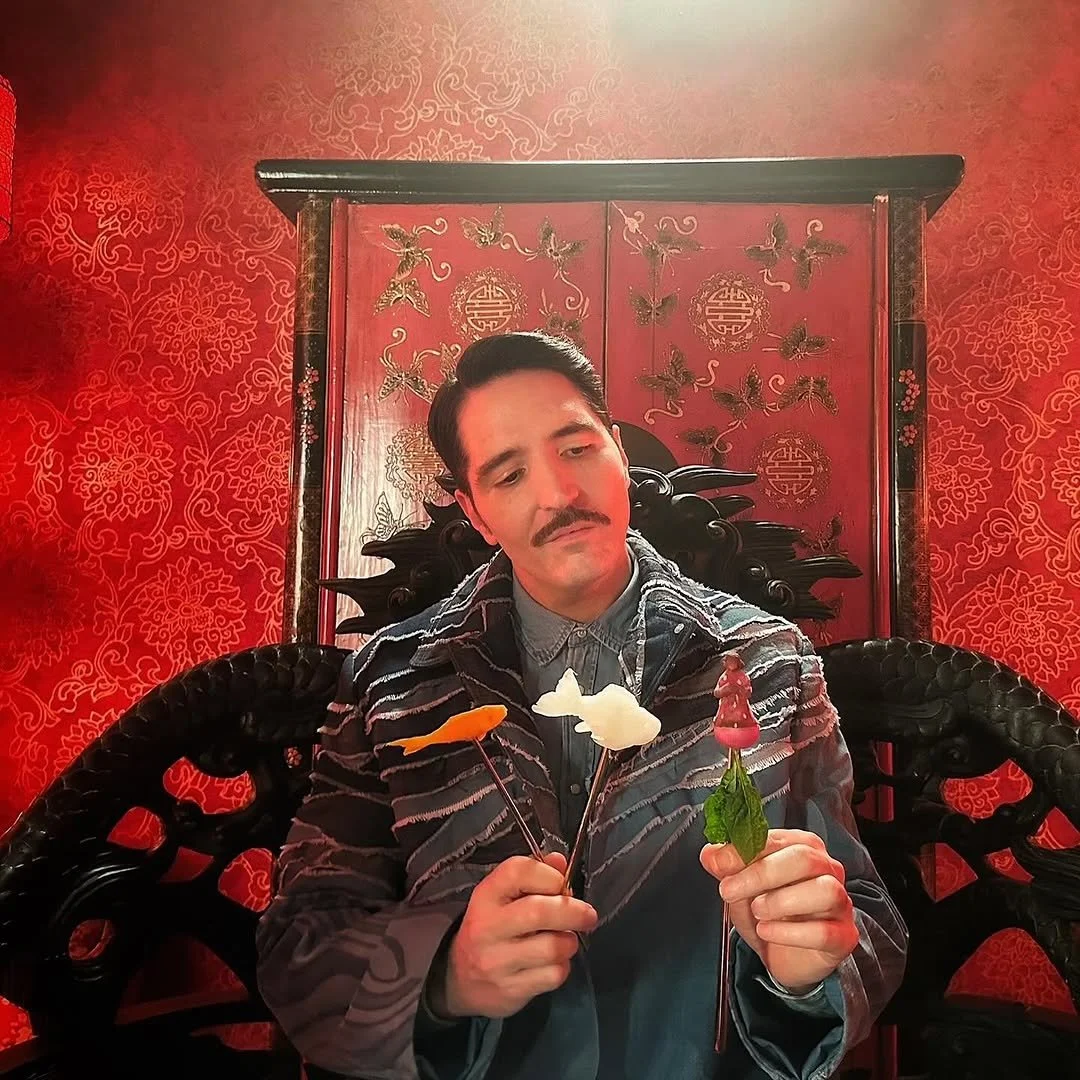
That idea connects directly to the films and stories that shaped him as a fan long before he became a filmmaker himself. He references genre classics that balance wonder and dread, stories that never forget the human core beneath their spectacle.
Those influences are felt throughout Dust Bunny, which Fuller treats as both a fairy tale and a mystery. The film asks viewers to sit with uncertainty and, ultimately, to believe children even when what they are saying feels impossible.
The timing also feels significant within Dastmalchian’s career. From his debut in The Dark Knight, where he was discovered by Christopher Nolan, to Oppenheimer, Late Night with the Devil, and now Dust Bunny, his recent work reflects a fascination with characters who occupy moral gray zones and emotional extremes. He is drawn to monsters that are not always external.
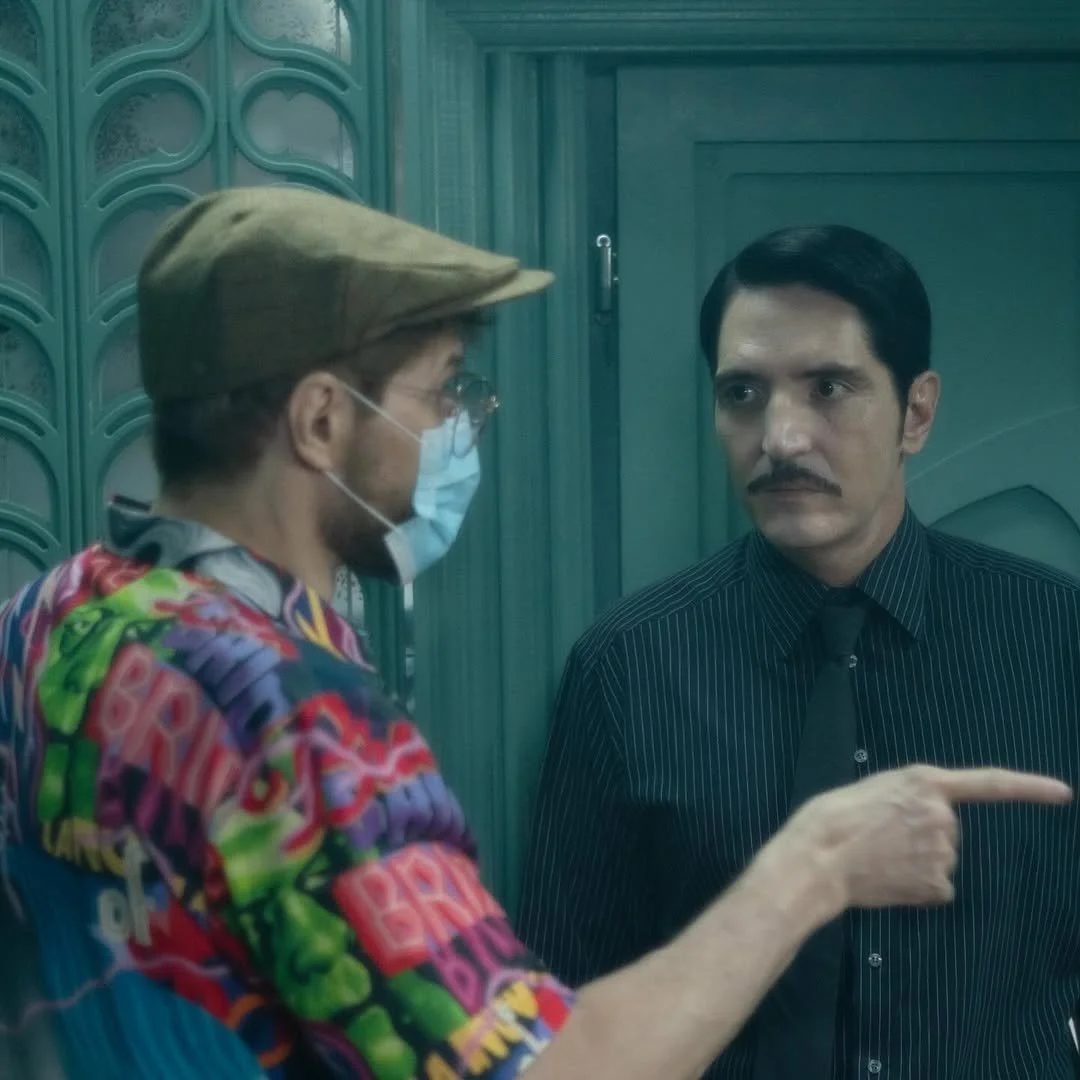
That instinct makes his collaboration with Fuller feel natural rather than coincidental.
“What makes Brian so special is that he has the expansive imagination you see in Spielberg’s work, combined with tactile, practical magic and a poetic artistic freedom,” Dastmalchian says. “You cannot really quantify him by comparison. You can compare other people to Brian because he is singular.”
Dust Bunny is not just another standout entry in Dastmalchian’s filmography. It is a crystallization of what makes him such a compelling presence. He understands how to ground the surreal, how to make fantasy feel lived-in, and how to let silence speak as loudly as spectacle.
Beneath the assassins, monsters, and fairy-tale logic, Dust Bunny is ultimately a story about belief. It is about listening, about emotional survival, and about the dangers of ignoring what children are trying to tell us. Dastmalchian, once again, proves himself to be the perfect guide through that uneasy space.
Jessie Hobson