
Premiering at Slamdance Film Festival 2026, Clovers drops us into Asheboro, North Carolina, once labeled the fastest-dying city in America, and refuses to let us look away.
Directed over a multi-year stretch by Jacob Hatley and Tom Vickers, the film centers on a quasi-legal strip mall casino and the orbit of people who land there when other structures collapse. What sounds like a gimmick becomes something heavier. The fish tables glow. The slots hum. The days blur. The house always wins.
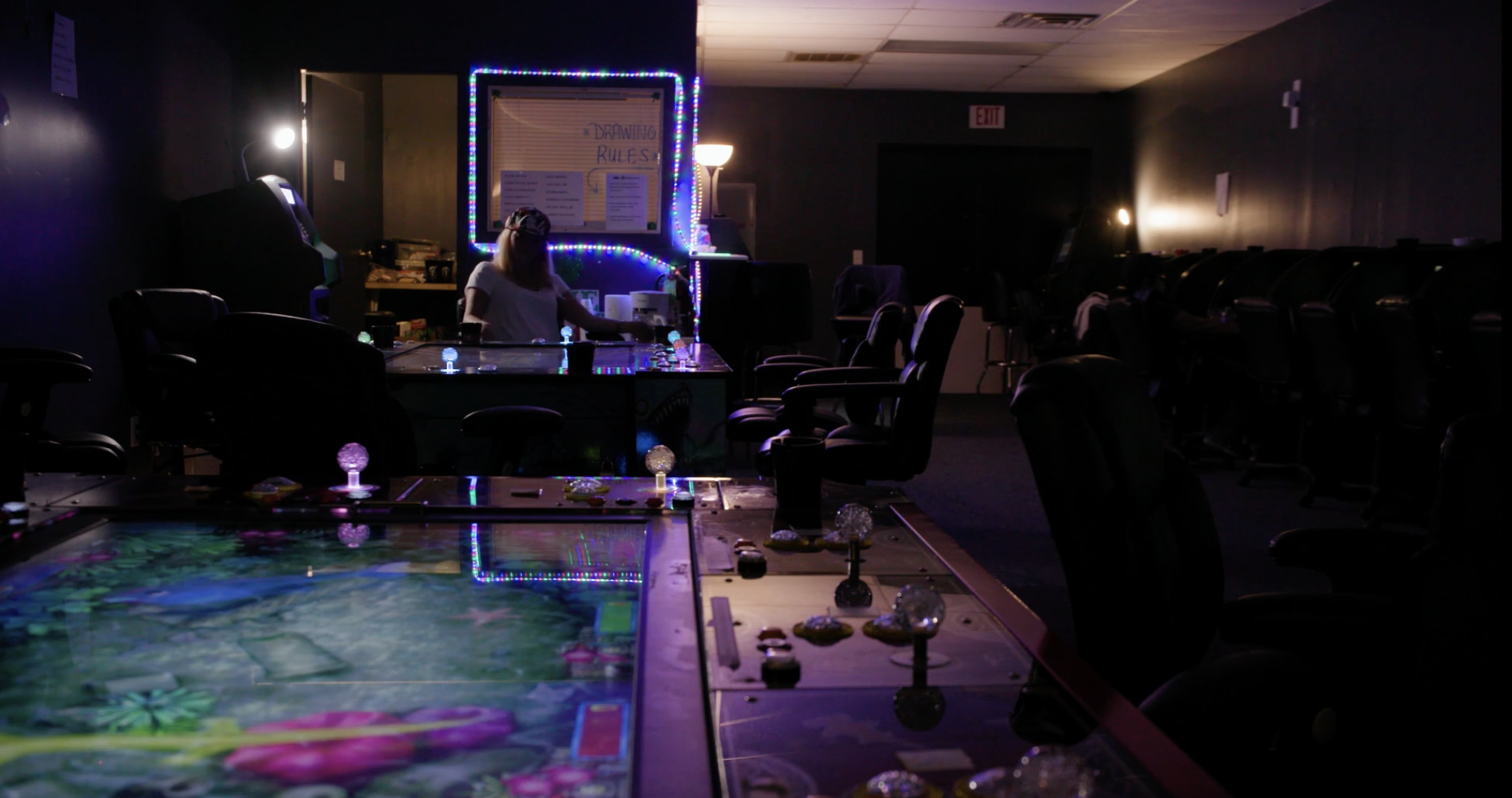
At the center is Jenny, newly fired from her job at the Randolph County Jail and suddenly managing Clover’s. She is, by a wide margin, the film’s emotional anchor. You feel for her immediately. She once loved her prison job. She wanted stability, purpose, maybe even pride. Instead, she’s running a gambling storefront in a town hollowed out by unemployment and addiction. Watching her get robbed is one of the film’s most difficult sequences. It is not sensational. It is just sad. You can see the small piece of hope she had carefully preserved take another hit.
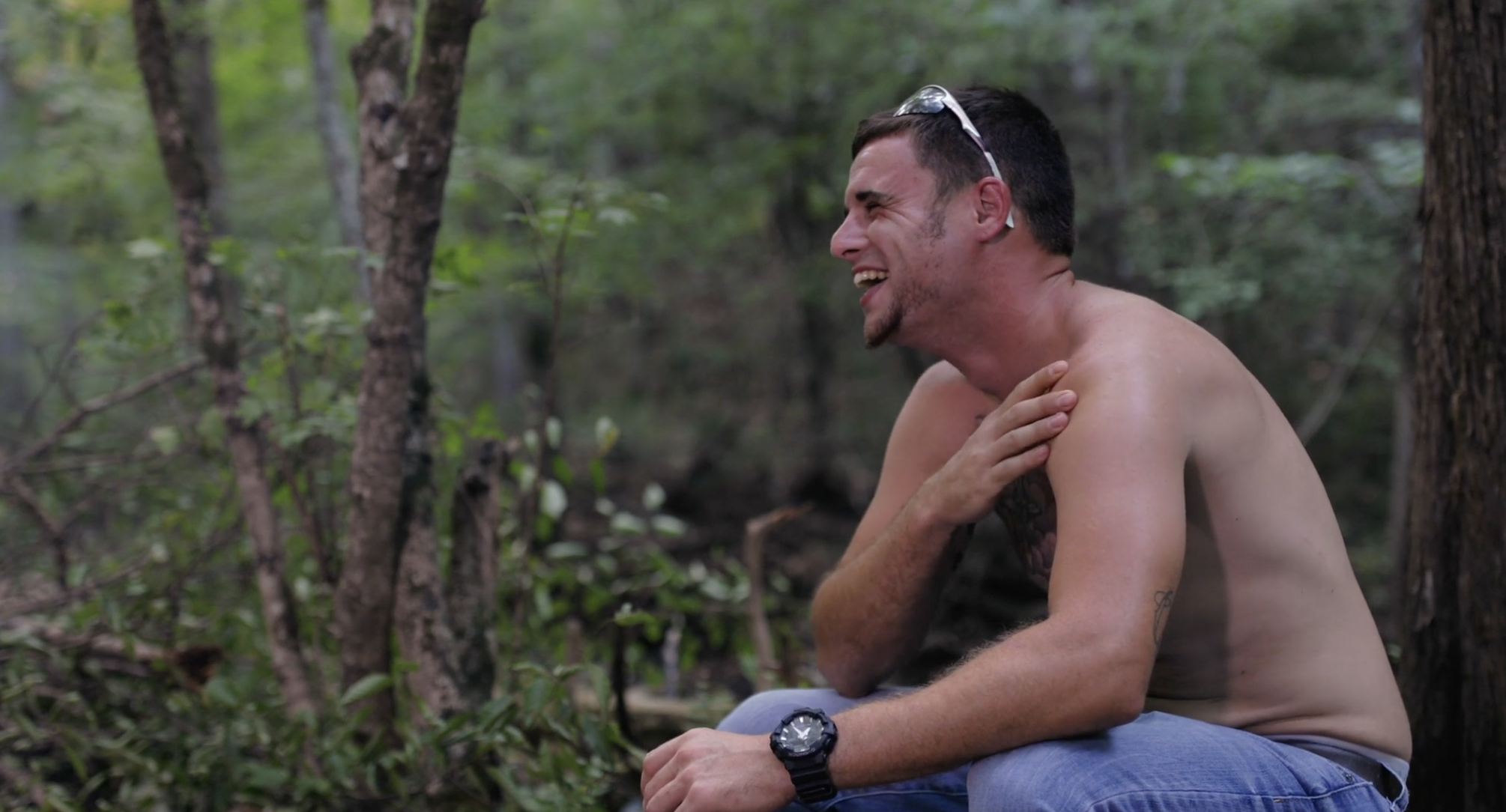
Around her swirl JD, Sharon, and their son Taylor. If Jenny feels like someone clinging to dignity, JD feels like someone who burned his years for sport. He brags about alcohol poisoning. He wears bar fights like trophies. He tells stories that he clearly thinks make him legendary. Watching him do drugs with his son is stomach-turning. The generational damage is not subtext. It is happening in real time.

Sharon, JD’s ex, is complicated in ways that are sometimes revealing and sometimes exhausting. She talks about political victory as if it personally redeems private tragedy. She recounts chaotic bar altercations like they were summer camp memories. The 2016 election hangs over the film like humidity. Conversations about electoral votes drift between confusion and absolute certainty. The disconnect is unnerving. These are voters. These are your peers. That tension is part of what makes Clovers hard to sit with.
And it is hard to sit with.
The film has been described as a portrait of endurance, and that feels accurate, though not always flattering. Hatley and Vickers resist romanticizing desperation. They do not shoot these people like tragic poetry. They also do not openly condemn them. The camera just stays. Addiction is present. Economic decay is present. Boredom is everywhere. Clover’s becomes an ecosystem, not glamorous and not quite hellish. Just a place people land.

There are moments of unexpected craft. The b-roll has texture and shows real value. The music, in particular, does a lot of emotional lifting. The score leans heavily into melancholy violin passages and sparse guitar, often played by someone on screen as quiet backing for a scene. It rarely swells into anything manipulative. Instead, it hums underneath the action, like a low-grade ache that never fully leaves. The metaphor of the machines is almost too clean. The games look like skill. They are luck. They are rigged just enough to keep you spinning. Whatever small wins you get, you never leave ahead.
Where Clovers becomes divisive is in how much time it spends with people who offer little in the way of redemption. JD in particular is presented without much counterweight. By the time the film reaches its bleak closing stretch, culminating in a title card memorializing Taylor, the sense of inevitability feels less like revelation and more like confirmation. The signs were there. The trajectory was visible. The tragedy does not shock so much as it lands with a heavy, defeated thud.
There is value in that. This is not a film about transformation. It is about stasis. Not much changes in Asheboro. That may be the point. The casino lights stay on. The political grievances recycle. The stories get retold. People talk about escape while sitting in the same plastic chairs.
But spending time in that loop can feel like a chore. The film is permeated by grief and regret, and while that honesty is admirable, it does not always translate into insight. At times you may find yourself wondering whether every story here deserved the spotlight, or whether the most compelling film was the one about Jenny alone.

Still, Clovers does something undeniable. It captures a pocket of America without filter or polish. It shows how boredom, loneliness, and financial instability create entire worlds. It shows how people can cling to hope in forms that look, from the outside, like self destruction. It shows how the next spin, the next election, the next day might be the one that changes everything.
It never is.
And maybe that is the most honest thing about it.
Jessie Hobson