
One Hour Girlfriend follows Richard, a withdrawn man who arranges a one-hour companion visit, believing intimacy can be treated like an experiment. What begins as a carefully controlled encounter gradually shifts as emotional walls erode, revealing a man wrestling with past heartbreak and a companion who becomes far more than a hired presence.
The film stars Sofia Papuashvili, Chris Spinelli, and Phillip Kim Marra, with writing and direction by Gregory Hatanaka, who also produced the film alongside Chris Spinelli and Jamie Grefe with co-producers Geno McGahee and Warren Hong.
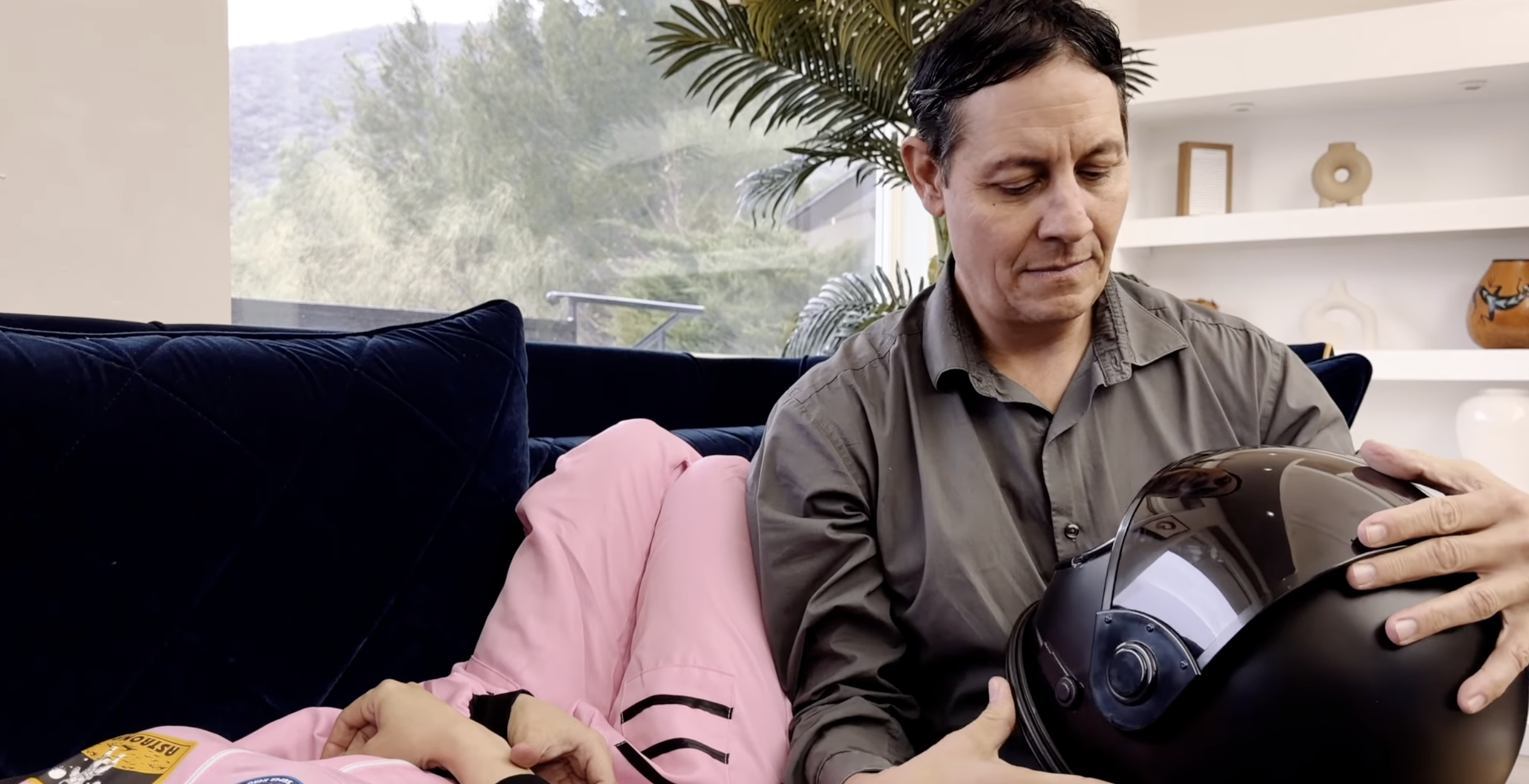
The movie is largely confined to a single space, which heightens the tension and draws attention to body language, eye contact, and the fragile emotional distance between the characters. With its deliberate pacing and sparingly used sci-fi elements, the film leans heavily into minimalism, allowing silence to take on as much weight as spoken dialogue.
This small world feels almost clinical at first, shaped by the agency’s detached approach to companionship. Yet as the hour progresses, the room begins to feel less like a controlled environment and more like a pressure chamber where Richard's carefully maintained emotional systems start to malfunction.
Richard enters the encounter believing he can control both himself and the emotional tone of the session. But the film slowly reveals that he is less in control than he imagines. As the structure he relies on begins to collapse, flashes of vulnerability break through.
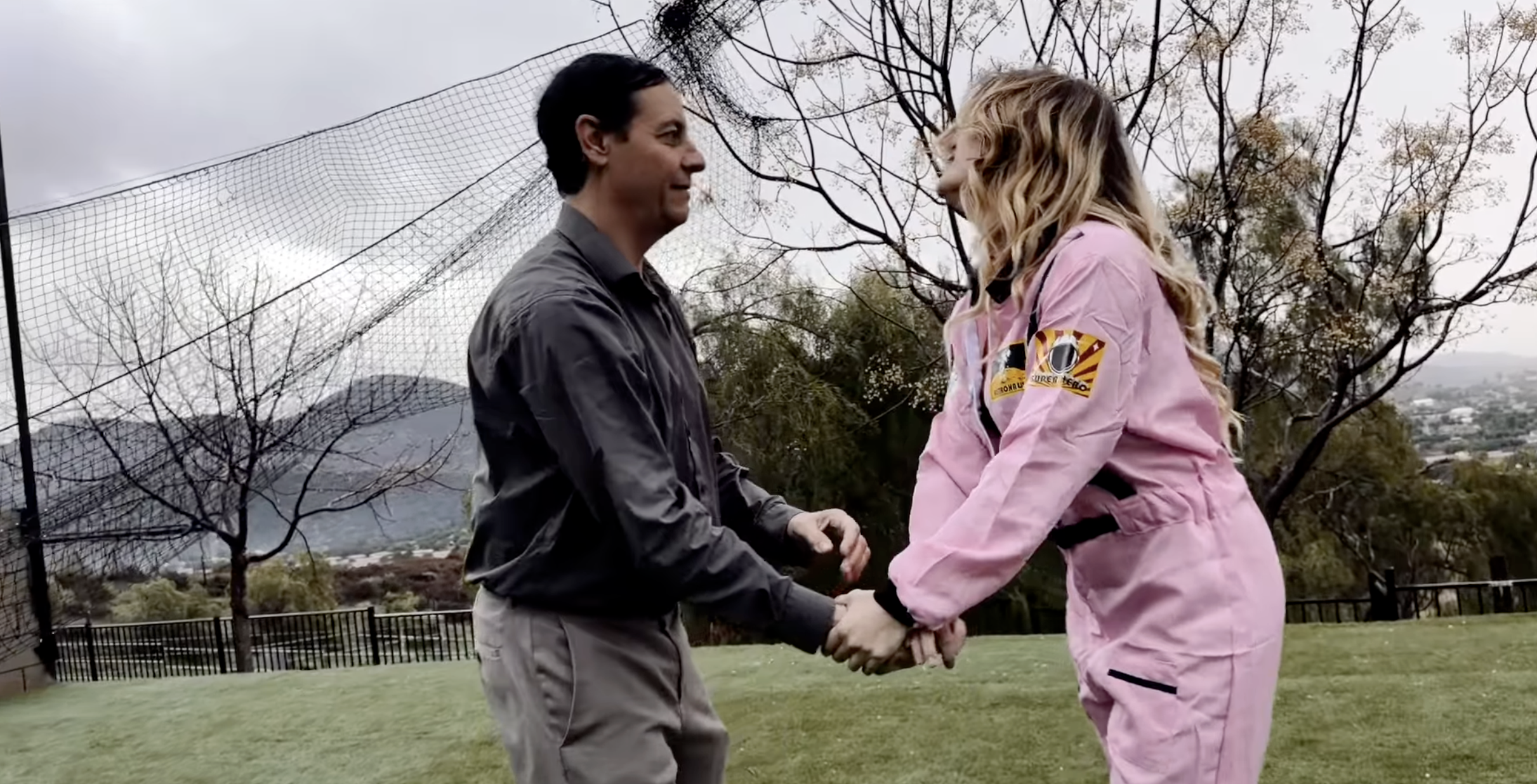
Melina, though hired and trained to modulate emotion, becomes an unexpectedly grounding presence. Her calmness, patience, and shifting emotional register allow the story to explore the tension between authenticity and performance — a central theme of the film.
The sci-fi element enters quietly: the agency's emotional modulation technology and the idea that human connection can be engineered. Yet the film's message leans in the opposite direction. Genuine emotion resists containment.
Rather than relying on traditional plot twists, One Hour Girlfriend builds its emotional impact through small shifts: a look that lingers too long, a break in composure, a moment of connection that neither character anticipated. Hatanaka’s direction emphasizes stillness and subtlety, inviting viewers to notice micro expressions and slight physical shifts that reveal internal change.

This slow unraveling creates a hypnotic tension. Time becomes elastic. The hour feels both suffocating and intimate. By the time the session ends, the emotional residue between the characters refuses to dissipate cleanly.
One Hour Girlfriend is a quiet, contemplative film that rewards attentive viewers. It explores the emotional risks of human connection, especially for those who believe they can control or avoid feeling altogether. While minimalist in structure and setting, it delivers an unexpectedly resonant exploration of longing, fear, and the unpredictable nature of intimacy.
It is a film for audiences who appreciate psychological tension, nuanced performances, and stories that take place in the delicate space where two people attempt to understand themselves through one another.
Jessie Hobson