
What begins as something resembling Dead Poets Society quickly reveals itself to be something altogether more contemporary: a sharply observed examination of rich kid faux intellectualism, artistic posturing, and the people who confuse proximity to art with the act of creating it.
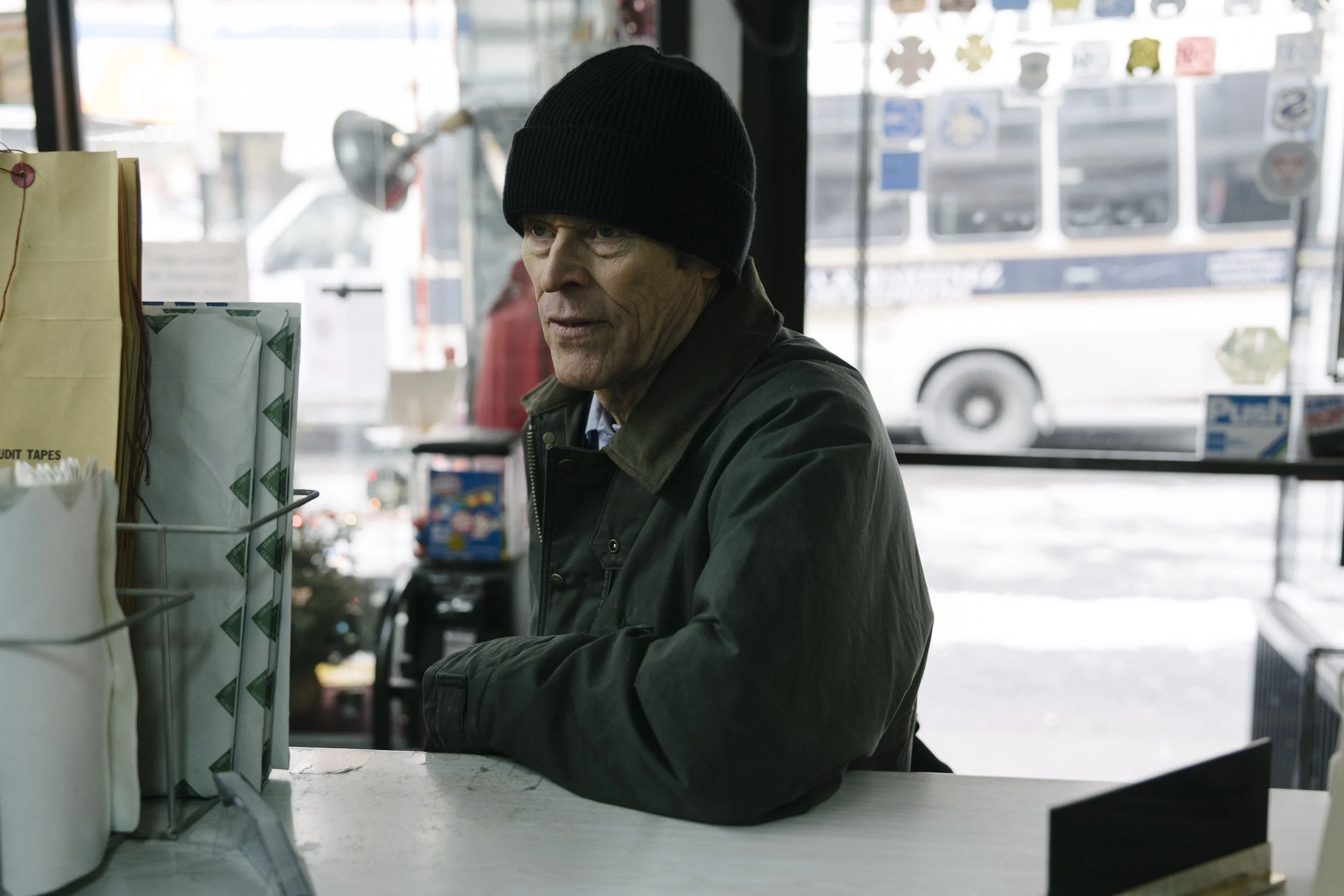
Kent Jones' Late Fame is sweet, smart, funny, and occasionally scathing. Adapted by Samy Burch from Arthur Schnitzler's novella, the film follows Ed Saxberger (Willem Dafoe), a forgotten New York poet whose long-neglected work is suddenly rediscovered by a collective of young creatives calling themselves The Enthusiasm Society. Their admiration reignites a creative spark in Saxberger, but it also exposes the uneasy line between genuine artistic passion and performance.
The film opens with a burst of old-school downtown New York energy and ultimately lands in a working-class dive bar, completing the tidy moral arc of a modern fable about fame, contentment, authenticity, and the city itself. Along the way, Jones offers an economical but surprisingly layered survey of cultural spaces increasingly occupied by people who love the idea of art more than the difficult labor required to make it.
Willem Dafoe is, unsurprisingly, tremendous. At this point in his career, it's almost redundant to praise him, but Late Fame serves as another reminder that few actors can communicate as much with so little. Dafoe gives Saxberger a tenderness and humanity that anchors every scene. A nod, a glance, a slight smile, a moment of hesitation. He tells entire stories through the smallest movements. The character could have easily become a bitter relic or a self-important fraud, but Dafoe instead finds the vulnerability beneath the ego. As Saxberger begins embracing the attention he's receiving, shutting out old friends and craving validation from his younger admirers, the transformation feels deeply human rather than pathetic.
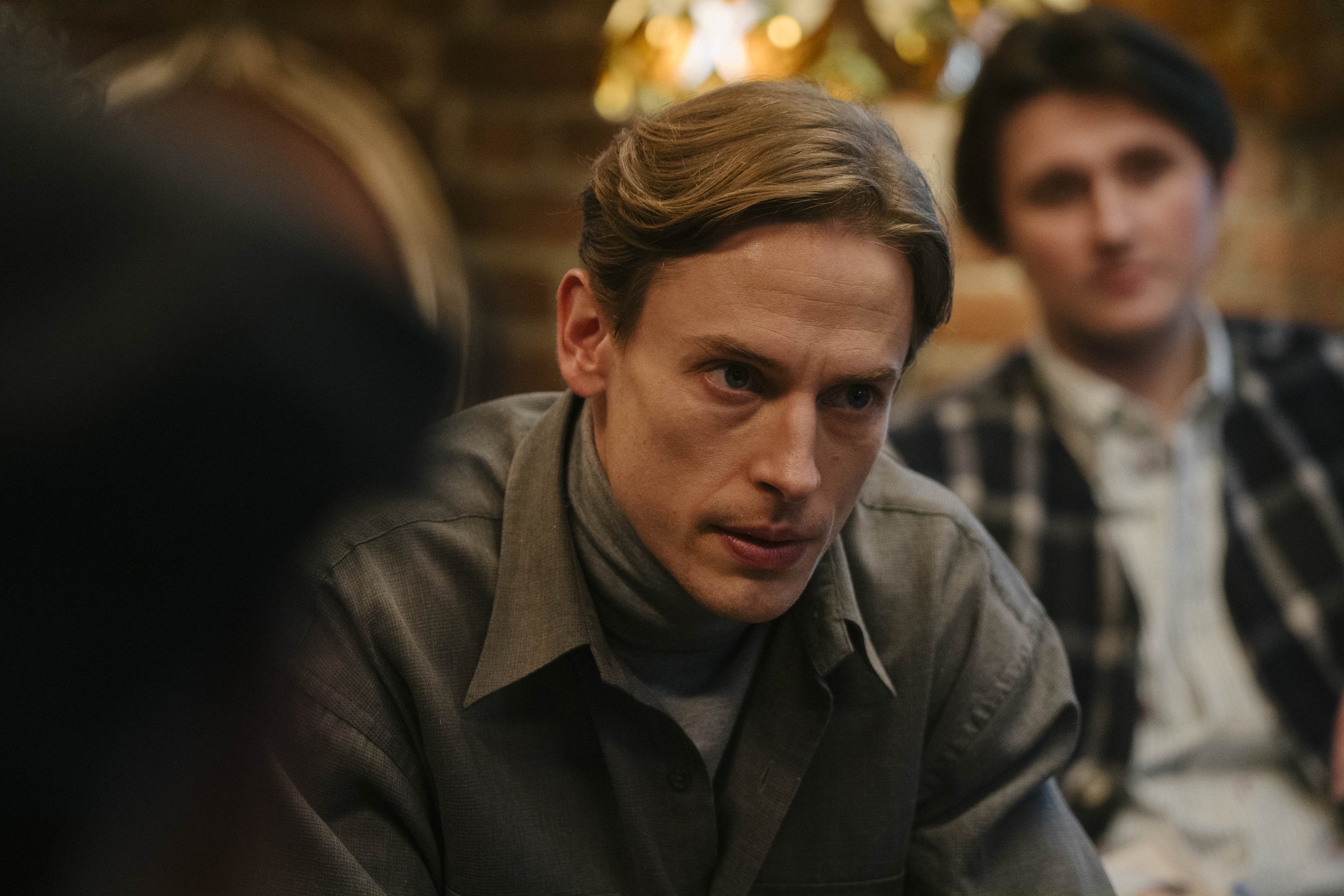
The film's most fascinating figure, however, may be Edmund Donovan's Meyers. The self-appointed leader of The Enthusiasm Society speaks with such confidence and literary conviction that he appears almost displaced in time. Donovan walks a delicate line between sincerity and absurdity. Meyers is pretentious, unquestionably, but he's also oddly charming. Sometimes he comes across as a devoted disciple of poetry. Other times he feels vaguely threatening, like someone who has simply never been told no.

His conversations with Saxberger are among the film's strongest moments precisely because they're difficult to read. Is Meyers socially awkward? Is he trying to manipulate Saxberger? Does he genuinely believe his own mythology? The uncertainty makes him compelling. Once Saxberger visits Meyers' impeccably curated apartment, complete with carefully displayed books and artifacts, the film briefly recalls American Psycho, a showcase of identity construction disguised as cultural appreciation.
The rest of The Enthusiasm Society fares similarly. Their rapid-fire intellectual exchanges often feel reminiscent of the verbal sparring in The Social Network. They're intelligent, enthusiastic, and desperate to matter. More importantly, they reveal themselves to be what many young artistic subcultures ultimately are: collections of outsiders trying desperately to belong.

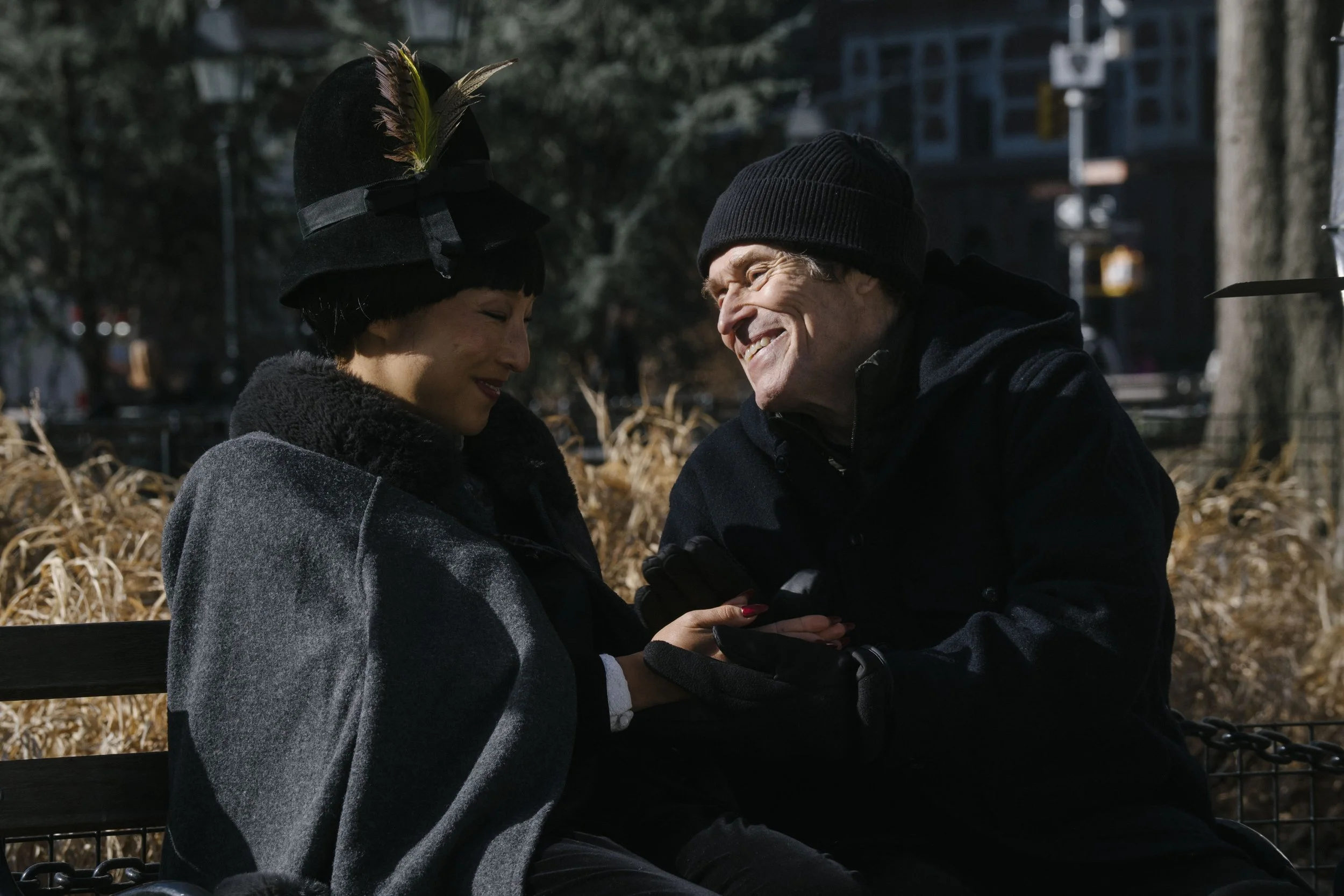
That same tension drives Greta Lee's Gloria, who initially feels like she wandered in from a different movie altogether. She is loud, attention-seeking, performative, and almost painfully eager for validation. Early on, she's difficult to embrace. Everything she does seems calculated, from ordering drinks she doesn't actually drink to her relentless attempts at capturing the room's attention. Then the film slowly pulls back the curtain.
As Gloria's talent emerges, especially through a revelatory musical performance, the character deepens considerably. Lee masterfully balances flamboyance with vulnerability. What first appears to be attention-seeking gradually reveals itself as survival. Gloria may be performing constantly, but unlike many members of The Enthusiasm Society, she actually possesses the artistic gift they're all chasing. Her desperation is born not from vanity but from necessity. That distinction becomes one of Late Fame's central ideas. The Enthusiasm Society loves poetry. Saxberger and Gloria have lived it.
Jones never turns the younger characters into villains, which is one of the film's greatest strengths. It would have been easy to create a simple satire of privileged cultural tourists. Instead, Late Fame remains surprisingly compassionate toward everyone involved. These characters aren't malicious. They're dreamers, romantics, and posers all at once. They're weird. They're awkward. They mean well. They're searching for purpose and community, even if they're often performing their identities while doing so.
Visually, the film thrives whenever it pauses to appreciate New York itself. The city photography is beautiful, capturing both the physical reality and the lingering ghosts of an older artistic New York that exists mostly in memory. The various street scenes and observational B-roll beautifully reinforce the film's themes of nostalgia and reinvention.

Not everything works. Jones' understated direction eventually won me over, but the film takes time to settle into its rhythm. The editing can occasionally become distracting, particularly through a series of fade transitions that feel oddly out of step with the material. There are also a handful of unnecessary exposition scenes that contribute little beyond basic information, moments that slightly undermine the otherwise economical storytelling. Still, those flaws are minor beside the film's considerable charms.
What starts as a witty comedy gradually becomes something much sadder. Late Fame is funny and cute until it isn't. Beneath the satire sits a melancholy story about aging, artistic regret, and the seductive power of recognition. Meyers wants Saxberger to write a memoir. Saxberger isn't even sure he can still write at all. The question hanging over the film isn't whether he deserves acclaim. It's whether artistic validation can ever arrive at the right moment.
By the end, Late Fame reveals itself as both ironic and sincere, a contradiction its characters understand all too well. It's a film about true artists and the people who orbit them, about New York's past and present, and about the uncomfortable realization that authenticity is often hardest to find among those speaking most passionately about it.
Anchored by a remarkably gentle Dafoe performance, elevated by Greta Lee's magnetically messy turn, and filled with sharply observed character work from its younger ensemble, Late Fame is a charming, bittersweet New York story that quietly questions whether recognition is ever as fulfilling as the pursuit itself.
Jessie Hobson