
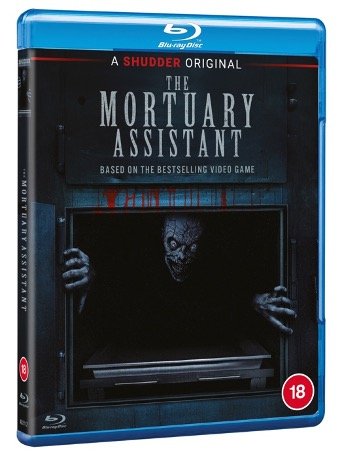
Video game adaptations continue to stumble their way through horror, but The Mortuary Assistant arrives with an advantage few of its peers possess: genuine affection for its source material. Based on Brian Clarke's cult horror game and directed by Slapface filmmaker Jeremiah Kipp, this Shudder Original has earned praise as a rare success story among horror game adaptations. Now arriving on Blu-ray, DVD, and digital from Acorn Media International, it gives genre fans another opportunity to experience one of 2026's more atmospheric and sincere horror offerings.
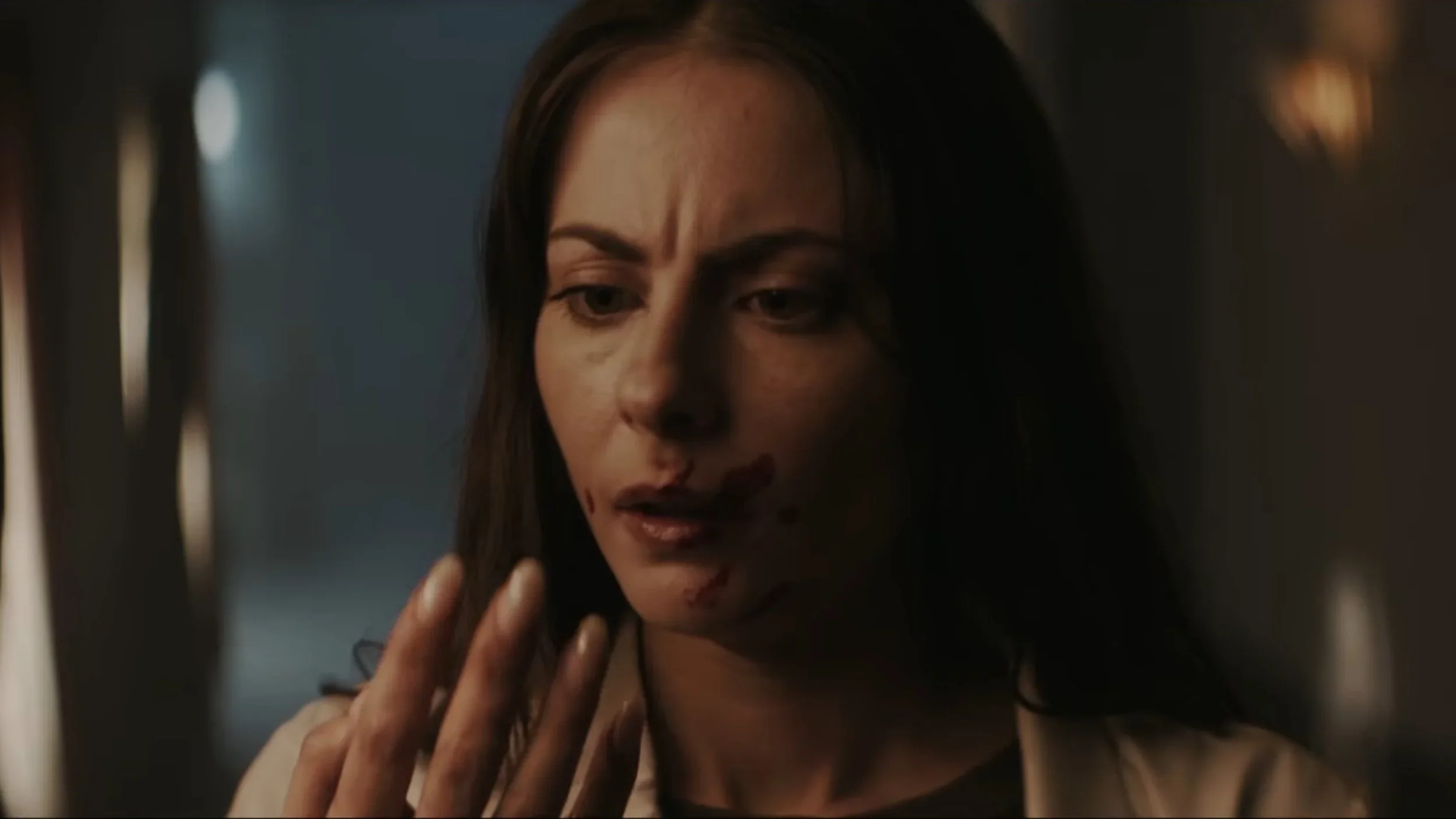
The story follows Rebecca Owens (Willa Holland), a newly certified mortician beginning her first overnight shift at River Fields Mortuary. What starts as routine embalming procedures quickly spirals into something far more sinister as bodies move, lights flicker, and terrifying visions begin to surface. Rebecca soon discovers a demonic entity may be using the mortuary as a gateway between worlds, forcing her to confront not only supernatural horrors but the unresolved trauma buried deep within her past.
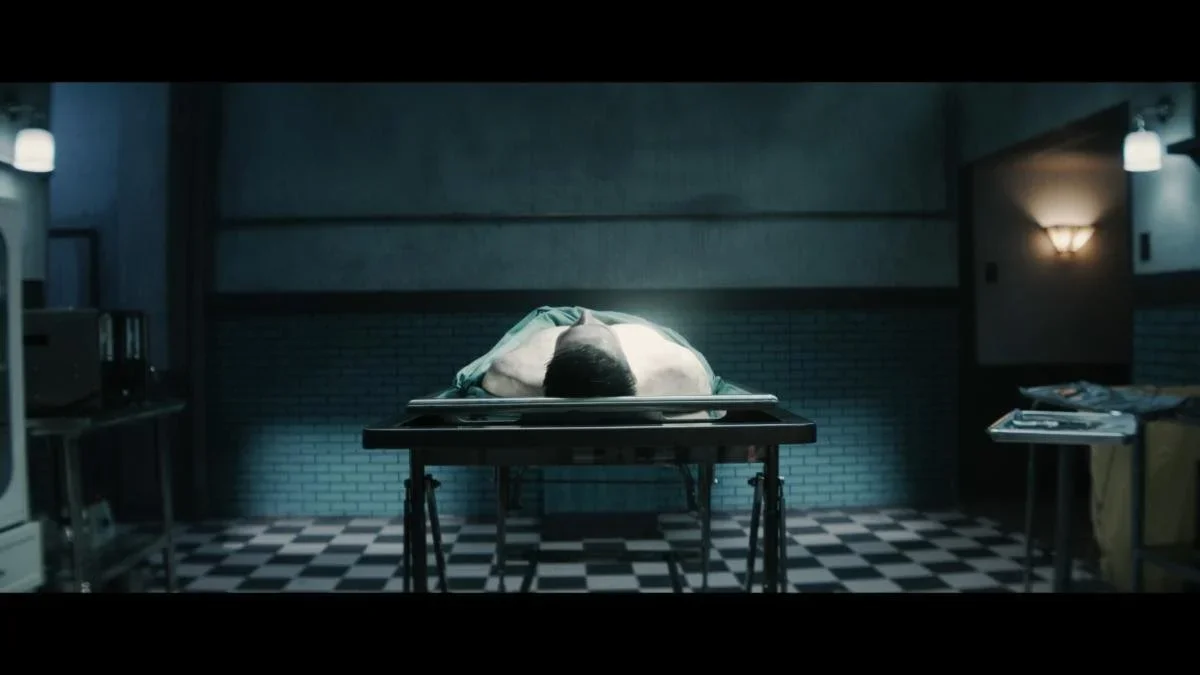
What immediately separates The Mortuary Assistant from many modern horror films is its atmosphere. Kipp understands that dread often works best when it's allowed room to breathe. The mortuary itself feels tangible and lived in, filled with practical details that ground the story in reality. The muted color palette drenches the film in shades of gray and blue, stripping warmth from nearly every frame. It creates an appropriately funereal mood that constantly reminds viewers that death is an everyday presence within these walls.
The production design deserves particular praise. The embalming rooms, preparation tables, and dimly lit hallways feel authentic rather than manufactured for scares. That authenticity becomes crucial once the supernatural elements begin invading the space. Instead of feeling theatrical, the horror feels invasive, as though something unnatural has contaminated an environment that already carries an inherent discomfort.
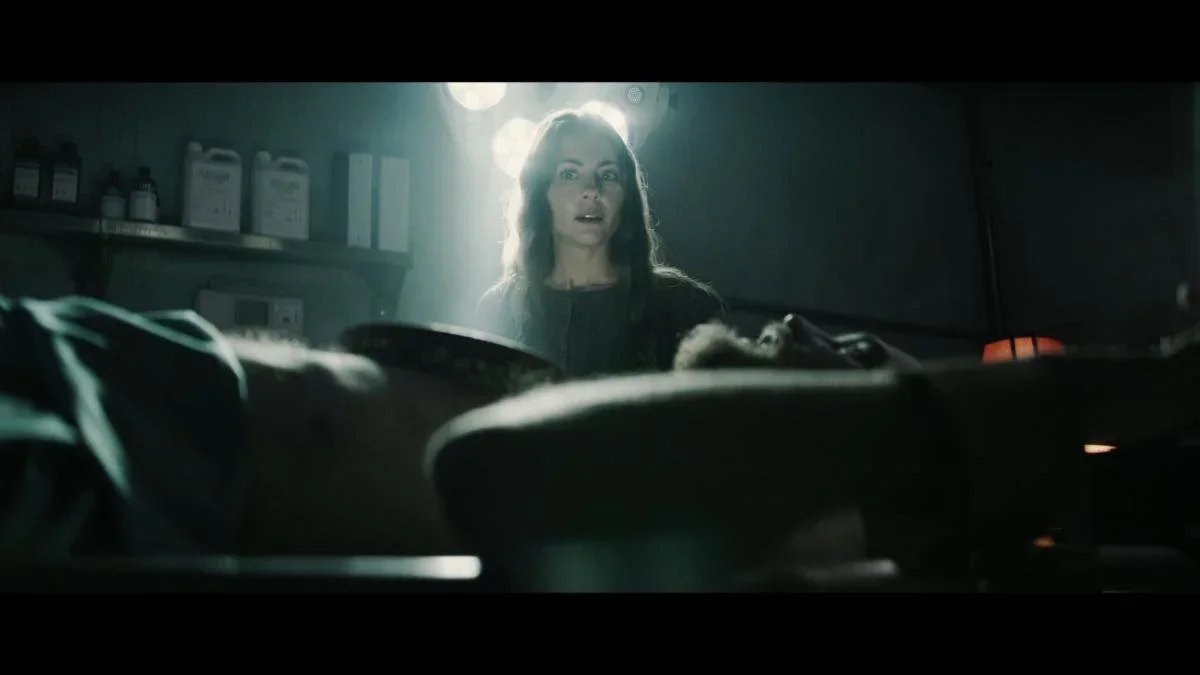
Kipp also employs framing techniques that subtly acknowledge the film's gaming roots. Tight corridors, low-angle compositions, and moments of visual isolation frequently evoke survival horror without becoming overly self-conscious. It is fan service executed with restraint, enhancing the atmosphere rather than distracting from it.
Of course, horror fans are likely coming for the gore, and The Mortuary Assistant delivers. The embalming sequences feature some genuinely impressive practical effects work. Staples pierce flesh, organs are exposed, and invasive procedures are presented with little effort to soften the blow. The film understands that physical horror can be just as disturbing as supernatural terror, and these scenes often provide the movie's strongest reactions.
The practical effects also help reinforce one of the film's greatest strengths: texture. Nothing feels digitally sanitized. Every injury, incision, and disturbing bodily detail carries a tactile quality that makes the experience far more uncomfortable than many CGI-heavy genre efforts.
Willa Holland anchors the film with a grounded performance that keeps the increasingly bizarre events believable. Rebecca never feels like a horror movie caricature. Holland portrays her as a woman desperately trying to maintain control while grief, trauma, and supernatural forces slowly dismantle her sense of stability. Paul Sparks provides effective support as Raymond Delver, Rebecca's mentor, whose uncomfortable presence keeps viewers uncertain of both his intentions and his secrets.
Unfortunately, the film's strongest qualities are sometimes undercut by pacing issues. While something is almost always happening onscreen, the narrative never fully capitalizes on its momentum. The slow burn approach is clearly intentional, but the escalation occasionally feels repetitive rather than progressive. Themes of addiction, trauma, depression, and possession are explored with sincerity, yet rarely evolve into anything particularly surprising.
The monster reveal stands as one of the film's most effective moments. It's creepy, memorable, and genuinely unsettling. Unfortunately, the ending that follows struggles to match that payoff. After investing considerable time building atmosphere and mystery, the final resolution lands with less impact than expected.
Comparisons to The Autopsy of Jane Doe are unavoidable, and not entirely unfair. The Mortuary Assistant often feels like a scrappier cousin operating within familiar territory. It lacks the narrative precision of that film, but it compensates with earnestness, strong practical effects, and a clear passion for horror.
As for the physical release itself, Acorn Media International keeps things relatively straightforward. The Blu-ray includes a behind-the-scenes featurette that offers viewers a glimpse into the making of the adaptation and its practical effects work. It is a modest supplemental package rather than a collector's edition, but the featurette feels particularly valuable given how much of the film's appeal rests on its atmosphere and effects-driven craftsmanship.
Ultimately, The Mortuary Assistant succeeds because it never feels like a cynical attempt to capitalize on a popular game. Kipp and his cast approach the material with respect, creating a horror film that prioritizes mood, character, and unease over cheap thrills. It doesn't reinvent either the possession subgenre or the horror game adaptation, but it offers enough genuine scares and strong practical effects to justify both its existence and a place on horror fans' shelves.
Jessie Hobson