
There is something immediately compelling about Sender, especially when you consider how it chooses to introduce itself. Right out of the gate, the movie hooks you with Jamie Lee Curtis, whose presence alone lends instant credibility and intrigue. Even when she is underutilized, you feel her gravitational pull over the project. This is a film that clearly knows how to sell its anxiety, even if it struggles to know what to ultimately do with it.
Directed by Russell Goldman and starring Britt Lower in the lead role, Sender leans heavily into the paranoia thriller space, unfolding like a lucid fever dream fueled by loneliness, uncertainty, and the creeping sense that the walls are slowly closing in. Julia, freshly sober and newly unemployed, starts receiving packages she never ordered. Each one feels too personal to be random. A blender. A corkscrew. The exact shade of lipstick she wears. It is the kind of premise that is both immediately unsettling and deeply relatable, especially for anyone who has ever spiraled while attempting to regain control of their life.
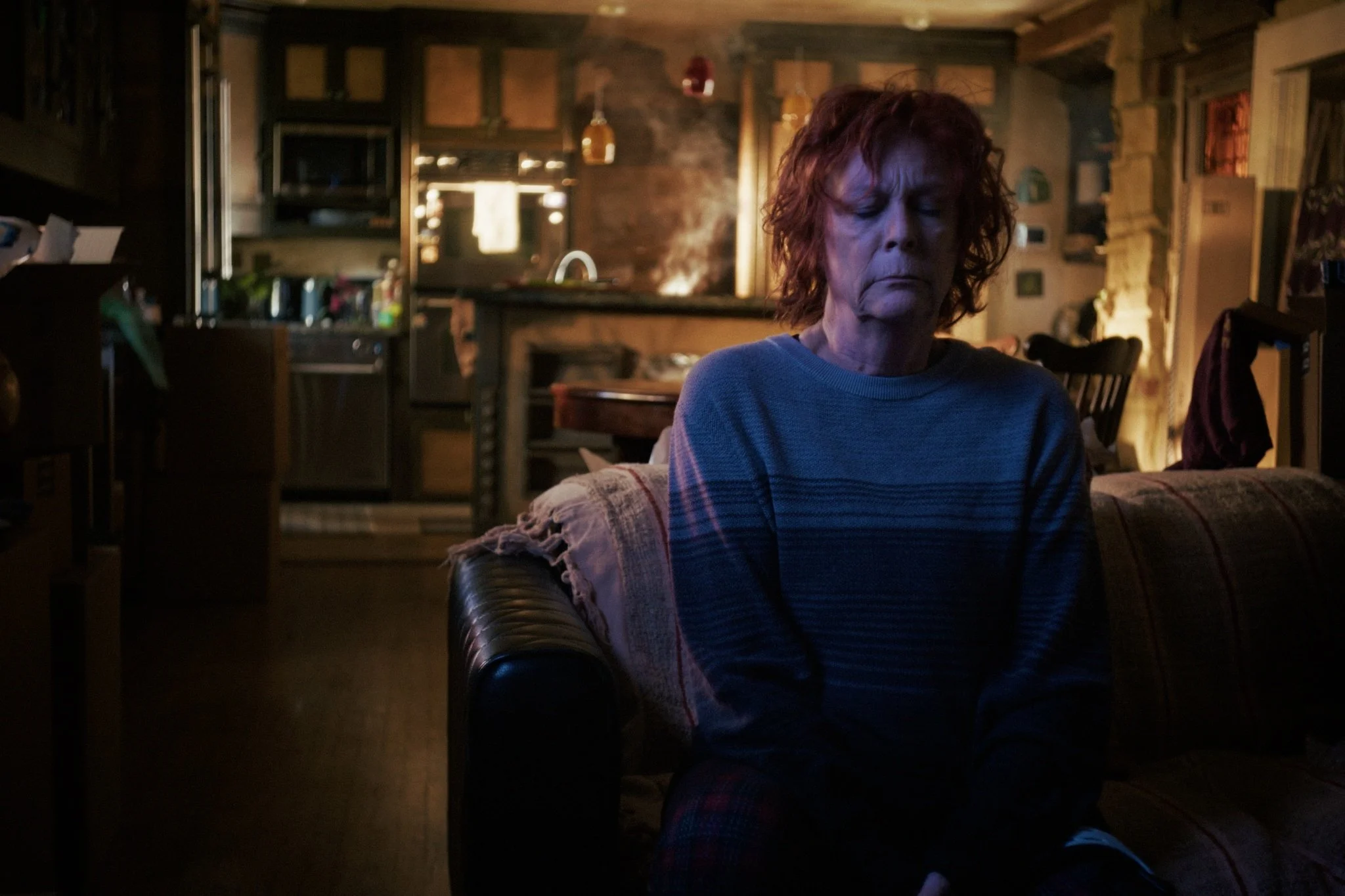
Stylistically, the film commits in very specific ways. Portions of Sender unfold through phone screens or on-screen views of text messages, apps, and interfaces, but this is only one piece of its overall visual language. Rather than dominating the film, these moments are deployed strategically to heighten claustrophobia and reinforce Julia’s tightening mental state. It feels less like a gimmick and more like a conscious stylistic choice, one that is utilized especially well for a film that likely could not afford to overindulge in these kinds of shots. When the framing turns extreme, such as the close-ups on Britt Lower’s lips and cheeks after Julia receives the lipstick in the mail, it becomes another way the movie traps you inside her head, making the moment feel intimate, invasive, and unsettling all at once.
The visual language extends further through its yellow-heavy color palette, giving the film a sickly, sun-bleached dread that never quite relents. At times, it plays with projection in clever ways, layering images and information so that it feels like Julia’s mind is fracturing in real time. The result is a suffocating atmosphere that made me feel genuinely lonely while watching it, stranded in the same anxious mental spiral as its protagonist.
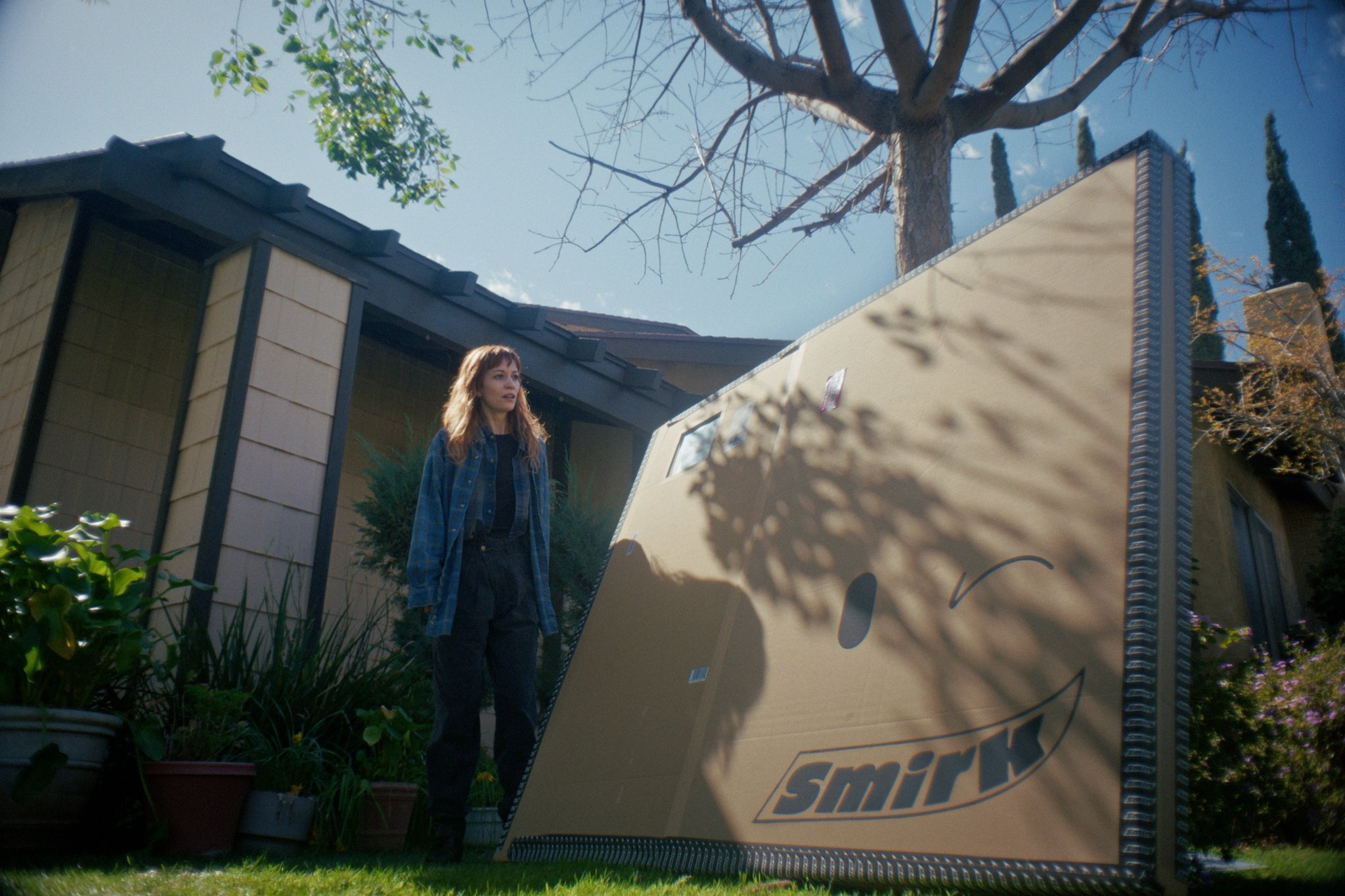
Sound design does a huge amount of heavy lifting here. The music and audio cues frequently feel more thrilling than the on-screen action itself. There is a constant low-level menace buzzing beneath nearly every scene, and to the film’s credit, those unsettling devices work almost too well. Sender succeeds at making you uneasy. It succeeds at instilling paranoia. It succeeds at making everything feel wrong, even when very little is actively happening.
And yet, that is also where problems start to emerge.
As the mystery deepens, the film begins to feel overly confident in how compelling that mystery actually is. The story hinges on a central question about the identity of the sender, but at a certain point, I realized I did not really care about solving it. The escalating chaos becomes less intriguing and more exhausting. By the time the third act arrives, the film starts to drag noticeably. Threads pile up, tones clash, and the narrative grows so jumbled that emotional investment starts slipping through the cracks.
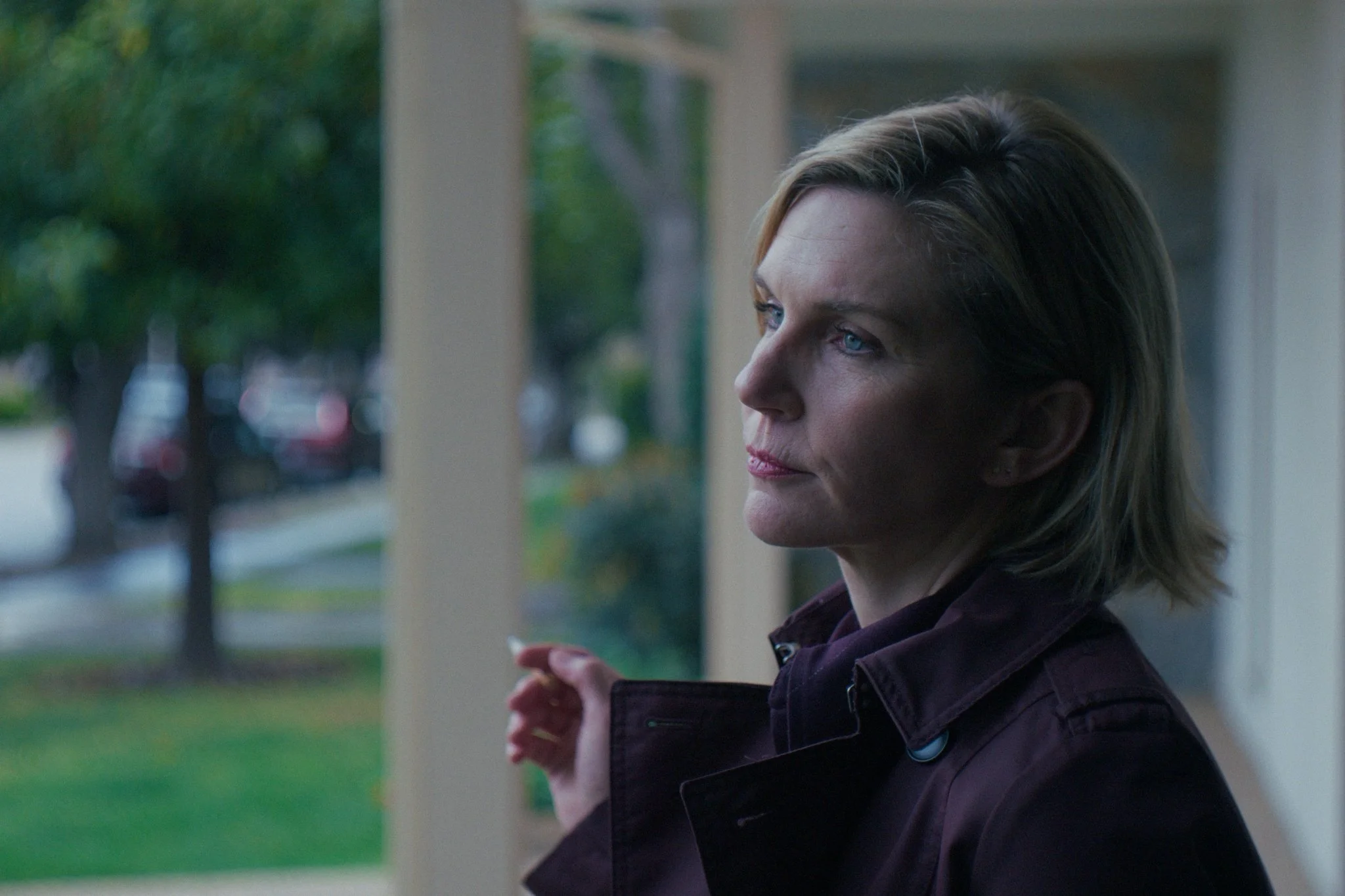
There are solid supporting players throughout, including Rhea Seehorn, but Mike Mitchell barely registers due to how little screen time he is given. He simply is not in the film enough to make a real impression, which makes his underutilization less frustrating than it is noticeable. David Dastmalchian, on the other hand, makes the most of his presence. He delivers a strong performance, and the camera clearly loves him, lingering just enough to let his inherent unease do some of the film’s work for it. Jamie Lee Curtis still makes a strong first impression, but she never quite becomes the force the film seems to be building toward.
When the reveal does finally arrive, it is fine. Decent. Not offensive. But it is not enough to save the film from the sense that something essential went missing along the way. The ending is underwhelming and tonally mismatched compared to the slow-burn paranoia that preceded it. After so much careful buildup, the final moments feel strangely hollow, like the film forgot to put a bow on its many ideas.
That said, Sender is not without its pleasures. It is a fun, weird little mystery, and one that deals with themes many people have personally grappled with. There is enough craft on display to justify the watch, especially for fans of Britt Lower, who is fully committed throughout. Stick around through the credits, which are genuinely fun and offer a version of Lower you likely have not seen before.
Ultimately, Sender is a film full of smart ideas and unfortunate missteps. It is claustrophobic, stylish, and deeply uncomfortable in ways that mostly work. But it is also drawn out, chaotic, and held together by a mystery that stops feeling worth solving. I am glad I watched it. But it is not a ride I feel any urge to take again.
Jessie Hobson