
There is a certain type of movie that does not so much tell a story as ask you to sit down and hang out for a while. Sparks, written and directed by Fergus Campbell and premiering at SXSW 2026, is very much that kind of film. It is a hangout movie in the purest sense. Loose, chatty, sun-baked, and more interested in vibes than narrative propulsion.
The premise is simple and strange. A group of teenagers in Sparks, Nevada, believes a nearby reservoir might be a portal through time. That idea sounds like it could launch a genre movie, but Sparks quickly makes it clear that it has no real interest in rules, explanations, or payoffs. The reservoir is less a plot engine than a shared fixation. It is something to talk about, to orbit, to pin dreams onto when real life feels too small.
Visually, the film leans hard into a specific aesthetic. The cinematography by Keldon Duane McGlashan is often beautiful but aggressively so. Many of the shots are overexposed, blown out, and washed in harsh desert light. It feels intentional, as if the movie is trying to ooze summer right off the screen, but the effect can be overwhelming. At times, it flattens the image and pulls focus from the characters. At others, it works, capturing that bleary, heat-soaked feeling of being young, bored, and stuck somewhere you are desperate to outgrow.
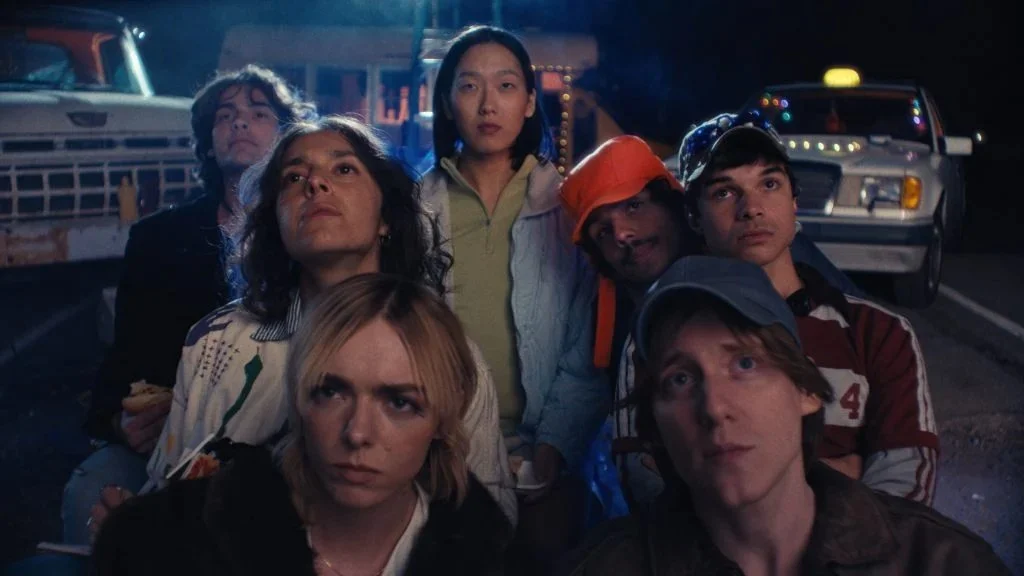
The dialogue is fast and overlapping, closer to a stage play than naturalistic realism. People talk the way people talk in movies about talking. It recalls early Kevin Smith, or even something like Waking Life, where conversations drift into philosophy, art, and self-mythologizing. Sometimes this rhythm clicks. Sometimes it absolutely does not. A lot of scenes feel like actors waiting for their turn to speak rather than actually listening to each other, which repeatedly took me out of the film.
Performance-wise, Elsie Fisher anchors the movie as Cleo, a newcomer to Sparks who latches onto the reservoir legend and treats it as something real. Fisher is genuinely great here. She brings sincerity, curiosity, and emotional clarity to a role that could have easily tipped into twee affectation. It is refreshing to see her continue to take on odd, thoughtful indie projects, and she once again proves how phenomenal she is. While everyone else seems busy crowning other young stars, Elsie Fisher remains my scream queen of the moment.
The rest of the cast is a mixed bag. There are flashes of genuine chemistry, and the group dynamic often feels like a real friend circle you might recognize, or maybe one you used to belong to. But the writing holds them back. The characters are stiffly drawn, more archetypes than fully realized people, and the performances sometimes suffer as a result. The movie asks you to spend over an hour with these kids, largely just listening to them talk, and whether Sparks works for you will depend entirely on whether you enjoy their company. Narratively, it does not really go anywhere, and that can either feel honest or frustrating depending on your tolerance for aimlessness.
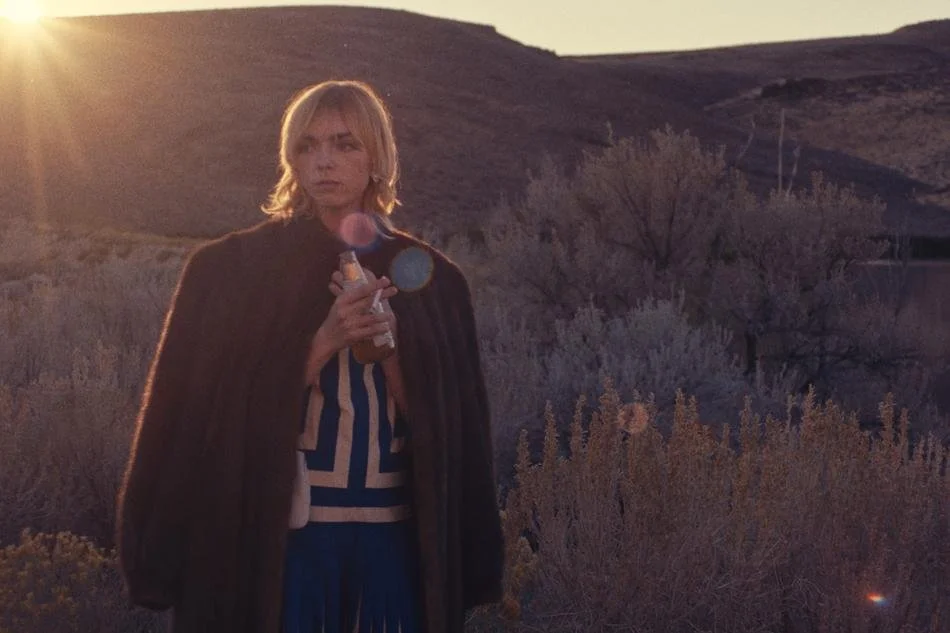
What Sparks is actually about is that restless, undefined stage of adolescence where life feels like it has not quite started yet. It captures the desire for escape, for meaning, for some larger world beyond the one you are stuck in. Cleo’s fixation on 1960s Paris and Jean Luc Godard is telling. It is not about time travel so much as wanting to step into a version of life that feels more cinematic and more important than your own.
The film’s greatest strength is also its biggest weakness. Its gentle, whimsical tone allows it to linger on moments and emotions that feel true to youth and boredom. But it also leans too heavily into an exhaustingly cutesy style that threatens to smother whatever rawness is there. This sometimes feels like post-mumblecore, a genre of movies about hanging out and talking, but filtered through film school romanticism and Gen Z self-awareness.
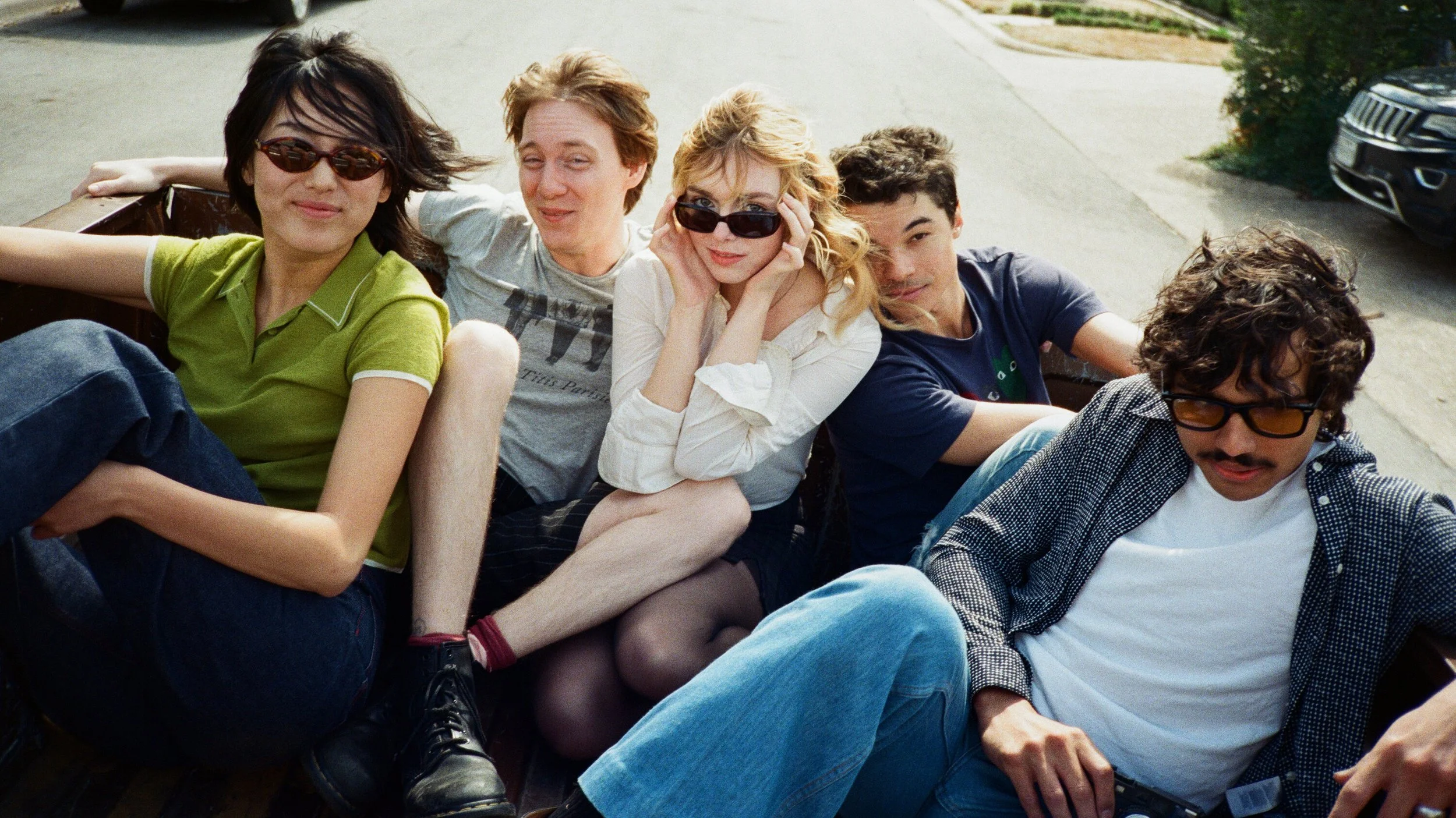
That said, I can easily see Sparks becoming a touchstone for young, aspiring filmmakers. It is sincere, handmade, visibly in love with cinema, and unafraid to be small. Even when it frustrated me, I could appreciate what it was reaching for. The film is not interested in resolving its mysteries or delivering satisfying answers. The reservoir remains unexplained. The conversation trails off. The ending lands softly, maybe too softly.
Sparks does not fully convince as a feature. The concept feels thin, better suited to a short or a looser episodic form. And while the cinematography is lovely, the writing and performances often kept me at arm’s length. Still, there is something here. A mood. A feeling. A very specific snapshot of being young, bored, and convinced that somewhere else, sometime else, life must make a little more sense.
Jessie Hobson