
There are interviews you do because you admire the work, and then there are interviews that sneak up on you. This was one of those. I do not get starstruck. I genuinely do not. But sitting down with Clive Russell, someone who has been quietly present across decades of television and film I grew up with, was a different experience entirely.
Russell has appeared in everything from Game of Thrones to Ripper Street, Outlander, The Witcher, Sherlock Holmes, and even the beautifully bizarre world of The Amazing World of Gumball. His face and voice have been in my home more times than I could count. And yet, despite all of that, the reason I was most excited to talk with him had nothing to do with epic fantasy or prestige television.
It was because The House Was Not Hungry Then is weird.
Not strange in a marketable, elevator pitch sense. Weird in a way that shouldn’t work on paper. A haunted house movie told almost entirely from the perspective of the house itself, shot in locked off wide frames, with minimal dialogue, no conventional coverage, and an atmosphere that feels more funereal than frightening. It is a film that asks you to sit with it, or leave.
Russell was drawn to that risk immediately.
“I try to work on low budget things for the simple reason that the connection of the people to the story they’re telling is usually much more passionate,” he explained. He spoke openly about balancing large scale productions with smaller, riskier projects driven by younger filmmakers. “This was so unusual. I found it irresistible.”
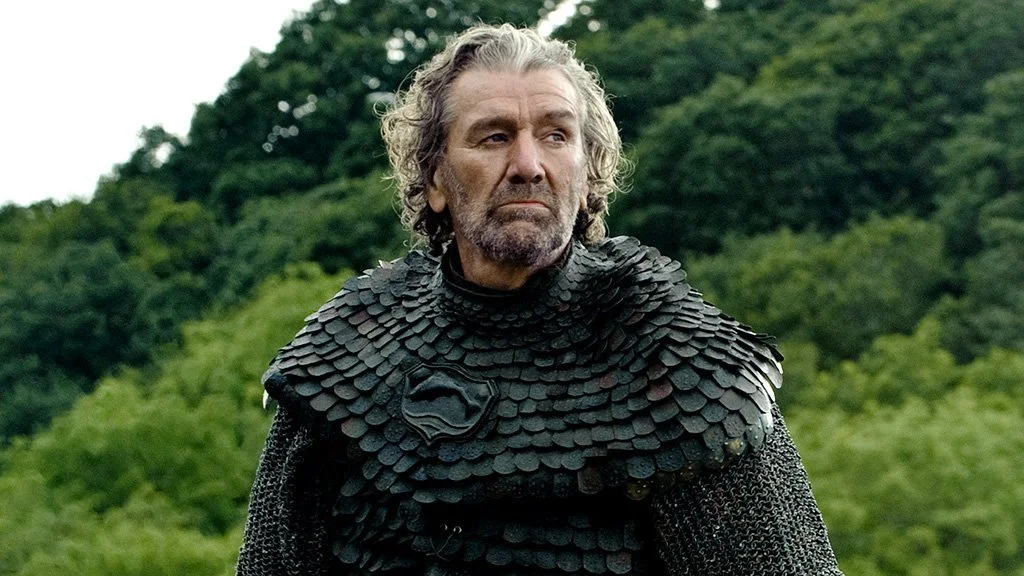
That unusualness extended to the filmmaking itself. Russell admitted the structure was not fully apparent to him at first. “It never struck me that it would all be on cameras at the far end of the room. That’s very, very strange.” But rather than resist it, he leaned into the discomfort. “I was drawn by the boldness, the braveness of it.”
In the film, Russell plays a man posing as a real estate agent. A caretaker. An accomplice. Maybe a lover. Maybe something worse. His character exists in a deeply unsettling relationship with the house itself, enabling its violence while attempting to manage it.
“There’s a bond going on there which is both enabling basically a serial killer,” Russell said, “but he’s also kind of very protective. He gets angry like a lover gets with a lover.”
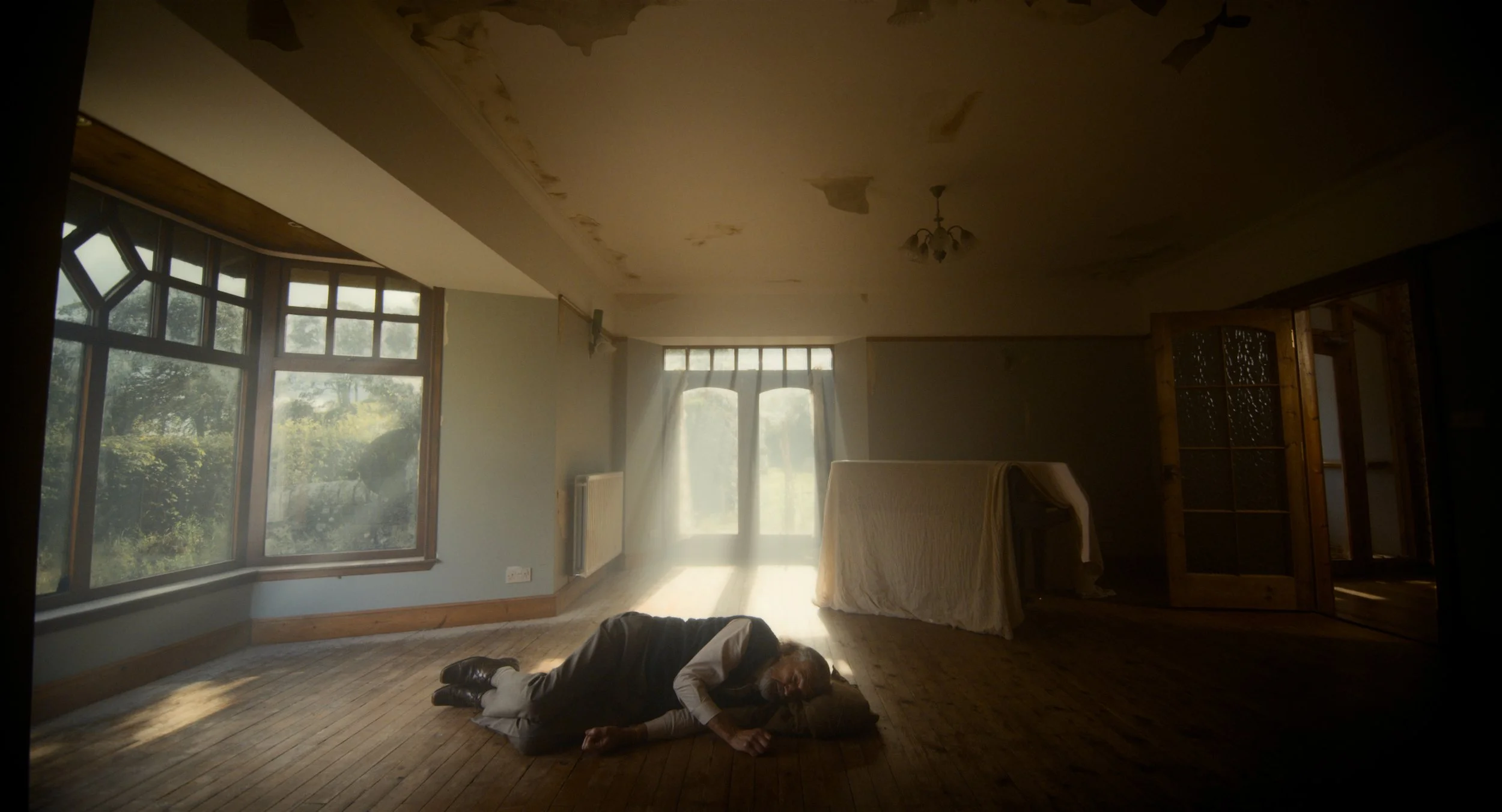
That duality became the key to his performance. Russell described a pivotal moment. “That scene where I lie on the floor and caress the floor and kiss the floor. That encapsulates it for me. It’s very strange yet if you translate the house into a person it’s understandable.”
In Russell’s mind, the relationship was not supernatural so much as painfully human. “Somebody you love is doing something appalling, which you’re enabling in order to keep them happy. He becomes enraged like a marriage.”
That framing transforms the character from a simple villain into something far more uncomfortable. Not a monster, but someone complicit. Someone who believes they can manage the harm without stopping it.
“From his point of view, there is no monster,” Russell explained later. “The parent and the lover always believe the best. He’s not going to report the house to the police, as it were. He believes he can persuade, charm, or coerce the house into not doing it.”
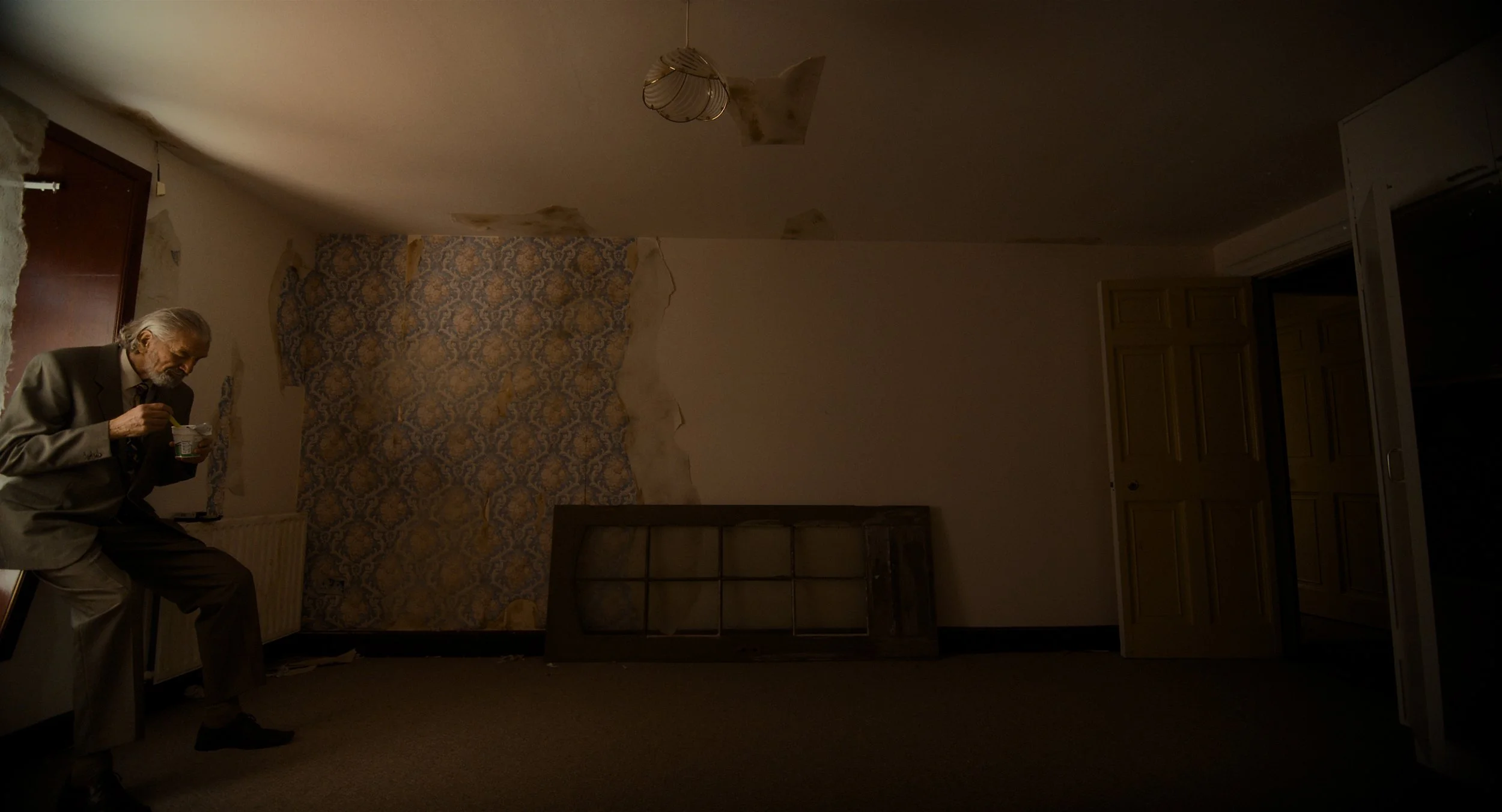
What makes The House Was Not Hungry Then linger is not its body count but its stillness. Russell spoke beautifully about performing in an almost empty space. “You really were in a big space,” he said. “In that particular house, as nearly all empty houses, the echoes of humans who’ve lived there for hundreds of years are there. You can almost hear them and feel them.”
That sense of absence became an active presence. “There is a melancholy about it. It’s no use anymore. It’s looked after people, it’s seen families and arguments, and now it’s useless. From the house’s point of view, the psychology of that is pretty clear.”
Russell shared a memory that perfectly captured the film’s tone. Walking past an empty garden door with his daughter, she remarked, “Somebody isn’t there.” It is a simple sentence, but it holds everything the film is doing. The feeling that something remains, even when no one does.
While Russell is best known for sprawling ensemble productions, he noted how different this experience was. “Most of the acting was done with voices or with something else,” he said. “Really, my dialogue was with the house.”
And sometimes, there was no response at all.
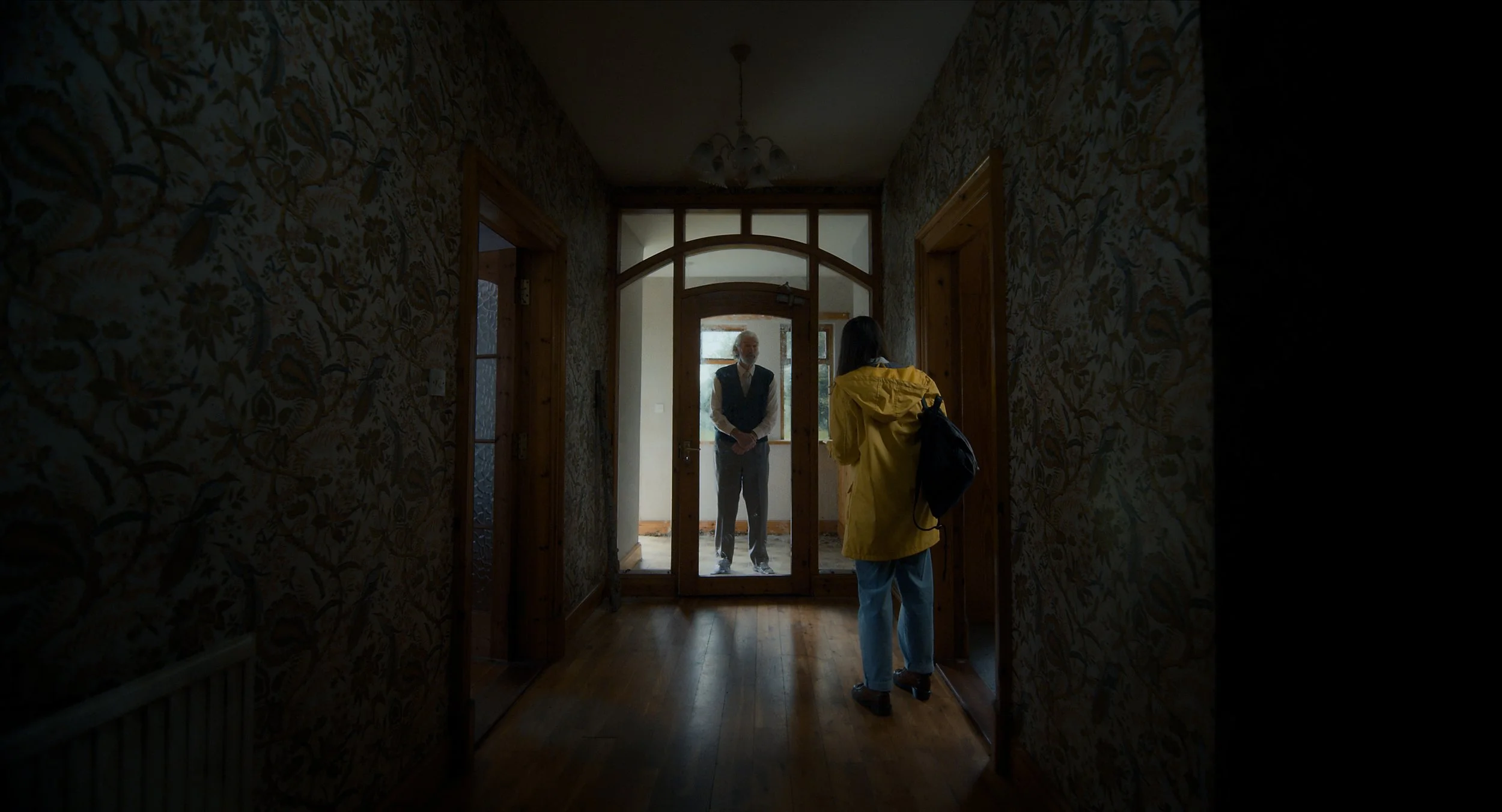
That restraint extended to director Harry Aspinwall’s approach. Russell described him as assured, disciplined, and refreshingly uninterested in over explanation. “He didn’t spend too much time saying too much,” Russell noted. “That’s a fault with most young directors. They feel defensive. That really wasn’t necessary here.”
The result is a film that will absolutely divide audiences. Russell knows this. He even anticipates it. “There won’t be enough dialogue. There won’t be enough actors. Some of the most important characters are the people who come in and disappear.”
But for those willing to meet it on its own terms, the film offers something rare. An invitation to think about spaces, memory, and complicity. To consider whether buildings absorb us as much as we inhabit them.
“Houses have an accumulation of blood and character,” Russell said quietly. “Without being mystical or sentimental about it.”
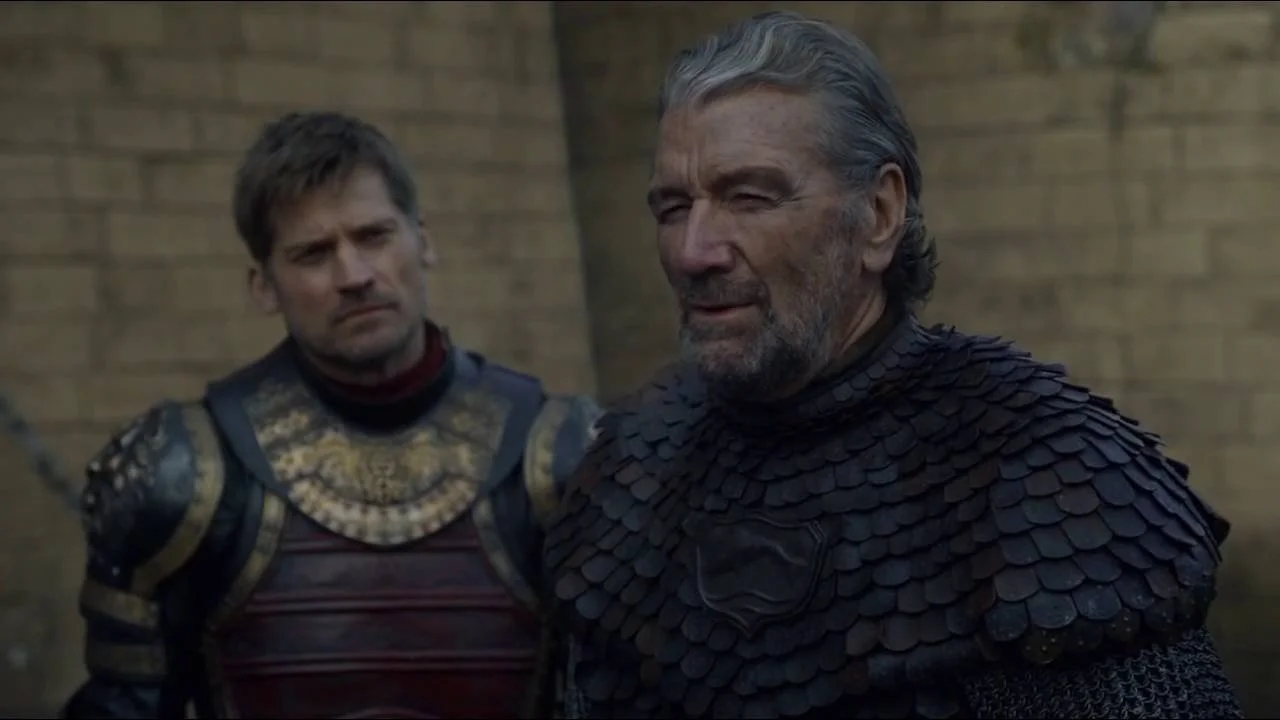
That sentiment stayed with me long after the interview wrapped. And honestly, that is why this conversation mattered so much. Not because Clive Russell has been in everything, though he has. Not because he was excellent in Game of Thrones, though he absolutely was. But because he chose to spend his time and talent on something this odd, this still, and this unresolved.
It is not every day you get to talk with someone you grew up watching, and discover that the thing they are most excited about is a strange little haunted house movie that barely behaves like one.
That kind of choice says everything.
Jessie Hobson