
Few films capture the simmering tension of modern America quite like I Voted. Directed by Tyler Mann and co-written by Mann and Rachel DeRouen, this politically charged thriller takes place almost entirely inside a polling location that suddenly goes into lockdown during a contentious presidential election. What begins as an uncomfortable gathering of strangers quickly evolves into a pressure cooker of competing ideologies, personal grievances, and escalating hostility that feels less like fiction and more like a plausible headline waiting to happen. The film's premise centers on voters trapped together during election day, forcing them into conversations most people are taught to avoid.

The setup is deceptively simple. A group of everyday Americans, each bringing their own political leanings, life experiences, and assumptions to the table, find themselves unable to leave as an unspecified police incident unfolds outside. With nowhere to go and no way to escape the tension, conversations naturally turn toward politics. What follows is not a debate over policy so much as an excavation of the fears, frustrations, and resentments that have come to define contemporary discourse. Mann and DeRouen are not interested in telling audiences who is right or wrong. Instead, they explore how quickly conviction can become hostility and how hostility can become something far more dangerous.
For much of its runtime, I Voted operates almost like a politically charged version of The Breakfast Club. The film takes its time introducing its ensemble and allowing their personalities to emerge beyond surface-level stereotypes. That deliberate pacing may test the patience of viewers expecting a more conventional thriller, but the investment pays off because every conversation gradually adds another layer to the emotional powder keg at the center of the story. By the time tempers begin to flare, the audience understands not only what these characters believe but why they believe it.
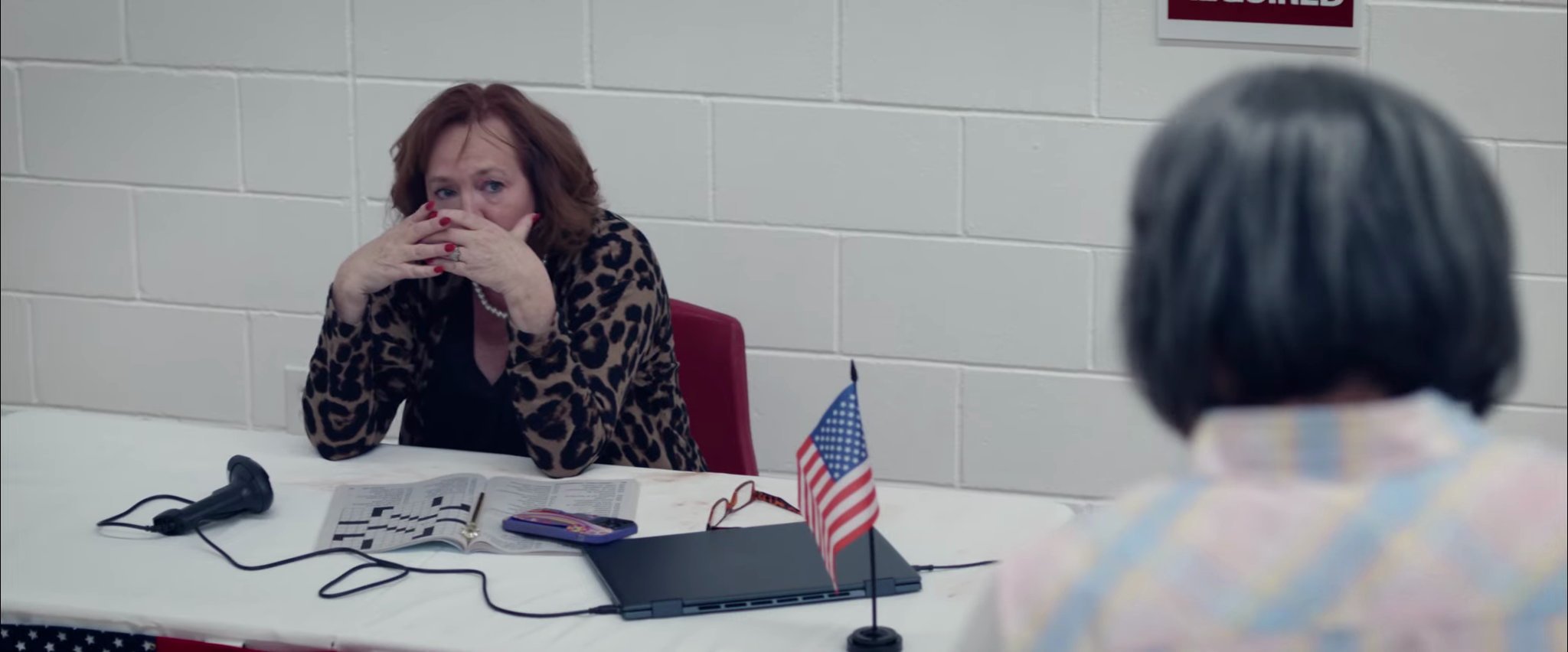
What makes the film particularly impressive is its refusal to flatten anyone into a caricature. Characters who initially appear to embody familiar political archetypes reveal vulnerabilities, contradictions, and moments of humanity that complicate first impressions. The screenplay repeatedly encourages viewers to examine their own assumptions, often forcing them to empathize with people whose viewpoints they may strongly oppose. In that regard, I Voted succeeds as both a thriller and a social mirror, exposing the uncomfortable reality that political polarization often begins with the belief that those on the other side are fundamentally different from ourselves.
Surprisingly, the film also contains a sharp sense of humor. Amid the ideological clashes and mounting tension, there are moments of genuine laughter that arise naturally from personality conflicts and social awkwardness rather than forced comic relief. Those lighter moments make the darker turns even more effective because the audience grows attached to the people trapped inside this increasingly volatile environment. One scene might have you laughing at the absurdity of modern political discourse, while the next leaves you emotionally rattled by the consequences of that same discourse.
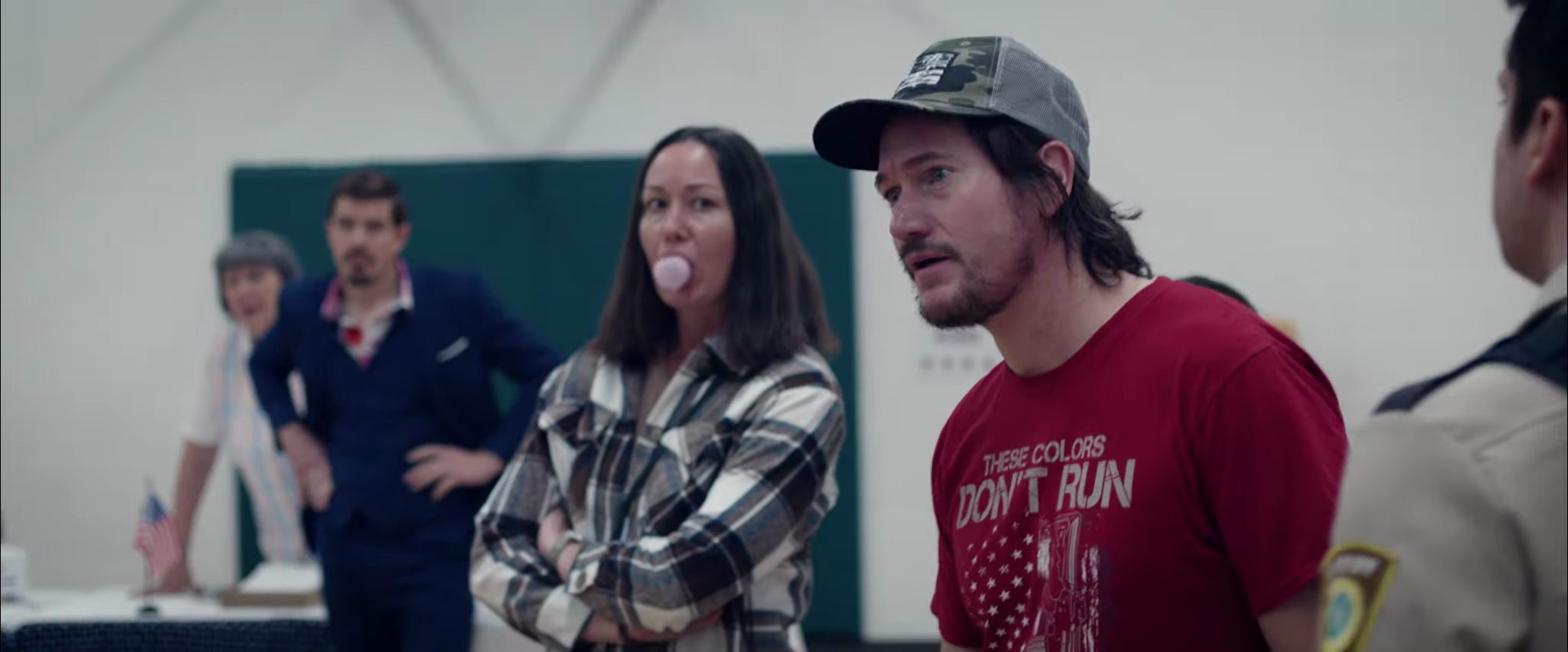
As the story progresses, the film gradually shifts from chamber drama into full-blown thriller territory. The polling location stops feeling like a public building and starts feeling like a battleground. Every conversation carries the possibility of violence, every disagreement threatens to spiral out of control, and every attempt at reconciliation seems destined to fail. The film presents the polling place as a microcosm of America itself, a spectacle of competing values and unchecked tensions where political strategy, fear-mongering, and personal resentment collide under the illusion of democratic order.
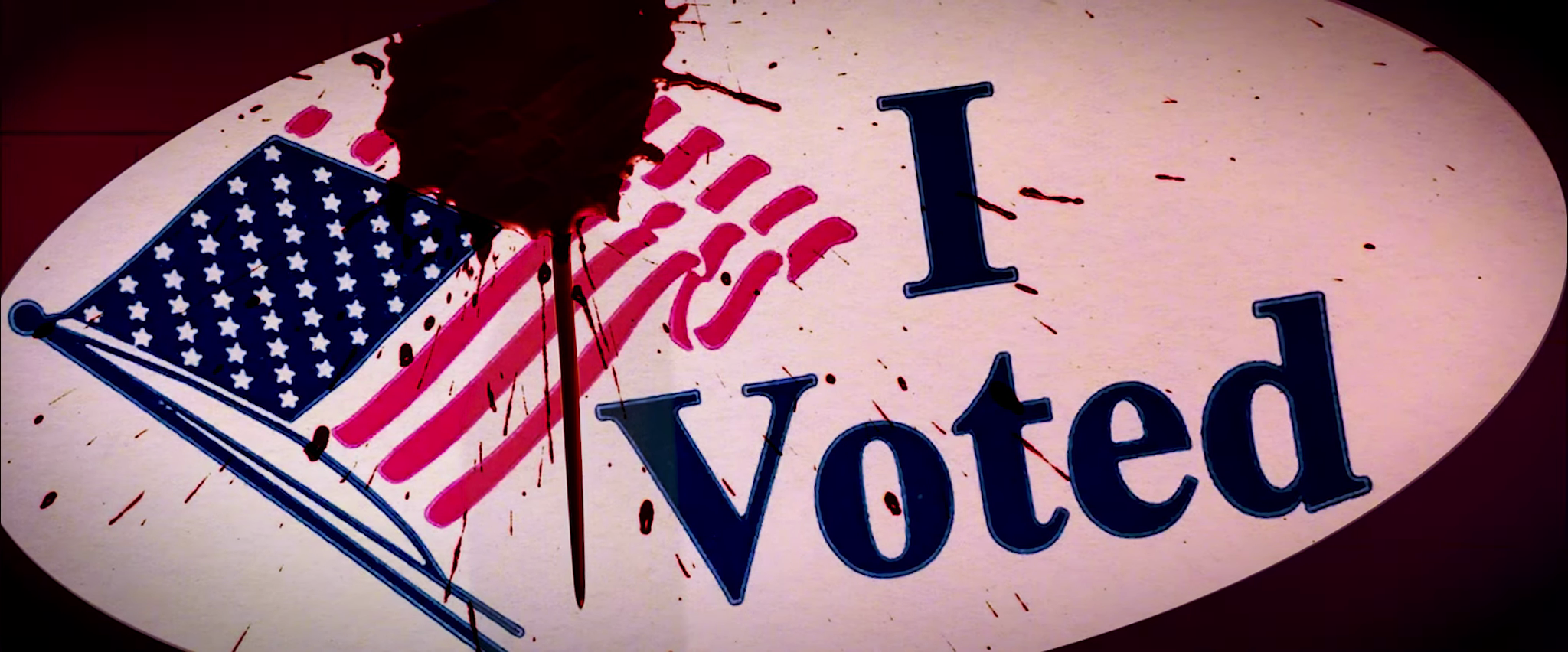
When the inevitable explosion finally arrives, it hits with devastating force. Without revealing specifics, the final act abandons any illusion that calm discussion will save the day and instead delivers a chaotic, shocking eruption of violence that feels both horrifying and tragically believable. There is a Tarantino-esque intensity to the film's closing stretch, but the violence is never celebratory. It is presented as the logical endpoint of a culture increasingly addicted to outrage and incapable of meaningful dialogue. The result is a finale that leaves audiences stunned rather than exhilarated.
The ensemble cast deserves enormous credit for making this premise work as effectively as it does. While the film lacks major star power outside of Eric Roberts' supporting appearance, the performances are consistently strong across the board. Every actor feels fully committed to the material, creating characters who come across as authentic people rather than vehicles for political arguments. The cast's conviction keeps the film grounded even as the tension escalates toward increasingly dramatic territory. The film features a large ensemble led by Federica Rangel, Nathan Harlan, Jessica Irvine Drake, and Dzifa Mallet, alongside veteran actor Eric Roberts.
What lingered most after the credits rolled was not the violence, however, but the conversation it inspired. Few independent films manage to provoke sustained discussion the way I Voted does. We found ourselves debating its themes for more than an hour immediately after the screening and then revisiting those same arguments the next day. That lingering impact is ultimately the film's greatest achievement. Whether viewers agree with its perspective or reject it entirely, I Voted succeeds because it refuses to be passively consumed.
At a time when civil discourse feels increasingly endangered, I Voted functions as both warning and reflection. It may be a slow burn, and it occasionally takes longer than necessary to reach its destination, but the payoff is undeniably powerful. Thought-provoking, unsettling, darkly funny, and ultimately explosive, this is the rare political thriller that feels less concerned with elections than with the emotional and cultural consequences of treating every disagreement like a war.
Jessie Hobson