
For someone whose entire life exists online, Jenessa Miller spends much of Data Not Drama profoundly alone. Writer-director David Ramer's intimate sci-fi drama follows the influencer behind the wildly successful "Data Not Drama" brand, a woman who has built a career sharing herself with millions while carefully withholding the parts that matter most. What begins as a clever satire of content culture gradually evolves into something far more affecting: a story about loneliness, vulnerability, companionship, and the universal desire to be understood.
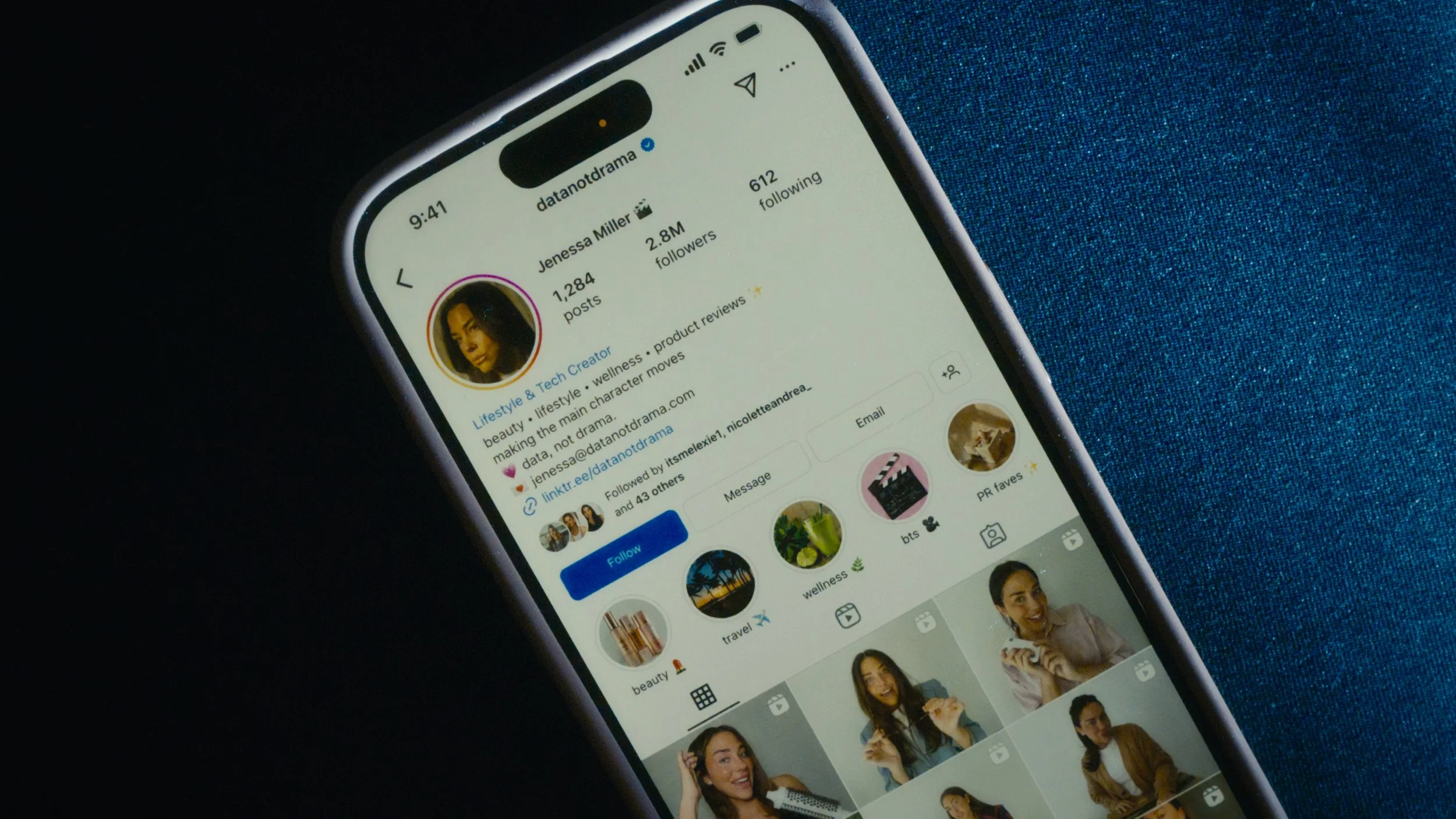
Alexa Poveromo anchors the film as Jenessa, a lifestyle influencer whose 2.8 million followers know her through product reviews, cheerful catchphrases, and perfectly curated videos. Her content projects confidence and connection, but behind the ring lights and sponsorships is someone quietly struggling with isolation. When a robotics company sends her an experimental humanoid Companion to review, she initially treats it like every other product that lands on her doorstep. It is simply another item to unbox, test, and convert into engagement. As the review progresses, however, the Companion becomes more than a marketing opportunity. It becomes a presence, and eventually something much harder to define.
Ramer finds genuine humor in the film's early sequences as Jenessa enthusiastically incorporates the Companion into her content ecosystem. Watching her turn even the most unusual situations into sponsored-style material serves as both a funny critique of influencer culture and an illustration of how thoroughly her personal life has become inseparable from her professional identity. The film understands that social media is not inherently the enemy. Instead, it is interested in the emotional cost of living as a brand, where every interaction is filtered through performance, and every experience risks becoming content.
What makes Data Not Drama particularly effective is its refusal to remain a simple satire. As Jenessa spends more time with the Companion, the relationship gradually shifts from practical to emotional. The robot begins filling a void that neither followers, metrics, nor online validation can address. Ramer wisely avoids sensationalizing this dynamic. Instead, he presents it as a natural extension of profound loneliness, exploring how quickly dependency can develop when someone is deprived of meaningful human connection. The result is a surprisingly tender examination of companionship that feels less concerned with technology than with the emotional needs that drive people toward it.
The screenplay also introduces deeper themes than its premise initially suggests. A date sequence adds an unexpected layer of social commentary by touching on concerns surrounding automation and labor displacement. Rather than presenting technology as either salvation or catastrophe, the film acknowledges the uncertainty that accompanies innovation. These moments broaden the film's thematic ambitions and help ground its speculative elements in real-world anxieties, making the story feel more relevant than abstract.

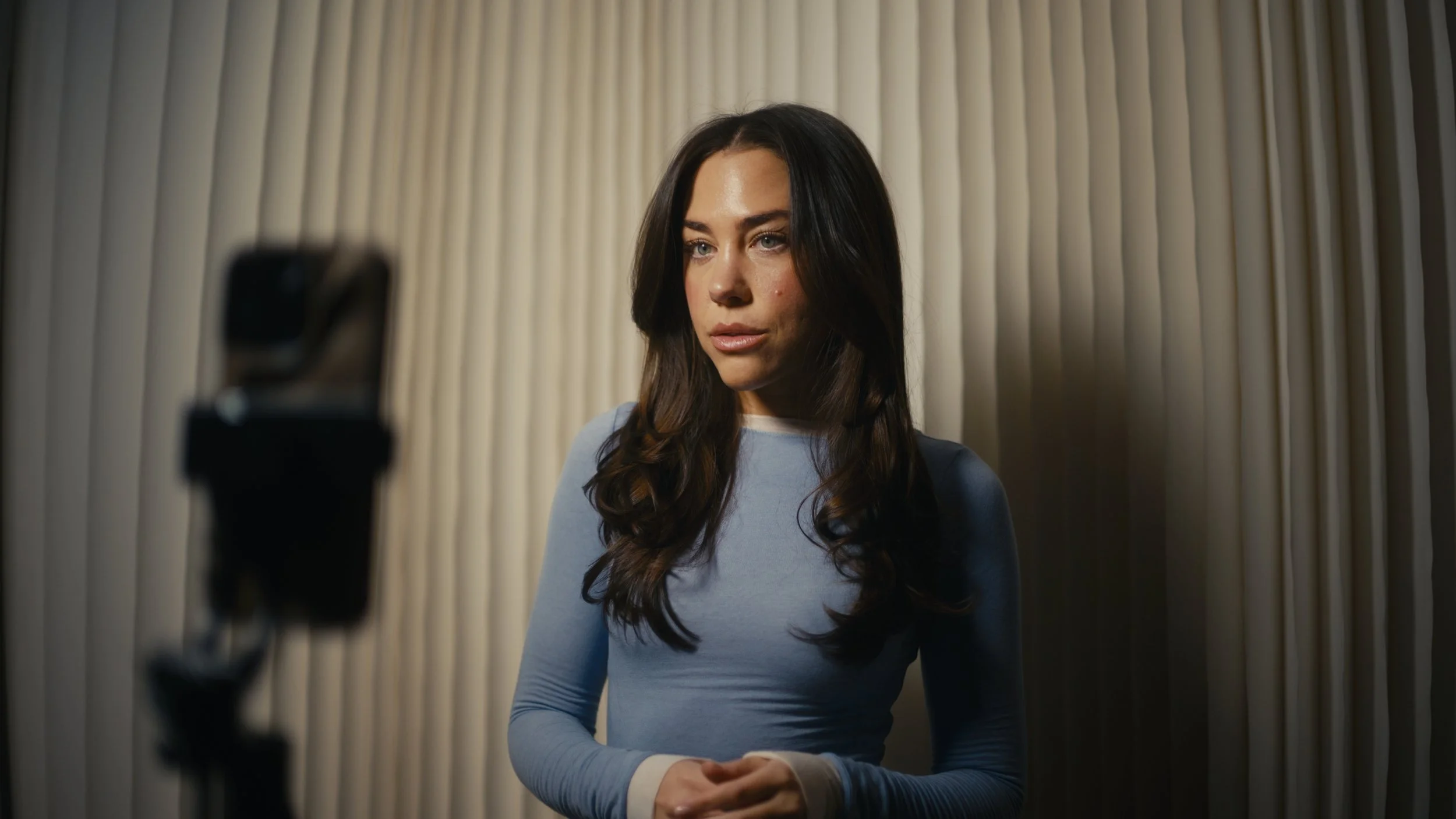
Poveromo carries much of the film's emotional weight, delivering a performance that effectively distinguishes between Jenessa's public-facing persona and her private reality. The subtle shifts between influencer enthusiasm and genuine vulnerability give the character depth, particularly as details emerge about a painful past relationship that continues to shape her worldview. Those revelations help explain why the Companion becomes so significant in her life and prevent the story from reducing her loneliness to a simple byproduct of internet fame. Instead, Jenessa feels like a fully realized person whose emotional wounds predate the technology entering her home.
The film is equally impressive on a technical level. Operating largely within a single apartment, Ramer transforms limitations into strengths. The confined setting reinforces the central themes, creating a world that feels simultaneously comfortable and suffocating. Considering that Ramer served in multiple creative capacities throughout the production, the finished product is remarkably polished. The writing, editing, production design, and overall craftsmanship create a level of confidence that frequently exceeds what audiences might expect from a modestly scaled independent film.
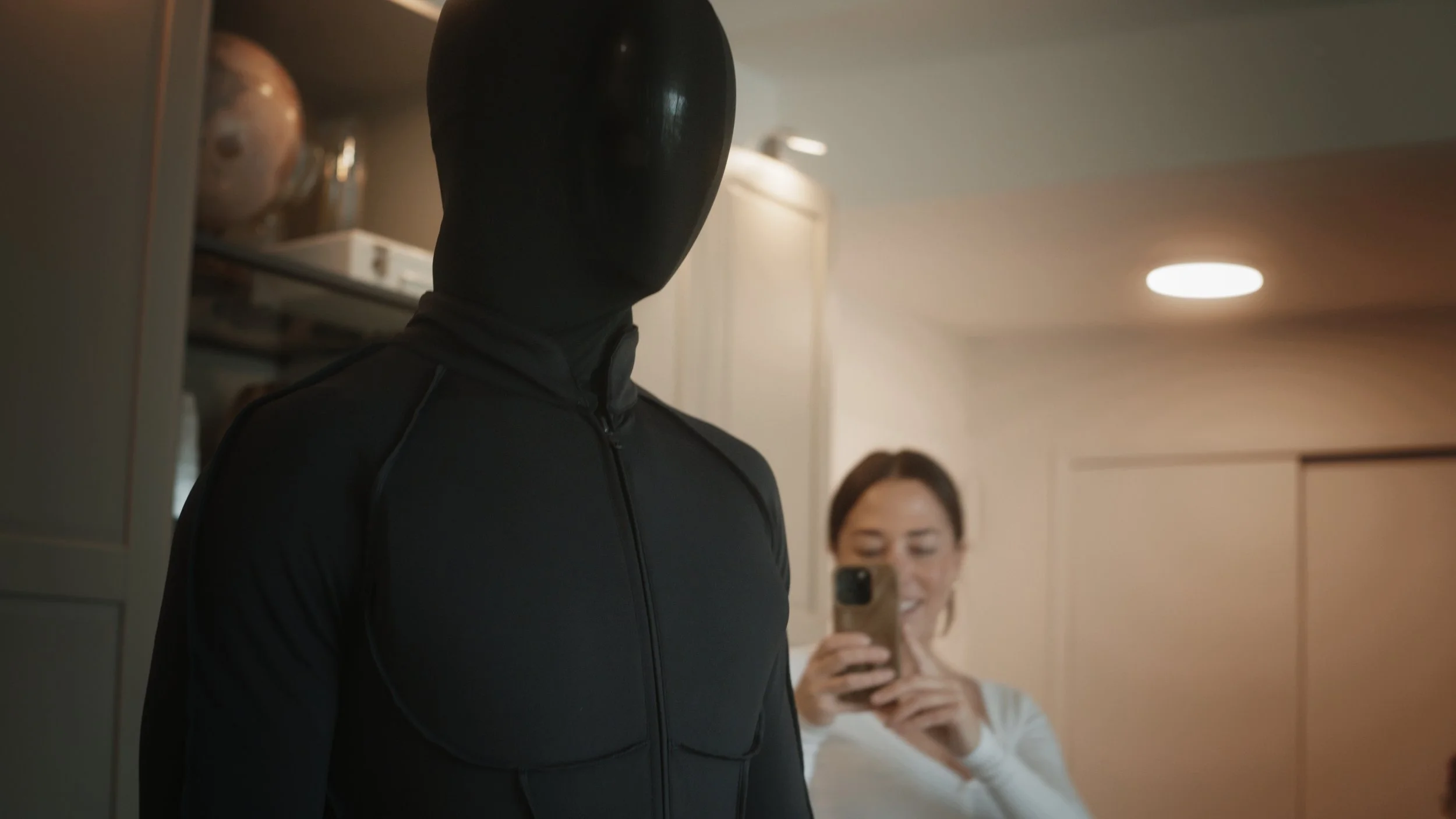
Perhaps the film's greatest accomplishment is understanding that its science fiction elements work best as a mirror rather than a spectacle. The Companion is not simply a futuristic gadget. It is a reflection of Jenessa's unmet needs and a vehicle through which the film explores questions surrounding authenticity, intimacy, and emotional dependence. As the story unfolds, the review Jenessa believes she is creating quietly becomes a review of herself. The line between observer and subject gradually disappears, forcing her to confront aspects of her life that she has spent years keeping outside the frame.
Without venturing into spoiler territory, Ramer also introduces developments in the latter portion of the film that significantly deepen its emotional impact. What initially appears to be a straightforward character study takes several unexpected turns that challenge the audience's assumptions and add new dimensions to the story's central relationship. The film earns these moments because it has invested so heavily in character before pursuing larger narrative ambitions.
At its core, Data Not Drama is about the distinction between being followed and being known. In a culture obsessed with visibility, engagement, and personal branding, the film argues that attention is not the same thing as intimacy. Millions of followers cannot replace presence. Constant interaction cannot eliminate loneliness. Real connection requires vulnerability, something far more difficult than posting another update or sharing another carefully curated moment. Smart, funny, and surprisingly moving, Data Not Drama succeeds because it understands that beneath its technological premise lies a deeply human story. Long after the sci-fi concepts fade, what remains is a poignant reminder that sometimes the loneliest place in the world is directly in front of an audience.
Jessie Hobson