
Chili Finger opens with a title card informing you that what you are about to see is “mostly a true story,” which immediately sets the tone for what follows. This is a film deeply invested in the idea that reality is often stranger, dumber, and funnier than anything we could fabricate. From its first moments at SXSW, the movie announces itself as a small-town crime story with big personalities and a wickedly patient sense of escalation.
Inspired by an infamous real-life fast food hoax, Chili Finger takes that kernel of truth and spins it into a tightly wound dark comedy thriller that understands exactly when to push things into absurdity and when to stay grounded. The result is one of those rare festival discoveries that feels confident, complete, and enormously satisfying.
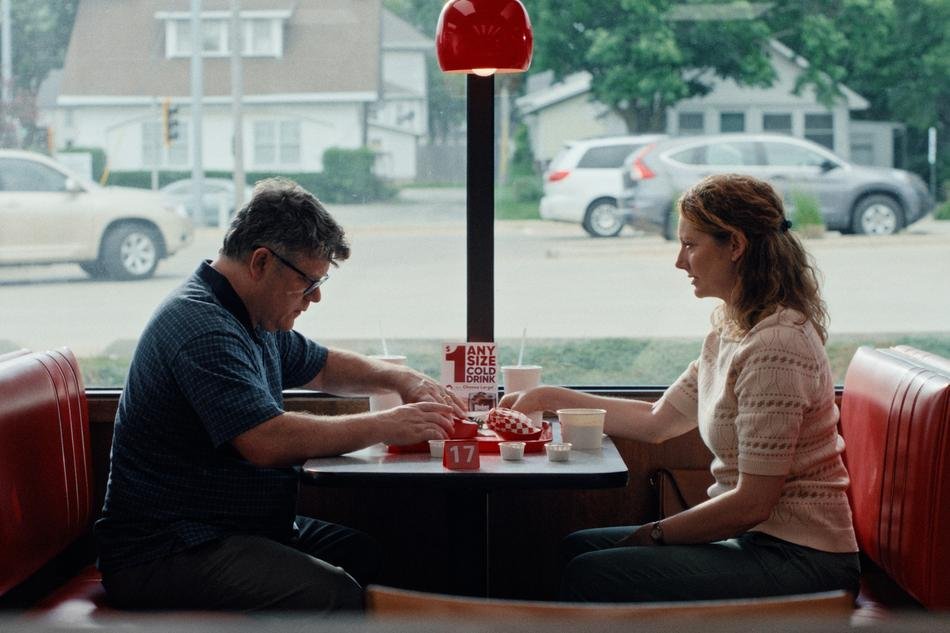
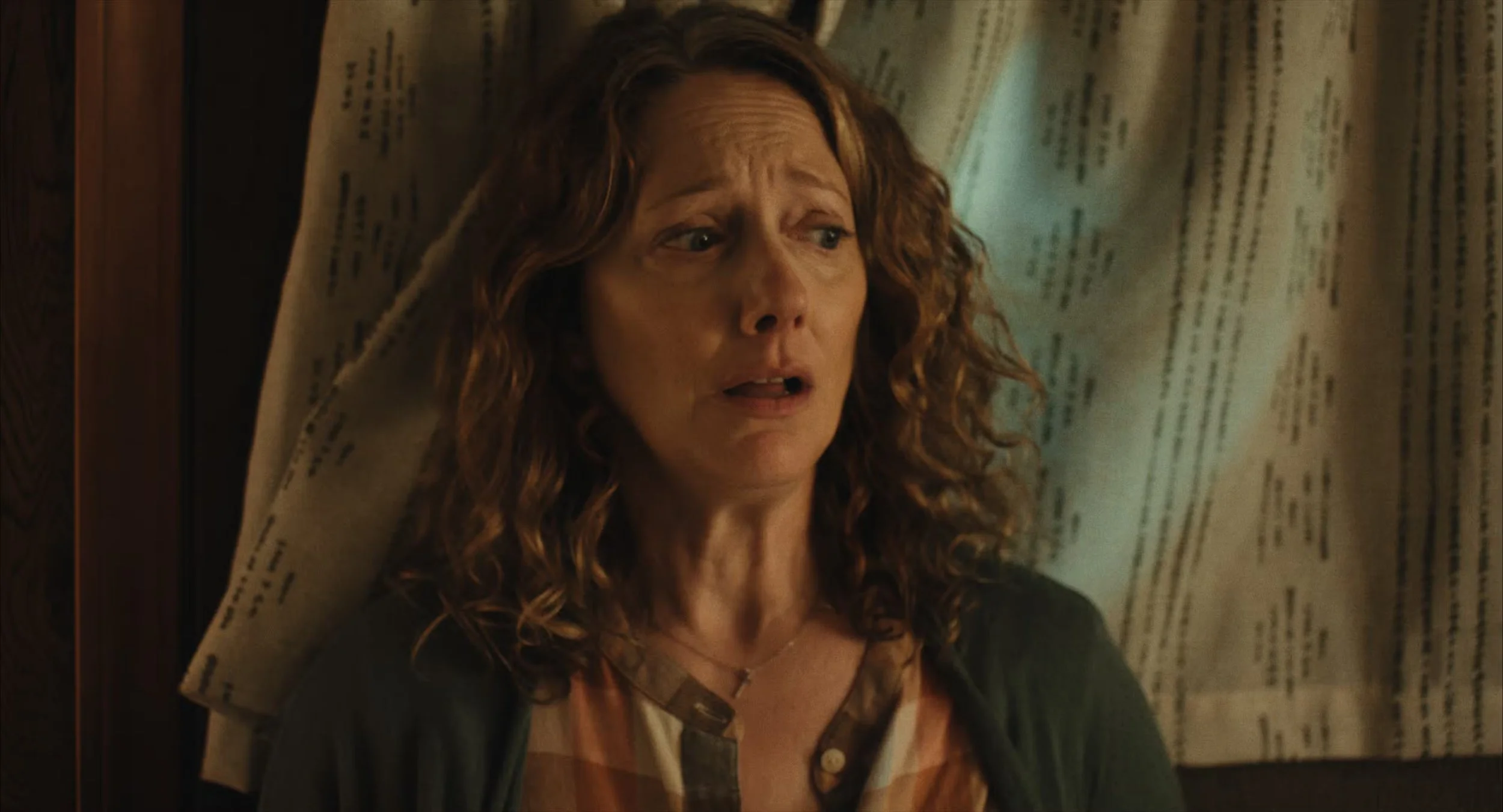
At the center of the film is Judy Greer, who delivers a reminder performance for anyone who has ever wondered why she is not headlining everything. Greer plays Jessica Lipki, a woman whose life has settled into a quiet, unambitious routine. When she finds a severed human finger in her bowl of chili at a beloved fast food spot, she recognizes not just a shock but an opportunity. Greer handles this transformation beautifully, shifting from restrained frustration to active manipulation with total control. The film works because she makes every step of that moral slide feel honest, human, and just unhinged enough.
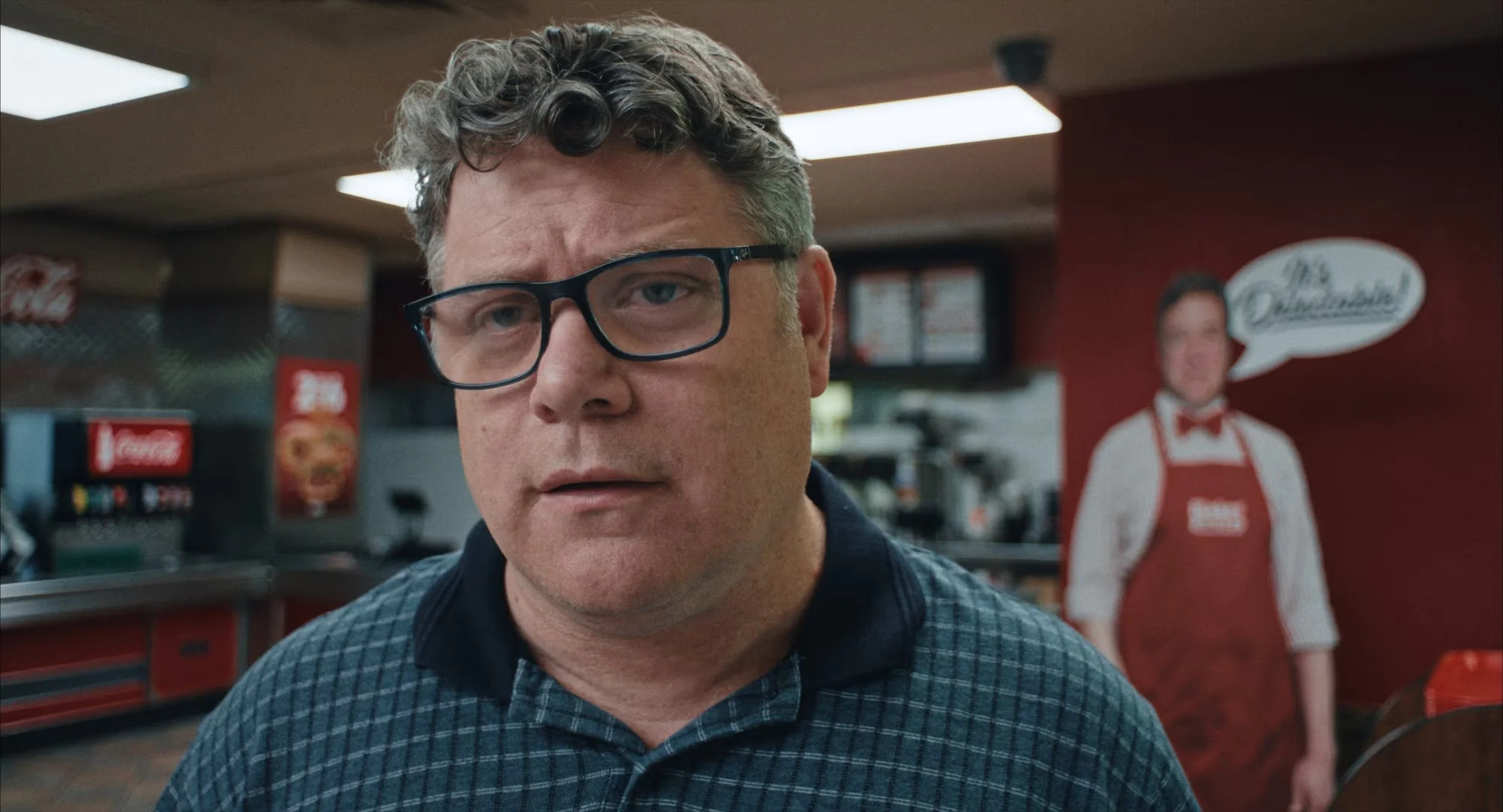
Her on-screen husband Ron, played by Sean Astin, completes the picture of an achingly familiar middle American household. Their dynamic feels lived in rather than written. The dialogue is natural, the rhythms recognizable, and the small moments between them often feel pulled straight from real kitchens and living rooms. The parents in Chili Finger are not caricatures. They feel like people you know. At several points, it is impossible not to be reminded of your own family, whether you like that admission or not.
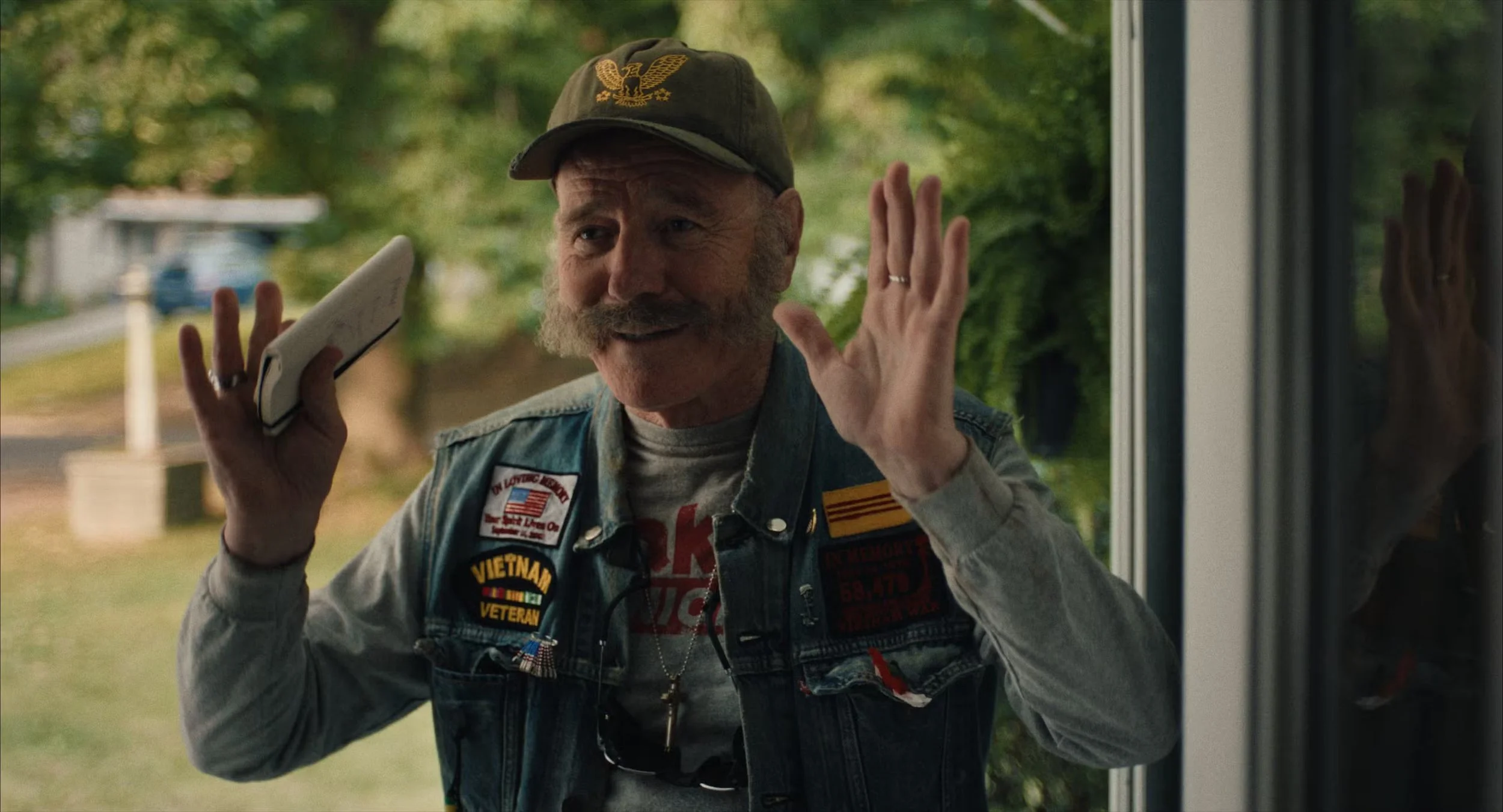
Once the blackmail plot kicks into gear, the movie leans into its twisty, turny small-town crime mechanics. This is where Bryan Cranston and John Goodman enter the picture, bringing with them a sense of controlled menace and comedic timing that elevates every scene they share. Goodman plays Blake Junior, the volatile owner of the restaurant chain, while Cranston portrays an ex-Marine fixer tasked with untangling the mess. Their chemistry is immediately electric. They bounce off each other with ease, and it is the kind of pairing that makes you wonder why Hollywood has not been putting them together for years. The answer, unfortunately, is probably that we do not deserve nice things.
Goodman, in particular, feels right at home here. His presence evokes strong Coen Brothers energy, which the film smartly leans into rather than fights. He gives another stellar performance that walks the line between intimidation and farce, using his physicality and voice to sell both. Cranston, meanwhile, brings a quiet danger that makes his character unpredictable in the best way.
The supporting cast deserves mention because Chili Finger is one of those movies where even the smallest roles feel purposefully cast. Madeline Wise is a standout in her limited screen time, perfectly calibrated to the film’s tone. Paul Stanko, who may not be a familiar name yet, absolutely announces himself here. This feels like a coming-out party performance, the kind that makes you immediately want to see what he does next.
Physically, the film is loaded with smart comedy. Nothing is broad for the sake of being loud. Every gag feels motivated, every bit of business tied to character. The directing by Edd Benda and Stephen Helstad is confident and visually interesting without drawing attention to itself. They know when to let scenes breathe and when to snap things forward, gradually heightening the stakes as the story spirals outward.
What truly cements Chili Finger as a standout is its script. This is a tight piece of writing with real payoffs. Nothing feels wasted. Details introduced early are remembered, echoed, and twisted in ways that feel both surprising and inevitable. By the time the film reaches its final act, it becomes clear just how carefully constructed everything has been. Loose ends are not simply tied up; they are looped back into the story in clever, often hilarious ways.
The ending deserves particular praise. It is not just good, it is perfect for the story being told. It lands with the confidence of a film that knows exactly what it is and refuses to overstay its welcome.
As a SXSW experience, Chili Finger played like a crowd pleaser without ever feeling dumbed down. It is a solid dark comedy crime thriller that builds momentum smartly, trusts its audience, and delivers on its promises. Funny, uncomfortable, sharply observed, and absurd in the most satisfying way, it is one of those movies that reminds you why festivals exist in the first place.
Jessie Hobson