
Damian McCarthy’s Hokum made its world premiere in SXSW’s Midnighter lineup, and from the jump, it announces itself as a horror film deeply committed to vibe. From its opening moments, the film settles into an eerie, funereal atmosphere that never fully lifts, even when the movie briefly pretends it might. This is a haunted hotel story soaked in shadow, dread, and folkloric menace, one that wants to crawl under your skin before yanking the floor out from under you.
The film follows novelist Ohm Bauman, played by Adam Scott, who retreats to a remote Irish inn to scatter his parents’ ashes while wrestling with creative paralysis and personal guilt. Scott plays Ohm as a deeply unlikable prick, which works beautifully. He is smug, dismissive, and emotionally shut down in a way that feels intentional rather than cartoonish. Scott sells the role with ease, and there is something about his performance that recalls Johnny Depp in Secret Window, though less theatrical and more grounded. Watching Scott spiral through increasingly hostile spaces is one of the film’s strongest anchors.
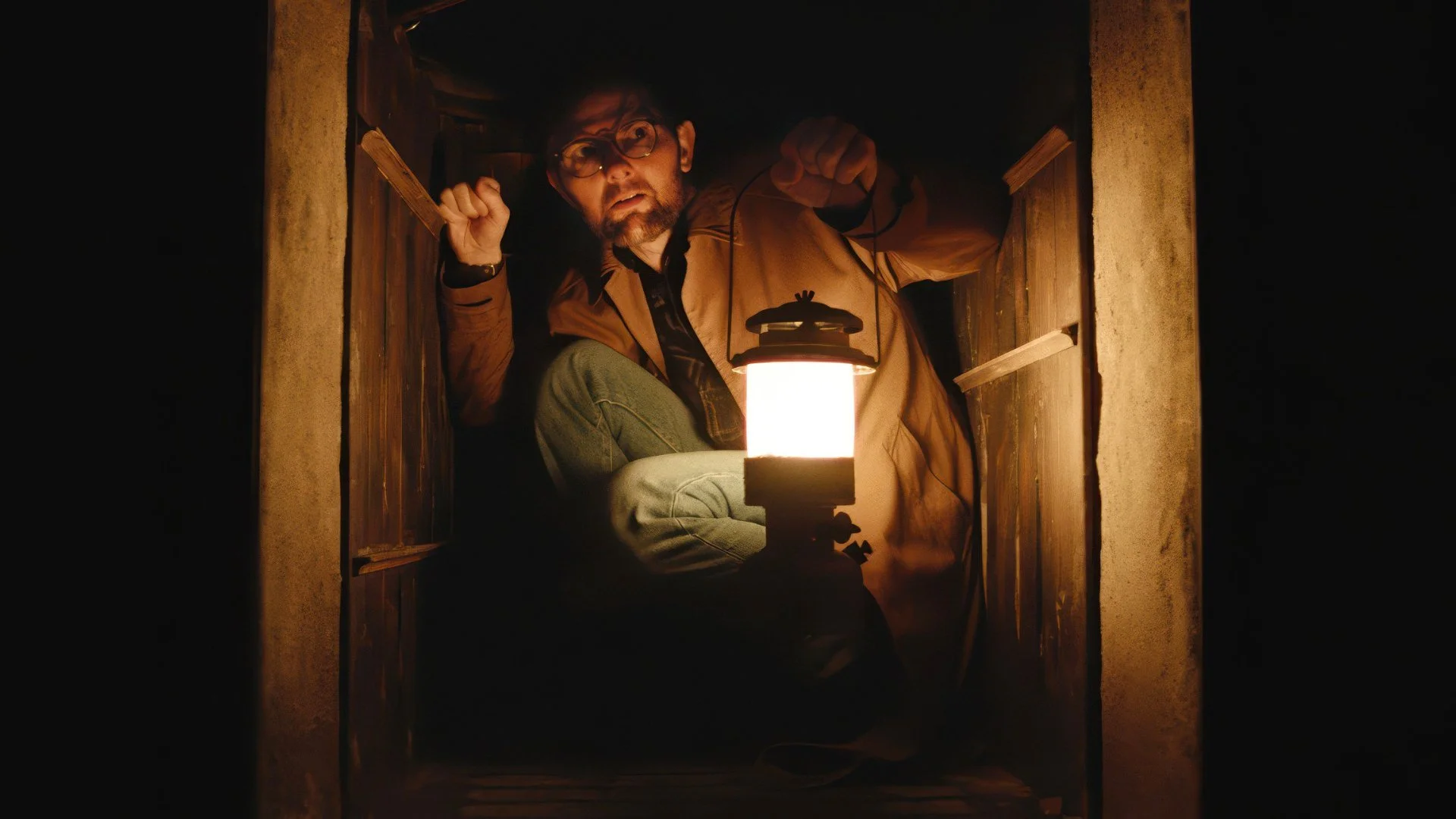
McCarthy wastes no time establishing unease. Early jump scares are effective, sharp, and just restrained enough to lull you into thinking the film will play it safe. It does not. Each new setting inside the hotel is more unsettling than the last, and McCarthy makes incredible use of confined space. He employs interesting angles and compositions that utilize every inch of the frame. Hallways stretch too far, doorways feel wrong, ceilings loom, and darkness is treated not as absence but as a physical presence. This is a director who understands how to let shadows do the heavy lifting.
The hotel itself is populated by an unexpectedly likable crew, particularly the bartender and bellhop, who provide grounding warmth without becoming tonal distractions. Their presence makes the inevitable dread feel sharper. When Ohm begins discovering new areas of the hotel, roaming corridors and forbidden rooms, the film hits its peak. These sequences are genuinely hair-raising, the kind that make your toes curl as you wait for something to move that absolutely should not.
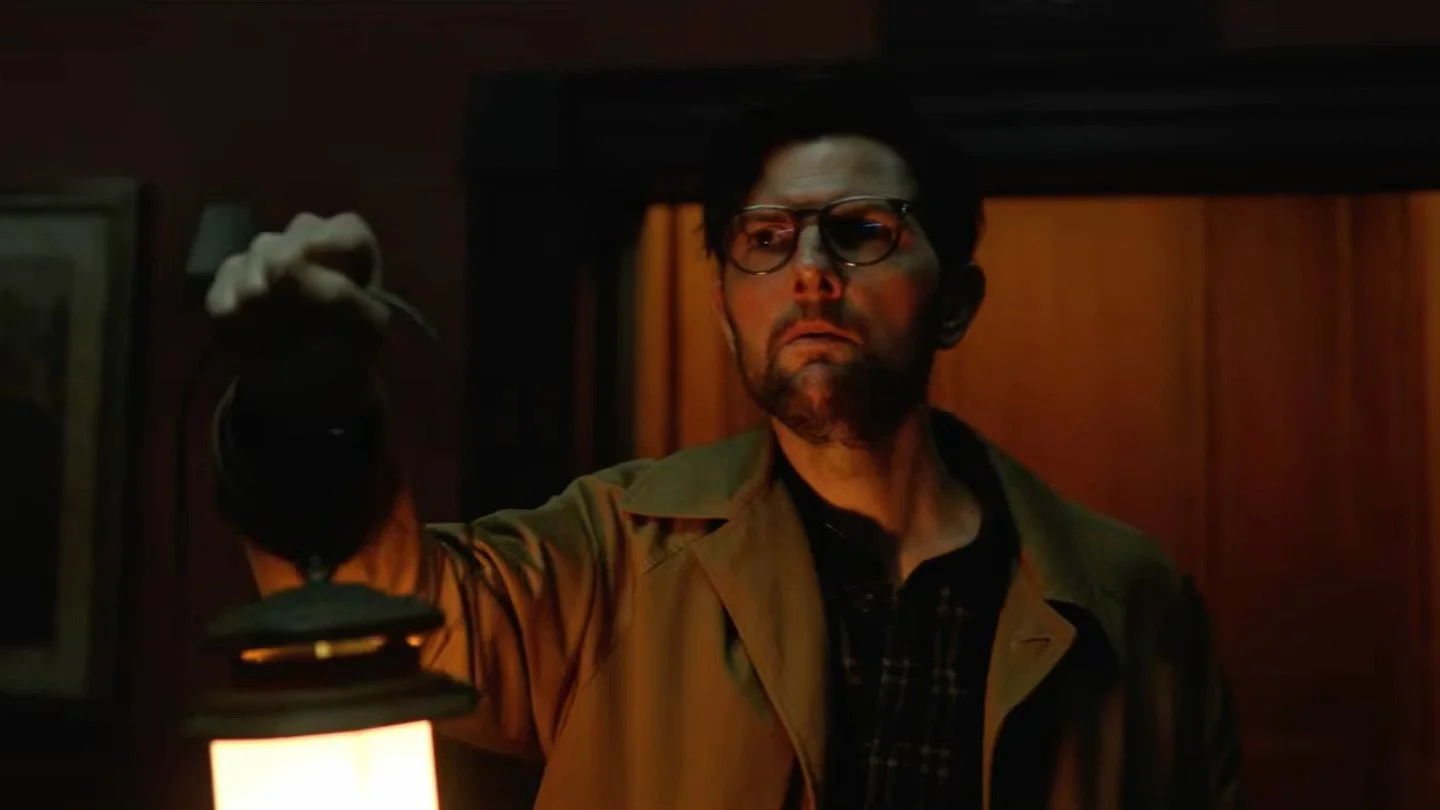
The score is relentless. Loud bangs, shrill tones, and dissonant bursts crash into scenes with surgical cruelty. Old-timey, foreign songs drift in unexpectedly, twisting already tense moments into something deeply upsetting. Bells, in particular, are weaponized here. Bells have never been scarier. It is effective, but sometimes heavy-handed, pressing the same musical buttons one too many times.
Visually, McCarthy continues his fascination with unsettling carvings and grotesque imagery, elements that have become something of a trademark. Mr. Cobb, the creepy old man played by Peter Coonan, is the first real sign that something is deeply wrong. His smug, knowing presence sets the tone, hinting at darker forces lurking just beneath the surface. There is also a witch figure that looks like something out of Frodo’s nightmares, and while visually striking, she is emblematic of the film’s larger issue: ideas introduced with promise but not fully explored.
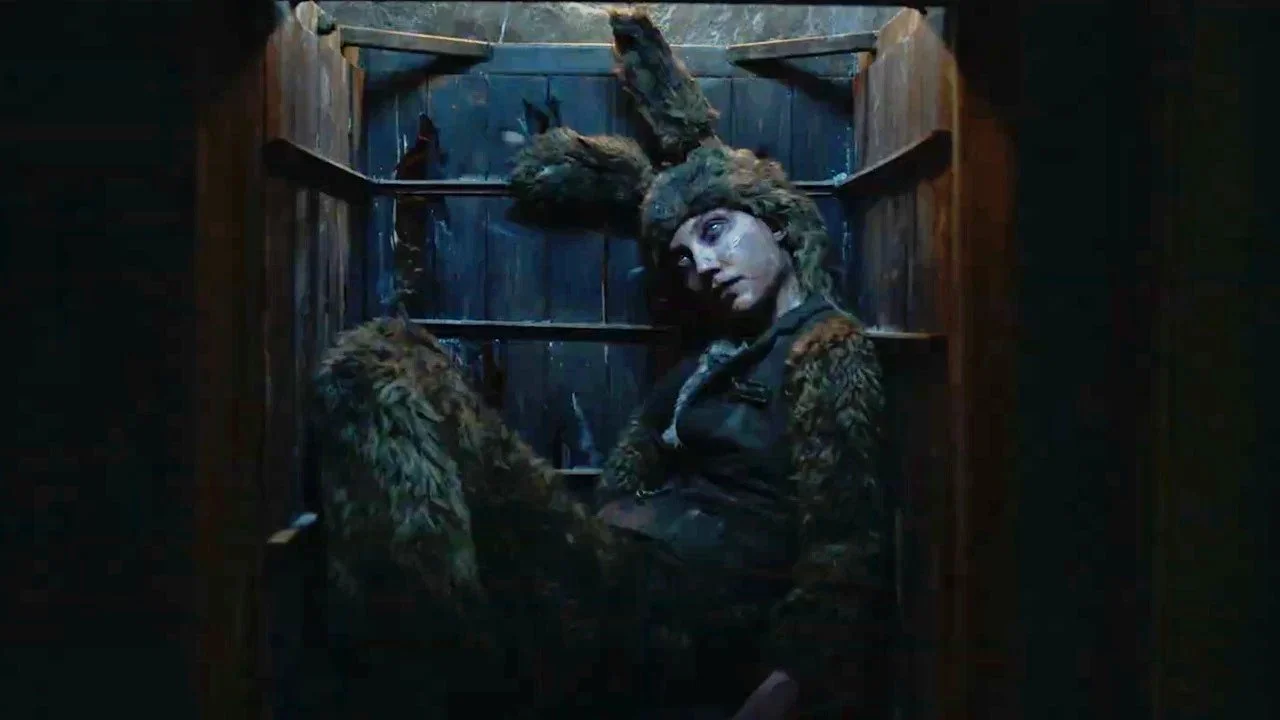
The rabbit creature is a perfect example. Visually, it looks like Tim Curry collided with the rabbit from the 90s live-action Alice in Wonderland. It is genuinely unsettling, bizarre, and memorable. Unfortunately, it appears and disappears without much explanation or payoff, a creepy flourish that never quite justifies its inclusion.
Tonally, Hokum is all over the place. The film opens in oppressive darkness, then suddenly swerves into near comedy, using awkward humor and drunk guys as brief relief, only to yank itself back into bleak horror once you start to relax. While this whiplash occasionally works, it often feels like the film is unsure of its own identity. The oscillation between vague ambiguity and painfully obvious narrative beats happens too frequently, undercutting tension rather than enhancing it.
There are undeniable moments of shock and plenty of genuine “what the hell” beats. Some environments are truly unsettling, and when the film clicks, it clicks hard. At its best, Hokum feels like one of the stronger haunted ghost stories in years. But it also leans heavily on familiar groundwork. There are clear and sometimes distracting similarities to The Shining. For fans of that film, the influence is obvious. Unfortunately, it often feels more like imitation than tribute.
That familiarity is ultimately the film’s biggest weakness. Hokum pulls from so many horror touchstones and folk-horror traditions that it starts to feel like a greatest hits compilation rather than a bold new statement. Coming from the director of Oddity, which felt sharper and more original, this is a disappointment. What was pitched as elevated horror never quite rises above its influences.
Despite its Irish folklore and witchcraft roots, the film squanders much of that potential in favor of loud scares and overemphasized moments. The vibe and atmosphere are strong, and the setting is excellent, but the narrative becomes overstuffed and convoluted, ultimately resembling a greatest hits reel of folk horror clichés.
By the end, Hokum oddly resembles a high-budget BBC murder mystery more than the kind of daring genre piece one expects from Neon. It is unsettling to its core at times, frustratingly familiar at others, and never fully finds its footing. There is something compelling here, buried beneath echoes of better films and unrealized ideas, but Hokum ultimately cannot escape the feeling that it has seen too much horror before and wants to remind you of all of it at once.
Jessie Hobson