Spending time talking with Kerry Mondragon feels a lot like watching Wetiko. You go in not entirely sure what to expect, and within minutes you realize you’re in the hands of someone who is deeply committed to what he’s doing. Not in a surface-level, filmmaker-on-a-press-run kind of way, but in a way that feels lived in, obsessive, and honestly a little bit fearless.
Mondragon’s psychedelic jungle thriller drops you into the Yucatán and pulls you into something that feels less like a traditional narrative and more like an experience. It follows Aapo, a young Maya man pulled into a world of ritual, manipulation, and shifting reality. But the way Mondragon talks about the film, it’s clear this didn’t start as a script. It started as a search.
“All of my films, they kind of happen naturally,” he says, explaining how he tends to gravitate toward “communities that are off the grid… that seem happy.” That curiosity brought him to the Yucatán, where he found himself caught between two worlds. One rooted in real Maya communities, and another built around Western spiritual tourism and curated ritual experiences. That contrast hit him hard.
He recalls being surrounded by eco-tourism and ritual invites, constantly asking himself, “Where are the Maya?” It was that question that pushed him deeper, eventually leading him to live with a Maya family in the jungle, a turning point that completely reshaped the project. “It was really when I found that family… that really kind of started” the film, he says, a moment where observation turned into something much more personal. That authenticity is all over Wetiko, but so is a very real tension.
Mondragon is fully aware that the film itself is walking a dangerous line. When asked about depicting a culture while critiquing its exploitation, he’s honest. “That’s a question that is still in my… I don’t know the answer to it,” he admits. That uncertainty shaped how he approached the production, constantly reminding himself and his team that “we cannot become the thing that we’re literally making this film about.” That mentality wasn’t just philosophy; it was survival.
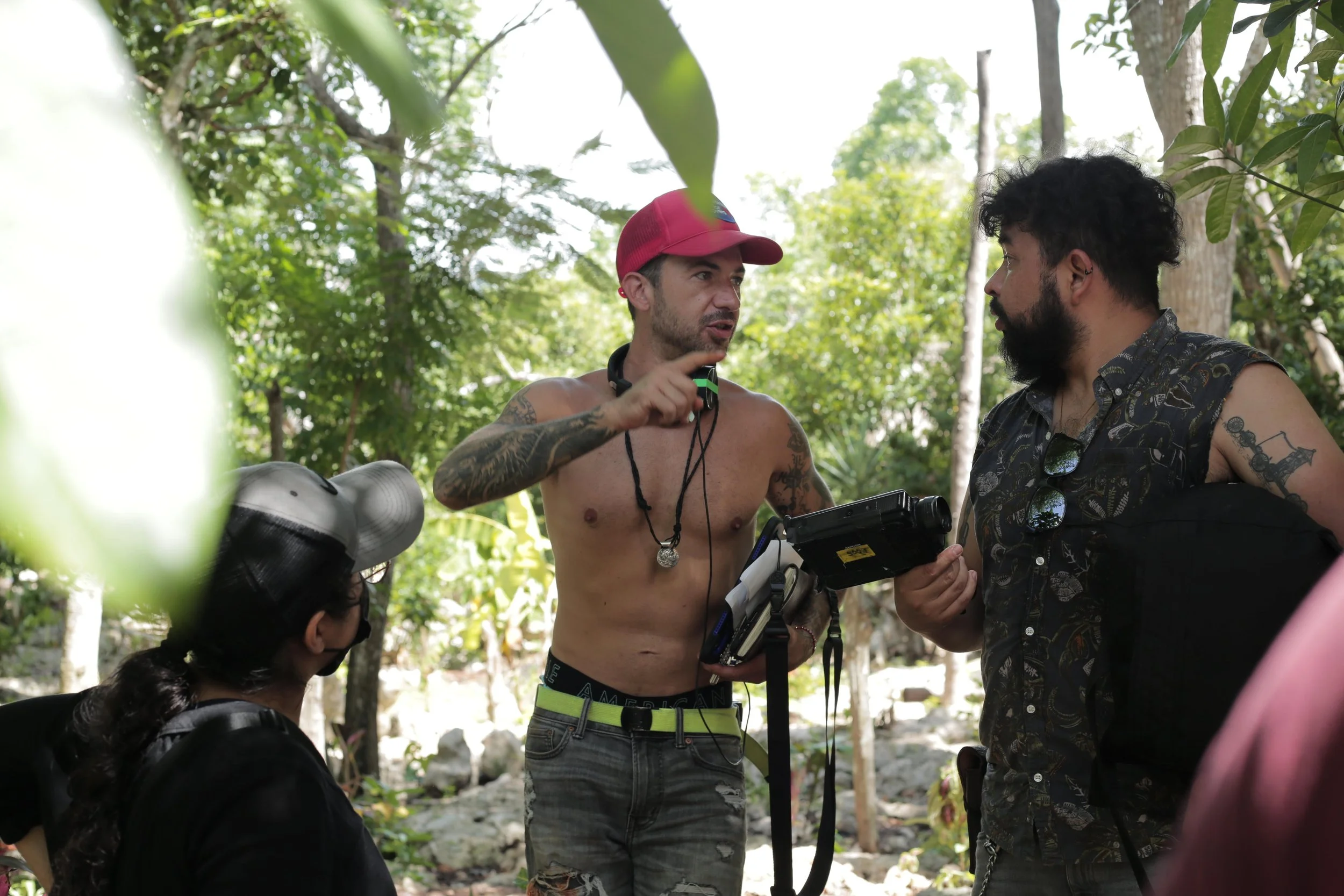
Filming in the jungle came with its own challenges, both physical and emotional. Mondragon describes the process as something that nearly fell apart multiple times, a shoot that felt volatile and unpredictable. There was never a sense of pure control. In fact, he was ready to walk away entirely if things crossed a line. “If we’re doing damage… we pull out. I don’t care what it is,” he says. That willingness to lose the film to protect the people and space around it tells you everything you need to know about how seriously he approached this project. And that rawness translates directly into the film itself.
Visually, Wetiko feels like something uncovered rather than created. Mondragon intentionally shot on 16mm to give it weight, texture, and imperfection. He wanted it to feel “tactile, like something that was found… like artifacts dug up.” It’s a choice that gives the film a distinct identity, something closer to a discovered relic than a polished production.
That sense of intention runs even deeper. The entire story unfolds over a 24-hour cycle, something Mondragon ties to a larger cultural framework while also using it to shape Aapo’s journey. The shift in visuals from vibrant, almost overwhelming color into something more worn and unstable isn’t accidental either. He talks about actively resisting beauty in certain moments, pushing scenes to feel less polished and more degraded, saying there were times when he had to step in and say, “this looks too pretty.” That push toward unease defines the entire experience.
Even the music reflects that philosophy. One of the film’s more unexpected moments is a Gucci Mane track cutting through the colorful cityscapes. It shouldn’t work, but it does, because it’s rooted in character. Mondragon explains that it was about highlighting Aapo’s dual identity, a young man caught between his roots and modern culture. It’s a choice meant to put you inside his head, to emphasize that disconnect instead of smoothing it over.
Everything in Wetiko operates like that. Nothing is there just to look cool. It all feeds the feeling. And sometimes, reality itself feeds the film.
One of the wildest moments Mondragon shares involves a real man who interrupted their shoot, someone who later turned out to be trying to buy the land they were filming on. Instead of shutting down, Mondragon leaned into it, grabbing a camera and folding that moment into the film. It’s the kind of instinct that defines his approach. If something real enters the space, it becomes part of the story.
That mindset extends to how he views the audience experience as well. When asked if the film succeeds when people walk away unsettled but unsure why, he doesn’t hesitate. “Absolutely… I think that what art should do… just to make you react.” For him, it’s not about clarity or comfort. It’s about leaving something behind, “something to think about… let it play in their head after.” And honestly, that’s exactly what Wetiko does.
The conversation itself ended the same way the film does, with a sense that this is only the beginning. There’s something exciting about Mondragon as a filmmaker, not just because of what he made here, but because of how he talks about it. There’s no detachment. No safe, polished answers. Just a genuine passion for the craft and a willingness to throw himself fully into whatever he’s creating.
It was a fun conversation. An unexpectedly great one. The more he talked, the clearer it became that this isn’t someone casually making movies. He’s chasing something, trying to capture a feeling, a truth, even if it gets messy along the way.
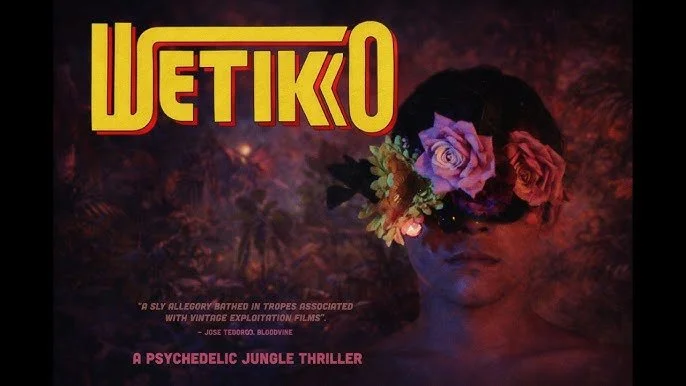
And if Wetiko is any indication, Kerry Mondragon is a filmmaker worth watching. The film is completely bonkers, in the best possible way, and somehow it all works. After sitting down with him, I came away with the feeling that he’s only scratching the surface of what he’s capable of. Consider me a fan.
Jessie Hobson