
There are few things more appealing to horror fans than a cast list packed with familiar faces, and The Pitchfork Retreat certainly delivers on that front. Screening at Houston Horror Film Festival 2026, the latest production from Fuzz on the Lens Productions assembles what feels like an entire convention guest roster under one roof. Nearly every scene introduces another recognizable genre veteran, from Tony Todd and Danielle Harris to Dee Wallace, Andrew Divoff, and a seemingly endless parade of horror personalities. At a certain point, it becomes almost distracting. The film is already overflowing with recognizable talent, making some of the additional cameo-style appearances feel unnecessary, as though the production couldn't resist squeezing in one more familiar face wherever possible.
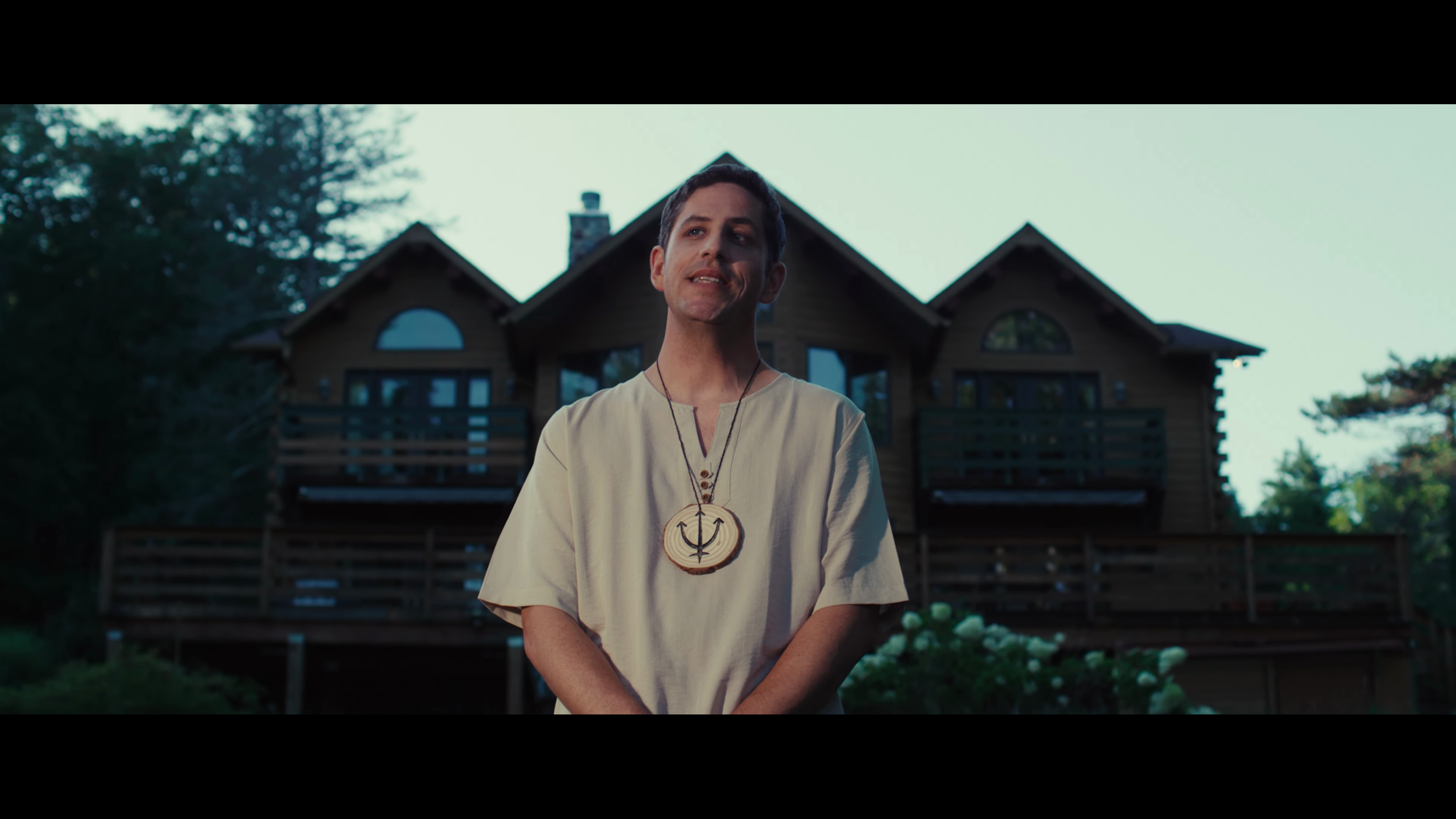
The premise is admittedly strong. Three aspiring horror writers arrive on a secluded island to participate in a prestigious retreat where the winner will receive a life-changing opportunity. As the competition unfolds, the writers begin sharing stories while confronting personal demons, eventually blurring the line between fiction and reality. On paper, it is a concept that offers plenty of opportunities for psychological horror, creative storytelling, and an anthology structure that feeds naturally into the larger narrative. Unfortunately, the execution never quite lives up to the promise of the setup.
The biggest hurdle is the pacing. The film takes an exceptionally long time to find its footing, and while things are technically happening during the opening act, very little of it feels particularly engaging. The audience spends a considerable amount of time getting acquainted with characters who are difficult to invest in, and the momentum never fully materializes. By the time the anthology stories begin, it feels like the film is just starting despite already being deep into its runtime. That sluggish opening creates a challenge the film spends much of its remaining runtime trying to overcome.
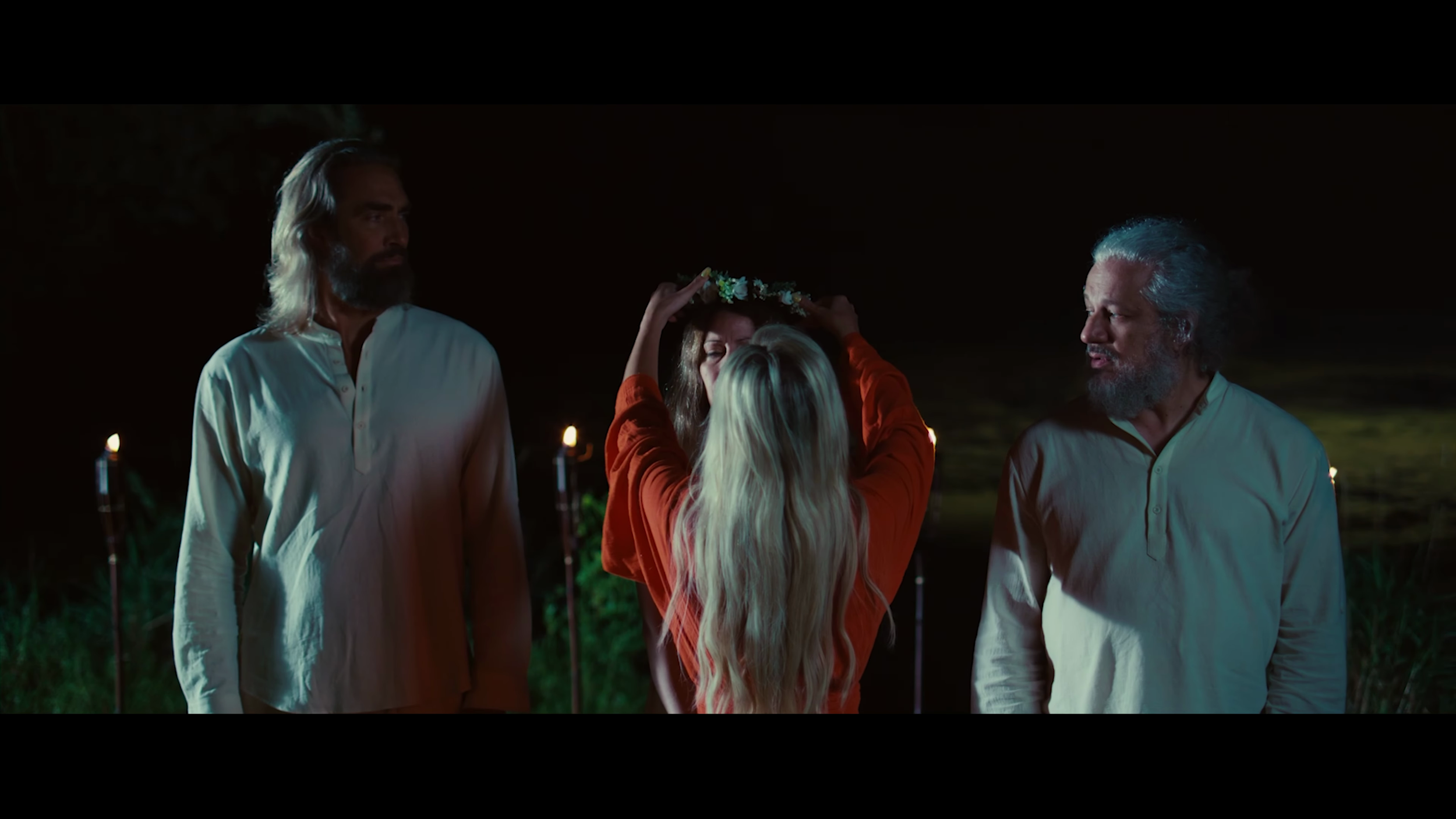
Once the storytelling competition becomes the primary focus, The Pitchfork Retreat shifts into anthology mode, and that is where the film becomes both more interesting and more frustrating. The individual stories contain a handful of clever ideas and some decent twists, but the quality varies significantly. One segment drags on longer than necessary while others feel rushed, creating an uneven rhythm that prevents the anthology from building consistent momentum. There are moments where the film feels genuinely inspired and others where it falls back on familiar horror tropes, dream sequences, fake-outs, and stories within stories that quickly become repetitive. The underlying ideas are often stronger than their execution, which becomes the defining characteristic of the entire film.
That inconsistency extends beyond the writing. Performances range from solid to surprisingly rough, while the makeup effects rarely rise above serviceable. The tone swings wildly throughout the runtime, shifting between serious horror, dark comedy, camp, satire, and psychological drama without ever finding a comfortable balance. The result is a movie that constantly feels at odds with itself. There are enough compelling concepts here for two or three separate films, but instead they are squeezed together into a single package that often feels overstuffed and directionless.
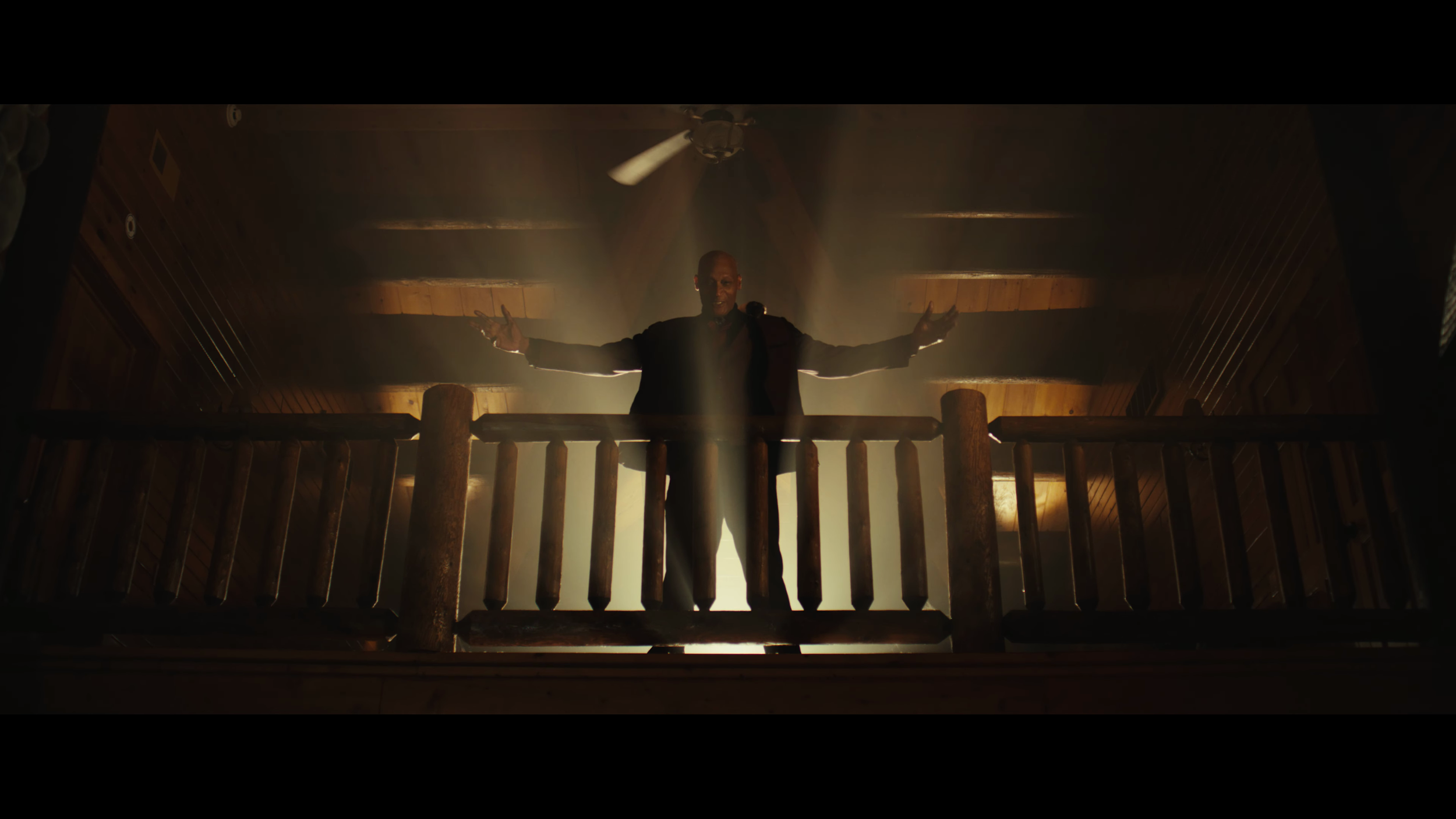
Still, whenever the film threatens to lose the audience entirely, Tony Todd arrives to remind everyone why he will always be one of horror's most beloved icons. His presence immediately elevates the material, bringing a level of gravitas and charisma that much of the film struggles to maintain on its own. Seeing him here is bittersweet, knowing this serves as his final released performance. Having crossed paths with him a handful of times over the years, there was something especially meaningful about seeing him on screen again. He remains effortlessly watchable, and even in a film packed with recognizable horror veterans, he stands comfortably above the rest of the cast.
What ultimately prevents The Pitchfork Retreat from becoming a complete disappointment is its ending. After spending much of its runtime feeling scattered and oddly assembled, the film finally delivers a payoff that recontextualizes much of what came before. The third-act twist does not solve every problem, nor does it erase the pacing issues, uneven performances, or tonal confusion that dominate the middle portion of the film, but it does provide a satisfying conclusion. In fact, the ending is strong enough to make viewers reconsider much of the frustration they experienced getting there. It is the rare case of a finale doing a significant amount of heavy lifting.
In the end, The Pitchfork Retreat feels like a movie with far more ideas than discipline. There is a genuinely compelling foundation hidden beneath the clutter, and there are moments where the film hints at what it could have been with a tighter script and a more focused approach. The anthology stories contain flashes of potential, the wraparound narrative has merit, and Tony Todd's presence alone gives horror fans a reason to pay attention. Unfortunately, the road between the opening setup and the final reveal is often a chore to navigate. While the payoff ultimately lands, getting there requires patience that many viewers may not be willing to give.
Jessie Hobson