
There is a tendency to approach AI-generated filmmaking with a certain level of skepticism. Too often the results feel like disconnected visual experiments rather than genuine storytelling. That is what makes Drew Spence's Age of Forgotten Heroes: City of Snakes such an interesting surprise. While the film never completely escapes the limitations of the technology behind it, it represents one of the most substantial leaps forward in AI-assisted narrative filmmaking that I've encountered. The result is an ambitious fantasy adventure that is equal parts fascinating, uneven, and undeniably imaginative.
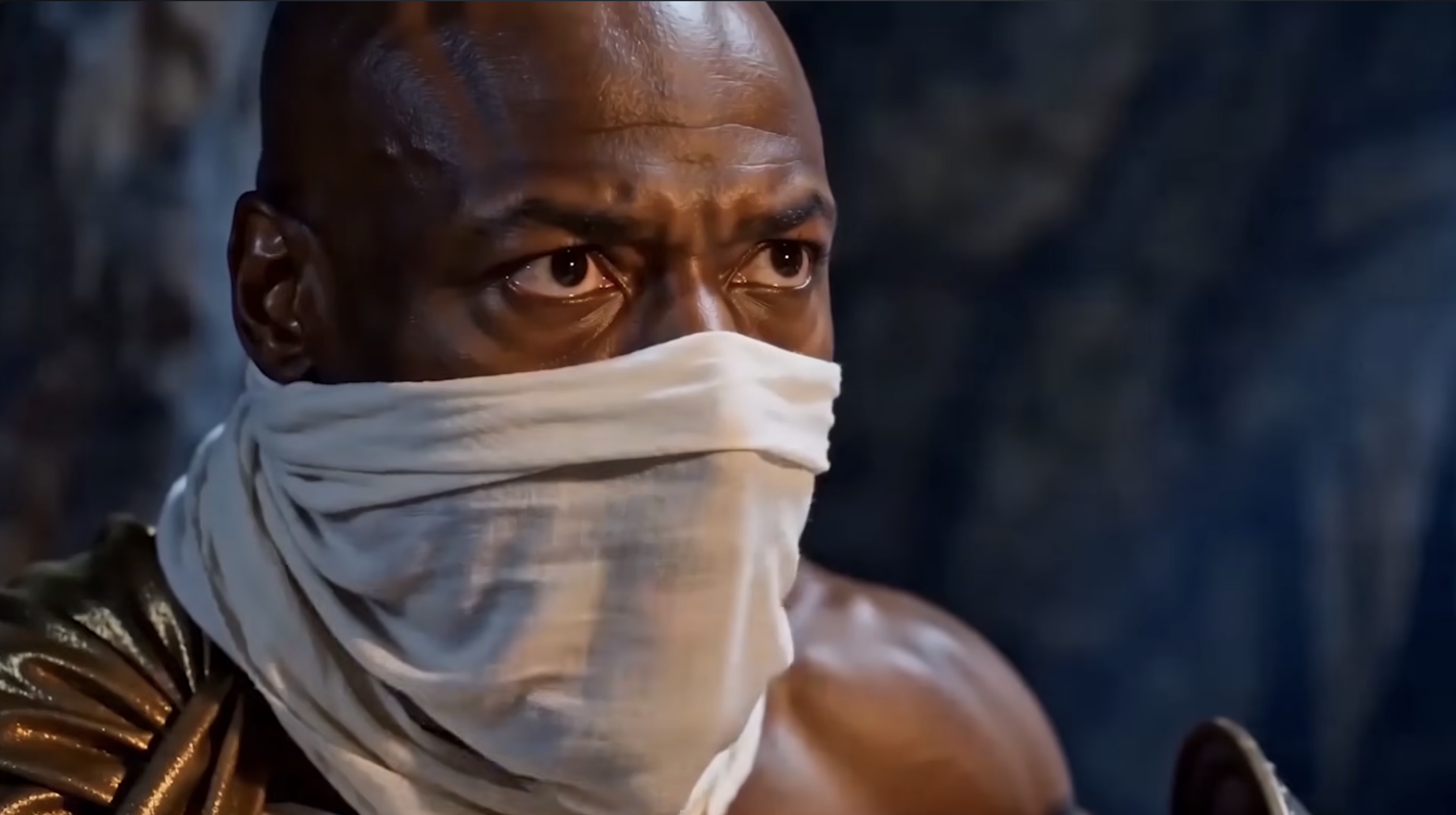
A director's cut assembled from a season of the Age of Forgotten Heroes web series, City of Snakes follows Marcus Griffin, better known as Dynamics Plus, a wandering adventurer searching for purpose in a world where heroism has largely faded into myth. Set in a fantasy landscape that blends influences from the Roman Empire, medieval folklore, and classical mythology, the film sends its protagonist through encounters with monsters, mysterious women, corrupt gamblers, snake cults, forgotten gods, and questions about fate itself.
What immediately stands out is how much more cinematic this project feels compared to many AI-driven productions. Rather than relying on static imagery or repetitive visual loops, City of Snakes employs multiple camera angles, frequent cuts, and editing choices that create genuine momentum. Scenes move with purpose, action sequences have an understandable rhythm, and there is an effort to build visual storytelling rather than simply present moving images.
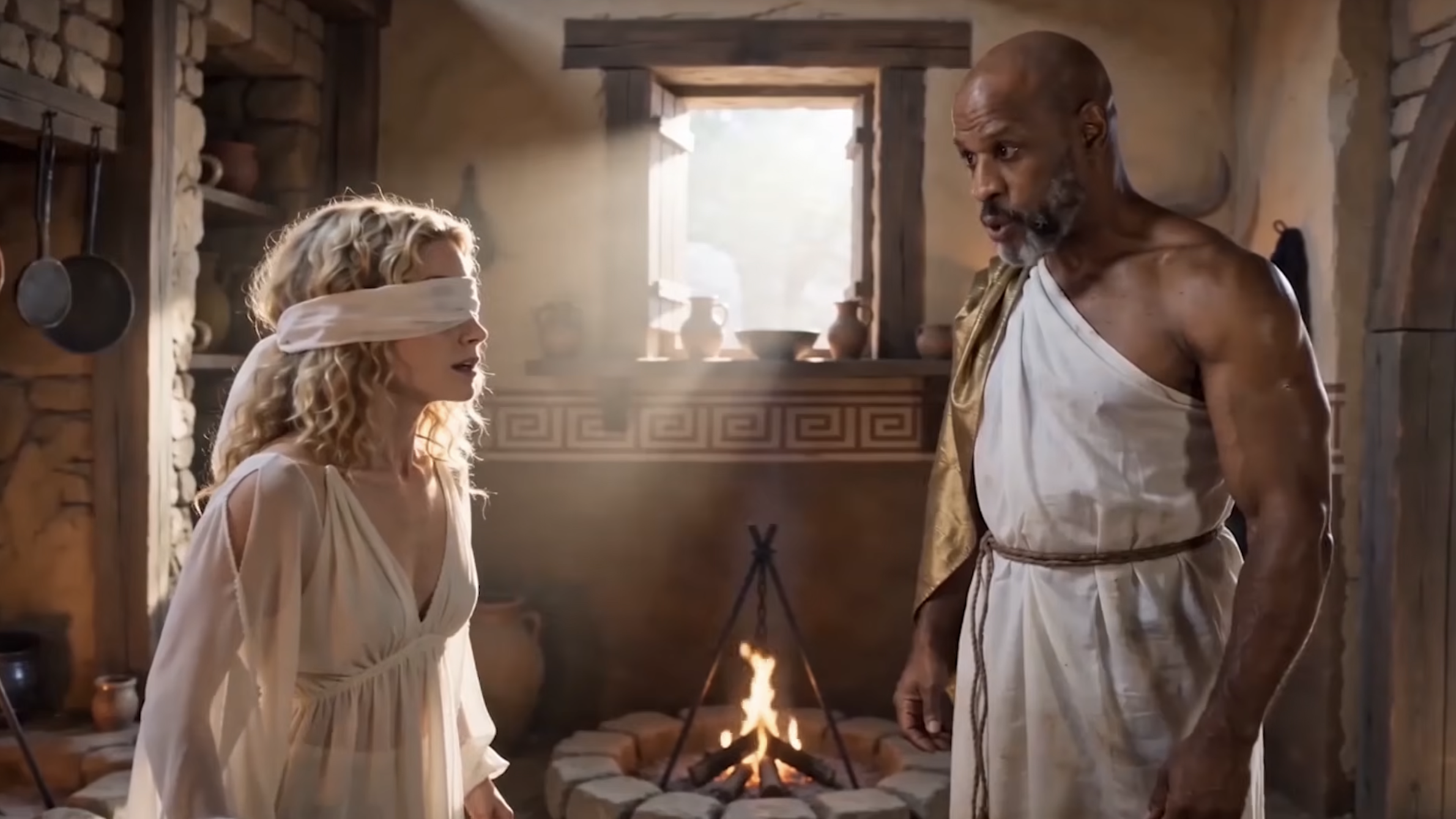
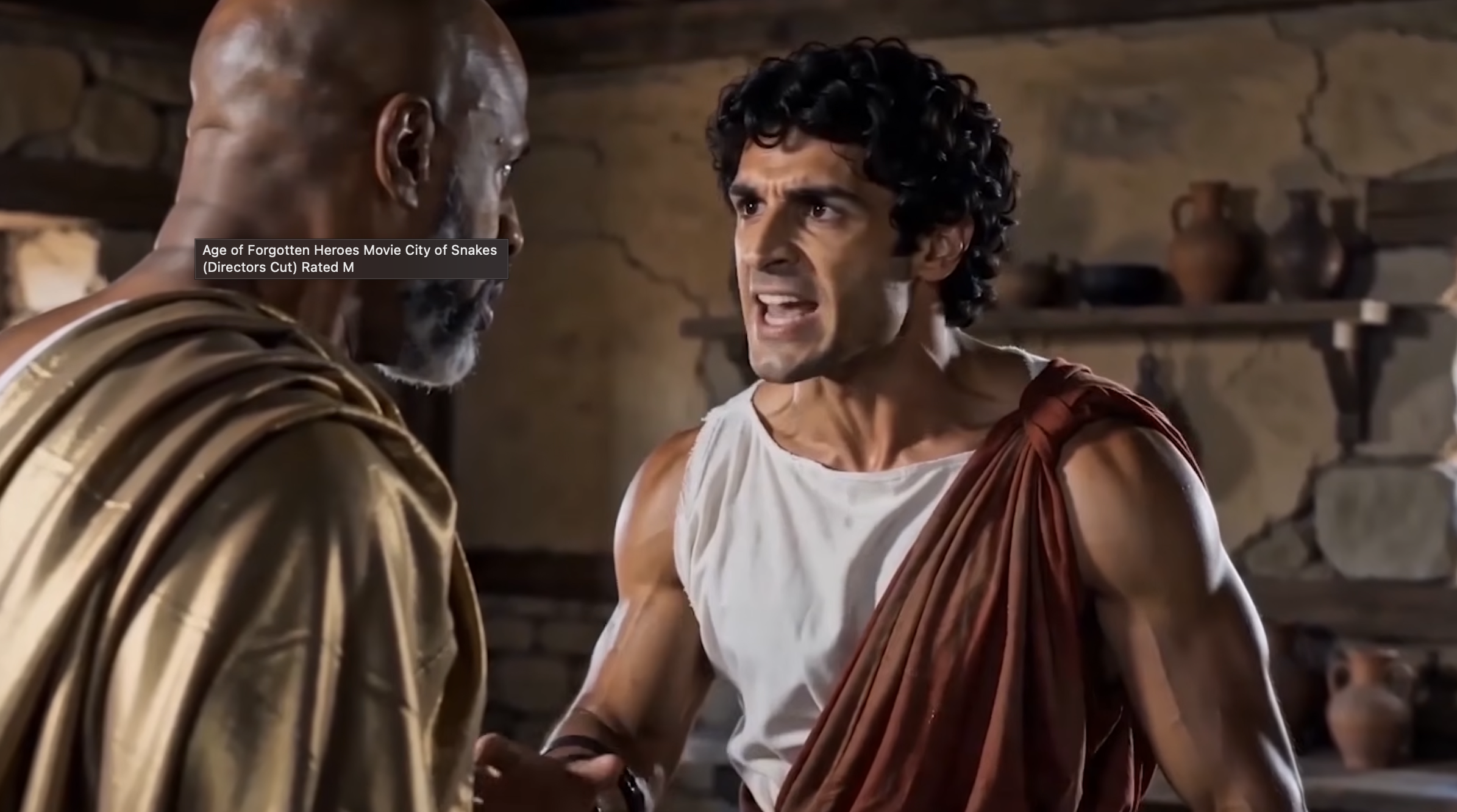
Even so, the film exists within a strange visual space. The characters often appear realistic at first glance, but there is still an unmistakable artificial quality to their movements and expressions. Faces shift subtly. Actions occasionally feel disconnected from physical reality. The world looks tangible while simultaneously remaining just outside the boundaries of human authenticity. Yet strangely, that quality almost benefits the film's mythological atmosphere. This is a story about gods, monsters, destiny, and ancient legends. The dreamlike artificiality can sometimes feel less like a flaw and more like part of the fantasy.
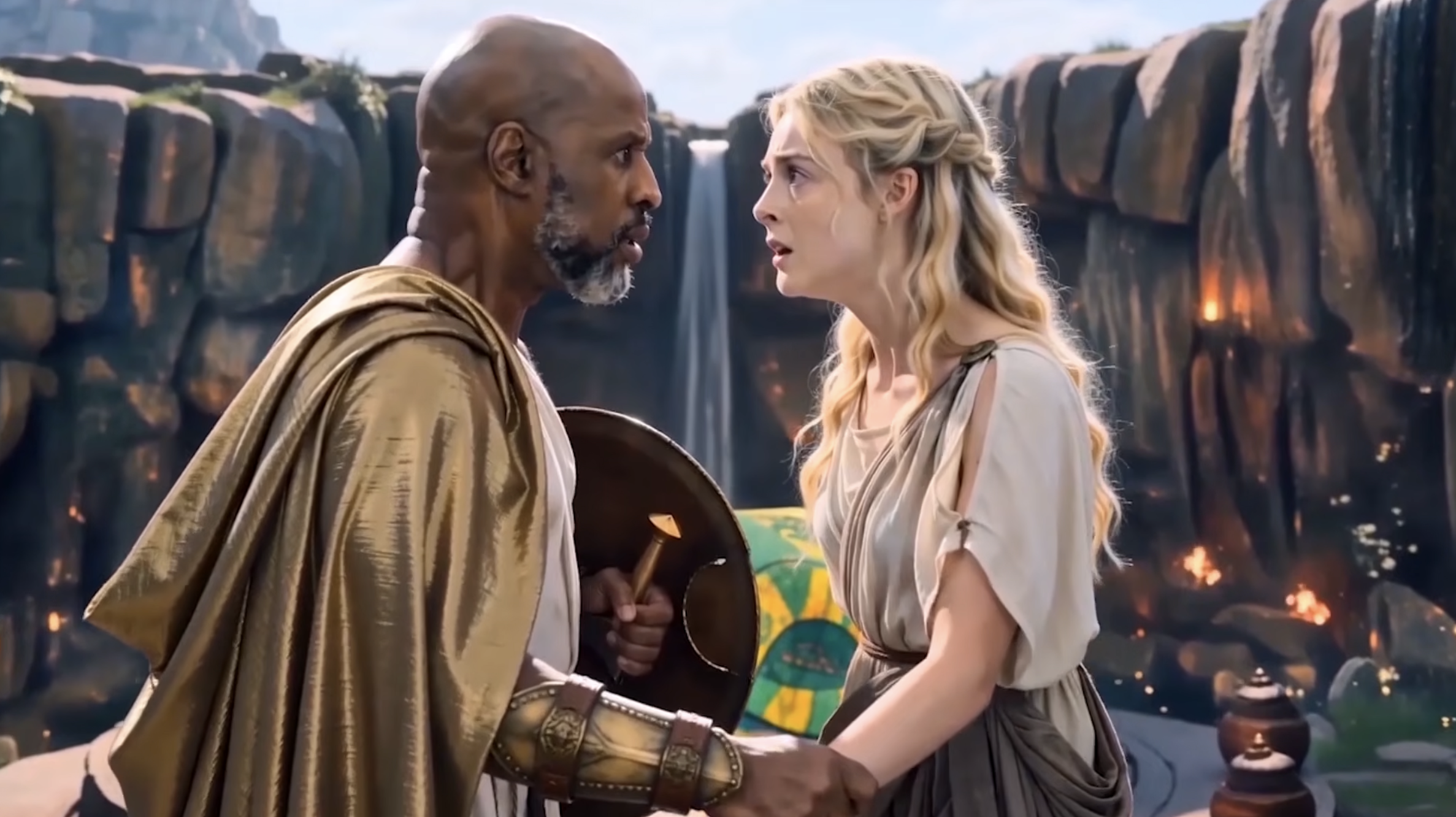
The narrative itself is surprisingly expansive. Marcus begins as a simple wanderer, but soon finds himself wielding mystical weapons, confronting a Medusa-like creature, rescuing sacrificial victims, navigating corrupt gambling dens, and unraveling conspiracies within the titular City of Snakes. Along the way, he repeatedly questions the role of fate in his life, wondering whether his adventures are meaningful or simply entertainment for unseen gods. "Do they really watch, or did we invent them to ease the burden of free will?" becomes one of several philosophical reflections that elevate the material beyond a straightforward fantasy quest.
Spence demonstrates an obvious love for mythology and pulp adventure storytelling. The episodic nature of the original series remains visible in the finished feature, but the structure largely works because Marcus serves as a compelling guide through increasingly bizarre situations. Whether he is battling monsters, navigating romantic complications, or debating the whims of fate, the character's constant internal narration helps create cohesion across the sprawling narrative.
The film's dialogue delivery remains one of its most obvious technical challenges. Some conversations land remarkably well, with recognizable cadence, tone, and emotional intent. At other times, lines are delivered too quickly, awkwardly emphasized, or in ways that simply do not feel entirely human. Yet even here there is evidence of genuine progress. Compared to earlier examples of AI-generated performances, there is more nuance, more consistency, and a clearer sense of character throughout the runtime.
The soundtrack also deserves recognition. Music plays a major role in establishing atmosphere, helping bridge scenes and maintain momentum throughout the adventure. The score and songs enhance the fantasy tone while supporting the larger worldbuilding efforts. Combined with the film's ambitious visual scope, the audio work helps create the feeling of a complete production rather than a technical experiment.
What ultimately makes Age of Forgotten Heroes: City of Snakes worth discussing is not simply that it uses AI. Plenty of projects use AI. What matters is that Spence understands storytelling, pacing, and worldbuilding well enough to use the technology in service of a larger creative vision. The film is imperfect. The artificial nature of the visuals is frequently noticeable, and some vocal performances remain inconsistent. Yet there is a genuine movie here, complete with recurring themes, memorable imagery, adventure, humor, and surprising emotional beats.
For viewers looking for polished mainstream fantasy, City of Snakes may still feel rough around the edges. For those interested in independent genre filmmaking and the evolving possibilities of AI-assisted production, however, it is one of the more impressive examples currently available. More importantly, it feels less like a proof of concept and more like an actual film.
Age of Forgotten Heroes: City of Snakes doesn't completely solve the challenges of AI filmmaking, but it demonstrates how far the medium has come. Ambitious, strange, occasionally awkward, and frequently entertaining, it is a compelling glimpse at where independent fantasy storytelling may be headed next.
Jessie Hobson