
Broken Bird is not interested in holding your hand.
Joanne Mitchell’s debut feature exists in that uneasy space between tenderness and dread, where silence does more work than screams and intimacy becomes unsettling. Anchored by a haunting performance from Rebecca Calder, the film asks the audience to stay close to a character who is difficult, vulnerable, and impossible to fully explain.
In our conversation with Mitchell, we dig into grief as narrative fuel, the choice to frame horror through psychology rather than spectacle, and what it means to trust the audience enough to let discomfort breathe.
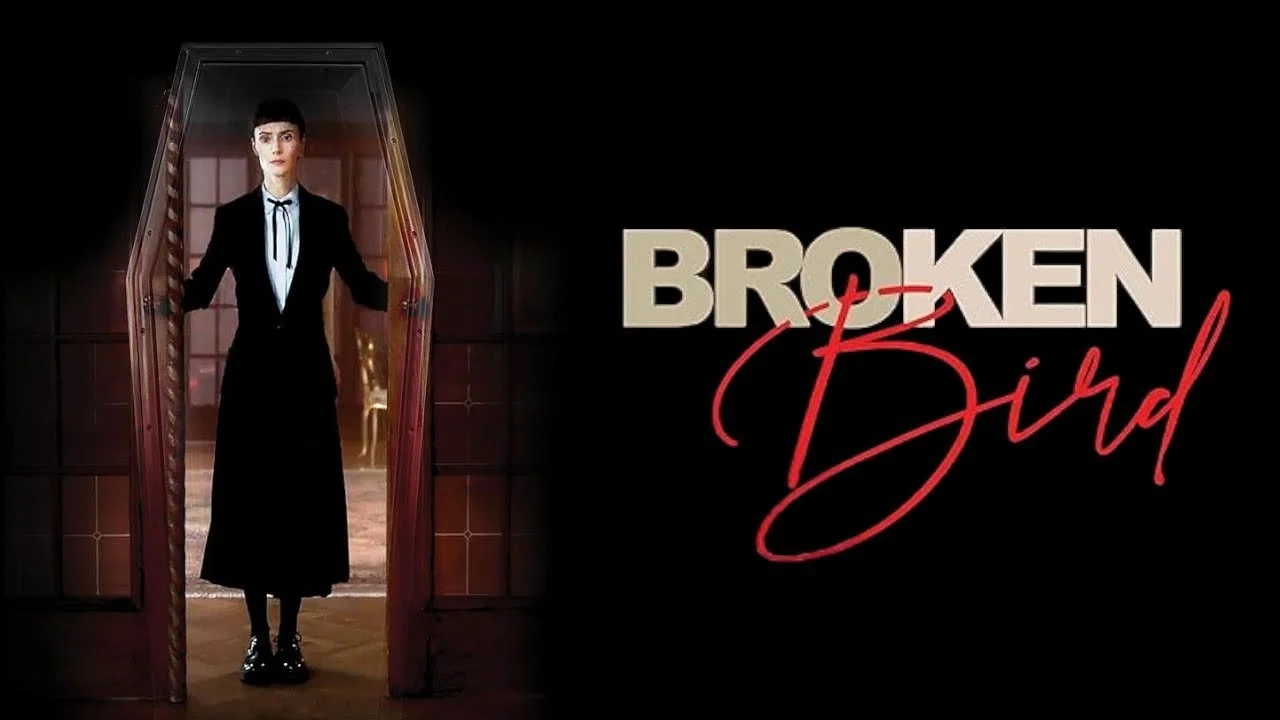
Jessie Hobson: Broken Bird began as your short film, Sybil, before evolving into your debut feature. What creative or emotional elements felt essential to preserve as you expanded the story into a full-length film?
Joanne Mitchell: I wanted to preserve Sybil’s unpredictability and that sense that you can’t quite pin her down. Even in the short film, she could shift very quickly from something dark and unsettling into something more sensitive and vulnerable, which I found compelling. As we expanded it into a feature, it was important to hold onto that ambiguity, but I wanted to deepen it emotionally. The short only gives you a glimpse of who she is, whereas the feature allowed me to explore her inner world in much more detail and understand where that behaviour comes from and why.
JH: When you were adapting Sybil into Broken Bird, what surprised you most about the story once you had more space to explore it?
JM: I think what surprised me most was how much sympathy I developed for Sybil. The more I explored her background and built out the world around her, the more I understood her, and that really shifted how I saw the character. It also made me realise how universal the story actually is. At its core, it’s about vulnerability, loneliness, grief, and the need to connect – things everyone experiences at some point in their lives. Once I grounded everything in her emotional reality, it allowed me to explore both the darker and lighter elements of the story in a more meaningful way.
JH: Sybil is a lonely mortician with what you’ve called a “poetic soul.” How did you and Rebecca Calder work together to balance empathy for the character with the film’s increasingly disturbing turns?
JM: It was wonderful working with Rebecca – she’s an incredibly grounded and nuanced actor, and she brought a real emotional honesty to the role of Sybil. From the start, we focused on finding the truth in everything Sybil does, no matter how dark and disturbing it becomes. It all had to make complete sense to her, from her perspective of the world and what had happened from her past. That was key to maintaining empathy, I think – because even as her behaviour becomes more extreme, it’s always rooted in something emotionally real to her. Nothing is played for shock – it’s all driven by her internal logic and experience.
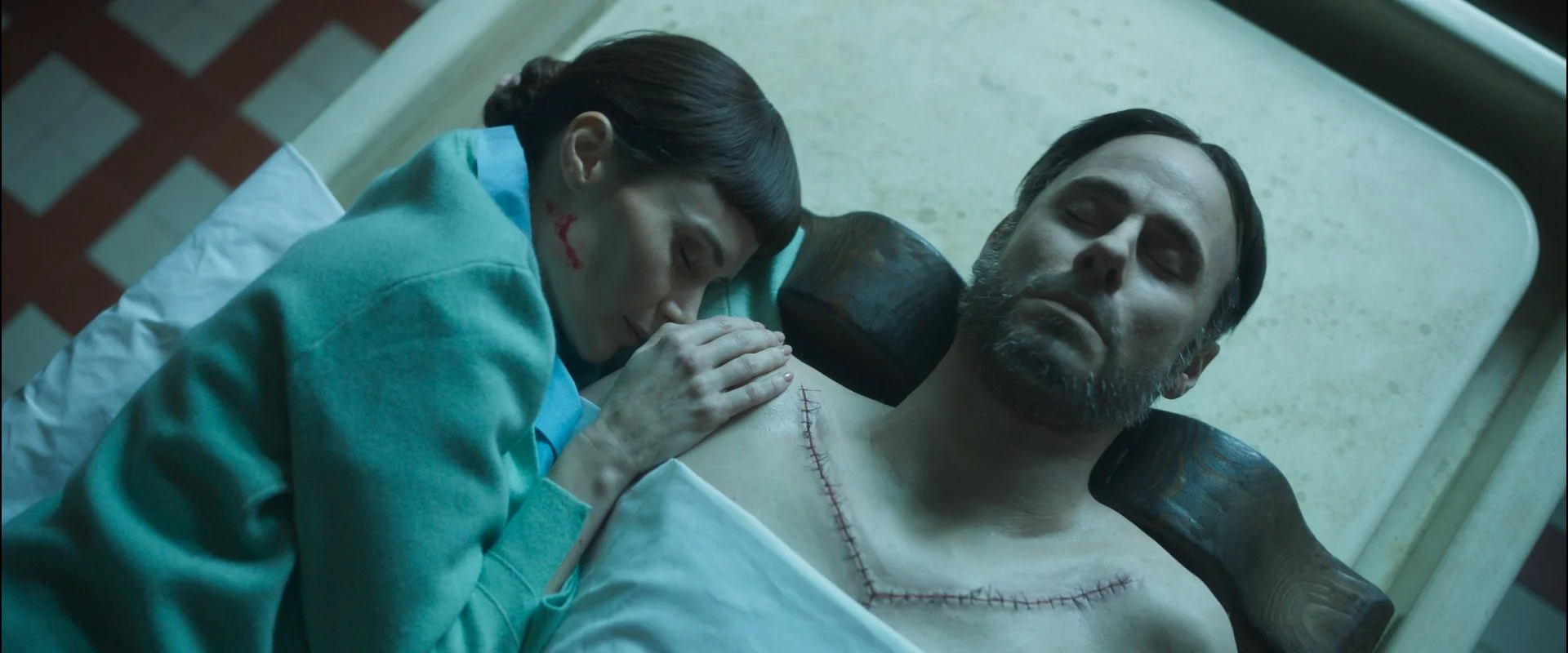
JH: Rebecca Calder has received significant recognition for her performance, including a Best Actor award at the Independent European Film Festival. What did she bring to the role that exceeded what was on the page?
JM: Rebecca has a very rare, enigmatic screen presence – even when she’s doing very little externally, you’re completely drawn into her inner world. It’s a rare quality. What she brought that went beyond the page was a real emotional depth and curiosity about the character. She did a lot of work in preparation in a very short amount of time, asked thoughtful questions, and was truly invested in who Sybil was. I think she developed a genuine empathy for the character, and that comes through in performance. This gives Sybil a complexity and emotional truth that enhances what was on the written page.
JH: James Fleet plays an important counterpoint to Sybil. How did his experience and screen presence shape the emotional dynamics of the film?
JM: James brings a real sense of warmth and ease to the role – so you immediately trust him. It never feels like he’s acting; he inhabits the character of Mr Thomas beautifully. That quality was really important as a counterpoint to Sybil. Where she’s more internal and unpredictable, he feels steady, grounded, and emotionally open. That contrast helps to anchor the film and gives the audience something familiar to hold onto. Because he genuinely cares and trusts her, their relationship builds real weight, so when that trust is broken, it lands in a much more human and affecting way.
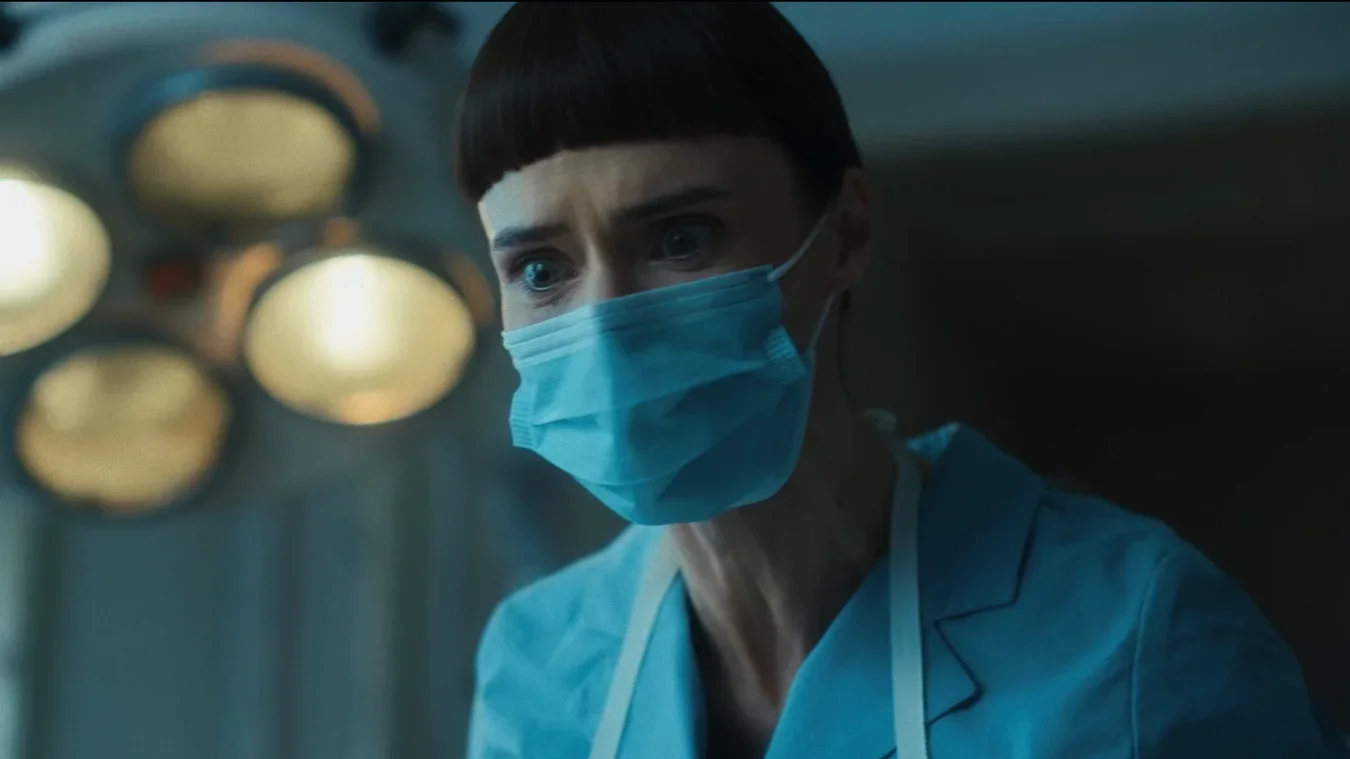
JH: Broken Bird explores grief, desire, loneliness, and the human need for connection. Were there specific emotional boundaries you knew you wanted to push—or protect—when telling this story?
JM: I wouldn’t say I was trying to push emotional boundaries for the sake of it – it was more about exploring them in an honest way through each character’s perspective. What was important to me was protecting the emotional truth of the story. No matter how extreme things became, it had to feel grounded and relatable on some level so the audience could connect with it.
Sybil’s experience is more internal and psychologically distorted, whereas someone like Emma exists in a more external, recognisable reality – but both are rooted in real emotional responses to grief and loss. As long as that human connection was intact, I felt I could go further with the darker elements.
JH: The film has been described as a psychological horror drama rather than a traditional horror film. How did you think about tension, unease, and intimacy instead of relying on conventional genre scares?
JM: It’s very much a character-led story that sits within the horror genre, so the focus is on the characters and their emotional journeys. For me, the tension comes from being so closely aligned with Sybil’s perspective – the audience experiences the world as she does, which creates unease.
Rather than relying on conventional scares, I was more interested in building discomfort through intimacy – staying with her, observing her behaviour, and allowing that to become increasingly unsettling over time. Because her perception of reality is skewed, that uncertainty becomes a powerful tool.
JH: Mortuary spaces are visually and emotionally charged. What did that setting allow you to explore metaphorically that a more conventional environment might not?
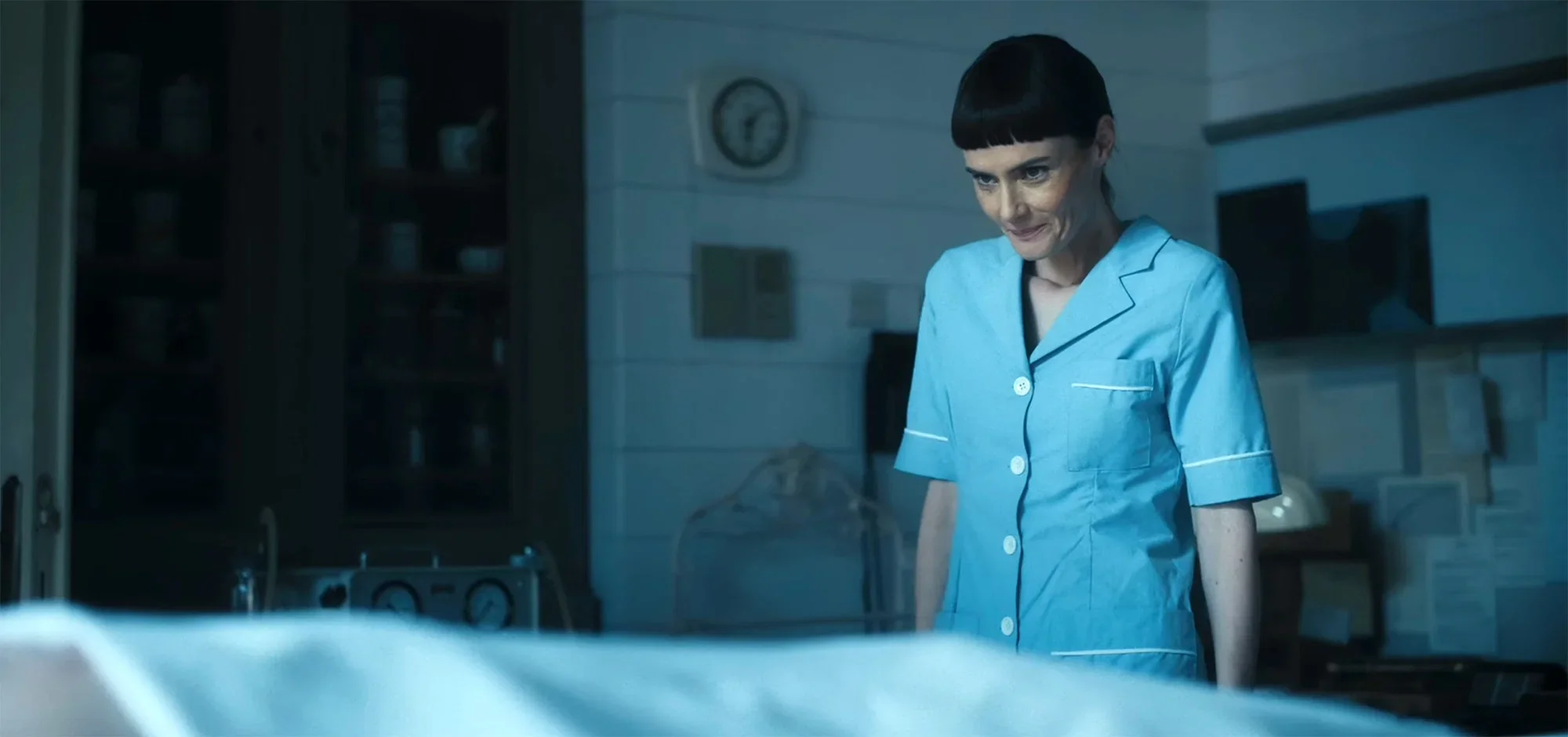
JM: The mortuary represents death and loneliness, but also control and stillness. For most people, it would feel unsettling, but for Sybil, it’s the opposite – it’s where she feels most at ease and at home. That contrast was really important. What’s typically perceived as cold or frightening becomes a place of comfort and intimacy for her. She feels more connected to the dead than the living, which says a lot about her emotional state. A more conventional environment wouldn’t have carried the same weight or contradiction.
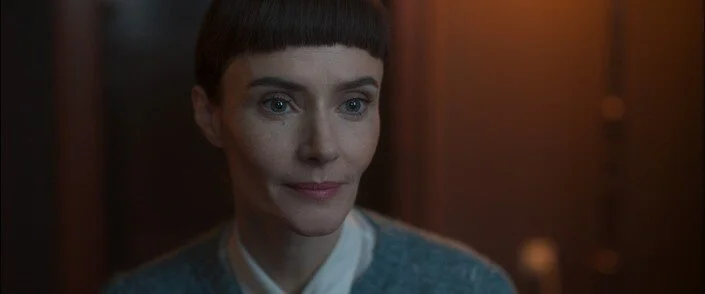
JH: This is your debut feature after years of acting, producing, and writing. What aspects of directing felt instinctive to you, and what challenged you the most on set?
JM: My background in acting felt the most instinctive. I understand how vulnerable actors can feel, especially when working quickly without much rehearsal, so creating a safe, collaborative environment was essential. The biggest challenges were practical – shooting in Serbia with a largely non-English-speaking crew required patience and focus. Time was also a pressure. But those challenges force you to be flexible and decisive, which is a huge part of directing.
JH: Your background spans theatre, television, film, and voice work. How did that multi-disciplinary experience influence the way you directed performers on Broken Bird?
JM: Working across those mediums has helped me understand how different performers work and what they need. My acting background especially means I can relate to the vulnerability of the process. I try to create an environment where actors feel supported enough to take risks while also receiving clear direction. That balance of freedom and guidance was really important, given how emotionally complex the characters are.
JH: The film’s atmosphere has been widely praised. How closely were you involved in shaping the visual language, from framing to pacing and silence?
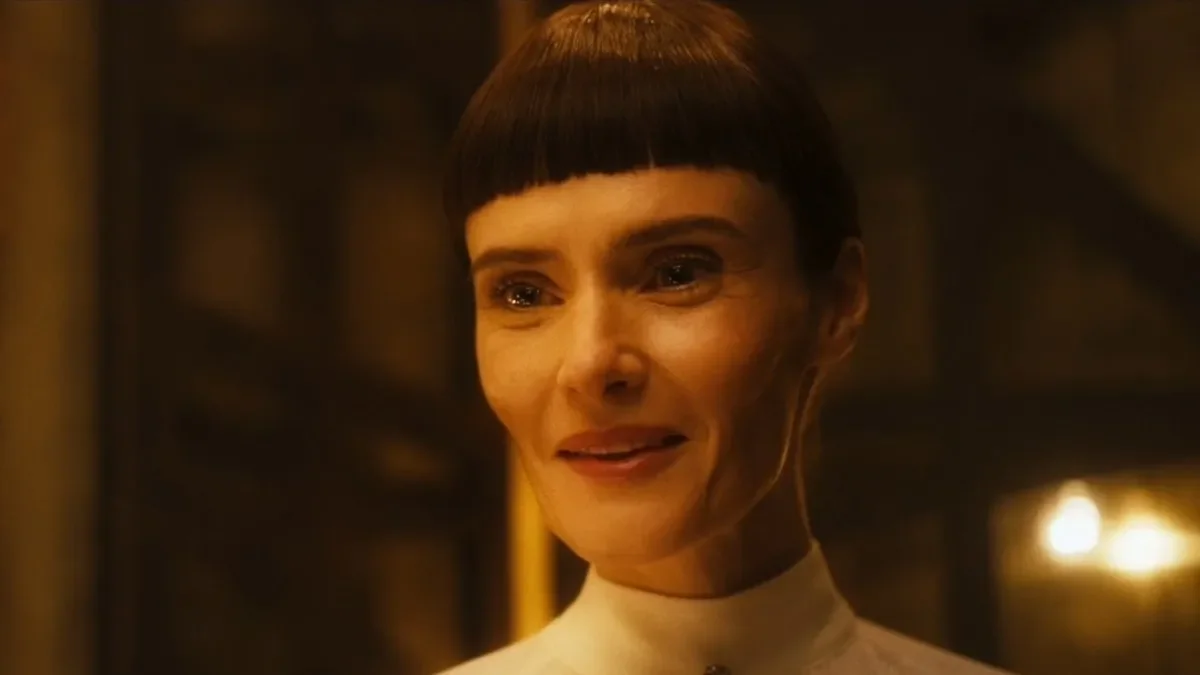
JM: I was very closely involved – it was a key part of the film for me. I created a detailed lookbook early on to establish tone, atmosphere, and mood, which I shared with my cinematographer and production designer. Everything was tied to Sybil’s perspective. The rhythm is measured and restrained, reflecting her internal world, then becomes more fluid in fantasy sequences. Silence and stillness were crucial – I wanted space for the audience to sit with the characters.
JH: Broken Bird premiered as the opening film at London’s FrightFest and screened at BIFFF, Trieste, and ECU. What did that mean to you?
JM: It was a real honour – opening FrightFest at the Odeon Leicester Square was a pinch‑me moment. Horror audiences are incredibly engaged, so watching the film with a crowd like that is special. Those festivals really champion independent cinema, and having the film screened there meant a great deal.
JH: Audience reactions can be intense and divided. How do you approach polarised responses?
JM: When you make something personal and unsettling, you have to accept divided responses. Once the film is out, it belongs to the audience. My responsibility is to tell the story honestly. A range of reactions means it’s connecting with people, even if not in the same way.
JH: You were a finalist for Screen International and FrightFest’s Rising Star Award in 2017. How do you reflect on that arc now?
JM: It’s been a real journey. That recognition was encouraging, but I spent the years since developing my craft – writing, producing, and directing shorts. Every project teaches you something new. It feels meaningful now to have Broken Bird connecting with audiences internationally.
JH: How did wearing fewer—or different—hats change your creative decision-making this time?
JM: It allowed me to be more focused. I could concentrate fully on directing – shaping performance, tone, and visual language. At the same time, it highlighted the importance of collaboration and trust. That balance was key.
JH: Now that Broken Bird is reaching U.S. theatrical audiences, what do you hope viewers carry with them?
JM: I hope they feel unsettled, but also emotionally affected. More than anything, I hope the character stays with them – that they continue thinking about her after the credits roll.
JH: Do you see Broken Bird as a foundation for continuing within psychological horror and gothic drama?
JM: I love psychological and gothic horror because it allows heightened emotional exploration. But I’m always driven by character‑led storytelling, so I’m very open to other genres as long as they offer that same emotional depth and complexity.
Joanne Mitchell’s approach to Broken Bird is defined by trust. Trust in her performers, trust in stillness, and trust that audiences do not need everything explained.
It is that restraint that makes the film linger, and that makes this debut feature feel like the work of a filmmaker with a clear sense of voice. Where Mitchell goes next may change in genre or scale, but the emotional precision feels firmly locked in.