
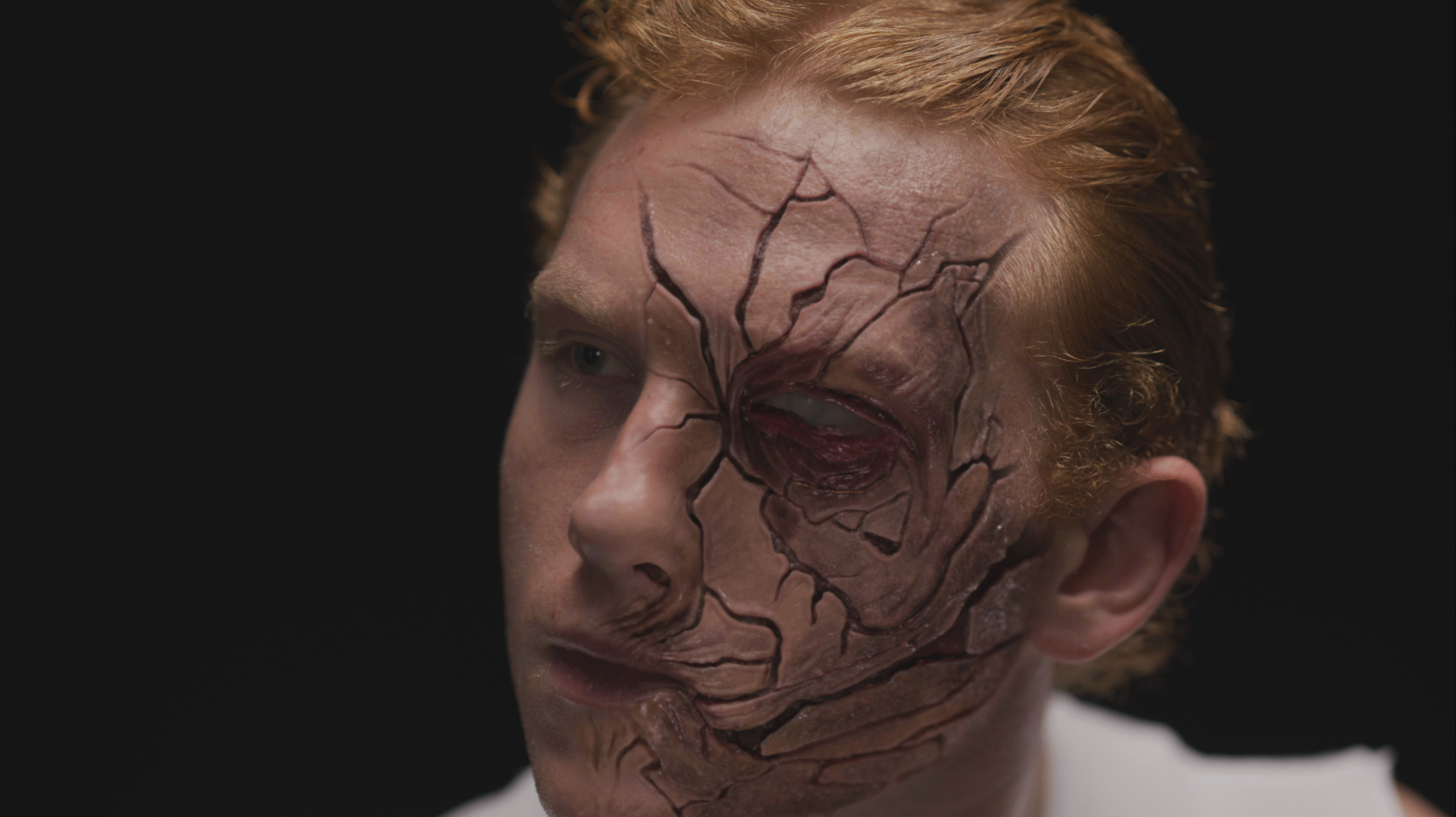
Dan Asma’s found footage sci‑fi horror drops you straight into the deep end and doesn’t bother holding your hand. We meet Devin, a retired lecturer unraveling from some kind of mysterious neurological disease, documenting his physical and mental decline as his face subtly warps and his motor functions slip away. It’s immediate, disorienting, and honestly kind of gripping.
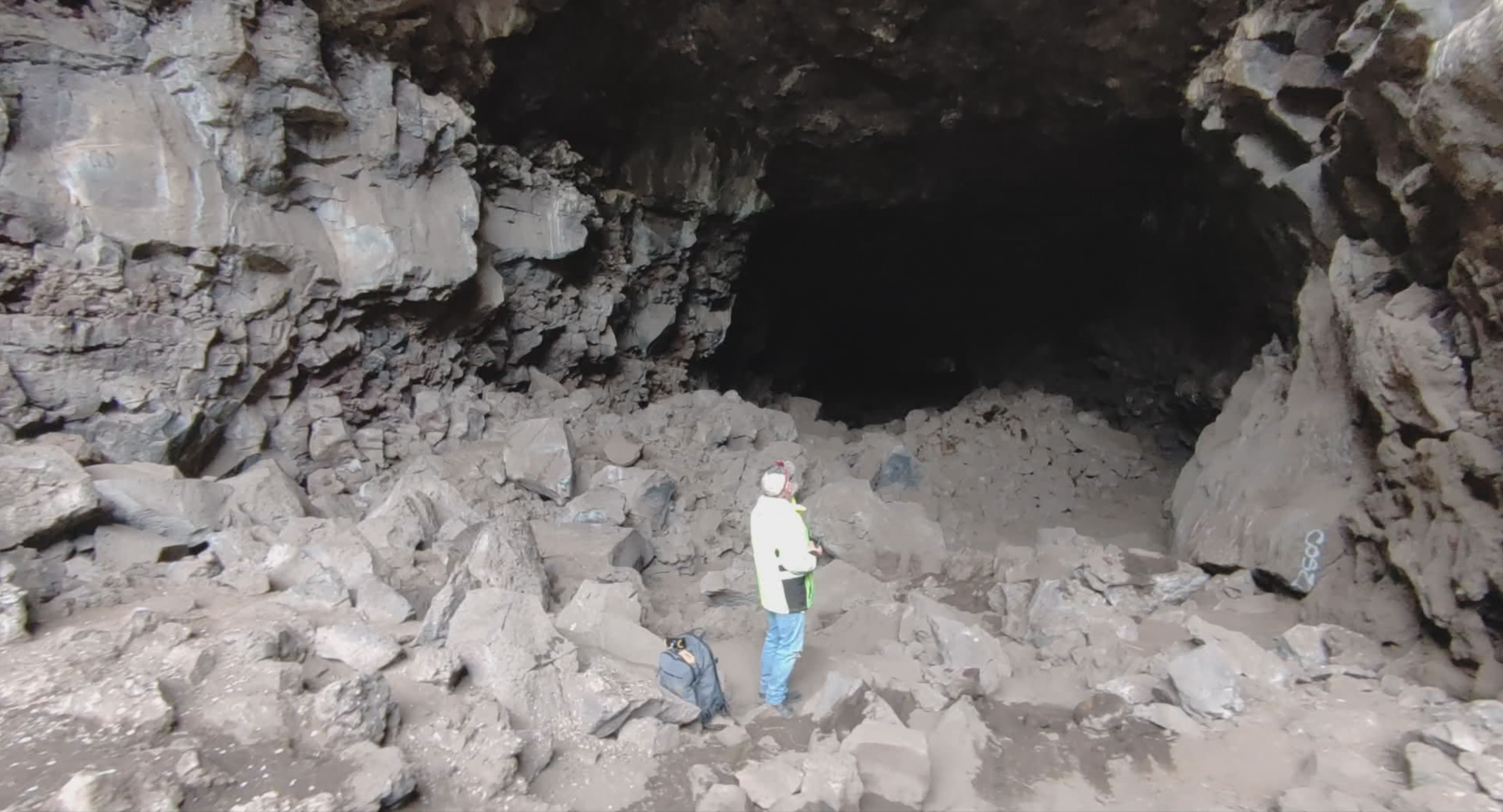
The setup is strong. Devin’s ex-wife Kate drops off a box of old tapes, and suddenly the film shifts into this layered mystery told through media drives, school recordings, notebooks, and fragments of a past he doesn’t fully remember. It’s deliberately messy, but in a way that feels purposeful at first. Like we’re piecing something together alongside him rather than being spoon-fed plot. And those early fragments work.
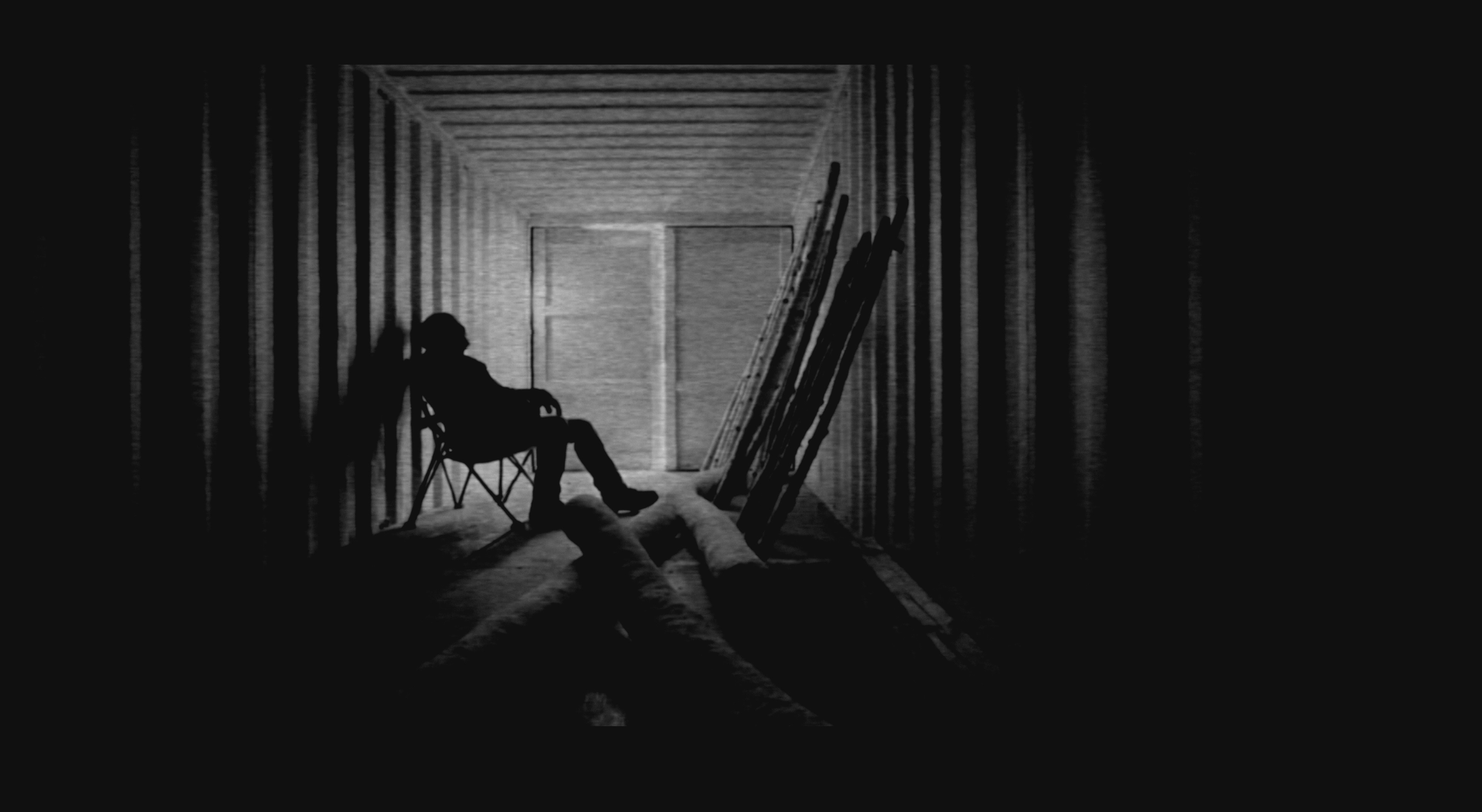
The school footage feels natural. Kids just talking, hanging out, existing. Then the film starts slipping in something off. A weird shot here. A glitch there. Then suddenly, a storage container with what looks like a portal inside. A cam recording that doesn’t behave right. Movement that feels wrong for something that isn’t supposed to move like that. The horror is subtle, creeping, and genuinely effective.
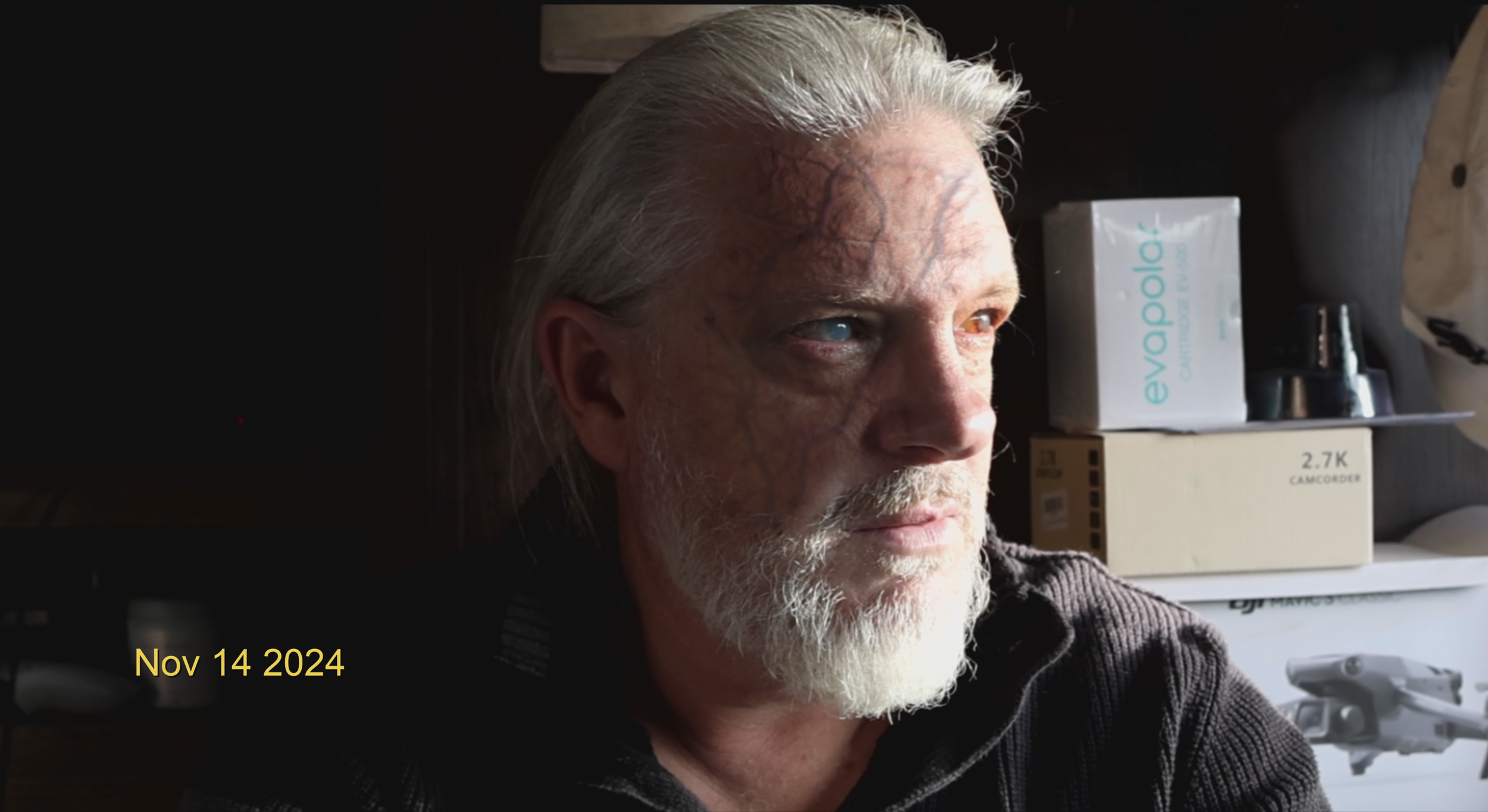
There’s even some solid technical work here. The practical effects and makeup on Devin are convincing, and the early VFX are surprisingly strong for a film operating in this space. The drone footage is actually used in a way that makes sense within the story, which is rare for found footage. It all builds an immersive tone that the trailer doesn’t even begin to sell. Then the structure expands.
Devin begins investigating the death of his childhood friend Charlie, who was found wandering in the mountains as a kid and later became entangled with something called the Church of Heaven’s Light before taking his own life. The deeper Devin digs, the more the film leans into cult paranoia, cosmic horror, and the idea that something ancient and unknowable is lingering just out of frame.
On paper, it’s all great. The lore is there. The ideas are there. There’s a genuinely compelling cosmic/cult horror buried in this thing. But Tribe can’t hold it together.
Performance-wise, it’s a mixed bag. Devin is easily the standout. He carries the film with a grounded, believable descent that makes you buy into the premise even when things start getting shaky. Everyone else ranges from serviceable to distracting, especially in the Zoom call sequences, which feel more like placeholders than fully realized scenes.
Still, up to about the halfway point, you’re in it. You’re invested. You’re waiting for the bigger picture to snap into focus. And then… it doesn’t.
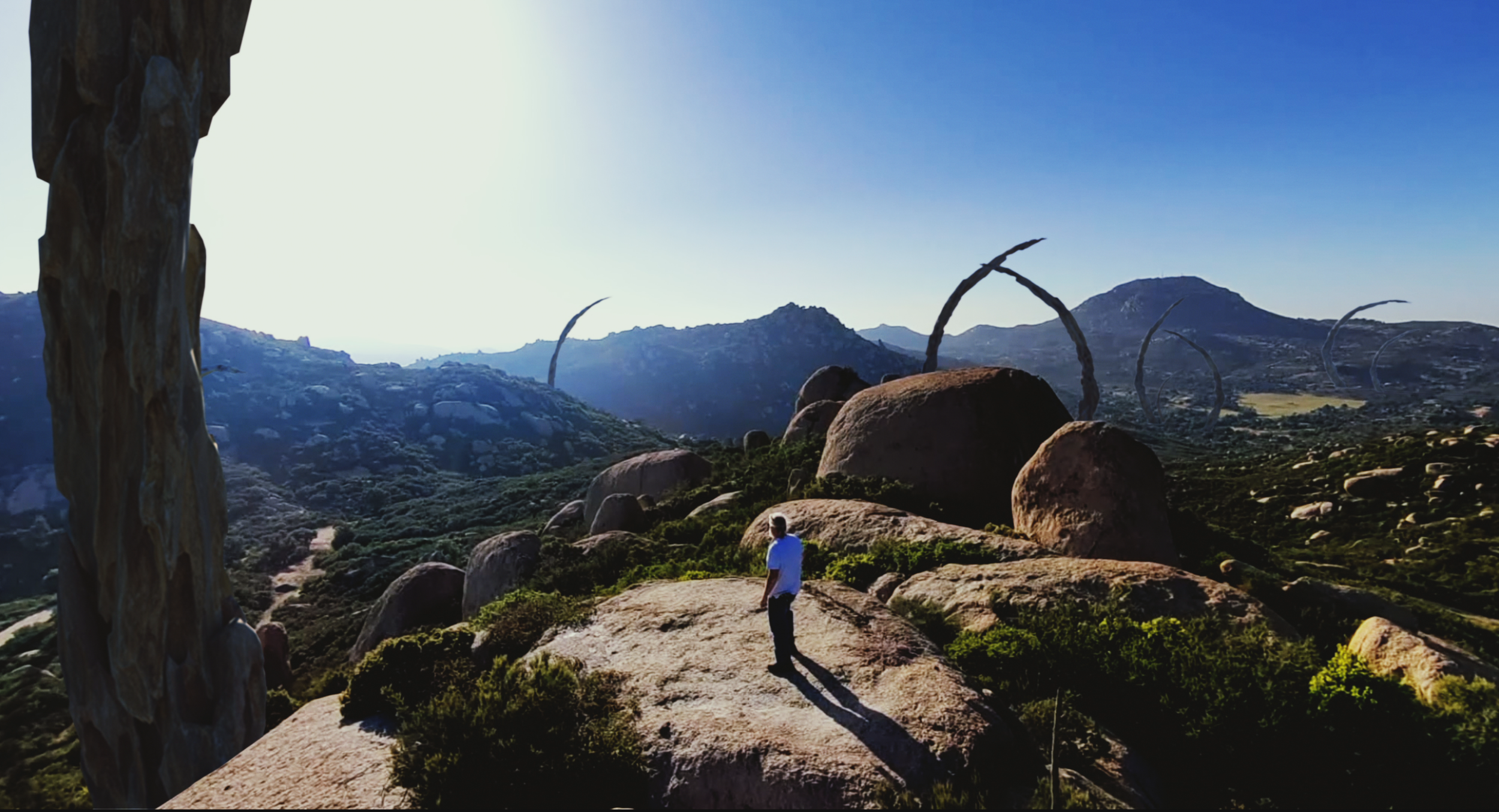
Instead, the film starts layering in AI-generated imagery. Not subtly. Not sparingly. Full-on montages of it. Entire sequences that look like they were ripped from a low-effort GenAI experiment and dropped into the timeline with zero concern for tone, continuity, or coherence. It’s not just that the AI looks off, though it does. It’s that it completely breaks the language of the film.
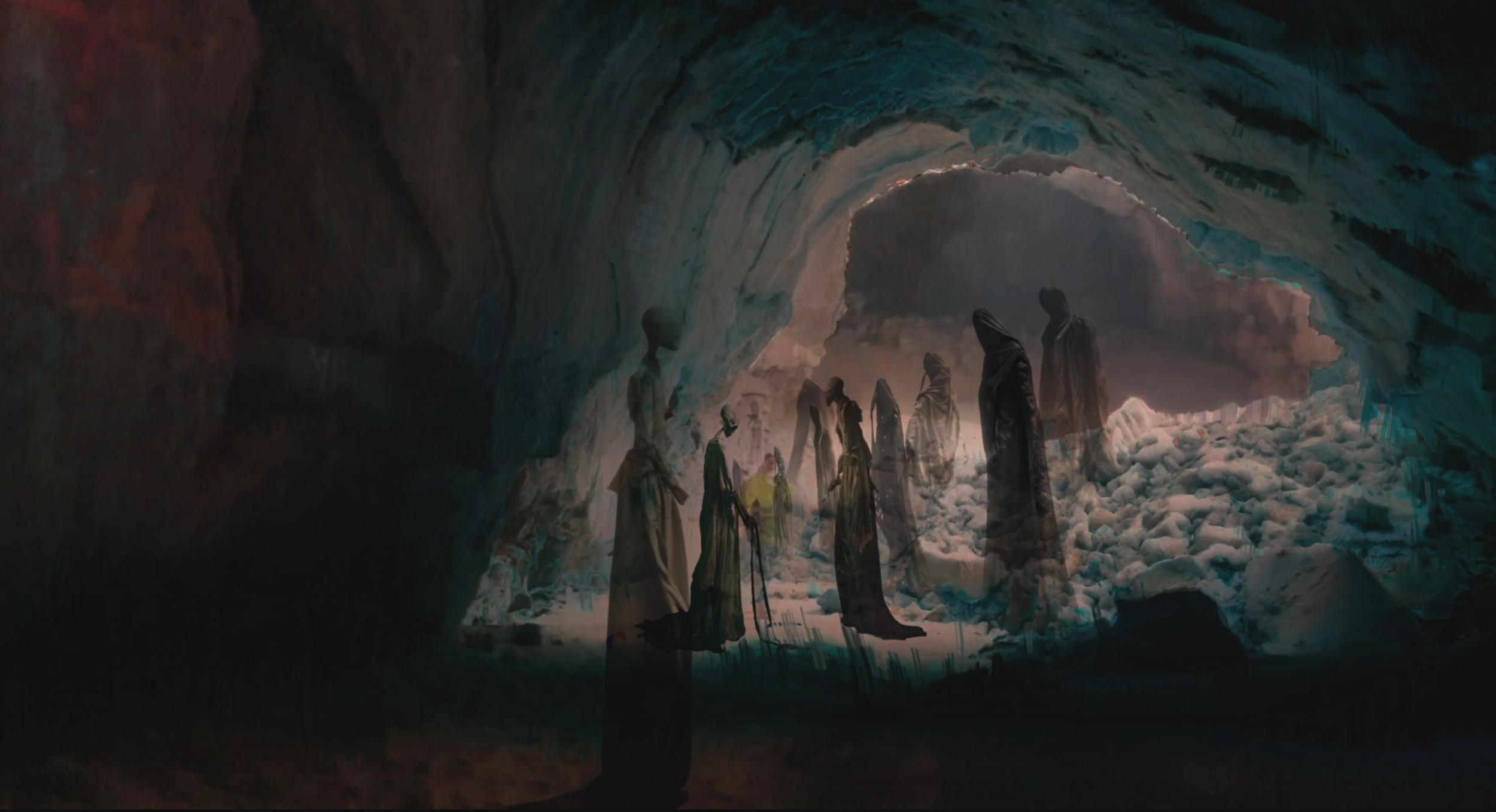
Up to that point, Tribe is built on texture. Grainy footage, grounded visuals, practical effects, and a sense of place. The AI sequences feel like they belong to a completely different project. Images don’t connect. Shots don’t flow. It becomes this bizarre scrapbook of “creepy” visuals with no throughline, no logic, and no weight behind them. And the worst part is, you can feel the exact moment the film gives up.
Instead of building toward its cosmic horror payoff, it leans on these generated montages to do the heavy lifting. The mystery doesn’t unravel. It just kind of… dissolves into noise. By the time we get to the later drives and the Mount Shasta material, the film has fully gone off the rails, abandoning its strongest elements in favor of something that feels rushed and artificially assembled.
What started as an eerie slow-burn turns into a slog where you’re no longer trying to solve anything. You’re just waiting for it to end. That’s what makes Tribe so frustrating because the potential is obvious.
The opening act is genuinely creepy and immersive. The central concept is strong, the practical effects deliver, and for a while it feels like Tribe is building toward something special. There’s a version of this film that sticks the landing and earns a place among the better found footage horror films. Unfortunately, that version only lasts about twenty minutes.
In the end, Tribe is less a descent into cosmic horror and more a case study in how quickly a film can lose its identity. What begins as something tense and intriguing slowly mutates into something disjointed and, eventually, exhausting. And yeah, in a weird way, that makes it fascinating. Just not for the reasons it should be.
Jessie Hobson